
Crumbl Cookie Packaging: The Pink Box and Lessons for Small Bakeries
What Crumbl documents about its pink box—and how to plan an original cookie box around your own products, layout, and handling needs.
Crumbl packaging is known for its pink box and the side-by-side presentation of its cookies. The company says its four-pack box was developed in 2018. For a small bakery, the useful lesson is to plan a recognizable presentation around the actual products: their count, finished width, topping height, and arrangement. Create your own identity and confirm the materials and handling requirements separately.
A bakery box does two things at once: it carries the order and sets up the moment the customer opens it. Crumbl gives that moment a recognizable visual identity. You can study the approach without borrowing its pink box or treating a photograph as a box specification.
What Crumbl documents about its box
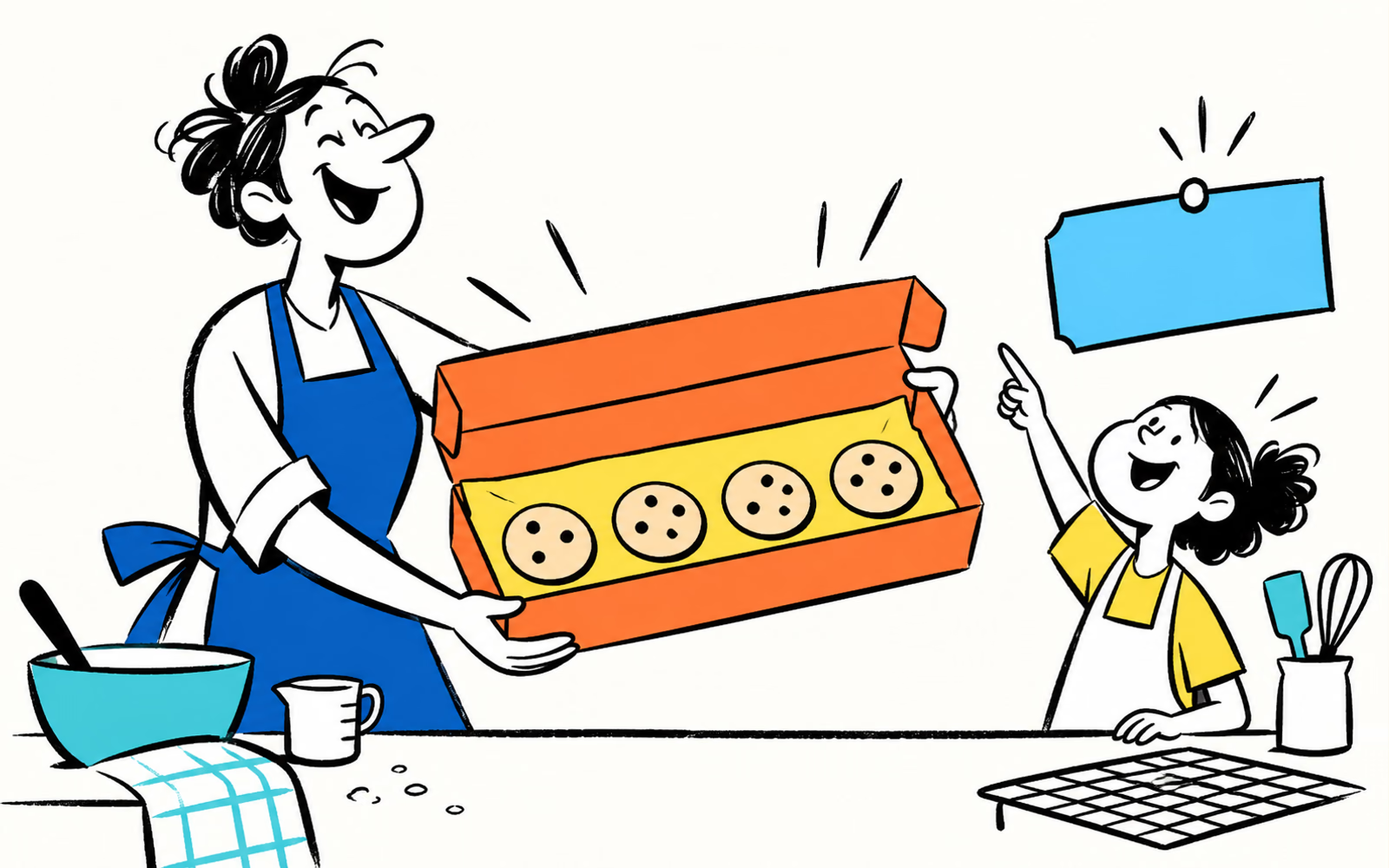
On its official story page, Crumbl identifies the pink box as part of its brand experience. It describes cookies and desserts sitting side by side and dates the notable four-pack box to 2018.
That gives us a documented starting point: a recurring color, a recognizable format, and a presentation arranged around the products. It does not tell us the box’s board grade, exact inside dimensions, coating, supplier, or printing specification. Those are different questions and cannot be established from the appearance of the box.
The lesson you can use
Choose a small number of repeatable decisions. Your box could have one distinctive color, a simple illustration, and a layout that makes the assortment easy to see. Keep those decisions consistent across the sizes you actually need.
Consider a fictional bakery that sells four decorated cookies as a weekend treat. Its starting question is not “How do we make a pink box?” It is “How do we present all four cookies clearly without the decorations rubbing against one another?” The layout comes first; the identity follows.
How cookie arrangement changes the brief
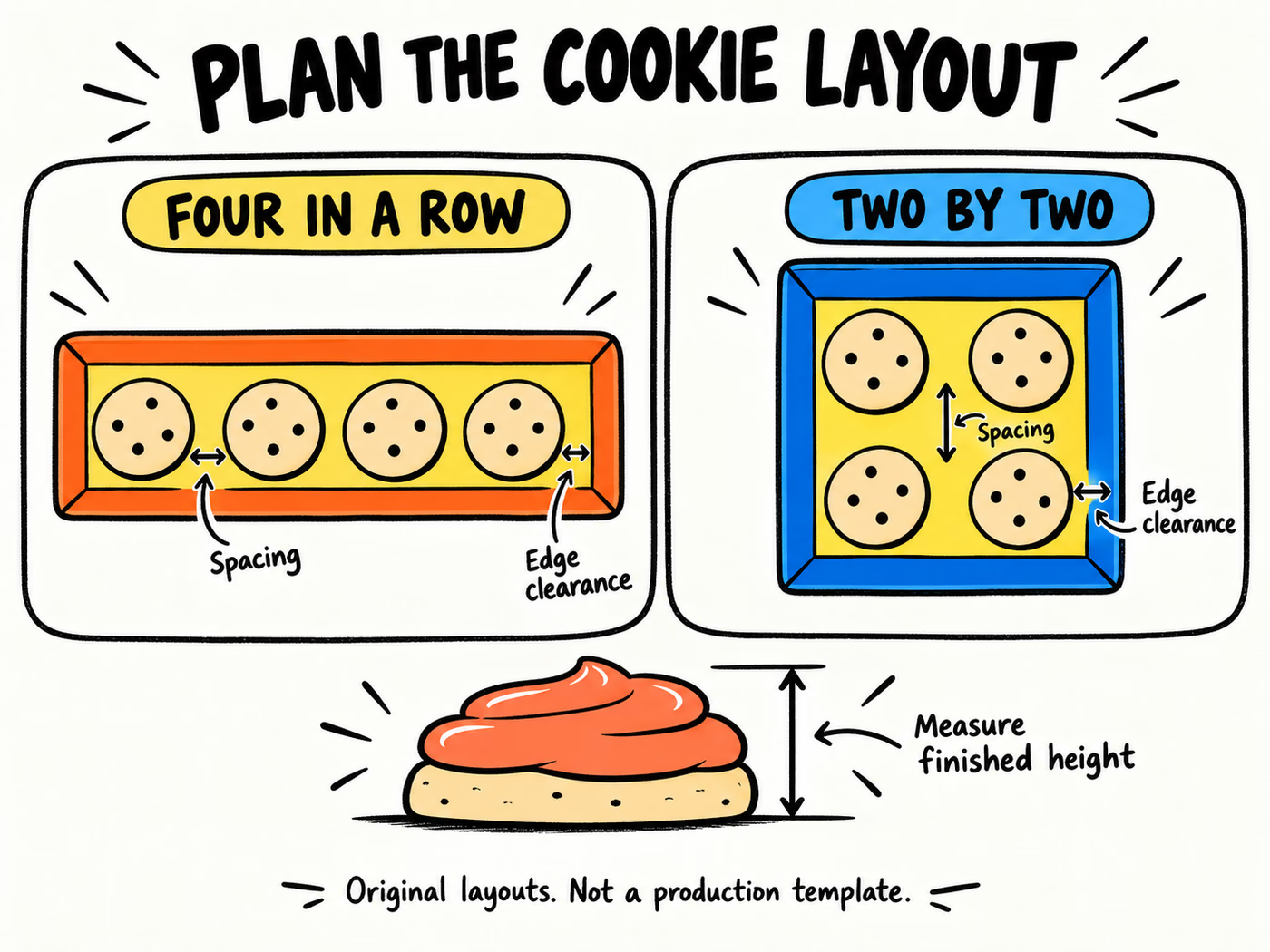
Four cookies in a row and four cookies in a two-by-two grid need different footprints. Neither arrangement is universally better. The decision depends on the product, the way the order is carried, and the space you have at the counter.
| Layout | What it offers visually | What to measure | What to check |
|---|---|---|---|
| Four in one row | A clear sequence of four flavors | Combined product widths, gaps, edge clearance, and finished height | How the longer pack is carried, stored, and placed in a bag |
| Two by two | A compact group seen from above | Row and column footprint, gaps, edge clearance, and finished height | Whether adjacent toppings touch and whether the lid closes cleanly |
Measure the finished cookie
Use the cookie as sold, including frosting, toppings, or decoration. Record the largest finished width and the highest point in the assortment. A flat chocolate-chip cookie and a tall decorated cookie may share a base diameter but need different vertical clearance.
Allow space deliberately
Separate three measurements: the product footprint, the space between products, and the clearance at the edge. If you propose dividers or inserts, their thickness and placement also affect the required inside space.
A useful worksheet is: packed footprint + intended gaps + edge clearance. It is a way to organize the brief, not a universal sizing formula or a guaranteed tolerance. Ask the supplier to reconcile the proposed construction with your sample.
Test the layout through the real handoff
Close the sample, lift it as staff would, and place it in the intended carry bag. Look for lid contact, product movement, and a pack that tilts awkwardly. If your business ships cookies, evaluate a separate shipping system; a counter presentation box should not automatically be treated as parcel protection.
Create an original bakery presentation
Your customers should recognize your bakery rather than mistake the order for another brand. Start with the identity you already use on your menu, labels, and shop signs.
- Pick a distinctive color relationship. A blue box with a warm orange accent, for example, creates a very different impression from Crumbl’s signature pink.
- Use a simple visual motif. One original drawing or pattern is easier to repeat across labels and box sizes than several unrelated designs.
- Keep the flavor information readable. A separate label or card can identify a changing assortment without forcing you to redesign the box every week.
- Choose print areas around the opening. Check where the customer first sees the design and where staff need to place a closure or label.
For a smaller bakery, a suitable stock box with custom labels may be worth comparing with a printed box. For a settled assortment, investigate custom folding cartons or product boxes against the confirmed food use and construction.
Paper inside the pack needs its own review. Our tissue, greaseproof, and wrapping paper guide explains why those uses should be distinguished. A decorative paper’s color or feel does not establish its suitability for direct food contact.
For a broader comparison of individual, assortment, and gift orders, see cookie packaging ideas for small businesses.
Request a box around your actual cookies
Prepare a brief that lets the supplier understand the product and the route from packing table to customer. You will get a more useful conversation by describing that use than by sending only a photograph of a box you like.
Include these details
- Cookie count and flavor combinations in each pack.
- Finished product dimensions, including the highest decoration.
- Preferred arrangement and any proposed spacing or dividers.
- Direct or indirect food contact and relevant handling conditions.
- Pickup, local delivery, gifting, or parcel shipping.
- Artwork, printed surfaces, label versions, and quantities.
- Destination ZIP code and desired arrival date.
Ask for confirmation of the materials for the stated food use. The FDA’s food-contact guidance explains that the status of a material depends on its components and authorized use. This article does not certify a particular box, liner, ink, or adhesive.
Review a physical sample with the finished assortment before approving the construction. Use our measurement guide to communicate inside dimensions clearly, and keep the production artwork tied to the supplier’s confirmed template.
Your cookies.
Your box. Your brand.
Planning packaging for your food business? Tell us what you are packing, its finished dimensions, intended contact and handling conditions, quantities, and delivery ZIP.
Sources & editorial notes
- Crumbl: Our Story — pink-box identity, side-by-side presentation, and the four-pack’s 2018 development.
- FDA: Regulatory status of food-contact material components — intended-use review.
Reviewed October 6, 2026. BrandYourPack is independent of Crumbl. All illustrated boxes and layouts are original concepts for an independent bakery. No Crumbl dimensions, materials, supplier, or physical test results are claimed. Final specifications and commercial conditions require project confirmation.