
Takeout Packaging Ideas for a More Recognizable Restaurant Brand
Coordinate a complete restaurant order with purposeful containers, bags, and labels, then make the packing and handoff sequence easier to repeat.
The most useful takeout packaging ideas start with the complete order: food containers, any separate sides, the carry bag, and a clear order label. Give each component a practical job, then repeat a small set of brand elements across the parts customers actually see. Build the presentation around your service workflow and confirm materials for the intended food contact and handling conditions.
A recognizable takeaway order does not need a different decoration on every surface. A simple box, a well-placed identity, and an easy-to-read handoff label can make the order feel coordinated while keeping the packing station manageable.
Start with the complete takeaway order
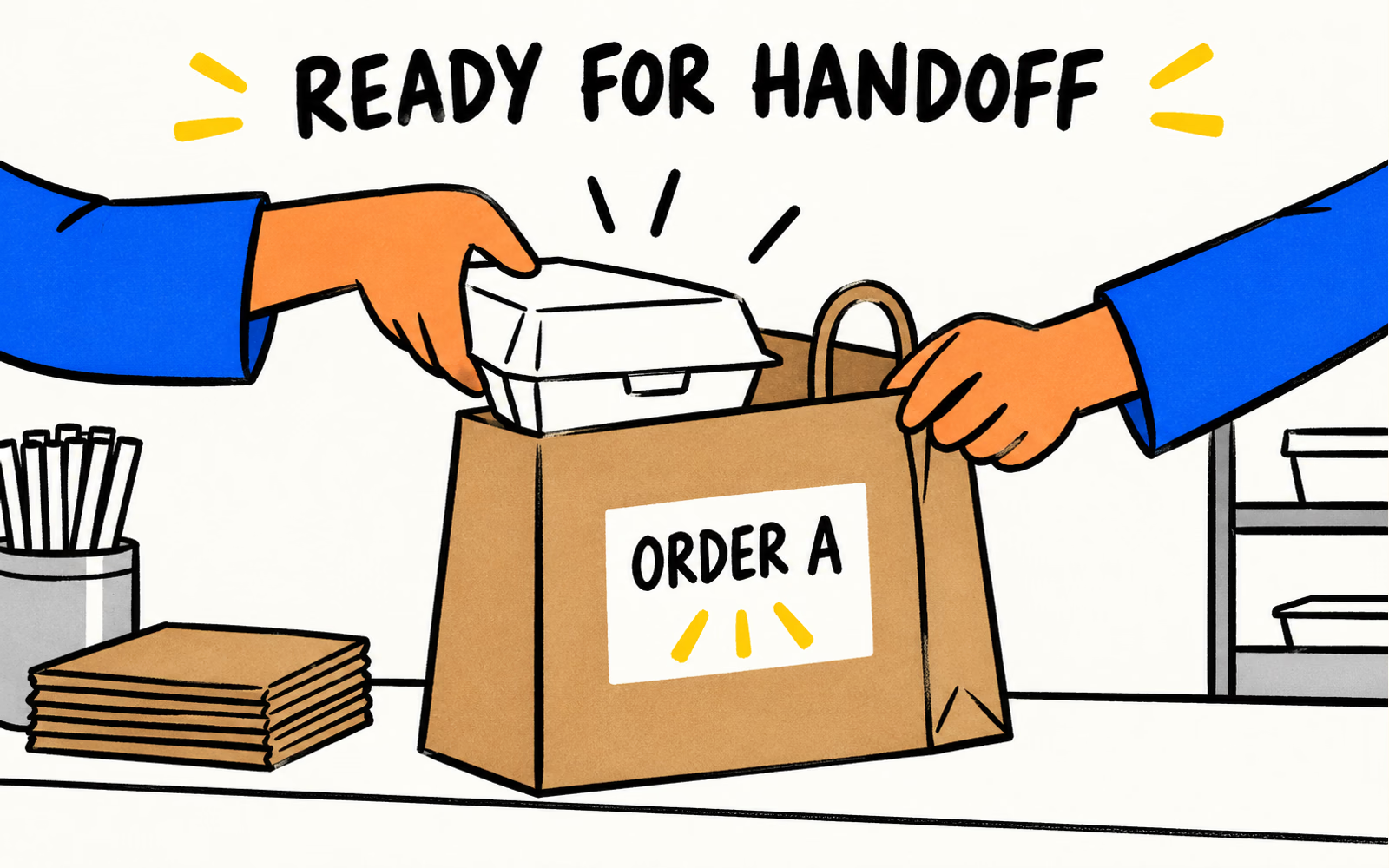
Choose a representative order from your menu and lay out everything that leaves the counter. Include the main dish, sauces, side containers, utensils when supplied, and the information customers need. A box that fits the main portion may still produce an awkward handoff when the rest of the order is added.
Compare the orders your team actually packs
Consider a single meal, a two-person order, and a mixed order with a separate side. Record the number of containers, their filled dimensions and weight, and how they are arranged in the bag. The goal is to identify repeatable packing combinations rather than force every order into one format.
Also describe the journey: immediate counter pickup, collection by a delivery driver, or another handoff. Record the expected holding and handling conditions for supplier review. Appearance alone cannot establish whether a proposed construction is suitable for them.
Try the full handoff
- Pack the actual proposed combination, including separate extras.
- Check how containers sit and whether the bag closes as intended.
- Check whether the order label remains visible after packing.
- Have someone carry and open the order in the intended way.
- Record what needs a different arrangement or a different component.
Match each component to its role
Separate food containment, carrying, and identification in the brief. The same printed motif can connect these roles visually, but it does not make the materials interchangeable.
| Component | Its job | What to confirm |
|---|---|---|
| Main food container | Hold the intended portion | Filled dimensions, construction, closure, contact and handling conditions |
| Separate side container | Keep a distinct part of the order organized | Fit, position, closure, and how it travels with the main container |
| Carry bag | Group the complete takeaway order | Packed arrangement, total weight, loading method, and carrying use |
| Order label | Identify the correct handoff | Readable information, suitable application surface, and placement |
Evaluate custom takeout boxes, paper bags, and labels against these jobs. The appropriate combination depends on the actual order and confirmed specifications.
Keep presentation paper in its proper role
A decorative sheet should not be assumed suitable for direct food contact, grease handling, or a particular temperature. Ask which material is proposed and what its stated use covers. The paper comparison guide helps organize that discussion.
Coordinate print without adding unnecessary parts
Pick a visual anchor—a clear name, a compact symbol, or one recognizable color—and decide where it should appear. For a fictional restaurant called Corner Kitchen, the carry bag might show the name prominently while a small box panel repeats the symbol. The order label stays focused on identifying the order.
Protect the information hierarchy
Keep the brand mark separate from variable order details. A team member should be able to find the pickup identifier quickly without searching through a patterned surface. Position artwork with the proposed folds, handles, closures, and label area in mind.
Before adding another insert or sticker, name its job. If it repeats information already on the bag and creates another packing step, try removing it from the prototype. If it supplies something useful—such as confirmed reheating information specific to the meal—check the wording and keep it easy to find.
Make the sequence repeatable
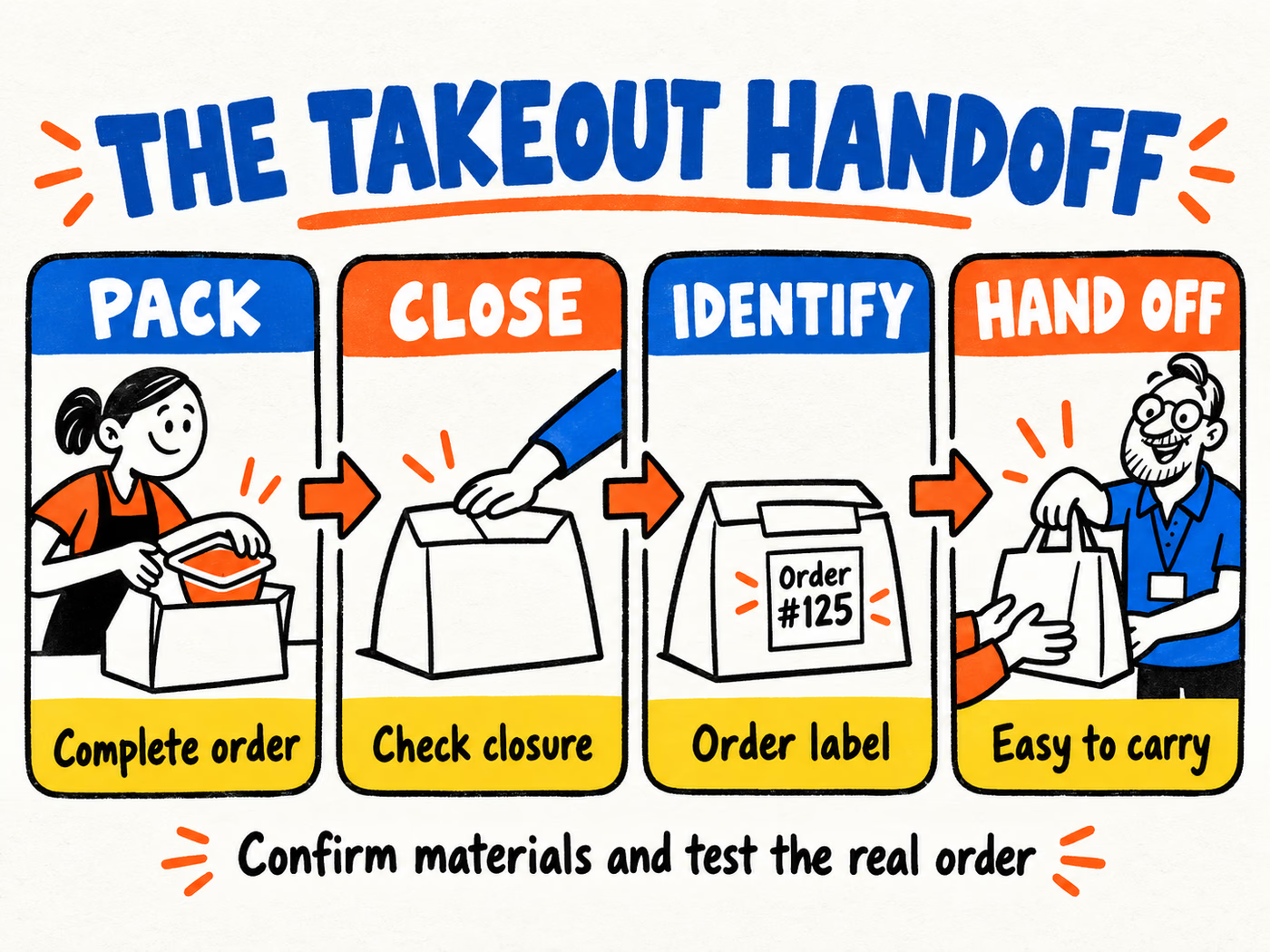
Write a short packing sequence and try it during a representative service run. Check the filled container, close it in the intended way, identify the order, and arrange it for handoff. Record any adhesion, closure, carrying, or readability questions that need further testing; this sequence does not establish leak resistance or food preservation.
Prepare a restaurant packaging quote
Send a brief that describes both the contents and the operation. Include photos or a simple sketch of the packed arrangement, filled component dimensions, quantities by format, and the intended food contact and handling conditions. Distinguish a food container from the bag that carries it.
For box fit, use the measurement guide to organize dimension labels, then confirm the conventions for the exact takeout format with the supplier. Use the artwork guide to prepare files after the construction and print areas are confirmed.
List artwork versions and quantities separately. A shared restaurant identity can be printed consistently while variable order details are added during service. Ask what the quote includes, which samples or approvals are required, and what remains pending before production.
A clear order.
A recognizable handoff.
Planning packaging for your food business? Tell us what you are packing, its finished dimensions, intended contact and handling conditions, quantities, and delivery ZIP.
Planning references
- BrandYourPack: Tissue, Greaseproof & Wrapping Paper.
- How to Measure a Mailer Box.
- Packaging Artwork Guide.
Reviewed October 6, 2026. Original restaurant planning concepts; illustrations are not evidence of manufactured products or completed performance tests.