
Burger Packaging Ideas: Match the Box to the Finished Order
Measure the finished burger and complete order. Compare individual and combined arrangements before coordinating boxes, exterior labels, and carrying bags.
Burger packaging ideas should match the finished burger and the complete order. Measure width and height including toppings, compare separate and combined presentations, then review the actual filled pack through your intended handoff. Coordinate exterior branding after fit and material use are confirmed.
A taller burger is not simply the same order with more filling. It may change the usable space, closure, and carrying arrangement you need to evaluate.
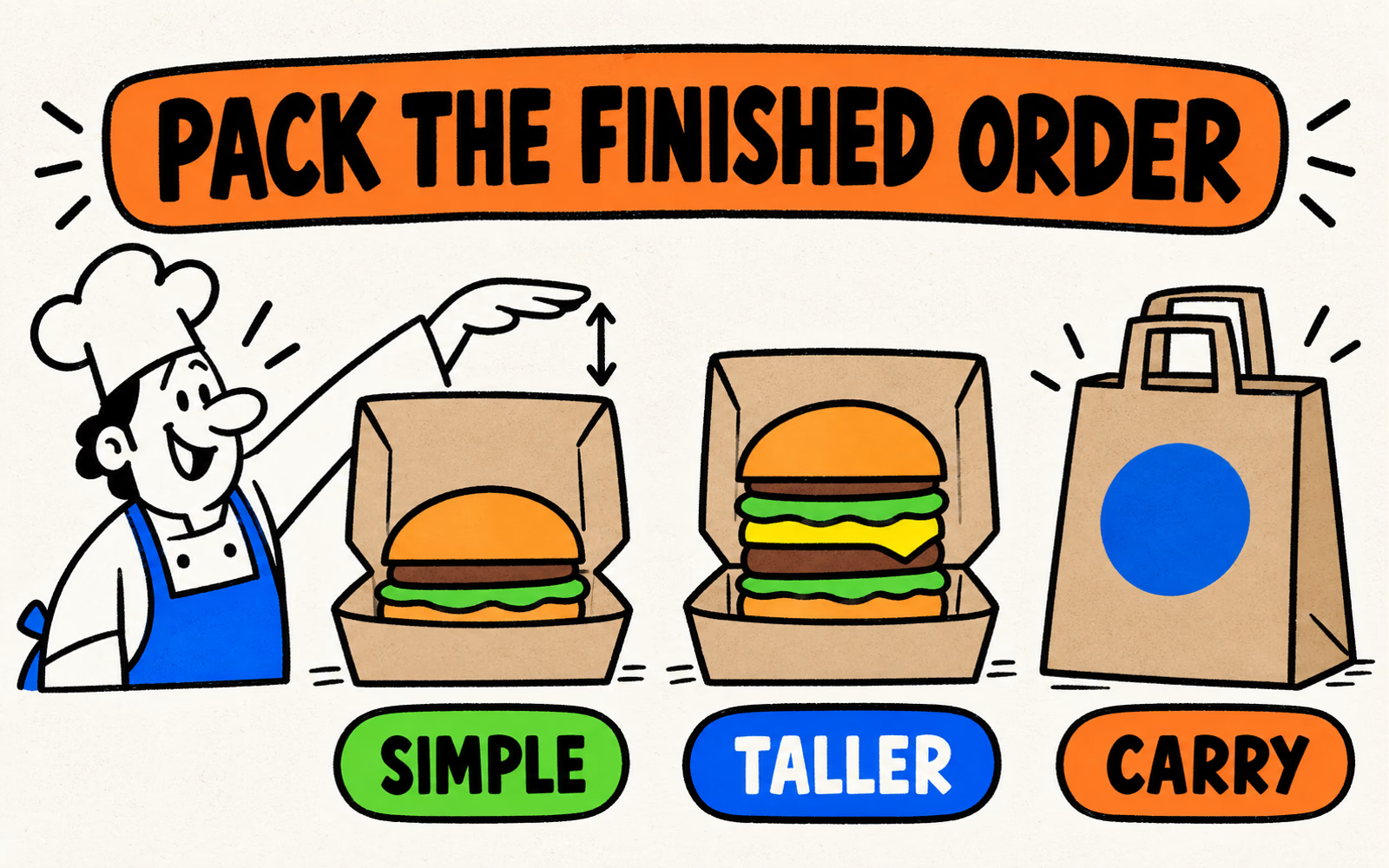
Measure the finished burger and order
Measure the assembled burger in its normal packing condition. Include the widest part, total height, projecting toppings, and any proposed wrap or liner. Record variation between menu items instead of using the bun diameter as the whole specification.
Include everything that travels together
List sides, sauces, cutlery, napkins, and drinks that form the order. Identify which have their own pack and which share carrying space. The complete order’s footprint and weight matter when you evaluate the outer bag.
| Record | What to include | Why it helps |
|---|---|---|
| Burger envelope | Finished width, depth, height, projecting toppings | Frames usable-space and closure questions |
| Contact arrangement | Proposed liner or wrap and actual contact surfaces | Defines the material-use review |
| Other items | Side and sauce packs, utensils, drinks | Shows the complete order rather than one carton |
| Carrying load | Completed arrangement and packed weight | Supports the outer-bag review |
The box measurement guide explains internal versus external space. Its measurement method does not establish that a mailer structure is suitable for your burger.
Compare individual and combined presentations
Begin with two arrangements to evaluate: a burger in its own proposed pack with separately packed sides, and a combined presentation whose actual construction is confirmed. Keep the contents and intended journey the same when comparing them.
A dedicated burger pack
Review how the finished burger rests, how the lid closes, and how the customer removes it. Include any agreed contact layer. Separate side packs then need their own placement within the complete carrying arrangement.
A combined order
A larger arrangement can organize several items together, but the drawing does not establish that suitable compartments or supports are available. Ask about the actual proposed structure and try the full order in that reference.
Compare packing work, movement, closure access, and opening. Record the route and duration you actually evaluate. Appearance alone cannot show heat retention, ventilation performance, or grease behavior.
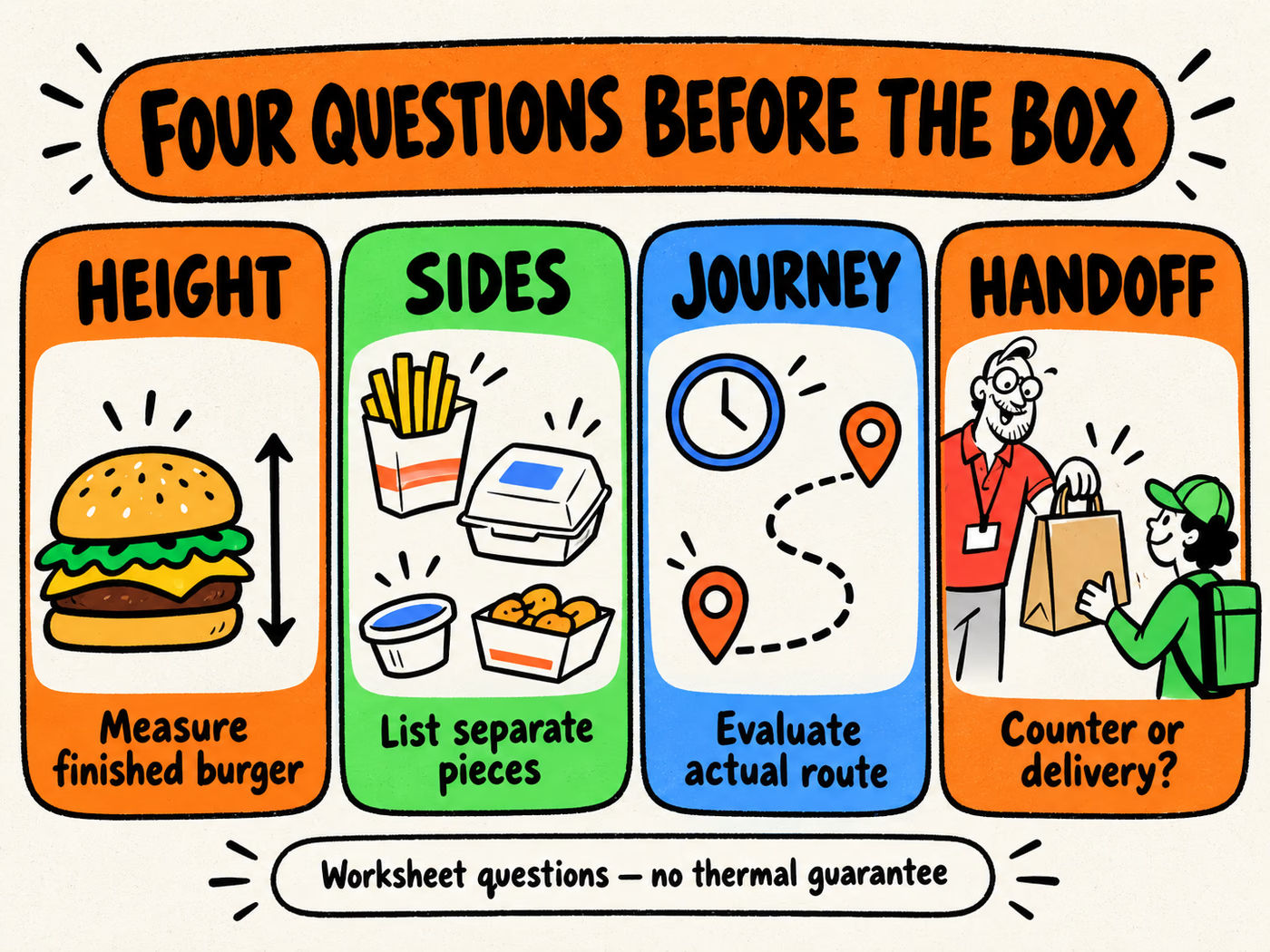
Coordinate boxes, labels, and bags
Choose one recognizable exterior identifier and decide where it belongs. The burger carton can carry the main mark; an exterior label can identify the order; the bag can connect the full takeout kit.
Keep brand and order information distinct
Give staff a clear place to check the order against the packed contents. A dense decorative pattern should not make a changing identifier difficult to find. Review whether any applied label crosses a closure or obscures information needed by the customer.
Evaluate burger boxes, labels, and paper bags as proposed components. Ask about the actual contact and carrying specifications, then review the assembled pack.
The takeout packaging guide covers a coordinated restaurant range. For mobile service, the food truck plan adds storage and service-window questions.
Prepare a practical use-test and quote brief
Write a test plan around your own service. Identify the sample pack, actual menu items, packing condition, closure, route, handoff, and observations to record. Use the fullest or tallest normal order as one of the arrangements to evaluate.
Record what happened
- Did the closure touch or compress the finished burger?
- Did any item move or interfere with another pack?
- Was the complete order easy to identify and open?
- What contact or handling questions remain unresolved?
- Which sample reference and conditions produced those observations?
Send that record with dimensions, quantities by design, and delivery ZIP. Keep performance claims tied to actual evidence and the proposed reference; the concepts above are not test results.
Fit the whole order.
Planning packaging for your food business? Tell us what you are packing, its finished dimensions, intended contact and handling conditions, quantities, and delivery ZIP.
Planning references
- BrandYourPack: How to Measure a Mailer Box.
- Tissue, Greaseproof, and Wrapping Paper.
- Food Truck Packaging.
Reviewed October 6, 2026. Original order concepts; material use, fit, and handling performance require evaluation with the actual product and pack.