
Brownie Packaging Ideas: Protect the Surface and Present the Assortment
Give decorated brownies their own measured space. Compare a single layer and separate portions, then specify contact materials and exterior branding.
Brownie packaging ideas should start with the finished portion and its surface. Compare a single-layer assortment with individually separated pieces, measure decoration height, and choose the food-contact layer separately from the printed exterior. Review the actual filled pack; a photograph cannot establish material suitability or shelf life.
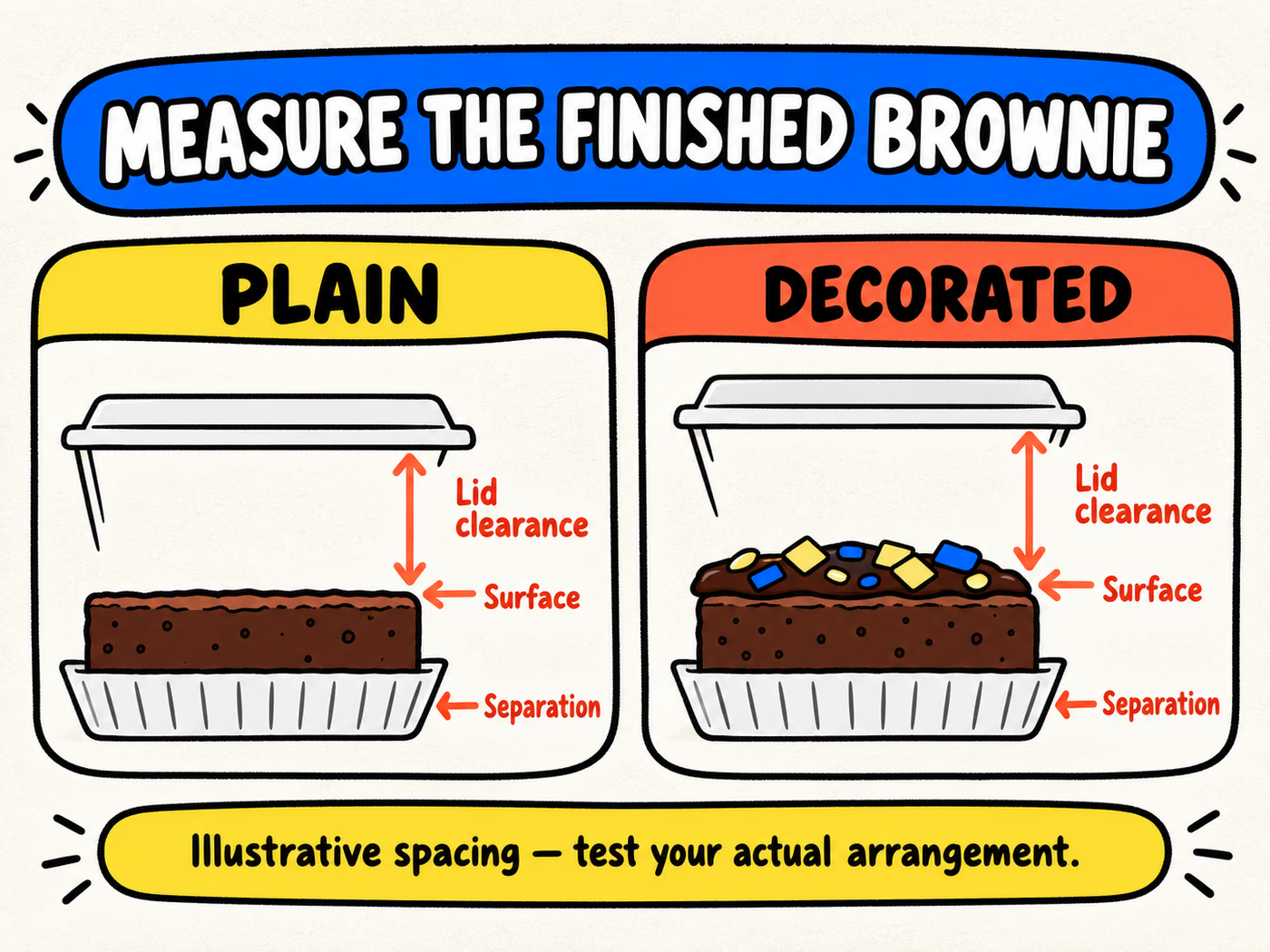
A plain square and a brownie with a tall topping may share a recipe base but need different packaging reviews. Give the finished product room before giving the box a design.
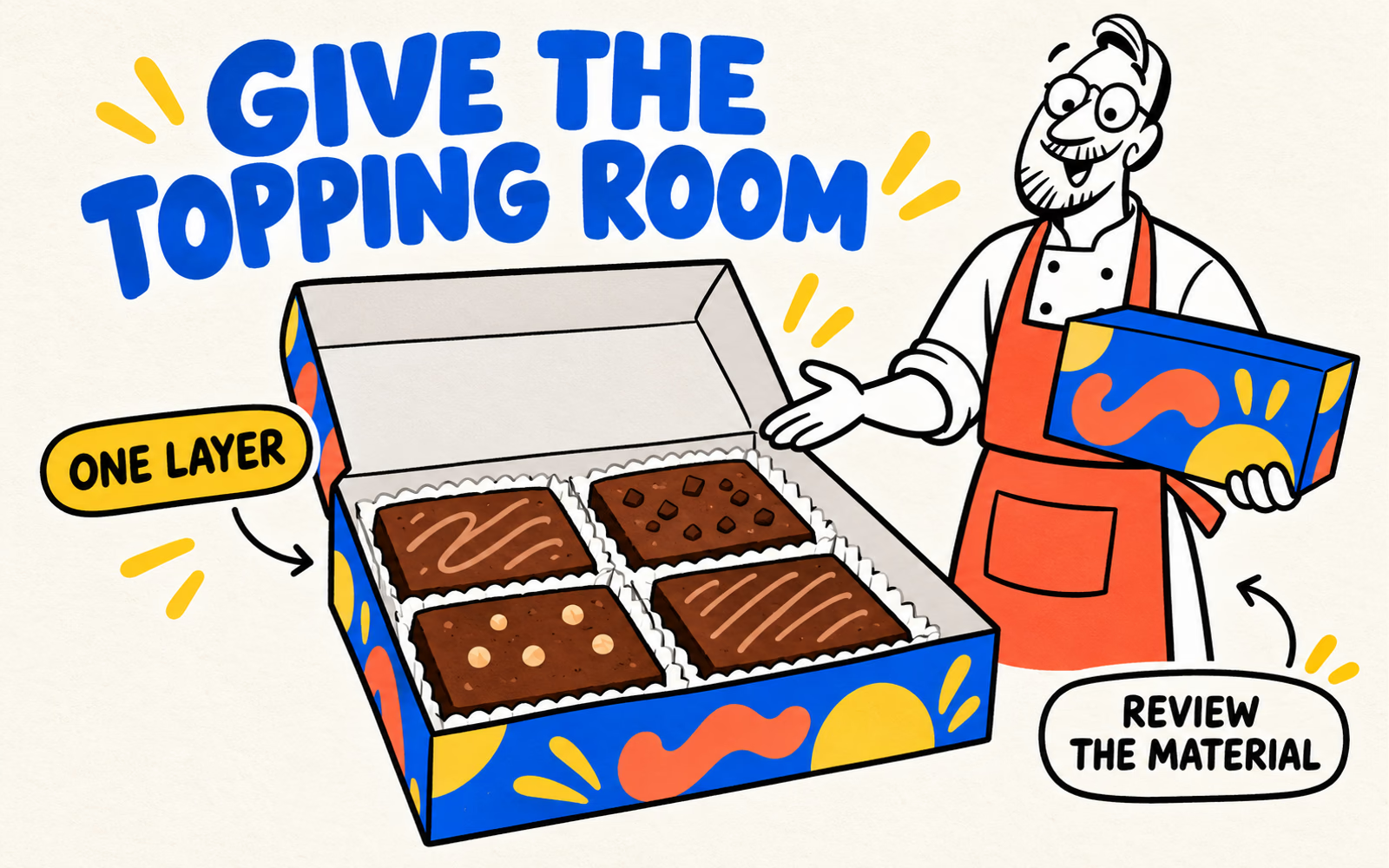
Define the brownie portion and decoration
List the portions you sell: an individual square, several small pieces, a mixed gift assortment, or a larger slab. Measure them after cutting and decorating, in the condition used for packing.
Describe the surface as well as the shape
Note whether the top is plain, covered with a soft finish, or decorated above the base. Include any decoration that extends sideways. These observations tell a supplier what needs review without turning a visual impression into a performance claim.
Consider the largest normal piece and the fullest intended mix. Record variation in cutting and topping so a packaging sample is not approved around an unusually neat portion.
Start with a finished-product record
- Portion width, length, and total decorated height.
- Surface and edges that may touch the pack.
- Number and arrangement of pieces per order.
- Packing condition, handoff method, and transport assumptions.
Compare single-layer and separated arrangements
A single layer makes the assortment easy to see and gives each portion its own position. It still needs review for movement, contact between pieces, and clearance below the lid. The drawing shows a concept rather than a tested support system.
One layer with space between pieces
Arrange the finished assortment and check the usable box interior. Include the contact layer, any proposed supports, and room to remove a portion. Avoid assuming that a nominal piece count means every combination fits.
Individually separated portions
A proposed individual liner or wrap can help organize the pack, but its material and specific use must be confirmed. Review whether it touches the top, interferes with decoration, or makes opening inconvenient. Separation does not automatically provide protection during transport.
| Arrangement | Presentation | Review before approval |
|---|---|---|
| Shared single layer | The assortment is visible together | Movement, gaps, removal, and lid clearance |
| Separate lined positions | Each portion has a defined place | Actual liner use, contact, and completed fit |
| Individually wrapped pieces | Each portion is opened separately | Material specification, surface contact, and packing work |
Stacking changes which surfaces carry the load. Treat a stacked arrangement as a separate packing proposal that needs evaluation with the actual product and materials.
Choose printed components outside the food-contact layer
Separate the layer touching the brownie from the pieces communicating your brand. A coordinated outer carton, exterior label, and card can carry the identity while the contact specification is reviewed on its own.
Keep the information useful
Give the assortment a clear name and identify its contents using verified information. Any product-specific care, ingredients, or other required information needs its own review; decorative artwork cannot substitute for that process.
Evaluate folding cartons, exterior labels, and insert cards for their intended roles. Position cards outside the food-contact area and review whether they can move during handling.
For a wider collection, connect the brownie identity with your cookie packaging system or seasonal gift collection. Shared graphics can connect the range while each food format retains its own packing requirements.
Prepare the dimensions and handling brief
Use the box measurement guide to describe usable space, while confirming that the proposed structure is appropriate for your food use. Supply finished-product dimensions, the full arrangement, contact-material requirements, and the intended closure and carrying method.
Include quantities by assortment and artwork. Ask which material details and sample evaluations remain pending, then review the filled pack through normal assembly, closure, handoff, and opening.
Keep observations specific: a topping touched the lid, one piece shifted, or a liner made removal difficult. Those notes support a useful revision. Do not assign a shelf-life claim from the box style or an attractive photograph.
Give every portion its place.
Planning packaging for your food business? Tell us what you are packing, its finished dimensions, intended contact and handling conditions, quantities, and delivery ZIP.
Planning references
Reviewed October 6, 2026. Original arrangement concepts; contact suitability, protection, and preservation are not established by the illustrations.