
Chipotle Packaging: Lessons for a Consistent Takeout Brand
Use a documented Chipotle example to separate containment, order identification, and carrying. Build a practical handoff system with your own brand identity.
Chipotle packaging is a useful starting point for studying how a recognizable restaurant identity travels across a takeout order. Use dated company documentation to distinguish the food container from the carrying bag, then build your own system for containment, order identification, and handoff. A visible package does not establish its heat, grease, leakage, or handling performance, and it is not a specification for your business.
The customer receives one order. The packing team manages several different jobs. Separating those jobs makes the brand easier to apply and the handoff easier to review.
Identify the documented packaging layers
Chipotle’s 2023 Sustainability Report, page 55, provides a dated company example: its packaging discussion identifies carry-out bags and bowls, and the accompanying photographs show several serving formats. Use that source to understand the variety of layers rather than treating one image as a complete current packaging catalog.
The report describes materials used during its reporting period. Those statements belong to that company and date; they do not establish the composition of a package ordered elsewhere or prove what every location uses today.
Separate observation from specification
A useful observation is that the bowl or wrap and the exterior bag serve different positions in the order. The practical inference for an independent restaurant is to assign a job to each component before designing it. That inference is our planning advice, not a documented Chipotle operating procedure.
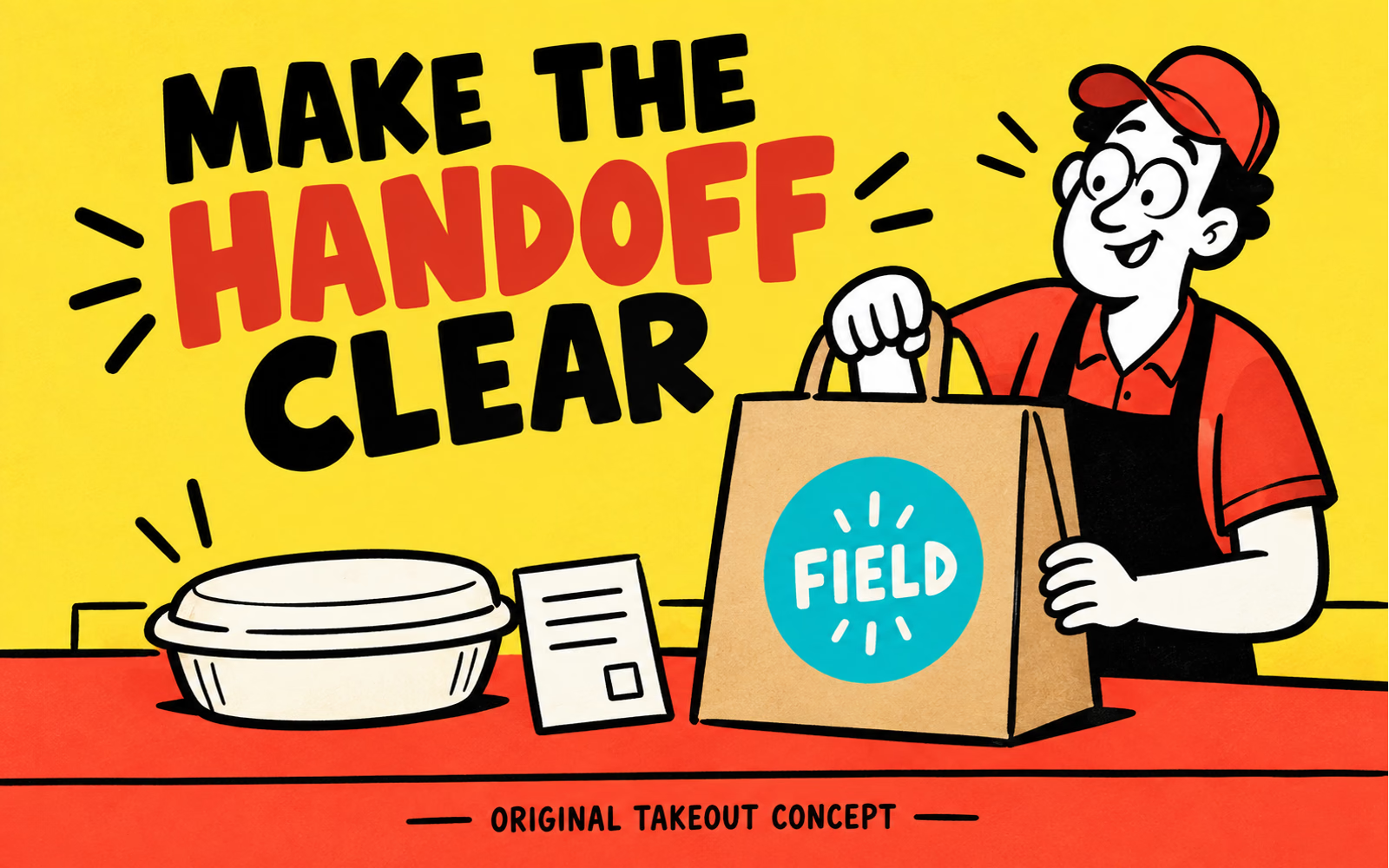
The illustration uses a fictional Field identity, a neutral closed container, and an empty label. It copies no Chipotle logo or packaging text and does not show an actual customer order.
Separate container, label, and carrying bag
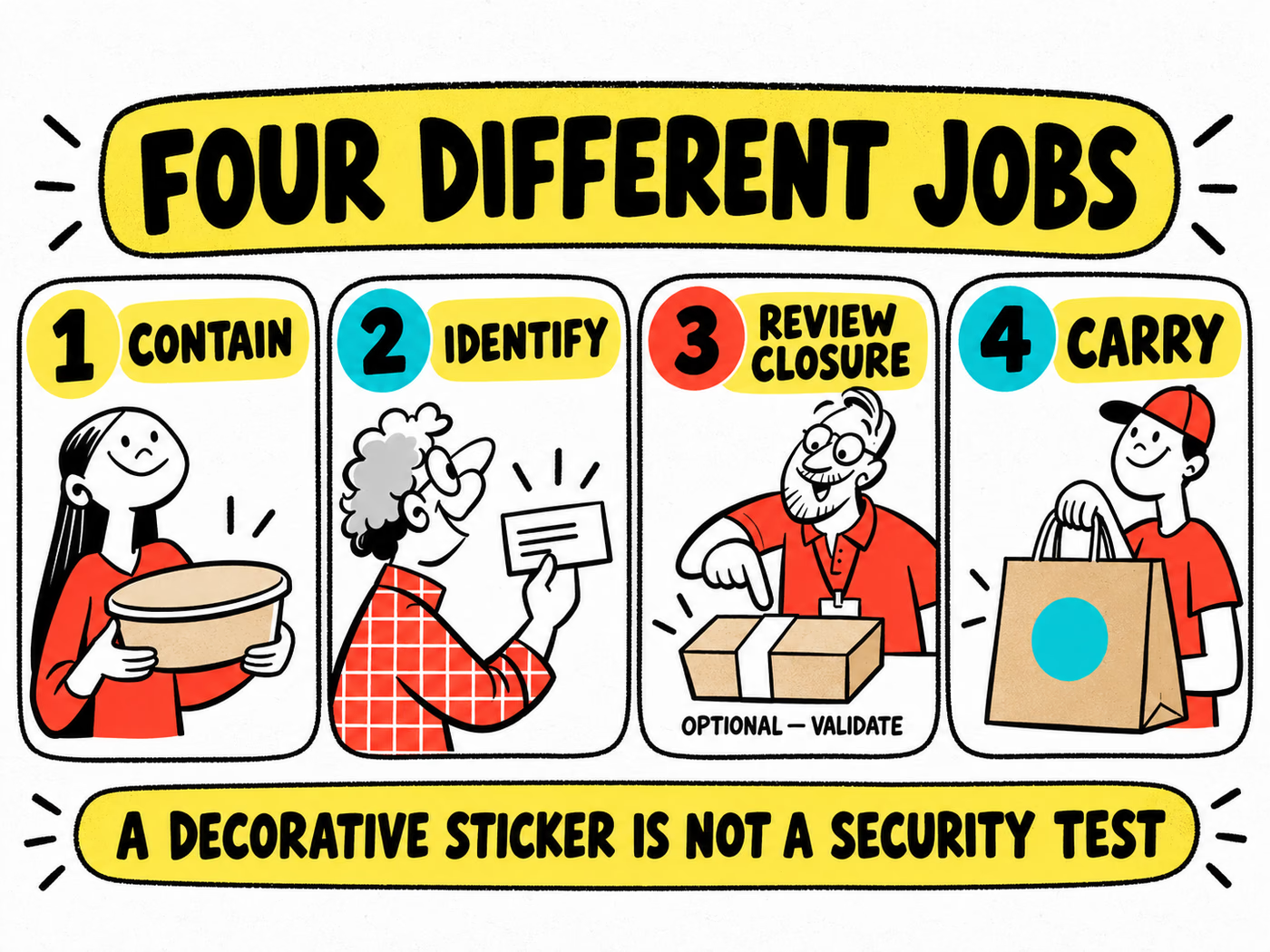
Draw the order as a set of layers. Ask what contains the food, which information identifies the order, what closes each piece, and how the complete arrangement is carried.
| Layer | Planning job | What needs confirmation |
|---|---|---|
| Primary container | Hold the intended item | Contact, construction, closure, and handling conditions |
| Order label | Identify the correct piece or order | Readable content, position, and application surface |
| Optional closure | Support the agreed closing method | What the closure can establish in actual use |
| Carrying bag | Bring the packed pieces together | Complete load, arrangement, handle, and bag dimensions |
Review closure claims separately
A decorative sticker can carry a logo or close a fold. Its presence alone does not establish tamper evidence, leak resistance, or a security test. If the workflow requires a particular closure function, describe it and request an appropriate specification and review.
Use takeout boxes, labels, and paper bags as starting points for a quote. The neutral bowl in this teaching graphic is not an offer of every illustrated container.
Handle order identification consistently
Choose an identification method that connects each packed item to the correct handoff. Decide which information belongs on the outer bag and which is needed on an individual piece. Use only the details necessary for the actual workflow.
Try a blank handoff exercise
Set up two fictional orders with different item counts. Leave the teaching labels blank; for the real exercise, use your own approved order references. Ask a staff member to match the packed pieces to the handoff record and note any ambiguity.
Review the location of the label after the package is closed. Check whether folds, handles, stacking, or a nearby logo make the information hard to find. Keep the order identifier distinct from a decorative message.
Define who confirms completeness before handoff and what happens when the bag contains more than one container. This is a proposed review routine, not a claim about Chipotle’s internal process.
Build on takeout system planning and meal-prep packaging planning when your menu changes the grouping or labeling needs.
Build your own takeout packaging brief
List the food item as served, its finished dimensions, intended contact conditions, and the complete carrying arrangement. Include the actual closure, label placement, quantities by component, artwork versions, and delivery ZIP.
For an outer bag, record the load with all proposed containers and accessories. Use the packed-arrangement measurement method to keep units and orientation clear; a mailer-box convention is not automatically the specification for a food container or bag.
If adding paper, consult the tissue, greaseproof, and wrapping-paper guide. Appearance does not establish suitability for a particular food-contact or handling job.
- Identify which component does each job.
- Separate confirmed requirements from open questions.
- Request the relevant material and construction details.
- Agree on a sample or review appropriate to the intended use.
- Retain the approved artwork and handoff arrangement.
Compare the burger-and-side case for a different grouping exercise. Keep the visual identity your own and the performance questions tied to the actual specification.