
eBay Packaging Ideas: Brand the Parcel Without Complicating Dispatch
Keep a consistent parcel identity across a varied product range. Select the actual pack by item needs and leave shipping information and closing areas clear.
Useful eBay packaging ideas combine the pack your actual item needs with a simple identity that works across parcel sizes. Check current eBay and selected-carrier guidance, allow for the necessary packing arrangement, and keep shipping information readable. Reuse a consistent card or brand element where it fits, while treating the closure and protective construction as separate specifications.
A seller with books, clothing, and rigid accessories does not need every order to look like the same box. The aim is a recognizable dispatch system that can adapt to the item.

Check current shipping guidance for your products
eBay’s Packing your sold items guide, reviewed on October 6, 2026, directs sellers to allow space for packing material, limit movement, close the box appropriately, and label it clearly with a return address. It also addresses reused boxes and irregularly shaped items.
Use the current page for its full instructions and the selected carrier’s guidance for your actual shipment. Avoid treating a photograph of another seller’s parcel as an approved specification for your merchandise.
Describe the actual item
Record what needs to be packed, its finished dimensions, weight, vulnerable features, and intended route. Include the support or cushioning arrangement before selecting an outer reference. The box around a rigid object and the pack around a soft garment solve different problems.
Use the complete-arrangement measurement guide to organize dimensions. A branded exterior does not demonstrate the result of handling or transport; review the actual proposed pack.
Keep a consistent identity across different parcel sizes
Choose a small set of elements that can travel across the range: a simple mark, a concise card, and a coordinated tape design where suitable. Let the product determine the outer construction, then adapt those elements to the available areas.
| Reference | Product-specific decision | Shared brand element |
|---|---|---|
| Compact parcel | Fit around the full packed item | Concise mark or card |
| Larger box | Support, weight and closing needs | Adapted tape or exterior artwork |
| Different outer format | Actual construction and handling | Same message system in the appropriate area |
Keep the printed card useful. A brief thank-you or current help information can serve the opening without adding several repeated messages. Follow the insert planning exercise and avoid inventing discounts, guarantees, or off-platform directions as decorative examples.
Separate decoration from closing
A tape design can coordinate the look, but its appearance does not establish that it is suitable for closing a particular box. Compare the jobs with tape versus stickers, and specify the actual closing requirement separately.
Leave shipping information clear
Reserve a readable area for the actual shipping information. Keep optional marks and decorative pieces away from the address and machine-readable parts of the label. Apply the selected service’s current instructions for label placement and any covering.
On a reused box, deal with old shipping information before adding new branding. eBay’s packing page addresses covering previous labels and marking out previous addresses. Inspect the actual parcel for conflicting information rather than simply placing a new card over a small part of it.
Check before the label is applied
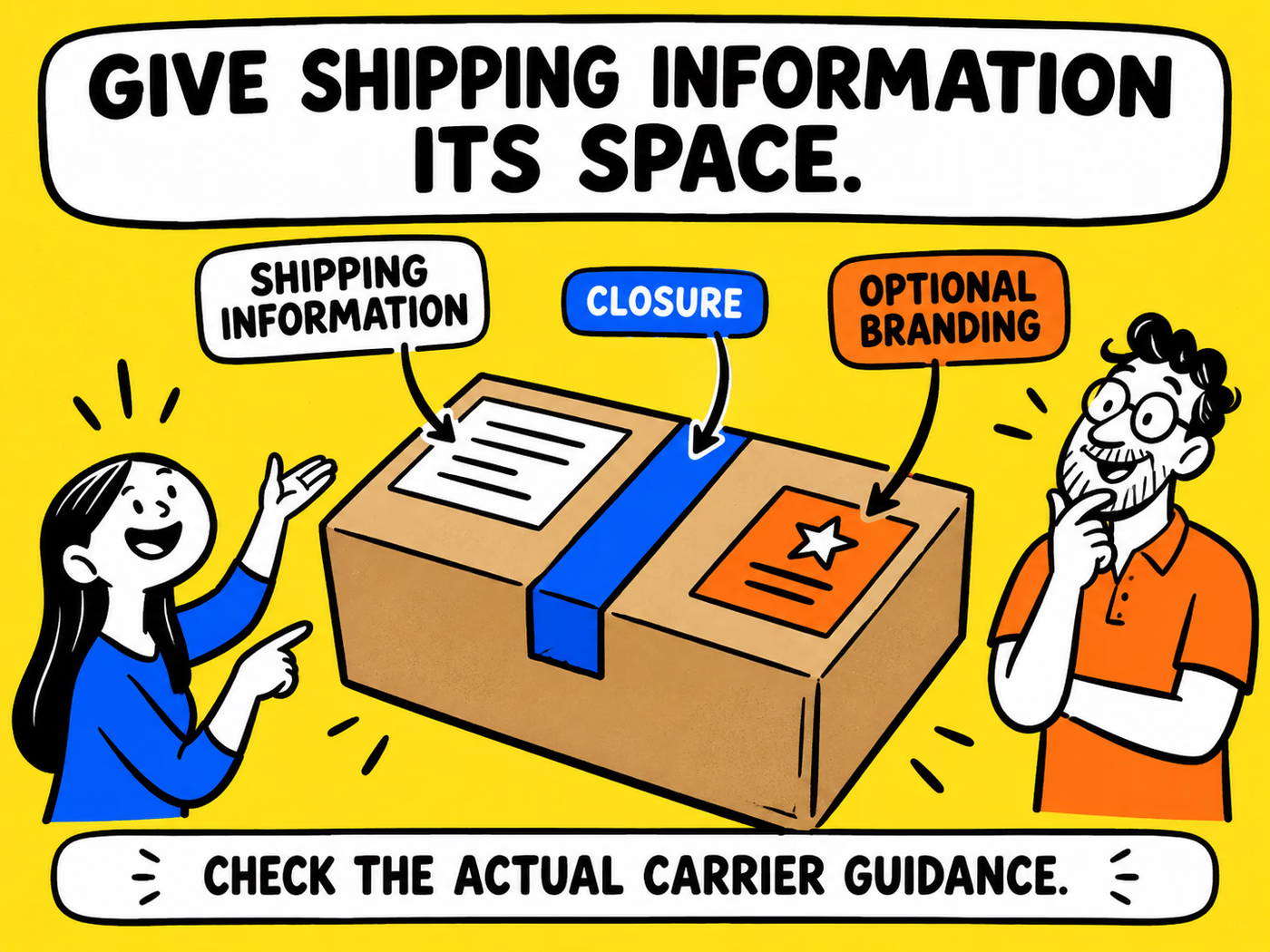
Review where the closing seam, tape, shipping label, and optional mark will sit. A large illustration may make a crowded layout appear workable; the real label and actual box should guide the decision.
The diagram below keeps the three jobs separate. It contains no address, barcode, QR code, numeric placement allowance, or carrier-specific approval. Review the final parcel against the current service guidance, then keep its label area free of additional presentation elements.
Build a flexible packing supply list
Group supplies by their actual reference and job. Count outer packs, protective components, closing materials, labels, and cards separately. Note which product arrangements use each reference and where a different construction is needed.
Keep an active packing sheet for the common order types, with photos of the complete arrangements. If a new product falls outside that range, review it before adding it to the standard dispatch routine.
Request quantities by reference
Explore shipping boxes, packaging tape, and insert cards with the actual intended use. Specify material or performance questions instead of inferring them from the concept drawings.
List artwork versions and quantities independently, even when they share one visual identity. Use the confirmed artwork template for each construction. Send complete packed dimensions, intended handling, closing requirements, quantities, and delivery ZIP for the project review.