
Faire Wholesale Packaging: From Individual Product to Retailer Delivery
Separate the individual product pack, commercial grouping and outer shipment. Keep identifiers and quantity units clear from the listing to retailer receiving.
Faire wholesale packaging should distinguish the product a retailer sells, the grouped quantity they order and the parcel that carries the shipment. Confirm the actual listing, order and buyer requirements before choosing each level. Keep product identifiers, quantities and measurement units consistent. A case-size setting does not by itself specify the outer carton, retail presentation or a retailer’s receiving conditions.
A beautifully printed unit box answers only part of a wholesale brief. The retailer also needs to know what was ordered, how the units are grouped and what arrives at receiving.

Check the buyer and platform requirements
Start with the actual product listing and purchase record. Faire’s case-size explanation, reviewed October 6, 2026, says brands set case requirements and that they vary. The product page shows the case size; for products with options, the page describes meeting that requirement for each option.
That information concerns ordering quantities. Confirm the physical grouping, packing and identification separately. Do not treat a case size copied from another brand as a standard carton count for your own products.
Ask about the retailer’s receiving context
Record any buyer-specific instructions you have actually received: how units should be identified, whether grouped quantities need a particular presentation and what information receiving staff need. Keep the source and version of those instructions in the project record.
This guide does not claim that every retailer or Faire requires a particular barcode, label layout or shelf-ready format. If a buyer requests such features, obtain the actual specification and clarify which packaging level it applies to before creating artwork.
Separate unit packaging, case packs, and shipping cartons
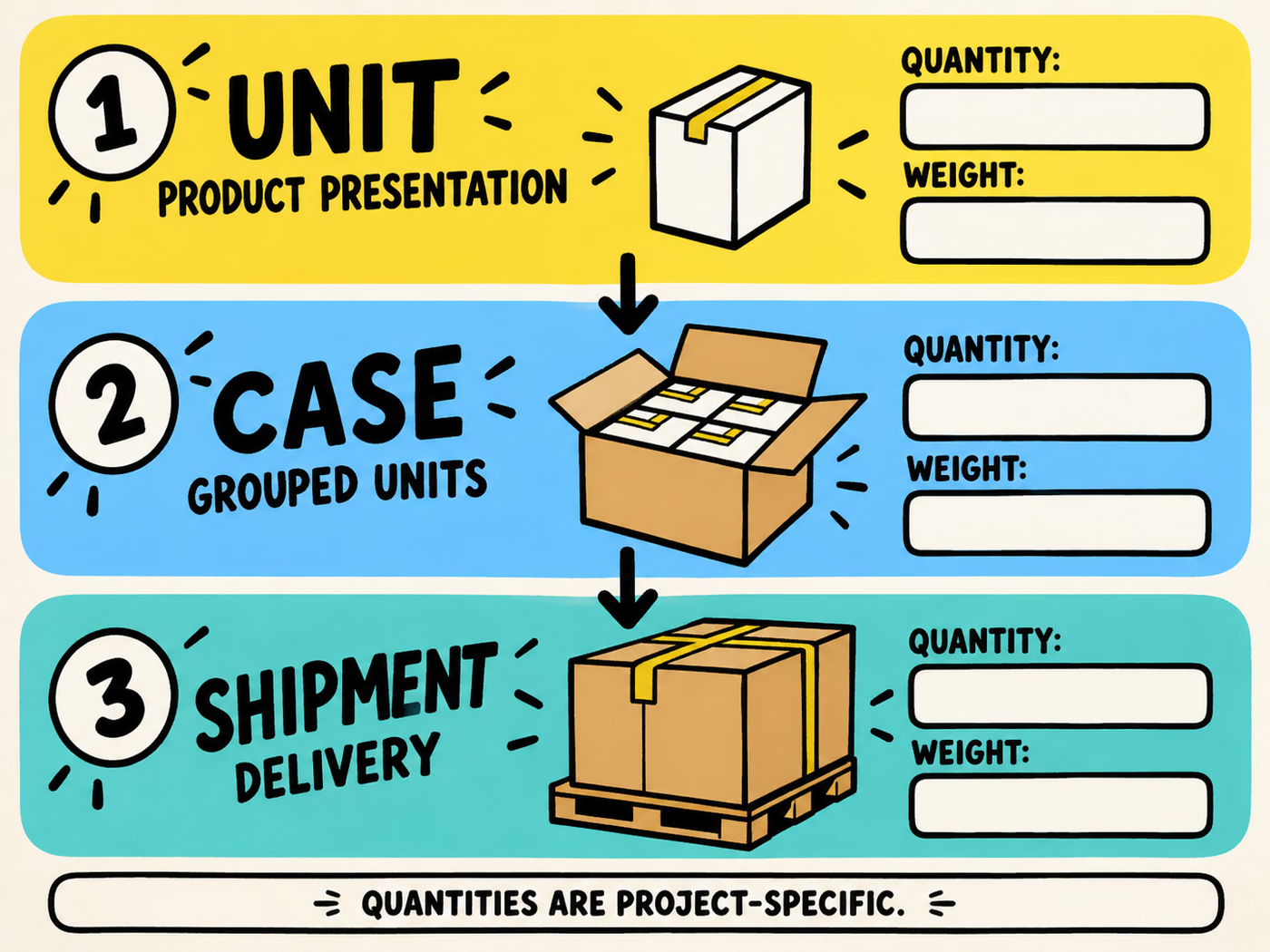
Name each level in the brief. The unit pack presents one sellable product. A case pack groups a confirmed number of units. The shipment carton accommodates the complete arrangement and its proposed protection for delivery. Depending on the project, these jobs may use separate components or a reviewed combined structure.
| Level | Information to record | Question to resolve |
|---|---|---|
| Unit | Product version, individual pack and usable dimensions | What does the retailer receive as one sellable item? |
| Case | Unit identifiers, count and grouped arrangement | What quantity is grouped, and how can staff confirm it? |
| Shipment | Complete contents, support, outside dimensions and weight | What exactly does this delivery parcel contain? |
Count without changing the meaning of a unit
In a hypothetical worksheet, one group might contain four individually packed items and an outer carton might hold two such groups. That is an arithmetic illustration only: it does not establish a Faire case rule, recommended quantity or approved configuration.
Keep the physical arrangement beside the count. A loose group, a sleeve and a separate inner carton can occupy different space even when they contain the same number of items. Use the complete-arrangement measurement guide and mark whether each dimension is internal or external.
Keep product identification consistent
Use the same approved product reference across the listing, packing sheet and required labels. Where color, size or another variant matters, make that distinction visible in the appropriate operational record. Avoid letting a decorative collection name replace the identifier receiving staff need.
Write quantities with their meaning: individual units, groups or cartons. “Two” beside a product name is ambiguous if one team reads it as units and another reads it as cases. Include the count of units within each group when that is relevant to the actual order.
Separate product identity from shipment information
A unit’s presentation panel and an outer shipping label perform different jobs. Keep the carrier’s current shipment information clear of additional branding. The parcel information example illustrates that separation without asserting a wholesale label standard.
The images here contain no valid barcode or acceptance seal. Generate and review any required codes from the actual approved data and specification; a placeholder drawing is not a functional identifier.
Prepare a retailer-ready packaging brief
Build one worksheet with a section for each level. Include product versions, unit counts, the grouped arrangement, proposed support, dimensions with units and the finished parcel weight. Attach the buyer’s actual instructions and photographs of the proposed packed samples.
Walk through unpacking from the outer carton to the individual products. Ask whether a receiver can reconcile the delivery with the packing record and identify each variant without guessing. Record any damaged, crowded or confusing areas for the relevant review.
Quote each packaging reference clearly
Explore folding cartons for unit presentation, shipping boxes for the proposed outer pack and labels for confirmed identification needs. Their final suitability depends on the actual project specification.
List quantities and artwork versions separately for each reference. Use the approved production layout and keep retailer requirements alongside it. “Retailer-ready” in the brief should describe agreed receiving needs, not imply blanket approval from a platform or every store.