
Jewelry Packaging Ideas: A Coordinated Retail and Gift System
Compare three original jewelry gift identities around the actual piece. Coordinate a box, outer retail bag, and useful card, with supports reviewed separately.
Jewelry packaging ideas work as a coordinated presentation system: a suitable support for the piece, a small product box, a useful printed card, and a retail bag where needed. Compare a modern graphic, a maker-led identity, and a restrained gift treatment around the actual item. Shipping protection requires a separate packing review.
A small piece does not need a crowded presentation. Give the jewelry a clear place, then use the surrounding components to tell one consistent story.
Define your jewelry presentation needs
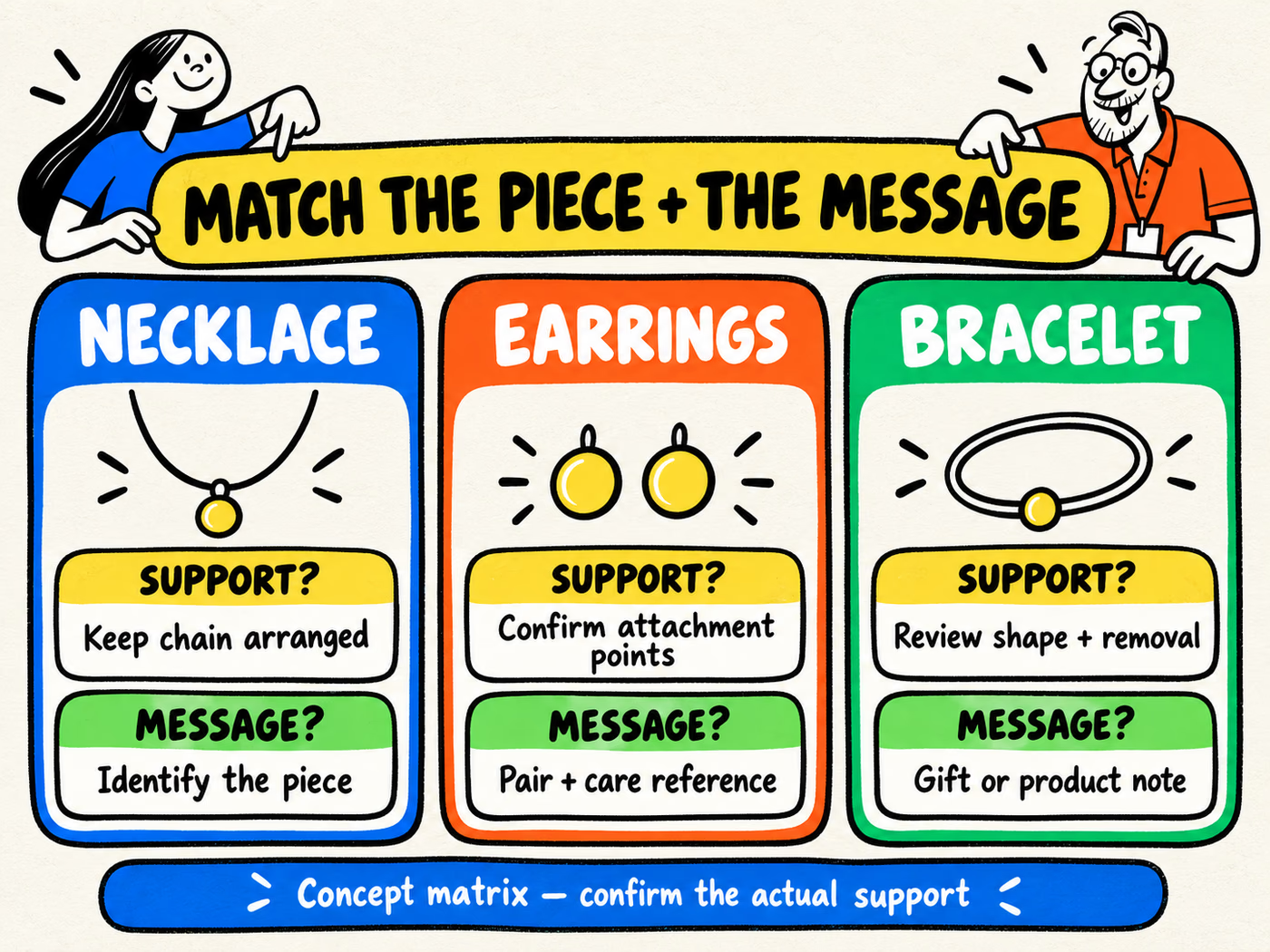
List the pieces you sell and how customers receive them: counter purchase, boutique carryout, gift collection, or mailed order. A necklace, earrings, and a bracelet may share artwork while requiring different supports and usable space.
Describe the actual piece
Record dimensions in the proposed presentation, attachment points, chain length where relevant, and any parts that must remain separated. Include how the customer removes the item. The support should be reviewed for those needs before its graphic is finalized.
Keep a printed information card separate from a structural holding card in your specification. One carries a message; the other may carry the piece. A similar-looking rectangle does not establish that they perform the same job.
For transport, use the Etsy jewelry packaging guide. This article focuses on original retail and gift presentation rather than repeating its shipping checklist.
Compare three original gift systems
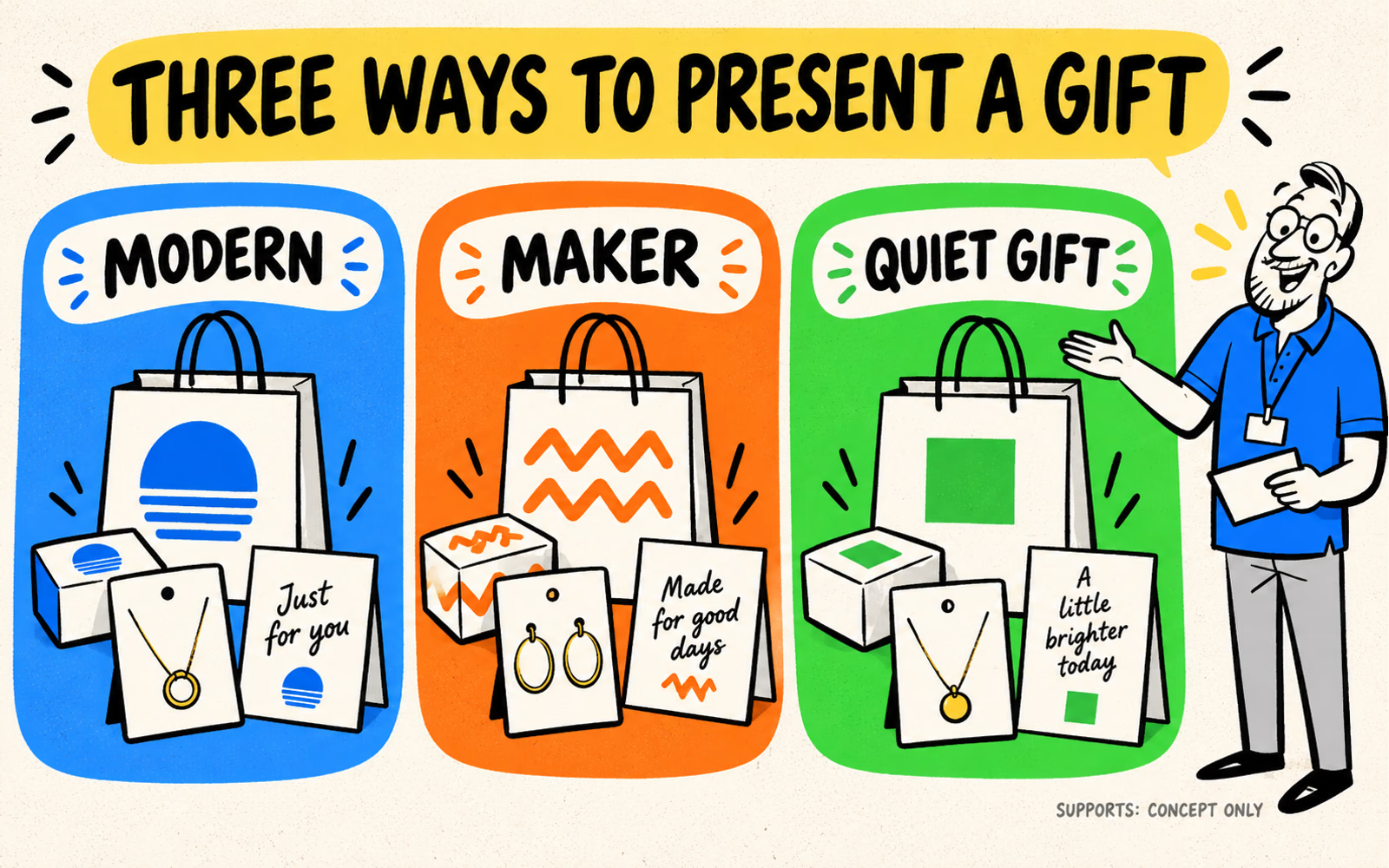
Keep the practical requirements visible while comparing the identity. The three fictional systems show how a box, outer bag, and message card can feel related without making every surface identical.
A modern graphic system
Use one bold blue geometric mark with generous open space. Repeat a compact version on the bag and card, leaving the jewelry itself as the focal point. Try the smallest printed identifier at its finished size.
A maker-led system
A simple orange hand-drawn zigzag gives the range an expressive character. Pair it with an accurate maker story or a short original note. Keep the story specific to your business rather than adding generic claims about craftsmanship.
A restrained gift system
A small green square on a neutral base creates a quieter presentation. A brief card can carry the personal moment, while the box and bag repeat the same identifier. Restraint comes from a limited set of elements rather than an assumed premium material.
| Direction | Identity anchor | Review |
|---|---|---|
| Modern | One strong geometric symbol | Recognition at small printed size |
| Maker-led | Simple hand-drawn motif | Readable detail and accurate story |
| Restrained gift | Compact mark and short note | Clear item identity and deliberate spacing |
Coordinate boxes, bags, and printed cards
Assign one job to each component. The box organizes the presentation; the outer retail bag carries the completed purchase; the card explains the item or adds a message. Review the complete arrangement rather than approving each graphic in isolation.
Keep the message useful
Choose an accurate piece identifier, a concise brand introduction, or product-specific information supplied and approved by your business. Avoid adding generic care instructions that may not apply to the actual metal, finish, or stones.
Evaluate product boxes, retail bags, and printed insert cards for their intended roles. Foam, cushions, magnets, and specialized holding components need their own availability and fit confirmation.
Use the printed insert guide to choose a message job. That printed-card discussion does not establish the construction of a jewelry support.
Specify the components you want reviewed
Send the proposed item arrangement, dimensions, support requirements, box use, carrying needs, and artwork quantities. Include whether the order is a single piece or a gift set, and mark any unresolved attachment or removal questions.
Your presentation brief
- Actual jewelry dimensions in its proposed support.
- How the piece is attached, displayed, and removed.
- Box, bag, and information-card roles.
- Artwork versions and quantities per component.
- Retail, gift, or transport use and delivery ZIP.
Review usable dimensions with the measurement guide and final files with the artwork guide. Presentation approval does not establish anti-tarnish performance or transport protection.
A small piece.
A considered presentation.
Planning your own product boxes? Share the packed-product dimensions, intended use, artwork versions, quantities, and delivery ZIP for a project-specific quote.
Planning references
Reviewed October 6, 2026. Three original graphic concepts; actual supports, closures, materials, and intended use require confirmation.