
Valentine’s Day Bakery Packaging: Match the Box to the Gift
Build the gift around the actual assortment. Use simple base structures, original bold graphics and a clear message, with fit and versions reviewed separately.
Valentine’s Day bakery packaging works best when the box matches the actual gift assortment and serving format. Compare feasible base structures, review height and separation for each set, then coordinate the label and message card. Original graphics can give a rectangular box a seasonal identity without relying on a heart-shaped die-cut. Confirm materials, quantities and print versions before assuming one structure fits every gift.
The recipient notices the message and the treats together. A useful gift brief starts with what is inside, then gives the graphics and card enough space to make that combination clear.
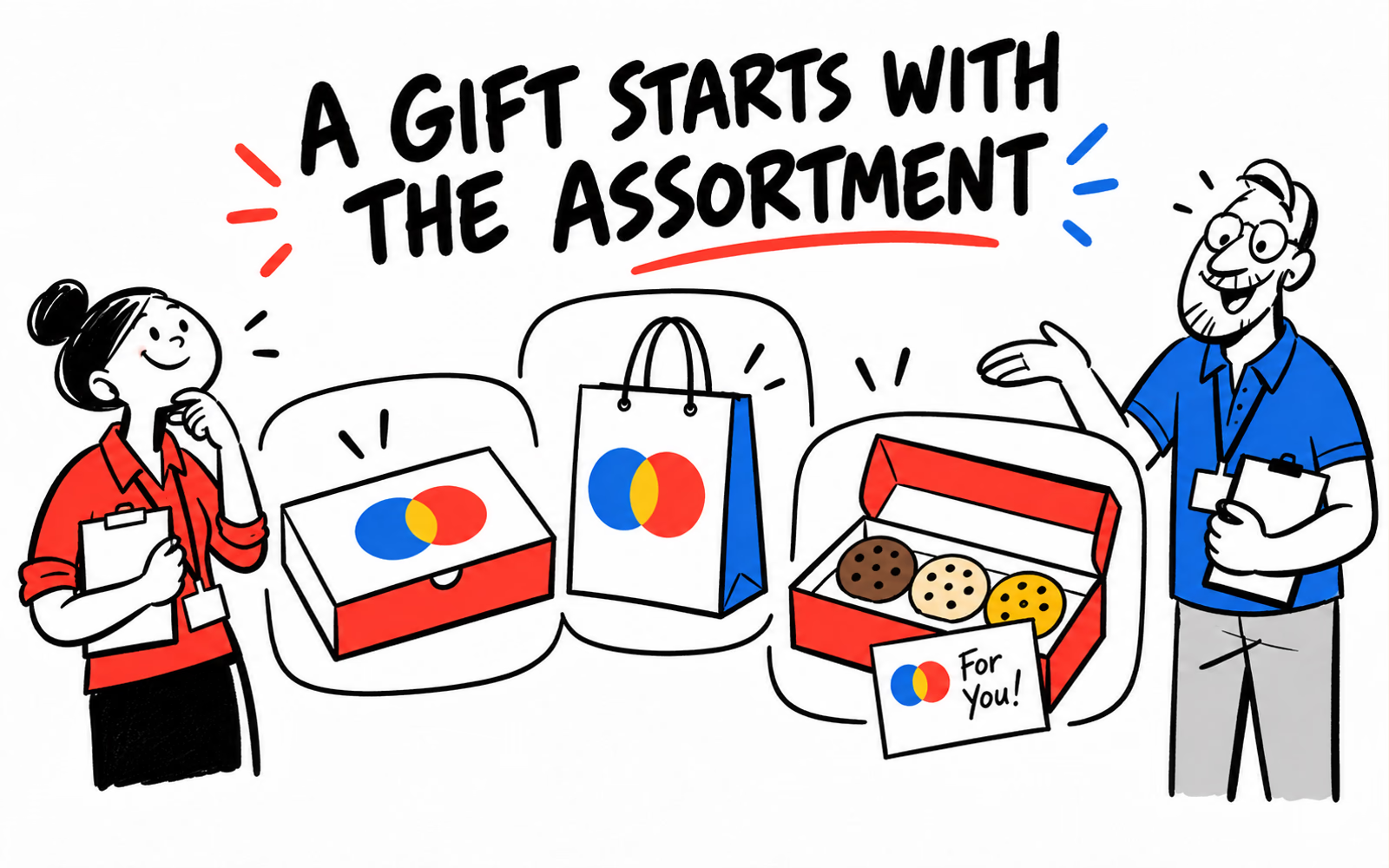
Define the gift assortment and serving format
Describe the order as it will be sold: one treat, a paired gift or a sharing assortment. Record the exact finished items, decoration, primary packaging and serving pieces that belong inside. A box shown with a few neat circles is only a concept until the actual products are arranged.
Decide how the gift is handed over and received. A counter pickup, an event collection and another intended journey can require different packing steps. Include any outer bag or delivery pack in the complete plan rather than adding it after the artwork is approved.
Start with a concrete edition
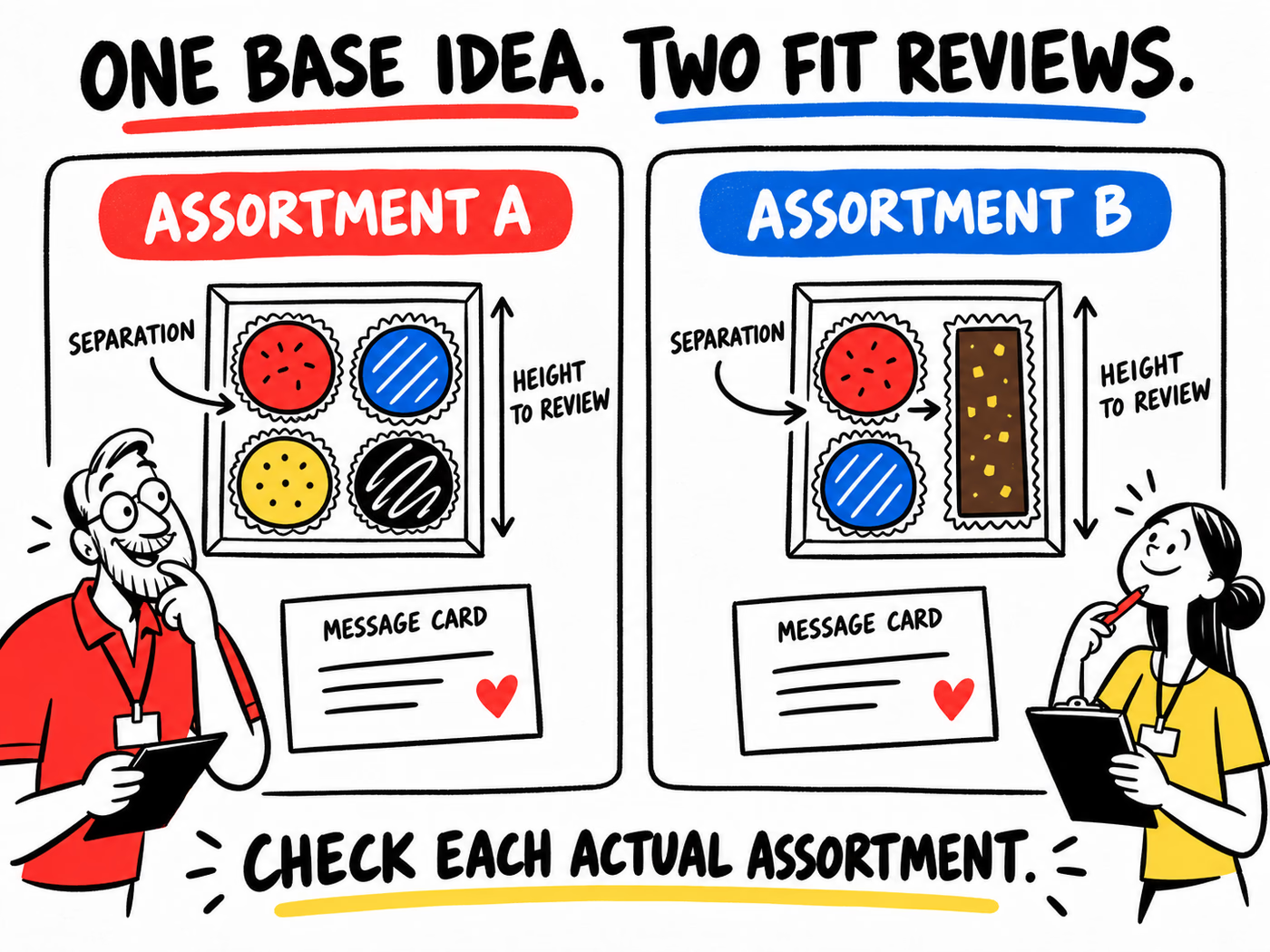
Our fictional Assortment A contains four simple cookie shapes; Assortment B combines two cookies and a rectangular treat. These invented examples illustrate different fit questions, not a recipe, serving recommendation or sale offer.
Use the cookie order guide to distinguish single items and gifts. If a decorated cupcake joins the mix, the height-and-support review adds product-specific questions that a flat cookie layout cannot answer.
Compare presentation using feasible base structures
Explore a rectangular carton, a bag carrying separately packed products or another confirmed base format. Let the original graphic system carry the Valentine theme. Our cover uses intersecting circular motifs and bold red, blue and yellow instead of a special heart-shaped structure.
| Gift concept | Presentation idea | Check with the actual products |
|---|---|---|
| Four-cookie set | Shared top panel and separate card | Positions, decorated height and removal |
| Mixed cookie-and-treat set | Same motif at a different scale | Different heights, contact points and support |
| Separately packed gifts in a bag | Bold front face and coordinated label | Primary packs, carrying arrangement and closure |
A shared base is a proposal
Assemble each assortment in its proposed construction. Check separation, height, closure and how the recipient removes the items. One layout’s result should not be copied into another merely because the artwork looks alike.
Identify every food-contact component and confirm its suitability with the responsible suppliers for the actual intended use. The diagram below leaves fit decisions open: it shows two arrangements to review rather than proving they fit the same box. Use the measurement method for the complete arrangement when defining an outer delivery pack.
Coordinate labels and message cards
Give the label and card different jobs. The label helps identify the confirmed product or assortment. The card can carry a short gift message. Keep the responsible food supplier’s actual product information connected to the pack rather than replacing it with a decorative slogan.
Choose one original motif and a small high-contrast palette, then repeat it at appropriate sizes. Leave enough clear space for the approved words. A strong graphic should support the reader’s route through the gift rather than compete with small product text.
Separate shared artwork from personal copy
A message such as “A little treat, with a lot of thanks” is an original wording example. Use it only if it suits the actual gift. If a customer requests an individual name or message, confirm the production method, data handoff and feasible quantity before building the offer around it.
The event-copy guide distinguishes shared design from changing names and messages. Follow the same approach here: retain one approved copy record and clearly identify each print version. Do not imply that individual personalization is included by default.
Prepare variants and dates before requesting print
Create a row for each assortment, packaging reference and artwork version. Add the actual quantity and intended availability period. Keep the business’s requested date distinct from the supplier’s confirmed project schedule.
Use the consumption calculator with your own expected orders and usage. A forecast can help organize a request, but it does not establish order minimums, prices or production lead time. Review those details in the actual proposal.
Send the assortment with the artwork brief
Explore folding cartons, labels and thank-you cards with confirmed dimensions and print scope. Attach a useful arrangement reference and state any unresolved component or material questions.
Prepare final files with the artwork guide after construction approval. Compare the printed message, product identifiers and packing version together. If the gift changes, update the affected quantity and fit records before reusing the previous artwork.