
Corrugated Cardboard vs Paperboard Packaging
Identify the actual board construction, then compare the presentation and transport roles. Record packed load, handling, and supplier specifications rather than judging strength by thickness.
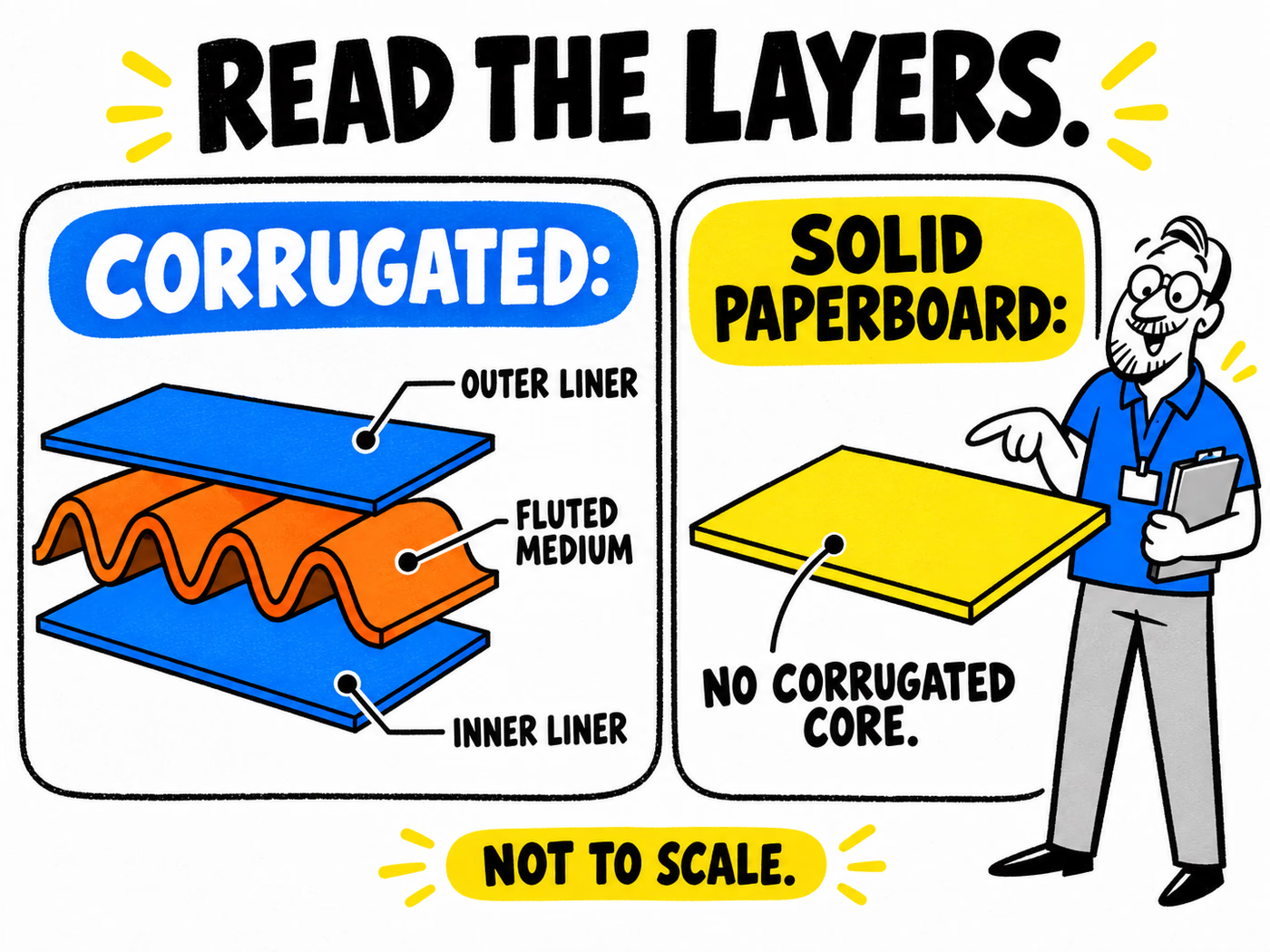
Corrugated vs. paperboard is first a construction comparison. A simplified corrugated board has a fluted paper layer between flat liners; a solid paperboard carton has no corrugated core. Specify what the pack must do, the complete load, and the actual material reference. Thickness, a brown surface, or a familiar box shape does not establish shipping strength.
This expanded guide adds labeled sections and a project worksheet to the existing comparison. Keep the presentation pack and the transport pack as separate roles when reviewing the whole order.
Identify the two constructions correctly
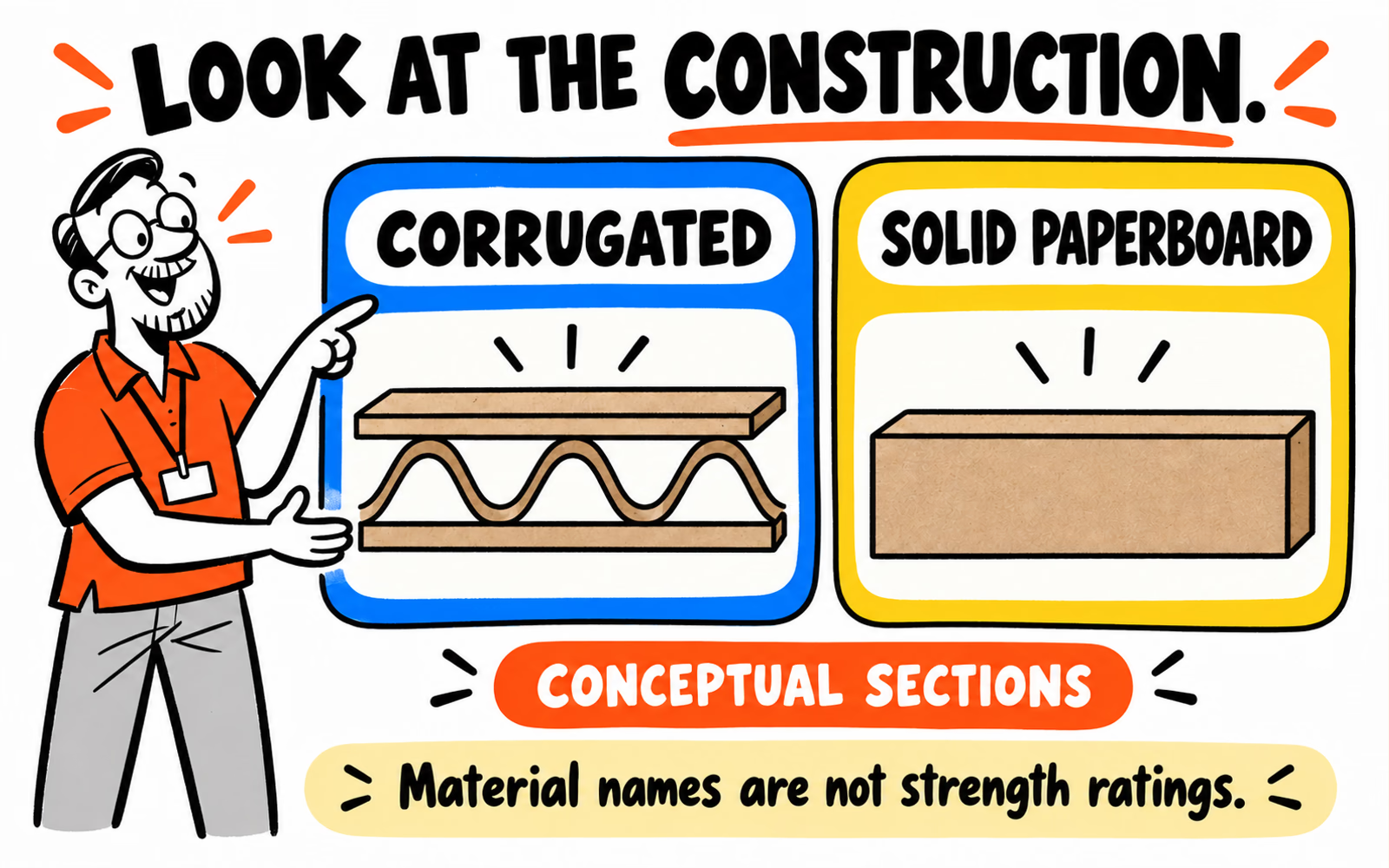
Look at a section of the actual sample rather than its outside color. In the simplified corrugated diagram, the wavy sheet is the fluted medium and the straight sheets are liners. The illustration shows one core between two liners; it does not describe every possible construction.
FEFCO explains linerboard and fluting medium and describes the different paper grades and flute combinations used in corrugated board. Those terms help identify a proposal; they are not a performance rating for an unknown box.
A compact sheet is a different structure
The solid paperboard concept has no wavy corrugated core. A compact appearance does not tell you the full grade, coating, or ply construction. Ask for the reference and description of the sheet proposed for the carton.
| Observation | What it can help identify | What remains unknown |
|---|---|---|
| Wavy core with flat liners | Corrugated construction | Paper grades, flute profile, complete-box performance |
| Compact sheet without a fluted core | Solid paperboard concept | Actual grade, plies, coating, and finished-carton suitability |
| Brown or white surface | Appearance and proposed print surface | Complete construction, recycled content, or certification |
The labels on the diagram name the parts only. No scale, universal thickness, or load value is implied.
Compare the packaging role rather than appearance alone
Write the job of each pack before comparing materials. Does it introduce a retail product, organize a kit, or carry the complete order through delivery? A single purchase can need more than one of those functions.
One fictional order, two roles
Imagine a small retail kit presented in a folding carton. For the proposed parcel shipment, that carton sits inside an outer box with a reviewed holding arrangement. Measure the kit inside the presentation carton, then measure the complete carton and proposed cushioning inside the transport pack.
This example is a planning arrangement, not proof that either proposed material is suitable. A corrugated mailer can also carry prominent brand artwork; a paperboard presentation carton does not automatically become a transport pack because it looks finished.
Compare mailer boxes, folding cartons, and shipping boxes around the opening, item support, closure, and intended journey. Explore custom printed boxes after the role is clear. The format name and material description belong in separate fields.
Record the load and handling requirements
Use the complete packed weight, not just the weight of the bare product. Include primary packs, accessories, and holding parts. Record fragile areas, places that should avoid rubbing, and whether one item can contact another.
Describe how the pack will be handled: retail handover, local carryout, a kit opened at a desk, or the proposed parcel route. State any known stacking or orientation requirements instead of expecting the supplier to infer them from a product photograph.
Thickness alone is not the decision
A thicker-looking sample does not establish a board grade or the performance of the assembled box. Folds, joints, closing method, support, and the actual contents are part of the review. Ask what evidence applies to the proposed arrangement rather than extending a result from another pack.
Use the box measurement guide to document usable space, orientation, and units. Keep external dimensions for storage or carrier review separate from the internal fit brief.
The trial record should identify the sample, contents, procedure, observations, and remaining questions. If the product or route changes, check which previous observations still apply.
Ask for the actual board specification
Request the supplier reference, construction description, and relevant material documentation for the proposed box. Ask which grade, flute, liner, coating, or sheet information applies to that specific reference. Do not fill missing fields from a similar-looking sample.
- Usable dimensions, orientation, and packed load.
- Presentation and transport roles, with support and closure questions.
- Actual board description and proposed surface treatment.
- Artwork layout, print areas, versions, and quantities.
- Project-specific sample and validation requirements.
The FEFCO design code supports communication about corrugated box designs; it does not confirm the grade or suitability of a BrandYourPack order.
Review mailer boxes, folding cartons, and shipping boxes as formats to specify. For the visual surface, continue with kraft vs. white packaging. Brown color does not prove recycled content or an environmental claim.
Prepare production artwork only against the agreed structure and layout, using the artwork guide. Keep final material and commercial terms with the approved proposal.
References & planning resources
Original conceptual comparisons and worksheets support the project brief. They show no tested performance, technical grade, or confirmed supplier terms.