
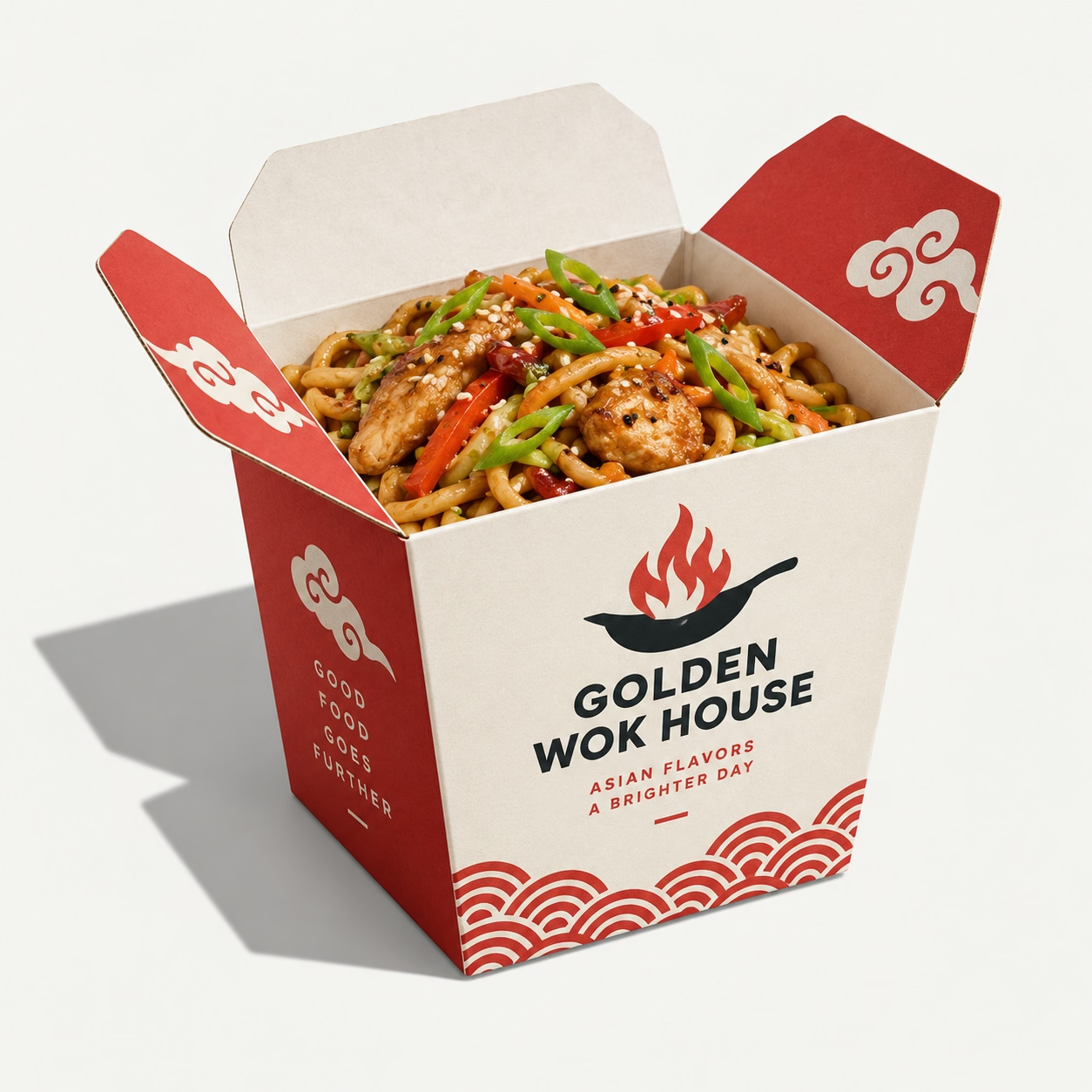
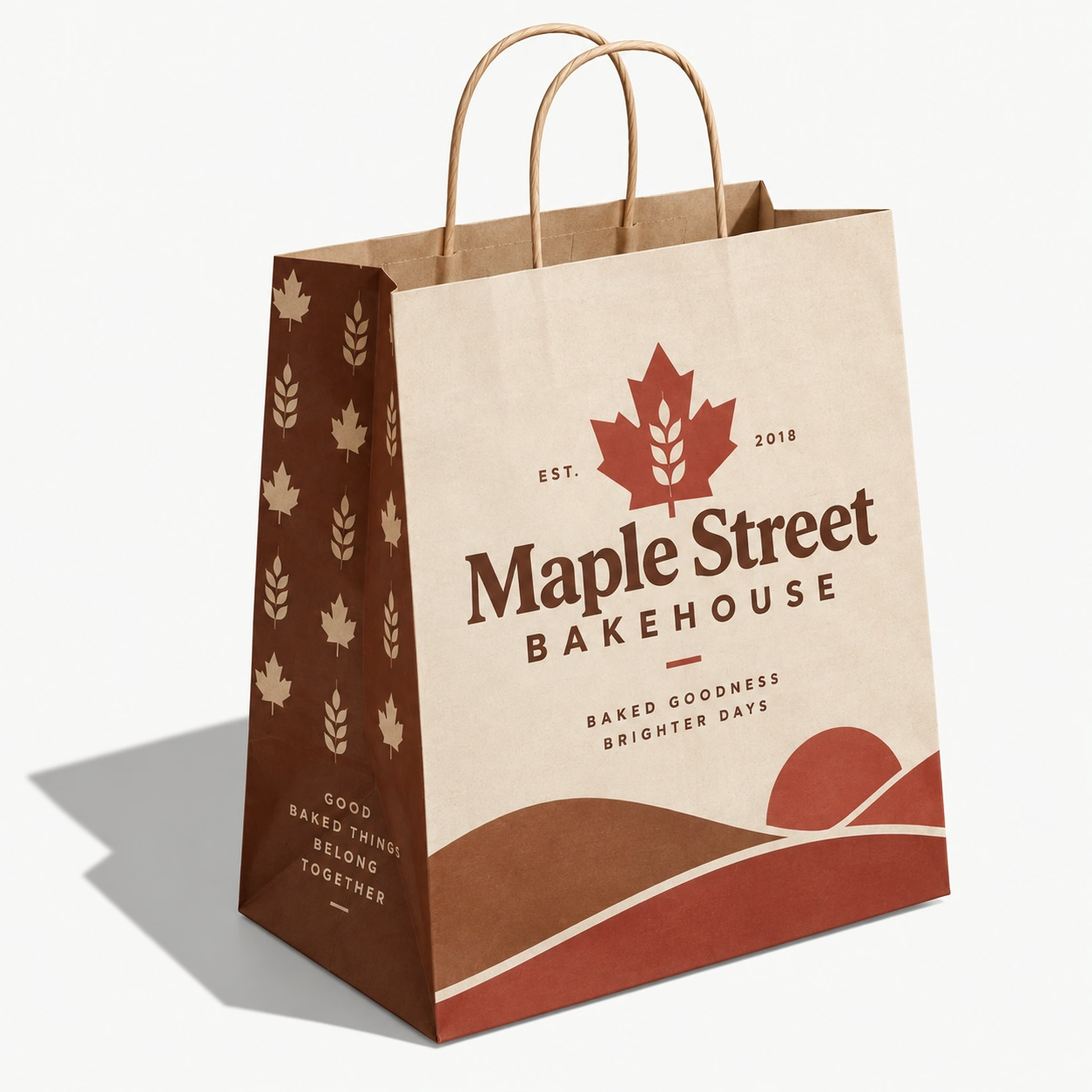
Build a food truck packaging setup around the finished meal, the handoff and the space available at your service station. Count containers, wraps and carrying bags separately.
Practical food truck packaging ideas organize a short range around the menu, the space at the service window, and the completed handoff. Map each item to its actual pack, separate working stock from reserves, and give changing order information a clear place. Review the arrangement in your own truck before treating it as an improvement.
At the window, every extra choice has to fit somewhere. A compact packaging system starts with a clear list of jobs, then gives each component a home within your real workspace.
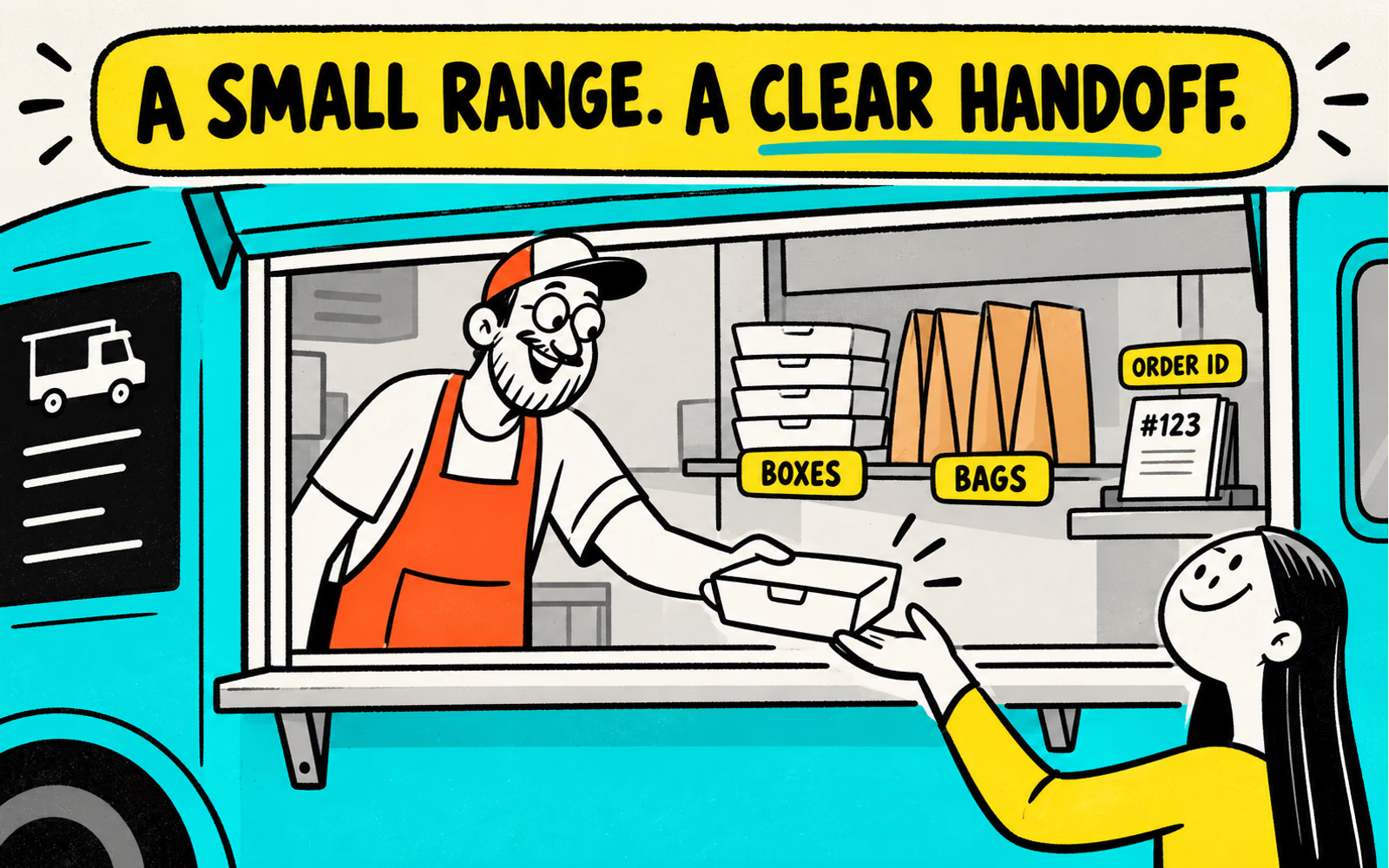
Map the menu to a small packaging range
List the finished items you serve, including their dimensions, contact arrangements, and complete order combinations. Group items only when the proposed pack can meet each intended use. Similar menu names are not enough to establish shared fit.
| Service role | What to record | Component to evaluate |
|---|---|---|
| Individual meal | Finished shape, height, contact, closure | Actual meal box or wrap reference |
| Side or sauce | Its own portion and carrying arrangement | Separate proposed pack as needed |
| Combined order | All packed pieces, footprint, weight | Outer carrying arrangement |
| Order identification | Changing identifier and checking process | Exterior marking or label area |
A common exterior identity can connect different components without forcing every dish into the same container. The takeout branding guide explores that visual system; the commercial plan below retains the menu-specific selection questions.
Organize storage and packing at the service window
Separate the reserve stock from the items currently being used. Record how much space unopened packs occupy and how the working supply is accessed. A flat carton and an assembled carton can create different storage demands.
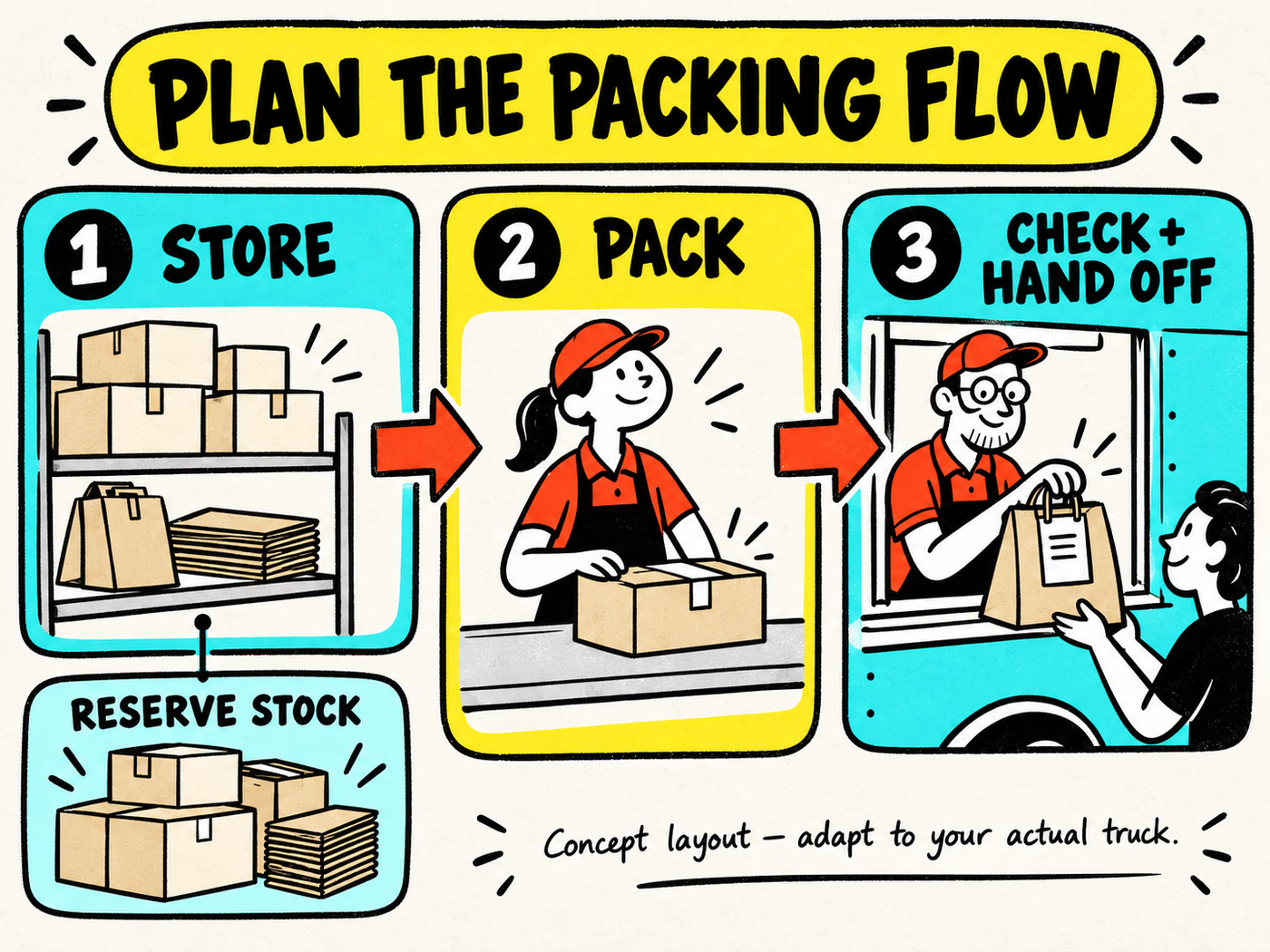
Give each step a clear place
Sketch where components are stored, where the completed pack is assembled, and where the order is checked before handoff. Adapt this to the actual vehicle and your operating procedures. The diagram is a planning concept, not a kitchen or food-safety layout specification.
Try the arrangement with your staff and normal order mix. Note repeated reaches, blocked access, confusing choices, or a reserve stack that is difficult to replenish. Use those observations to revise the setup; no measured time saving is claimed here.
A workspace review
- Can staff distinguish the required pack references?
- Is working stock separate from unopened reserves?
- Does the packing area accommodate the full order?
- Where are exterior labels or order markers kept?
- What gets in the way during replenishment and handoff?
Make order identification easy to check
Choose a defined place for the changing order identifier, separate from decorative brand artwork. Check that it remains readable when the pack is closed and placed in the carrying arrangement.
Check the packed contents against the identifier
Decide who confirms that the correct meal and separately packed pieces are present. Keep the written identifier clear enough to use during your service process. Color can support organization, but it should not be the only way to distinguish orders.
For exterior labels, record the actual surface and application conditions. See the label application checklist before assuming an adhesive will work on a particular pack.
If your truck serves taller burgers, use the burger order guide to organize the finished dimensions and complete carrying arrangement. Keep that fit review separate from the order marker.
Build a quantity plan for your operating days
Count primary packs from the menu units they serve and carrying bags from the orders that receive them. Count labels and accessories from your actual usage policy. Avoid multiplying every component by the same combined order total.
Use explicit service scenarios
For an illustrative day with 60 individual meals and 20 two-meal orders, the starting count is 100 meal packs. If each completed order receives one outer bag, that assumption gives 80 bags. These are planning inputs, not observed demand or a production minimum.
Record opening stock, expected use, allowances, and remaining stock for each reference and artwork. The existing event stock guide develops replenishment planning around your own service scenarios.
Evaluate takeout boxes, paper bags, and labels against these roles. Include the finished dimensions, actual handling needs, quantities by design, operating period, and delivery ZIP in the request.
A clear range for your window.
Planning packaging for your food business? Tell us what you are packing, its finished dimensions, intended contact and handling conditions, quantities, and delivery ZIP.
Planning references
- BrandYourPack: Food Truck Packaging for Event Service.
- Label Surface and Application Checklist.
- Tissue, Greaseproof, and Wrapping Paper.
Reviewed October 6, 2026. Original workspace concept and labelled quantity example; no speed, food-safety, or handling-performance result is claimed.
Match each menu item to its packaging job
A burger, sandwich and loaded side do not share the same fit problem. Measure the food as served, including toppings, and describe whether it is handed over open, wrapped or inside a closed container. Identify every food-contact surface for specification review.
| Menu item | Starting measurement | Check with the proposed sample |
|---|---|---|
| Burger | Finished height and widest footprint | Closure around toppings; loading and removal |
| Sandwich | Length, width and filled height | Paper fold or closed-box clearance |
| Side | Actual portion and serving arrangement | Container fill and handling |
| Combo | All completed packs together | Carrying bag base, access and load |
Explore burger boxes, takeout boxes and greaseproof paper as distinct formats, not interchangeable performance claims.
Plan working stock around the service station
Record a normal busy interval, staff handoff and access to replenishment. Keep enough working stock in reach without treating the full purchased order as counter stock. Store different sizes and artwork versions where staff can identify them.
- Assign one reference to each menu use, with any substitute requiring review.
- Count wraps and boxes from actual menu usage.
- Count bags from completed carrying arrangements.
- Record reserve stock separately from the quantity at the station.
Review the complete order before printing
Try the proposed wrap, container and bag with the actual menu item and normal journey. Note closure, grease exposure, carrying and the customer opening experience. A printed illustration cannot establish suitability for a hot, oily or wet food.
For events, prepare a one-event quantity scenario using the consumption calculator. For mixed meals, use the combo-order worksheet.
Prepare a quote that staff can use
- Finished food dimensions and intended serving conditions.
- Reference and quantity for each container, paper sheet and bag.
- Artwork version and printed areas for each reference.
- Delivery ZIP, required date and storage constraints.
- Sample observations and questions to resolve before production.
BrandYourPack planning worksheet. Sample checks described here are steps for your project, not published test results. Confirm material, dimensions, print, quantities and intended use for the proposed reference before approval.
Build a coordinated setup
Selections to review for your project. Each reference and its conditions are confirmed in your quote.
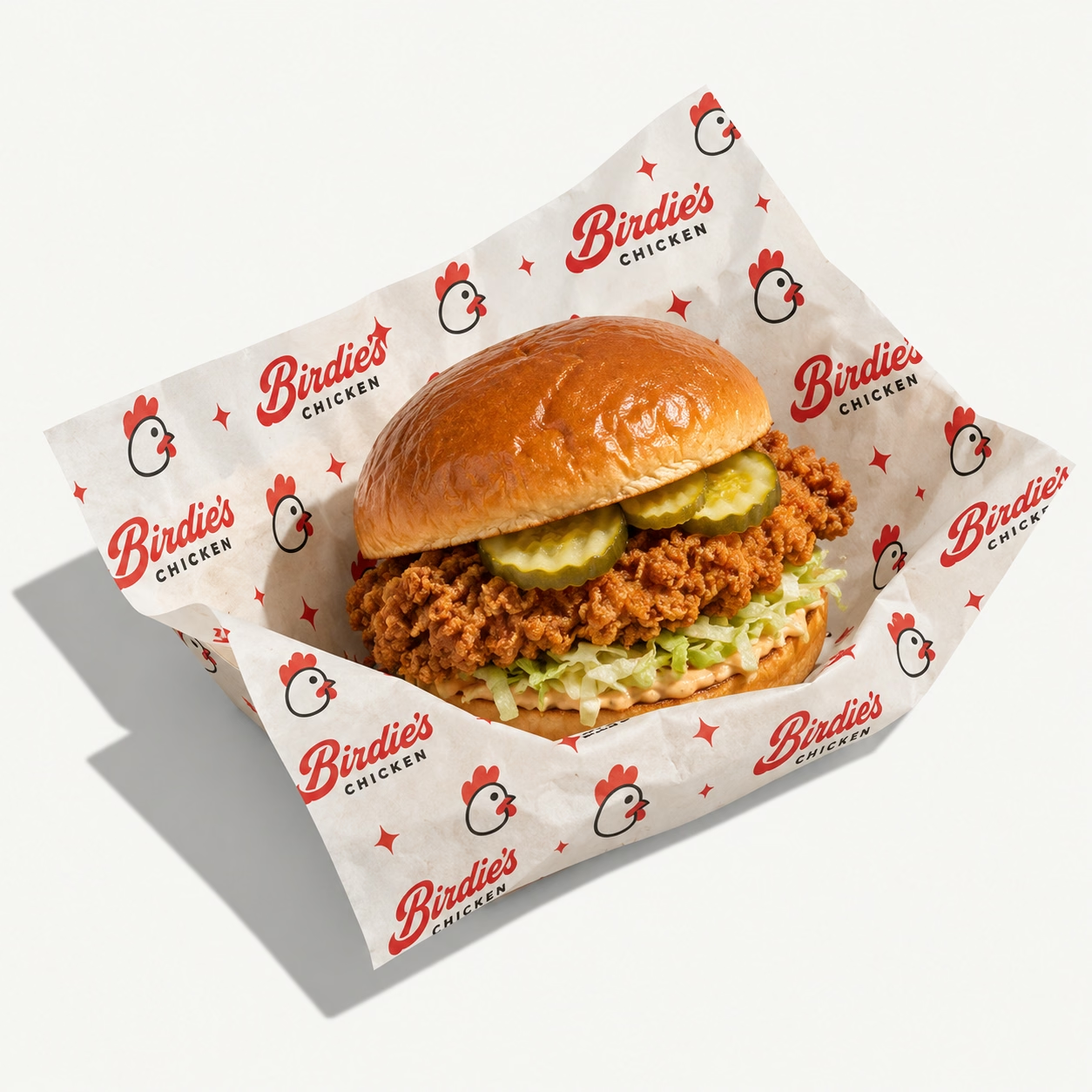
The wrapped meal
Review the finished food, the paper fold and any outer container as separate parts of the setup.
The complete combo
Bring the meal and side into one carrying arrangement only after the primary packs are selected.
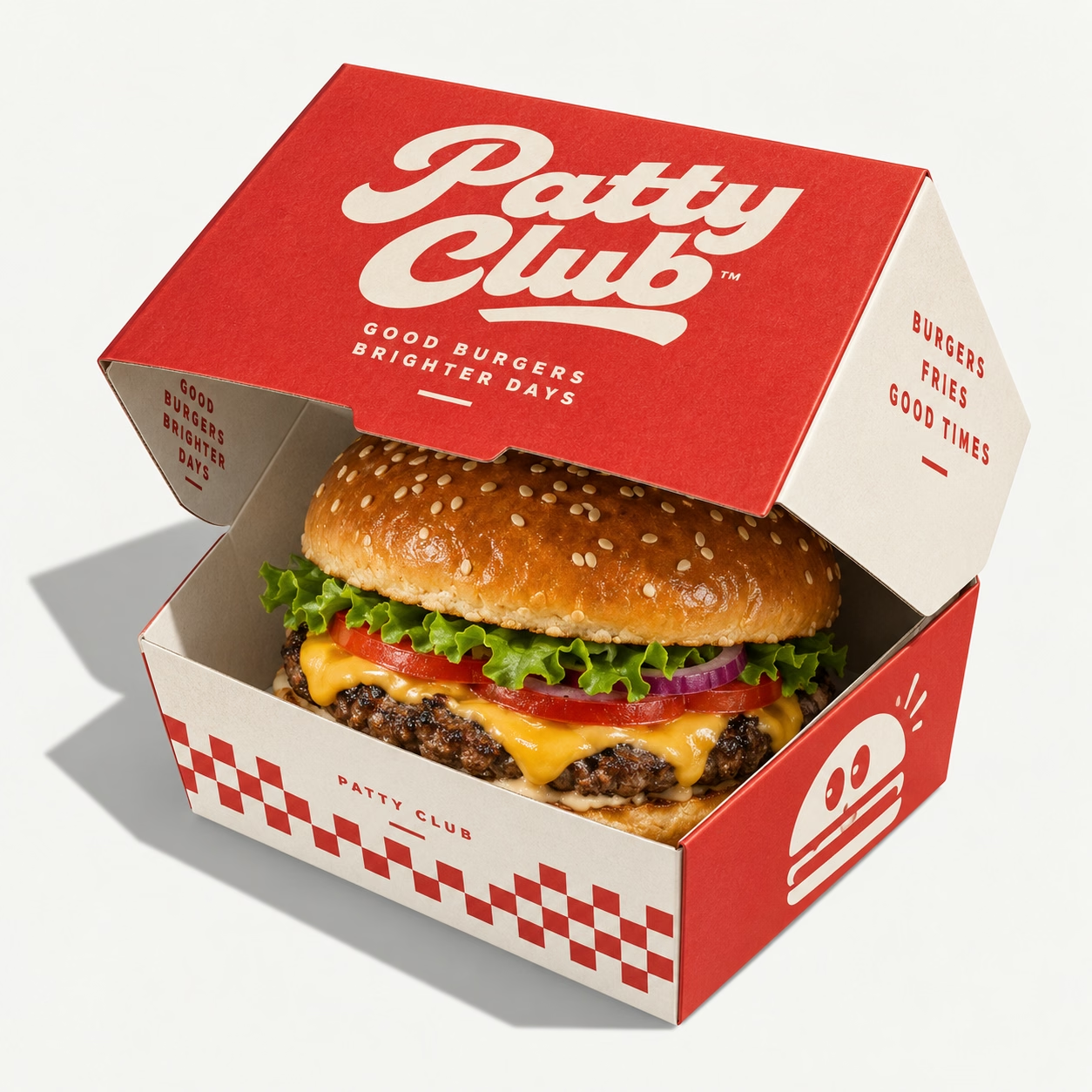
A menu becomes a service system.
Illustrative brief: a truck offers burgers, sandwiches and sides. It assigns a reference to each finished item, records bags by completed combo order and separates station stock from reserve supplies. Physical samples resolve fit before artwork approval.
Use the quote checklistQuestions about this decision
Do I need a wrap and a box for every burger?
Only when your actual serving arrangement uses both. Specify each job and test the complete meal; counting one of each by default can overstate consumption.
How many bags should a food truck order?
Count bags per completed order that needs carrying. Use your expected order mix and current usable stock, then confirm pack quantities and supplier minimums.
Can the same paper be a wrap and a liner?
A sheet can be evaluated for both jobs, but dimensions, folding and exposure differ. Confirm the proposed material and sample for each use.
Are these products guaranteed for my menu?
The catalogue identifies formats to discuss. Fit and material suitability require the actual menu, intended conditions and proposed reference to be reviewed.
Ready to put your plan on paper?
Share the intended use, dimensions, quantities, artwork and delivery ZIP. We will review the specification for your project.