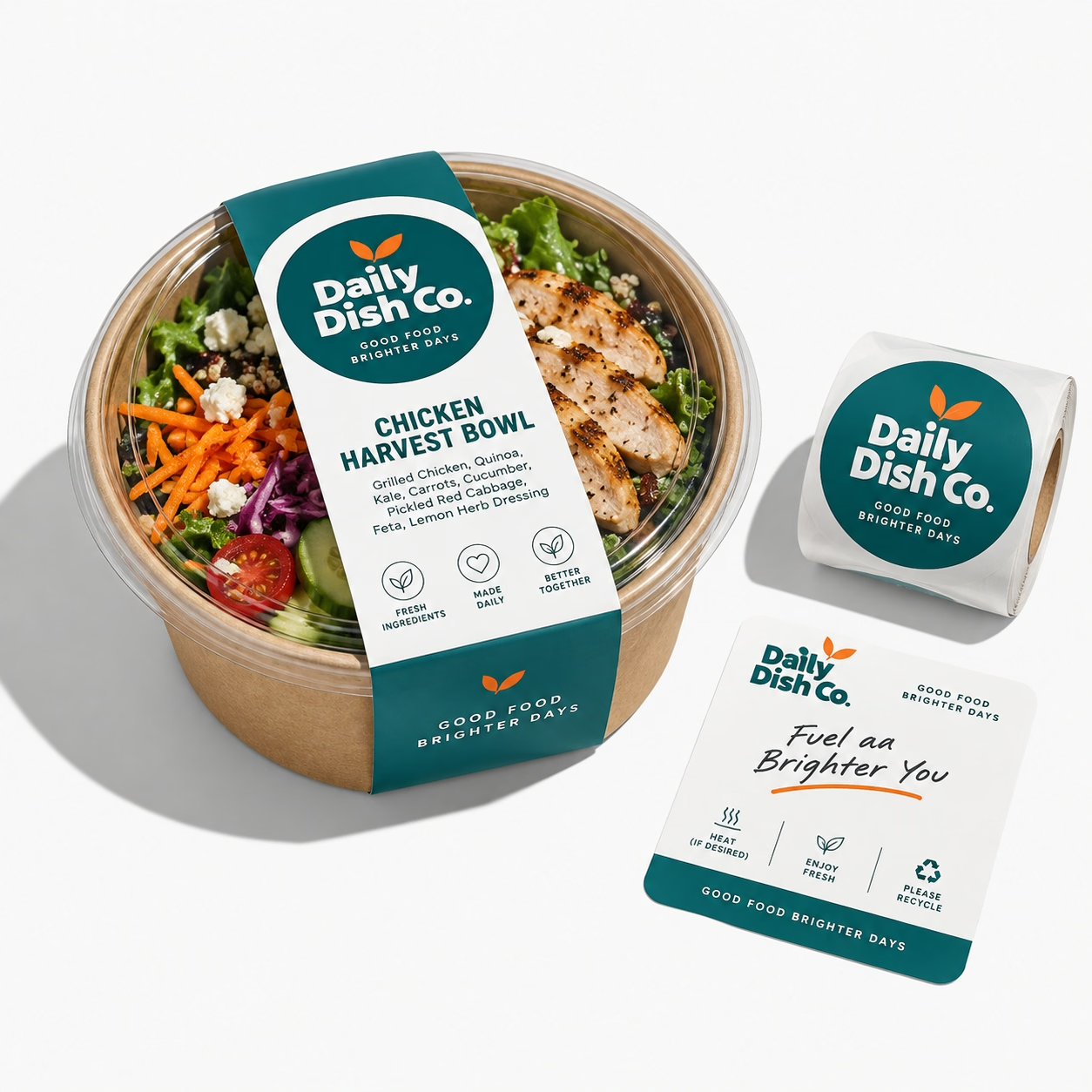
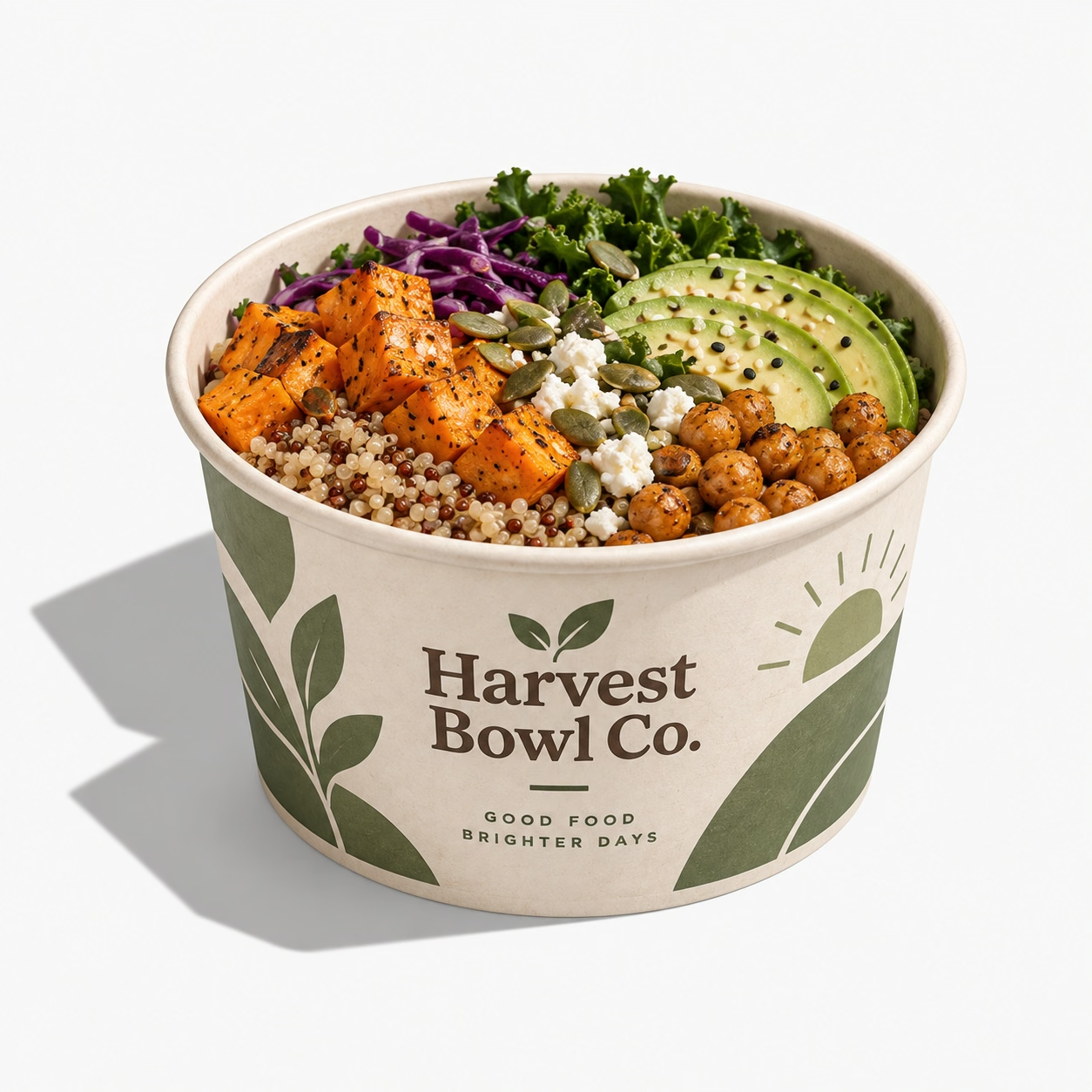
Lid clearance is a relationship between the exact bowl, closure and finished toppings. Check that complete arrangement instead of specifying a universal gap.
Identify the bowl and lid as a pair
Record both supplier reference codes and request the dimensional information used to confirm their match. Note the rim connection and usable interior profile of the closure. A matching diameter description alone is not a complete compatibility approval.
| Reference detail | Why it matters |
|---|---|
| Bowl and lid codes | Identifies the complete proposed pair |
| Rim connection | Determines the intended closure interface |
| Usable lid profile | Describes working space above the portion |
| Normal topping build | Identifies the highest intended arrangement |
| Packing sequence | Defines how staff fit and check the closure |
Review the finished topping arrangement
Prepare the actual recipe with its normal fruit, granola and other toppings. Fit the proposed lid using the intended method. Observe contact with toppings, rim access, closure engagement and the way the pack is opened.
Measure and record the sample rather than prescribing a universal clearance. If the recipe or topping arrangement changes, keep that change visible in the approval record.
Separate fit from transport and cold-use questions
A lid that fits an empty bowl has not demonstrated behavior with the finished portion during the intended journey. Request information for the proposed materials and use conditions, and review the complete closed pack. Do not infer leak resistance or a freezer rating from the shape or photograph.
Good Start Packaging presents dedicated smoothie and acai formats. Its references illustrate a specialized category; they do not establish matching parts or material conditions for our proposed bowl.
Document the approved serving reference
- Bowl, lid, recipe and sample identifiers.
- Topping profile and any permitted recipe variation.
- Observations and unresolved closure questions.
- Final artwork area and quantity per container design.
Keep the record with the sample checklist and use the takeout arrangement for carrying questions.
This is a planning method, not a report of completed sample tests. Keep approval tied to the exact proposed construction, artwork and intended use.
Questions about this decision
How many millimeters of clearance are required?
This guide does not set a universal gap. Review the exact lid profile and finished recipe on the proposed sample.
Does the same nominal bowl size guarantee a matching lid?
No. Confirm the exact bowl and lid references and their intended connection.
Can a label fix an incompatible lid?
Do not treat a branding label as a closure solution. Resolve the bowl/lid combination and any separate sealing requirement with the supplier.