
Cup Sizes and Lid Compatibility
Choose between 8, 12, 16, and 20 US fl oz around your drink menu, then check the exact cup, lid, sleeve, and quantities as one serving system.
Choose a coffee cup around the drink portion and service conditions, then confirm the matching lid. Requested sizes such as 8, 12, 16, and 20 US fl oz are useful planning labels, but capacity alone is not a lid-compatibility specification. Record your actual serving fill, hot or cold use, exact cup-and-lid details, and quantities before approving a complete setup.
Cups with the same nominal ounce label can have different rim dimensions or constructions. This guide helps you translate the menu into a manageable cup range, while keeping fit, handling, and stock planning in the same conversation.
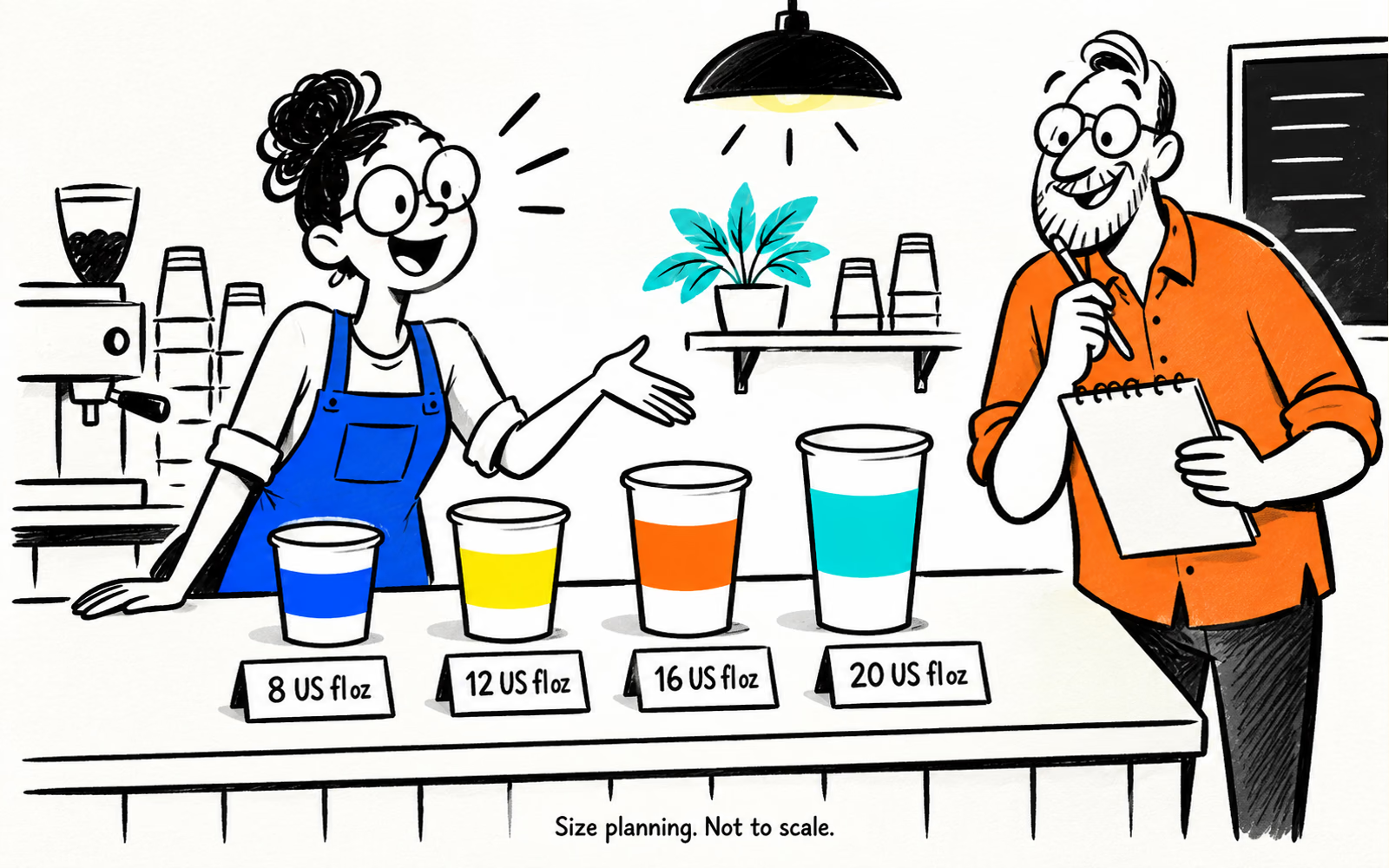
Match cup size to your drink menu
Begin with the drinks rather than a supplier’s list of sizes. List the actual served portion, whether it is hot or cold, and any foam, ice, or toppings that change the working space needed.
| Requested capacity | Approximate volume | Planning question |
|---|---|---|
| 8 US fl oz | 237 mL | Does the complete served drink fit with the working space you need? |
| 12 US fl oz | 355 mL | Which recipes could share this size without changing the intended portion? |
| 16 US fl oz | 473 mL | Are hot and iced recipes being specified separately? |
| 20 US fl oz | 591 mL | Does a larger request solve a menu need, or only add another stock item? |
These are comparison labels, not a statement of available sizes, physical cup dimensions, or recommended drink recipes. Milliliters use NIST’s US fluid-ounce conversion factor and are rounded to whole milliliters. Fluid ounces measure volume; they are not coffee weight ounces.
Match the menu to the complete setup
- List the drink portion, including space for foam, toppings, or ice.
- State whether the drink is served hot or cold.
- Identify the cup construction and handling needs for review.
- Request the actual rim dimensions and corresponding lid specification.
- Check the proposed cup, lid, and sleeve together using a sample.
If useful, compare the names and capacities in our US Starbucks size chart. Use it as a reference for menu vocabulary rather than a physical specification for your own cups.
Compare nominal capacity and serving fill
The capacity label and the complete served drink are not the same piece of information. Your recipe may include foam, ice, or a topping; the proposed cup also needs suitable working space for filling and handling.
An illustrative menu example
If one drink includes foam and another includes ice, their useful fill requirements differ even when they share a menu size name. Record both recipes and how they are served. This example does not recommend a universal cup size or confirm an available cup-and-lid combination.
| Item | Useful information |
|---|---|
| Serving volume | Actual portion and working space; not only the ounce label |
| Cup | Material, wall preference, dimensions, and intended beverage |
| Lid | Matching format, fit, and service requirements |
| Sleeve | Fit on the intended cup and handling position |
Record the filled sample you intend to serve, including additions and the proposed closure. Ask the supplier how its capacity is specified so you can compare your service requirements with the actual construction.
Check the complete cup-and-lid system
Test the combination, not one component. Evaluate fit, removal, stacking, and the way staff handle the filled cup. A wall preference does not establish a lid match, and a sleeve should be checked on the selected cup.
Will every lid for the same nominal cup size fit?
No. A nominal volume does not identify the rim diameter or lid connection. Match the exact cup and lid specification, then confirm the fit on the proposed components. If a sleeve is required, review where it sits on the tapered cup and what printed area remains visible. These checks must use the actual proposed setup, not the example illustration.
Check the complete serving setup
Specify the serving portion, drink type, expected temperature, lid needs, and whether a sleeve is part of the setup. Test the filled cup with the proposed lid and sleeve together. Check loading, carrying, and the intended drinking opening instead of judging each component in isolation.
Read single-wall vs double-wall cups, compare paper cups, coffee cups, and plastic cups, or review printed sleeves. Use the coffee shop collection to plan the rest of the order.
Share observations from the actual filled sample before approving a production specification. A visual inspection alone does not establish performance for every service condition.
Prepare quantities by cup size
Plan quantities alongside the specification. Estimate each consumable separately using orders, open days, and actual units per order. The packaging consumption calculator helps you deduct stock and round purchases to supplier pack sizes. Use your own values; its examples do not establish production minimums or prices.
A simple worksheet
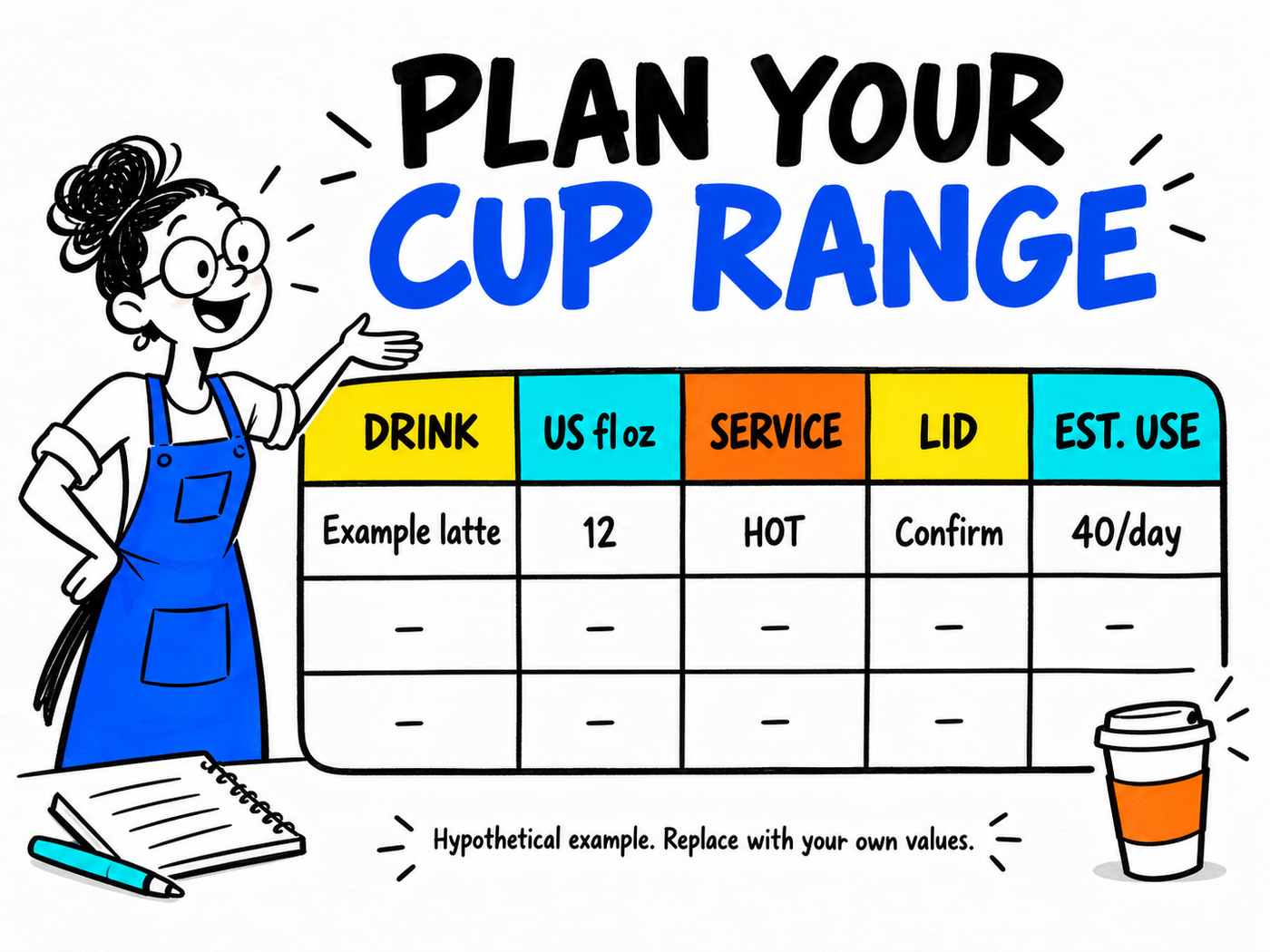
Create one row for each drink or serving setup, with columns for requested capacity, hot or cold service, exact lid needs, and estimated use. Add separate rows where a design version or component changes the order.
| Input | Example only |
|---|---|
| Drinks using this setup per open day | 40 |
| Open days in the planning period | 20 |
| Calculated cup use | 40 × 20 = 800 cups |
| Next checks | Usable stock, your chosen buffer, supplier pack size, and separate lid or sleeve demand |
Do not assume that 800 cups means 800 lids or sleeves. Use the proportion of orders that actually need each component. Keep the matching specification beside the quantity so replenishment does not quietly substitute a different lid.
Download a blank cup-planning worksheet (.csv) ↓ for your menu, service type, and quantities.
More cup-and-lid planning notes
Keep one approved serving reference
| Identifier | Record |
|---|---|
| Cup | Reference, construction, nominal size, rim/drawing and print layout |
| Closure | Exact lid reference, compatible cup and requested opening |
| Sleeve | Reference and checked position/fit |
| Use | Drink, working fill, ice/toppings and serving conditions |
| Approval | Sample identity, observations and final proposed specification |
A replacement supplier code or lid design needs another compatibility review. Do not silently substitute it because the capacity label is unchanged.
Use the same sheet for launch and reordering
For a coffee cart launch, combine this reference sheet with the opening quantity plan. On a reorder, confirm that cup, lid, sleeve and artwork versions remain the approved ones, and ask whether the material or terms have changed. Keep fit approval separate from commercial confirmation.
Your menu.
A practical cup range.
Planning your own café packaging? Share your drink use, requested capacities, exact lid needs, quantities by design, and delivery ZIP for a custom quote.
Method & editorial notes
- NIST: Appendix B.8 conversion factors — approximately 29.57353 mL per US fluid ounce.
- Existing BrandYourPack cup-and-lid guidance, expanded while preserving its URL, core fit checks, product links, calculator link, and planning extension.
Updated October 6, 2026. This is a planning guide, not a supplier specification or physical test report. Capacities and worksheet inputs are illustrative requests. Materials, dimensions, component compatibility, quantities, and timing require project-specific confirmation.