
Employee Welcome Kit Packaging: Measure the Kit Before Choosing the Box
Build the box brief around the actual notebook, clothing, cylinder, and welcome card. Review the complete arrangement and keep packaging separate from gift sourcing.
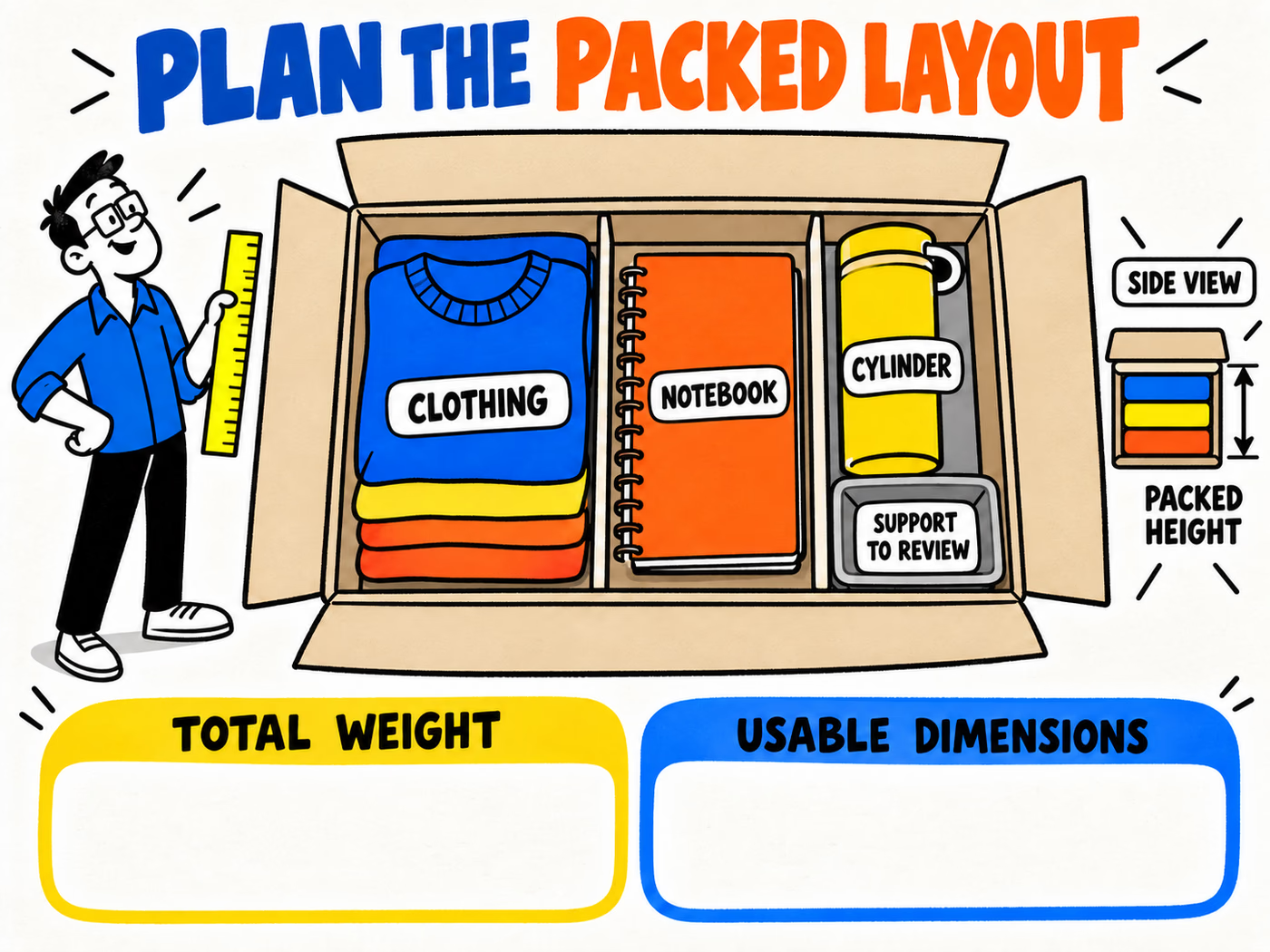
Employee welcome kit packaging starts with the complete kit, not a favorite box size. List the actual items, arrange them with any proposed support and card, then measure the packed layout. Review the largest relevant clothing size and the tallest rigid item. Request the packaging separately from notebooks, clothing, bottles, and any packing service.
A thoughtful welcome can be simple: useful items, a clear first message, and an arrangement that makes each piece easy to find. Work out that arrangement before committing to the print layout.
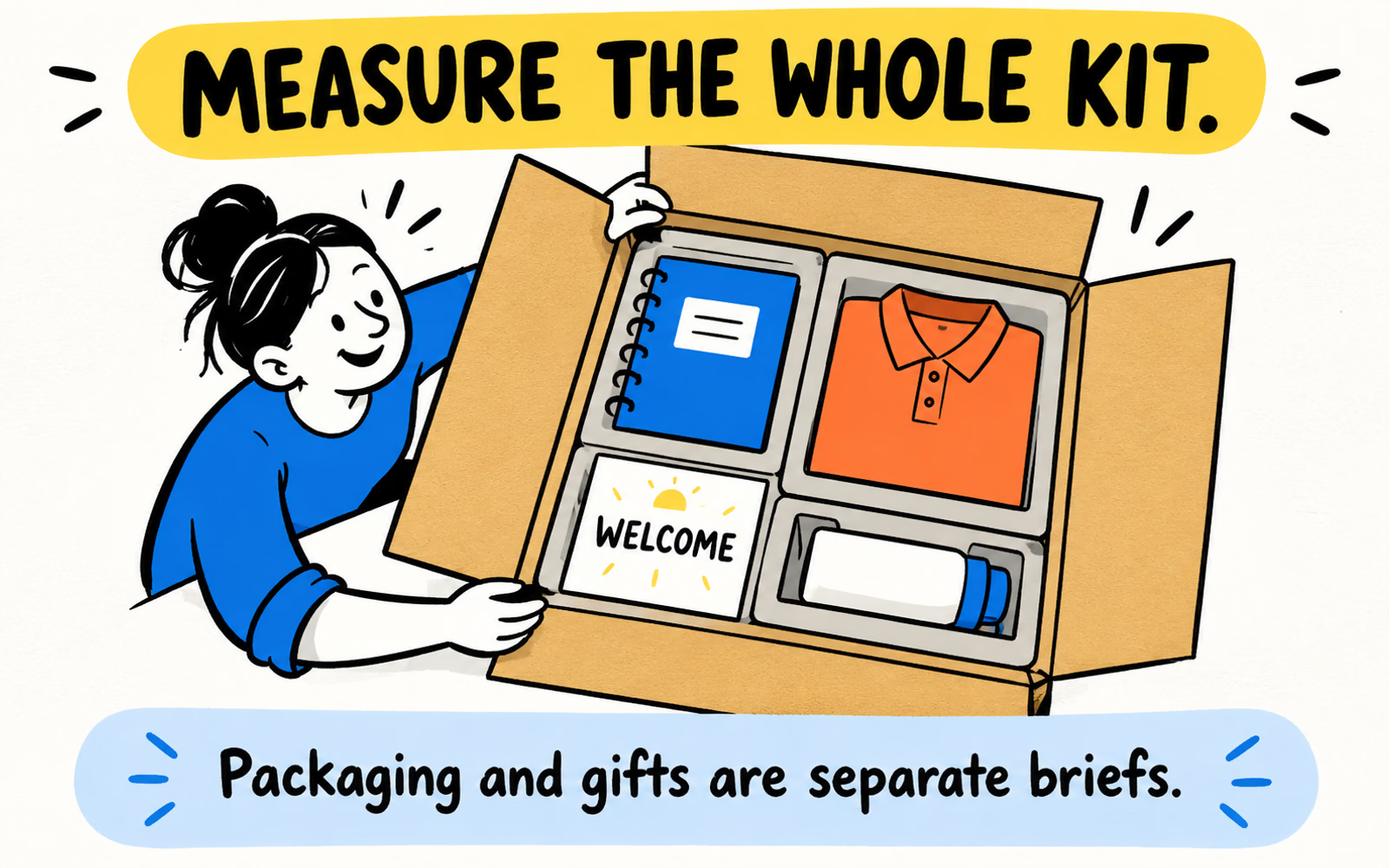
List every item in the actual welcome kit
Make a contents list using the items that will actually be supplied. Record the notebook format, garment size range, cylinder dimensions, primary packs, and any accessories. A supplier photograph is useful for identification, but it cannot replace measuring the sample in front of you.
Give variants their own rows
A larger folded sweatshirt can change the layout even when the notebook and bottle stay the same. If remote and office employees receive different kits, assign separate kit codes. Do not combine their measurements into one average.
| Item | What to record | Question to resolve |
|---|---|---|
| Notebook | Actual format and thickness | Does it need a sleeve or protection from rubbing? |
| Clothing | Folded dimensions for each relevant size | Which fold will the packer repeat? |
| Cylinder | Diameter, height, primary pack, and weight | How will its position be maintained? |
| Card | Printed size and version | Where should it be seen first? |
The objects shown here are fictional examples. They are not a list of gifts supplied by BrandYourPack. Note who provides each item and when its actual sample will be available for review.
Measure and arrange the complete contents
Place the items in the proposed opening order, then add any sleeve, holding part, or separator. Measure the space occupied by that complete arrangement. A folded shirt may sit beside a notebook or underneath it; those layouts can have different height and access requirements.
Review the awkward version too
Try the widest folded garment and tallest cylinder in the relevant range. Record where the items touch and what can move. A loose notebook should not become an accidental support for a heavier object simply because both fit inside the lid.
Use the mailer-box measurement guide to distinguish usable internal space from an external box measurement. Include space used by the proposed holding system in the layout. Avoid assigning an arbitrary extra inch to every kit.
Photograph the proposed arrangement and record packed weight. Then review closing and item removal with the actual samples. The support and loose-fill comparison helps frame the holding questions; an attractive layout is not a completed transport test.
Plan welcome and practical information cards
Let the first card do one clear job: welcome the new colleague and explain what to do next. Keep practical information easy to find instead of burying it in decorative copy.
Two original message directions
A simple welcome: “Welcome to the team. We are glad you are here. This kit is a small start to getting settled in.” Adapt it to the organization’s own voice rather than adding claims about the gifts.
A useful next step: “Your first-day information is available through the link in your joining email. Your team contact can help with any questions.” Only use wording that matches the actual process.
Keep contact details and destinations current. If a card includes a QR code, review its destination and test the actual-size proof. A printed card should not expose private access credentials.
Use printed insert cards as a message format. Group-specific files and individual name printing are different requests; confirm the proposed versioning and print process. For a larger collection, see corporate gift packaging by recipient group.
Request the packaging separately from the gifts
Send the kit codes, measured arrangements, packed weights, intended use, artwork versions, and quantities. Include any unresolved support questions and the destination for the packaging delivery. Name the actual structure you want reviewed rather than asking for a generic onboarding box.
- Identify customer-supplied items and the final sample references.
- List each box and card design with its own quantity.
- Attach arrangement photographs and the measurement sheet.
- State which support, assembly, or delivery services require separate confirmation.
Compare mailer boxes and shipping boxes for their proposed role. Review the complete pack with its real contents before approval.
A quote for empty packaging does not automatically include gifts, gift sourcing, packing, or dispatch to employees. Keeping those responsibilities visible makes the final brief easier to price and the finished kit easier to assemble.
References & planning resources
Original concepts, checklists, and hypothetical examples support your own project review. Confirm the final specification and purchasing terms with the quote.