
Christmas Packaging Ideas for Small Businesses: Build a Reusable Base
Give a year-round packaging identity a seasonal message. Compare original apparel, coffee, and gift concepts while reviewing fit, artwork versions, and remaining stock.
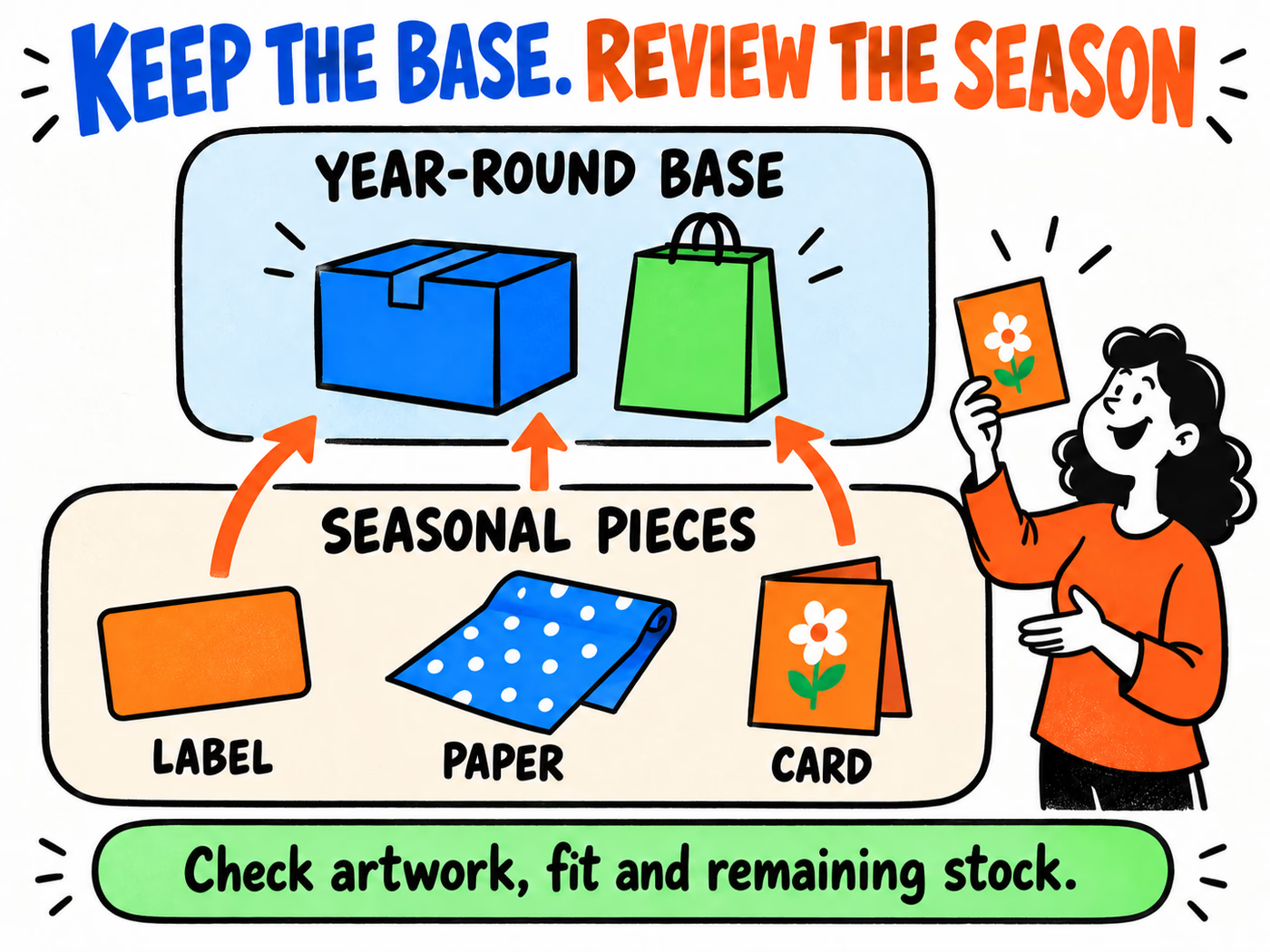
Christmas packaging ideas for a small business can begin with a year-round box or bag and a separate seasonal label, card, or paper treatment. Keep the base useful beyond the campaign where its specification and artwork still fit your products. Review each seasonal piece separately. This approach is a design and stock-planning option, not a guarantee of savings or environmental benefit.
You do not need to put the same winter pattern on every surface. A recognizable base and one well-placed seasonal message can give the collection a clear direction.
Define the products and holiday selling window
List what the holiday collection contains: single products, pairs, or gift bundles. Measure the proposed packed arrangements, including primary packs and any holding parts. A gift bundle may require a different box from an everyday order even when the products are familiar.
Name the jobs the packaging must do
Separate a retail presentation from an outer shipping pack. Identify which surface introduces the gift, which piece carries product information, and which part supports or closes the order. Decoration should not hide a useful label or interfere with opening.
Write your own campaign window and requested receipt date in the brief. Keep them separate from supplier-confirmed dates. Avoid printing a year or a last-order promise while those details remain undecided.
If your collection is specifically baked goods, the holiday bakery collection guide covers that narrower product mix. The examples here focus on a shared seasonal design system across other small-business formats.
Separate evergreen packaging from seasonal additions
Choose the elements that should still make sense after the campaign: the brand mark, core color, useful product identity, and the approved base structure. Then identify the seasonal pieces that change with the message.
| Component | Possible continuing role | Seasonal decision |
|---|---|---|
| Base box or bag | Brand identity and actual packed fit | Does the unchanged structure still suit the bundle? |
| Label | Product identification where appropriate | Which artwork and surface are being reviewed? |
| Paper | A proposed wrapping or presentation layer | Which pattern and amount are needed? |
| Card | Useful message and next step | What wording belongs to this campaign? |
A removable card is one option; a separate applied label is another. Confirm surface suitability and application before selecting either. Wrapping paper also needs a size and handling review with the actual product. These pieces are not interchangeable simply because they share a color.
Count remaining base and seasonal stock separately. An undated box can still become unsuitable when the contents change; a dated card can become obsolete while the box remains useful. Treat both as specific references rather than one total called holiday packaging.
Compare three original holiday systems
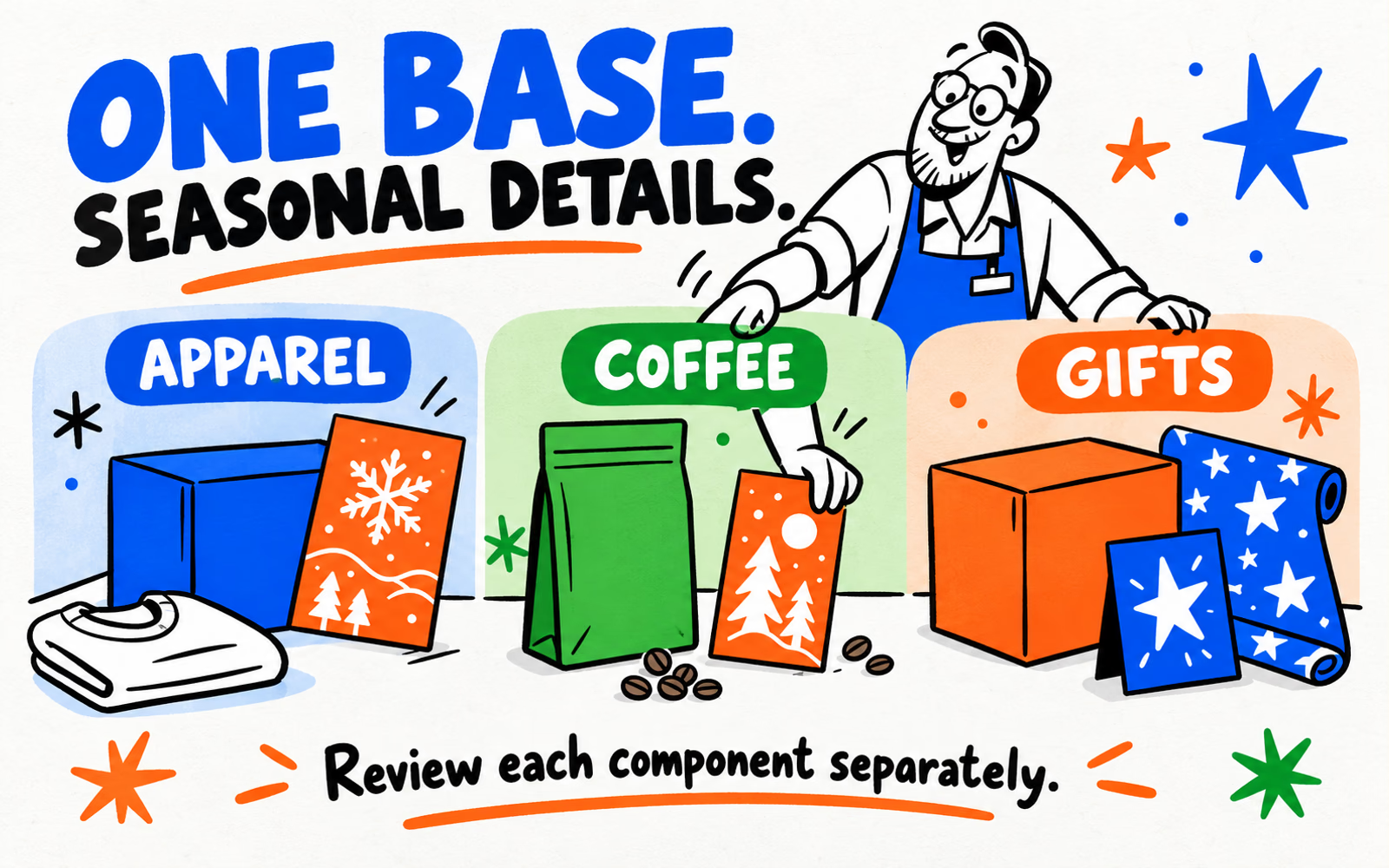
Apparel: a steady box with a winter card
Use an original blue base identity and an orange card with a bold abstract winter shape. Keep the garment’s care information accessible. Review the folded size and opening sequence before extending the same design to another bundle.
Coffee: a stable pouch identity with a seasonal message
Pair a green base concept with an orange seasonal label in a reviewed position. Keep required product information and closure requirements separate from the festive graphic. Confirm the pouch specification and label application for the actual proposal.
Gifts: a plain base with an expressive paper layer
Try an orange base box and blue star-pattern paper with a brief card. Check how much paper the actual arrangement uses and whether the card is seen before the customer unwraps the contents.
These are original fictional systems, not manufactured examples. Compare mailer boxes, labels, and wrapping paper as components to specify. Their palette can connect the collection without making every layout identical.
Prepare artwork and quantities for confirmed production dates
Assign a file name and quantity to each base and seasonal version. Review the artwork on the approved layout at actual size. Check the printed message, small text, placement, and any destination before approval; use the artwork guide for the project brief.
Write a component list for each order type. Not every order needs seasonal paper, and one gift card per order is different from one per product. Use your own mix in the consumption calculator, then review the resulting quantities by artwork version.
Keep requested dates, confirmed approval conditions, production scope, and packaging delivery separate in the purchasing record. No universal Christmas cutoff follows from choosing a seasonal design.
Continue with holiday inventory planning to distinguish expected use from the quantity you may need to purchase. Reconcile that plan with the supplier’s confirmed reference and terms before ordering.
References & planning resources
Original concepts, checklists, and hypothetical examples support your own project review. Confirm the final specification and purchasing terms with the quote.