
Holiday Packaging Inventory Planning: Use Your Own Order Scenarios
Separate base packaging from seasonal print versions. Work through an explicit hypothetical component example, usable stock, waste assumptions, and supplier pack rounding.
Holiday packaging inventory planning works component by component: distinguish year-round packs from seasonal versions, enter your own order mix, count usable stock, and review supplier purchasing units. Expected use and a purchase quantity are different figures. Use the existing calculator for your inputs, with waste, cover, and timing assumptions visible; it does not predict demand or confirm supplier terms.
A shelf full of boxes can coexist with a shortage of the right holiday card. Plan the components that make up each order rather than treating packaging as one interchangeable stock total.
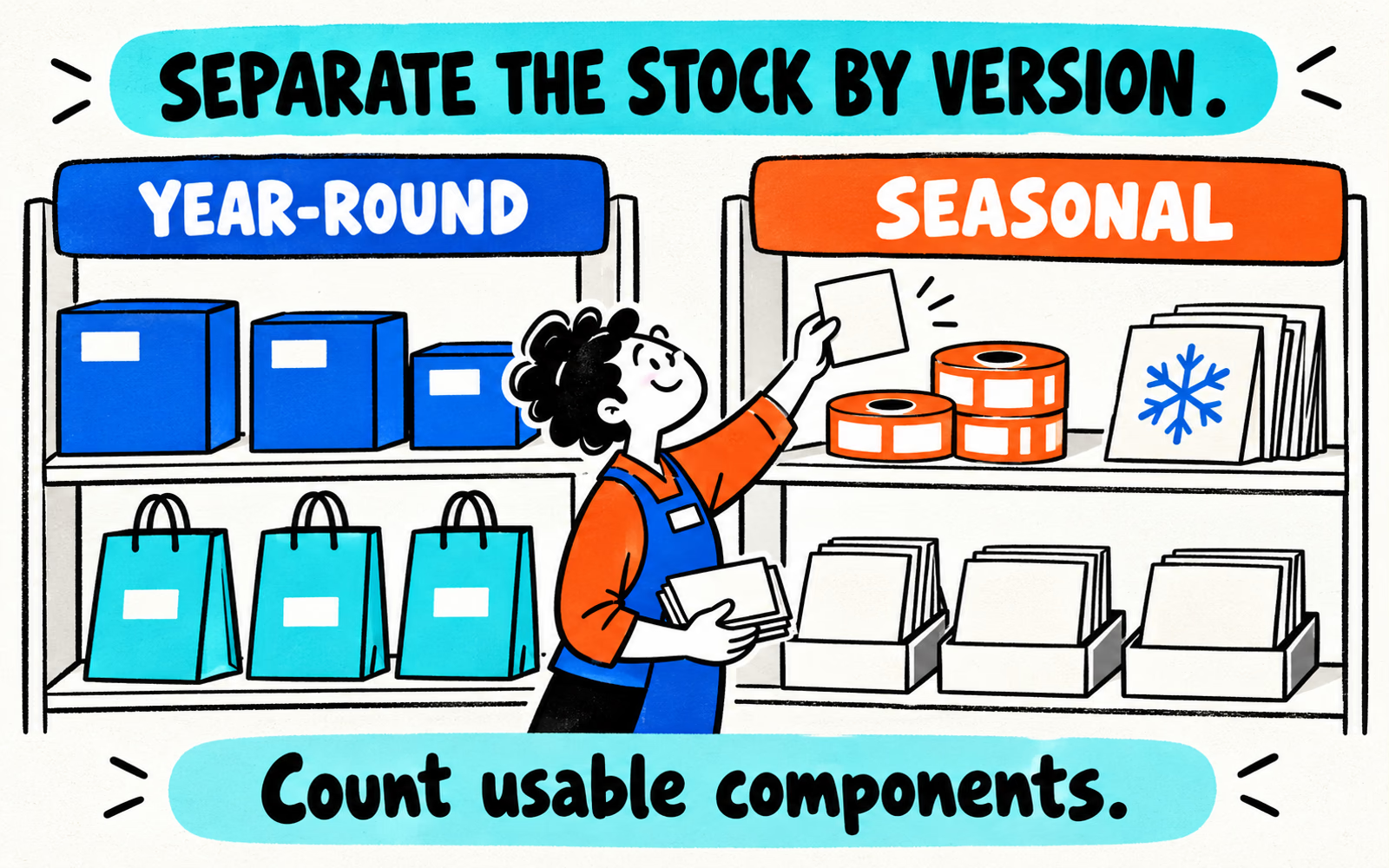
Separate evergreen and seasonal consumables
Create separate references for the base box, carrying bag, seasonal label, and card. Add the artwork version and the unit you count. If a pack or design changes, give the new reference its own line instead of silently combining the stock.
Check whether the item can still be used
A continuing brand mark may work after the holiday, but the structure must still fit the actual product. A seasonal card can be physically sound yet carry an outdated message. Count these situations separately from damaged stock.
Use the seasonal design system to decide which components change. Then record how each order type uses them. A gift option that adds paper and a card should have a different component list from a standard order.
Keep units consistent across storage and planning. Count paper sheets as sheets if that is how they are issued; record roll quantities and measured usage separately where needed. Do not subtract rolls from a requirement expressed in individual labels.
Model order scenarios with your own inputs
Choose a period, operating days, and explicit order scenario based on your own planning. Record the proportion of orders using each optional piece. Keep the original inputs so a later revision can be explained.
A deliberately simple hypothetical case
Suppose a fictional campaign has 100 orders: 60 standard orders and 40 gift orders. Every order uses one base box; only the gift orders use one seasonal label. Assume no waste and no extra cover for this example. These are invented teaching inputs, not recommended purchase quantities.
| Component | Use rule | Expected units |
|---|---|---|
| Base box | 1 for each of 100 orders | 100 |
| Seasonal label | 1 for each of 40 gift orders | 40 |
The blended label rate is 0.4 labels per completed order: 40 divided by 100. That is the rate to pair with the combined order count in the existing consumption calculator. Keep the label and box as distinct item lines.
Change the hypothetical inputs to your own data. If you add a waste allowance, use the calculator’s stated convention and record it. Avoid transferring an unexplained allowance from another business into your plan.
Account for usable stock and confirmed replenishment
Continue the same hypothetical case. Assume 35 usable base boxes and 15 current seasonal labels. For teaching purposes only, assume a 25-unit purchasing pack for each, with no minimum. These pack sizes are invented, not BrandYourPack terms.
| Component | Expected use | Usable stock | Shortage | Rounded purchase |
|---|---|---|---|---|
| Base box | 100 | 35 | 65 | 75: three 25-unit packs |
| Seasonal label | 40 | 15 | 25 | 25: one 25-unit pack |
The box purchase is larger than its 65-unit shortage because the hypothetical supplier sells whole packs. The 110 boxes available after that purchase leave 10 after the 100-order plan. The labels leave zero. Neither result is a safety-stock recommendation.
Keep timing beside quantity
List incoming references, quantities, and confirmed receipt conditions separately. An expected replenishment is not a physical stock count. Review whether the packaging can be received, checked, and made available before it is needed.
Replace the hypothetical purchasing units with the confirmed supplier proposal. Additional cover, changing order mix, damaged units, or a minimum per design can change the purchase. Keep each assumption visible so it is counted once.
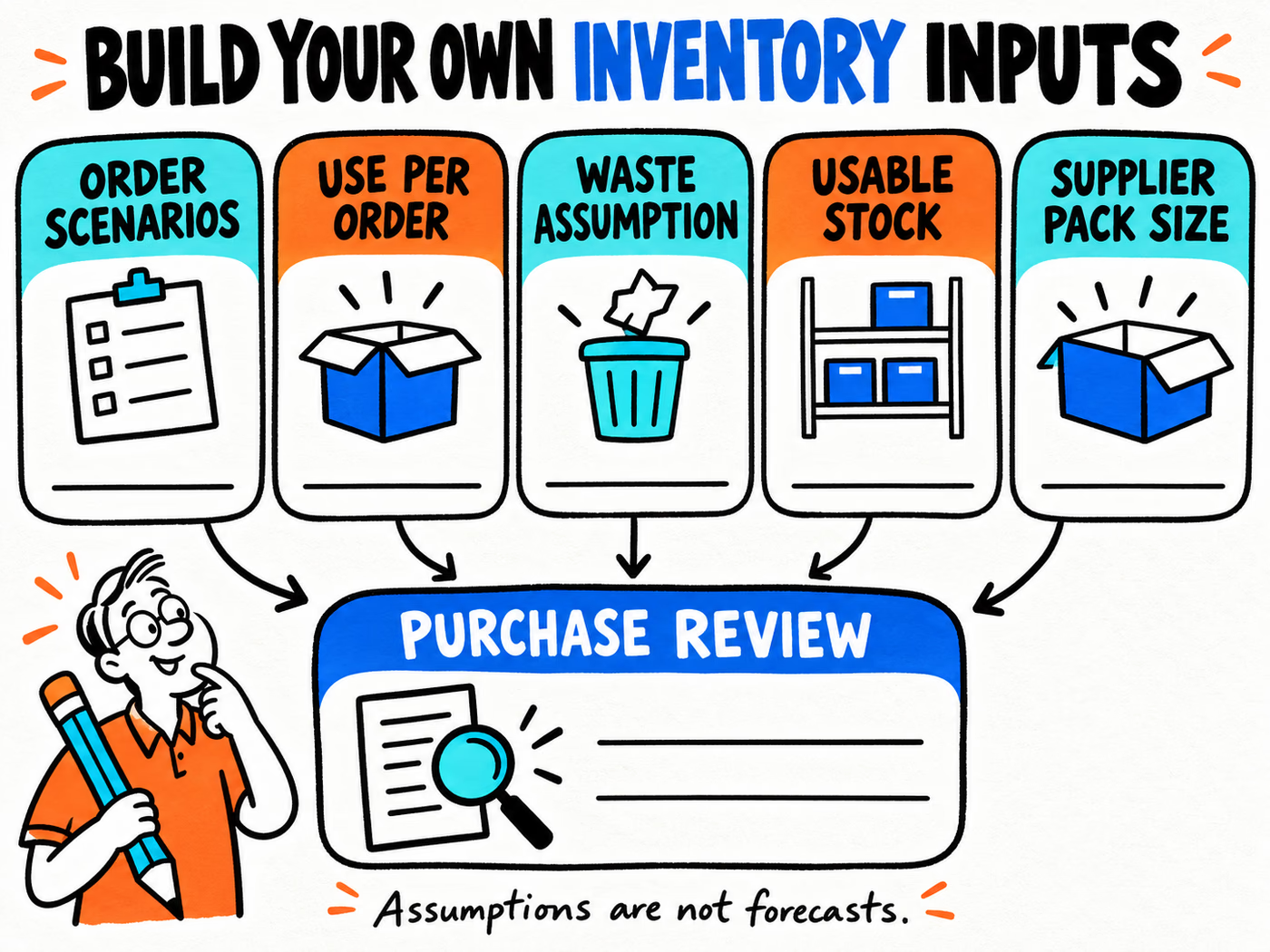
Review the plan before placing packaging orders
Reconcile every line with its intended product, artwork version, and current stock count. Review base mailer boxes, labels, and paper bags separately. Do not treat a combined design total as a confirmed minimum for each version.
- Are usage units and stock units the same?
- Which orders actually use each optional seasonal piece?
- Are the current files and quantities assigned to the right reference?
- Which waste, reserve, or continuing-activity assumptions are included?
- Have purchasing units and delivery conditions been confirmed?
Use the artwork guide for print preparation. The custom packaging cost guide helps review the full quote scope. For a bakery-specific collection, see holiday bakery packaging ideas. For the complete purchasing picture, the cost comparison tool is a separate resource; check its assumptions before comparing outputs.
Follow the packing readiness checklist to connect the planned stock with actual assembly. Update the plan when the product mix or campaign changes, and retain the previous version so the difference is understandable.
References & planning resources
Original concepts, checklists, and hypothetical examples support your own project review. Confirm the final specification and purchasing terms with the quote.