
Black Friday Packaging Checklist: Plan Supplies Before the Order Rush
Prepare order-type lists, stock counts, artwork versions, and a trial packing sequence. Use your own scenarios and confirmed supplier terms instead of a universal sales forecast.
A Black Friday packaging checklist should connect your own order scenarios with the supplies and packing steps each order requires. Count consumables by order type, check usable stock by reference, review artwork versions, and confirm purchasing terms. Then try the actual packing sequence. A planning scenario is an input to review, not a prediction of sales.
The practical question is whether the right pack, current message, and closing materials can be found and used together. Work through that question before the campaign starts.
Build scenarios from your own order data
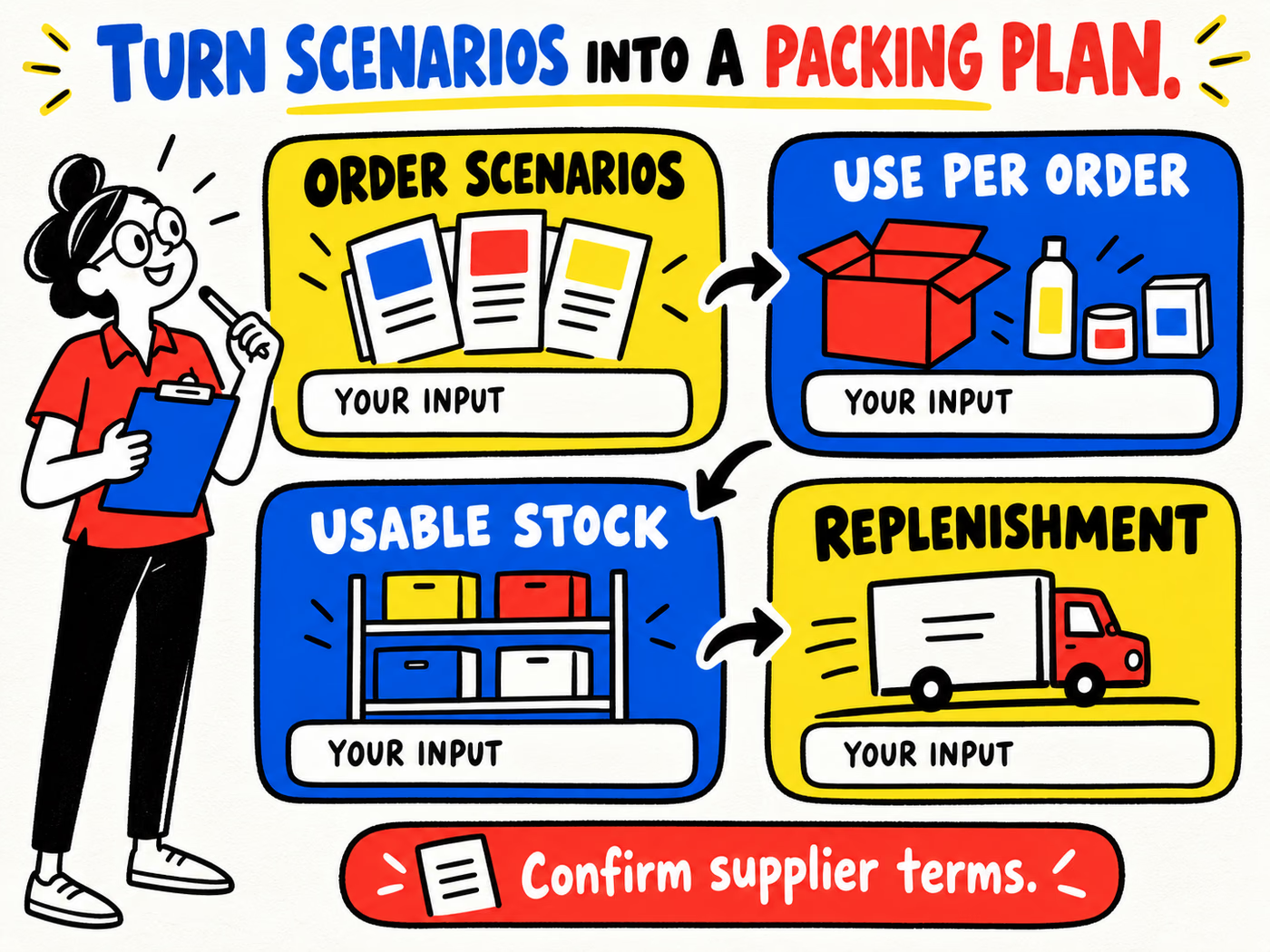
Start with your recorded order mix, upcoming product offer, and the period you want to cover. Separate single-item orders, bundles, and any other arrangement that uses different packaging. Past activity is a reference; it does not establish this campaign’s outcome.
Write down what changed
A new bundle, channel, gift option, or product size can change the packaging mix even if your total order assumption stays the same. Record those changes beside each scenario so the reason for a quantity is visible.
Give a scenario an owner and review date. If you compare a lower and higher activity case, change only the inputs you mean to investigate and retain the other assumptions. Do not turn a broad industry growth figure into your own order forecast.
For a one-time selling period, make the operating window explicit. Review whether the business continues afterward before adding future stock cover. Treat an unconfirmed receipt date as a question to resolve.
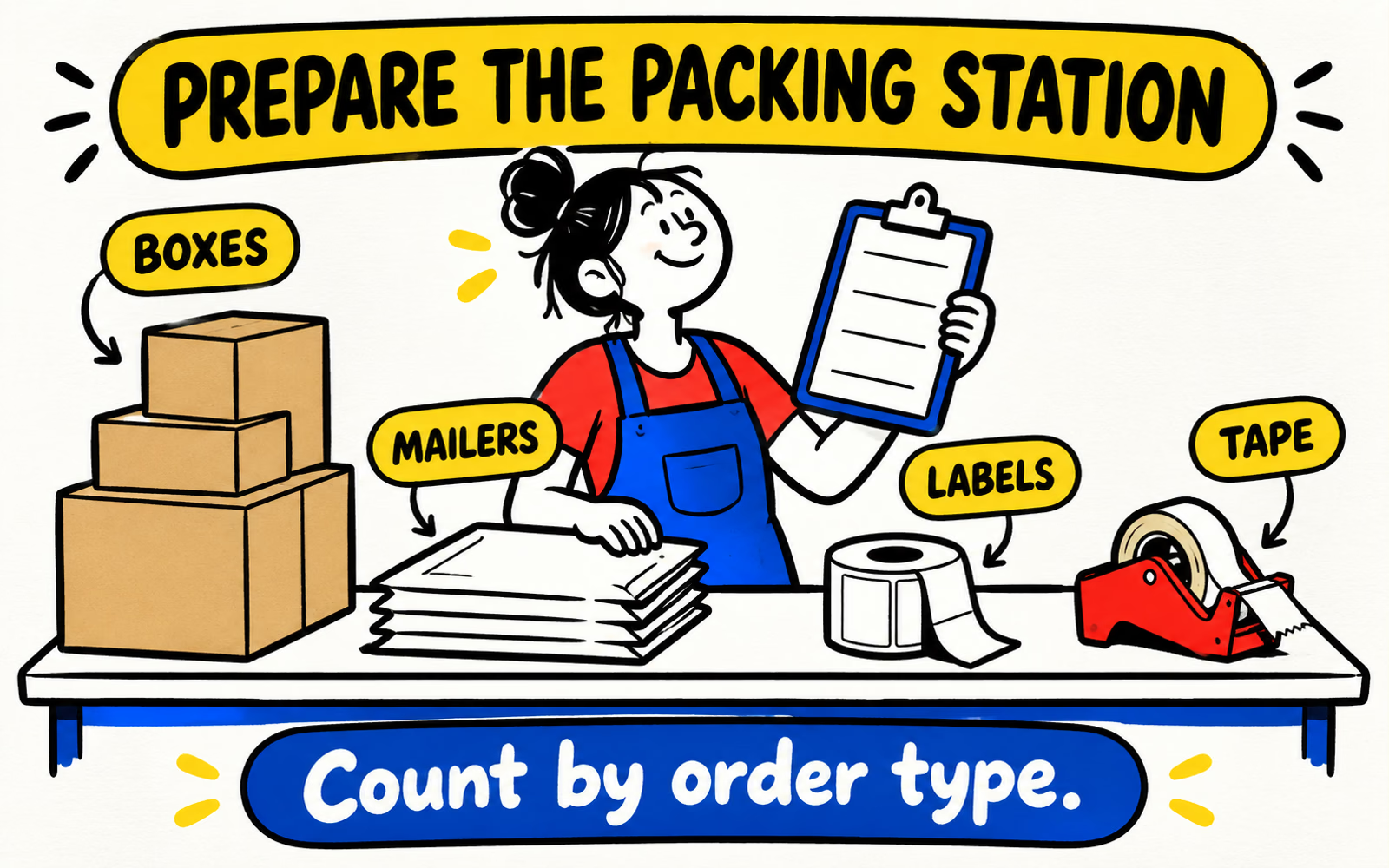
Count packaging by order type
Write a component list for each packed arrangement. A garment may use a mailer, while a rigid bundle may use a box and a different closing method. Measure and review the actual order before assigning that format.
| Order type | Outer pack | Other consumables | Version check |
|---|---|---|---|
| Single item | Record actual reference | Record closure and message usage | Which current files apply? |
| Multi-item bundle | Record reviewed box | Record holding and card requirements | Which bundle version applies? |
| Gift option | Record proposed arrangement | Record optional paper or label | Which gift message applies? |
Include labels, tape, cards, and optional wrapping where they are actually used. Keep their units clear: one piece, one sheet, or a measured length. A tape roll and a tape length are not the same stock unit.
Where the existing consumption planner uses a combined order count, express each item as its average usage across that complete mix. A card used in only some orders should not be entered as one card for every order.
Give separate lines to incompatible sizes or designs. Their combined stock total cannot supply an order that needs a particular reference.
Review stock, pack sizes, and reorder assumptions
Count stock that can actually be used: correct reference, current artwork, suitable condition, and available for this campaign. Identify damaged, obsolete, or already allocated units separately. Note incoming orders without treating an unconfirmed delivery as stock already on the shelf.
Check the purchasing unit
Record the supplier’s proposed pack size and any minimum per reference or design. Keep them separate from your expected consumption. A calculated shortage does not establish the quantity a supplier will sell.
Enter lead time only from the confirmed project terms, then review proof approval, production, transit, and receipt in your purchasing schedule. The stock worksheet cannot confirm that a later order will arrive before the campaign.
Record waste and any extra cover as distinct assumptions. Do not hide a reserve in several places. For a component-by-component worked example, use holiday inventory planning; this checklist focuses on readiness at the packing station.
Prepare a confirmed purchasing and packing plan
Match the component list to the current artwork files and proposed quantities. Review mailer boxes, poly mailers, and packaging tape for their actual roles. A decorative sticker is not a substitute for a reviewed closing method.
Run one complete practice order for each arrangement
- Find the right outer pack and current message version.
- Follow the proposed item placement and support method.
- Close the pack and check its finished identity.
- Record assembly questions, corrections, and observed material use.
- Update the instructions before sharing them with the packing team.
For an Etsy order, the per-order packaging cost worksheet is a separate way to account for materials and preparation. Keep a packing reference where it will be used: arrangement image, component codes, and current file versions. The artwork guide supports the print review; it does not approve an untested packing arrangement.
Before placing the order, reconcile quantities, quote scope, delivery destination, and confirmed dates. Revisit the checklist if the bundle, message, or order scenario changes.
References & planning resources
Original concepts, checklists, and hypothetical examples support your own project review. Confirm the final specification and purchasing terms with the quote.