
Shopify Return Packaging: Plan the Box and Instructions Together
Build the insert around your store’s confirmed return process. Review opening, packing and closing on the actual reference before describing it to customers.
Shopify return packaging should support your store’s real return process. Confirm how a customer requests a return, what happens after approval, and which packing and shipping instructions apply. Then check the actual box or mailer after opening before describing how it can be used again. A platform account or a return-guide card does not establish that a pack has a second-use closure or that shipping is free.
A return insert becomes confusing when the card describes one process and the store uses another. Plan the wording and the physical package together so customers can follow the next step you actually support.
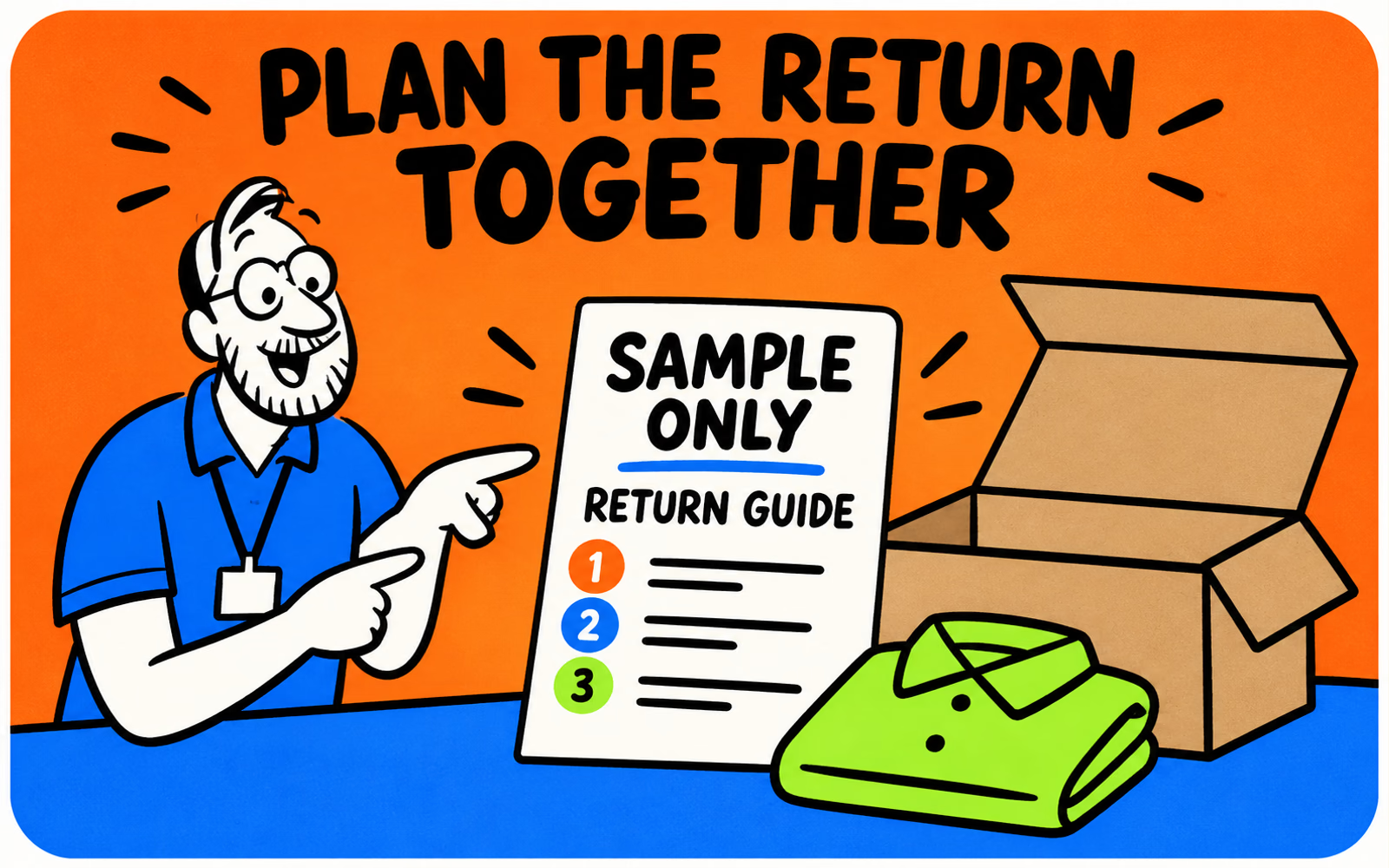
Start with your store’s actual return process
Write down the customer journey your store currently uses: where a request begins, who reviews it, what the customer receives next and whom they can contact for help. Keep the current policy and approved operational instructions beside the packaging brief.
Shopify’s self-serve returns documentation, reviewed October 6, 2026, describes customers submitting requests and merchants reviewing them under their policies. For an approved return, merchants can provide shipping instructions and return labels. Availability and configuration should be checked for the actual store; the feature description does not set a universal return policy.
Identify what the card can safely summarize
A durable insert can point to the maintained policy and explain the first step. Time-sensitive details may be better supplied through the confirmed store process. Check eligibility and any applicable requirements with the people responsible for the policy before print approval.
Do not copy another shop’s return window, address or wording into your own card. The outbound Shopify packaging guide can help coordinate the parcel presentation; the return process needs its own confirmed record.
Check whether the packaging can support that process
Open a packed sample in the way a customer is likely to open it. Record what remains intact, which protective components are still present, the usable space and what closing material would be needed for the return arrangement.
| Observation | Record on the sample | Decision to confirm |
|---|---|---|
| Opening | Torn or removed areas and usable panels | Does the return instruction describe the real opening result? |
| Fit | Actual return contents and remaining support | Can this proposed arrangement fit after opening? |
| Reclosure | Confirmed feature or separate material needed | What exact closing instruction can the store provide? |
| Identification | Old information and the new shipment process | How will the customer avoid conflicting shipment information? |
Keep structural features specific
A pictured strip is not evidence of a second closure. Confirm the actual reference, opening method and proposed reclosure with the producer. If separate closing supplies are needed, make sure the process and instructions account for them.
The apparel return specification guide separates physical closure questions from the customer process. Use the measurement guide for the complete return arrangement rather than assuming it matches the original bare item.
Write clear return instructions on an insert
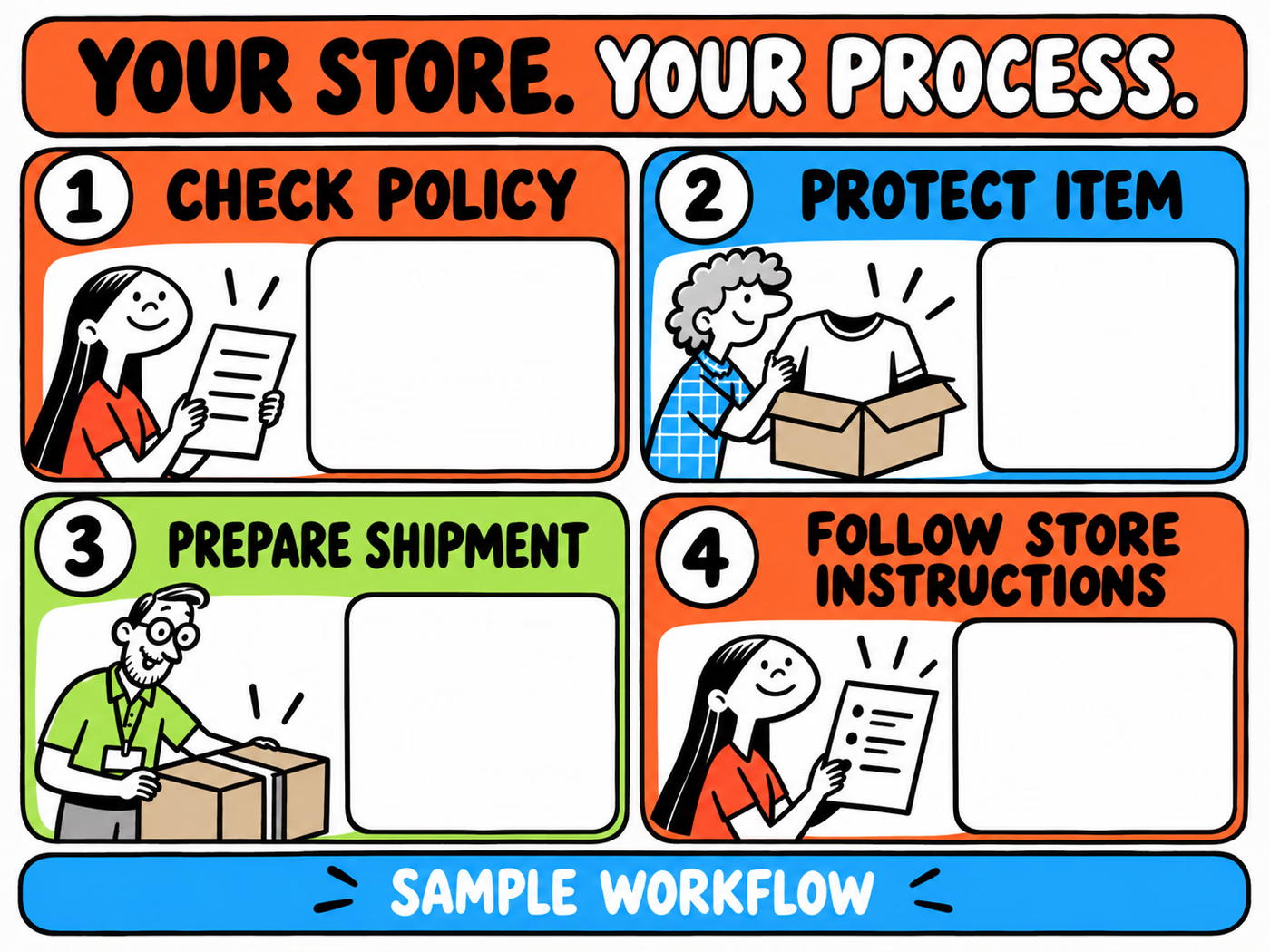
Use the customer’s task as the organizing principle. A sample structure is: consult the current policy, follow the confirmed product-protection instructions, prepare the shipment after the required store step, and use the shipping directions supplied for that return.
A non-operational example might begin: “Need help with this order? Start with our current return instructions at your confirmed policy page. Follow the instructions supplied for your request before sending a parcel.” Replace the placeholder, review the actual workflow and test the destination before production.
Separate stable guidance from individual instructions
Keep the reusable card free of a fictional address, invented deadline or promise of free shipping. Individual shipment details should come from your current process. If instructions differ by product or market, assign the correct version in the packing record.
Use the insert planning guide to prioritize one clear action. Put a real support route where readers can find it. The illustration below deliberately leaves store-specific fields blank; it is a planning framework, not a ready-to-send return instruction.
Test the instructions with a packed sample
Give the draft and a packed sample to someone who did not write the instructions. Ask them to identify the first step, explain what they would wait for and show how they would protect and close the proposed return pack. Record where the wording and physical result disagree.
This walkthrough checks comprehension and the proposed sequence. It does not establish transport performance or certify a reused pack. Resolve construction and handling questions for the actual project before describing the result to customers.
Keep approval tied to a version
Record the policy destination, card artwork version, packaging reference and review date. Revisit the card when the process, product arrangement or pack changes. Explore mailer boxes, poly mailers and insert cards with confirmed intended use. Follow the artwork guide for the final print file.