
Coffee Bag Label Information: Separate Design Fields from Compliance Checks
Build a product-specific information sheet before finishing the label. Separate branding, batch data and fields needing qualified US labeling review.
Coffee bag label information needs a product-specific review before the artwork is finalized. Start with what is actually inside the bag, the intended US sales context and every proposed claim. Separate brand storytelling from information such as product identity, net quantity and applicable business, ingredient, allergen or nutrition labeling. Plain coffee, flavored coffee and coffee-based mixtures should not automatically inherit the same labeling decisions.
A label can have excellent typography and still be built around incomplete product information. Give the designer approved content and a list of unresolved fields, so a beautiful layout does not quietly turn a guess into printed data.
Identify the product and applicable US labeling guidance
Write a product profile: whole bean or ground, the actual formulation, any added ingredients, intended package format, sales context and proposed claims. Include the current ingredient specification and responsible business details. A marketing name alone does not give a reviewer enough information.
Use the FDA Food Labeling Guide page for orientation. Reviewed October 6, 2026, it warns that its nutrition chapter and certain allergen information do not reflect all current requirements. It directs readers to newer resources, including the 2025 allergen guidance, Edition 5. Do not rely on an old downloaded chapter for a current nutrition decision.
Check the coffee nutrition exemption carefully
21 CFR 101.9(j)(4) includes whole or ground coffee beans among examples for a conditional nutrition-labeling exemption. The condition concerns insignificant amounts of all nutrients and food components required to be declared, and the absence of nutrition claims or other nutrition information in labeling or advertising, subject to the rule’s stated exception.
That is not a blanket exemption for anything called coffee. Have the actual formulation and claims reviewed; a flavored product or mixture needs its own assessment. This article organizes design inputs and does not approve a food label.
Separate marketing content from required information
List the brand name, story and proposed tasting language in one working group. In another, list fields for applicable labeling review. A memorable blend name cannot silently replace the product’s reviewed statement of identity.
21 CFR 101.3 addresses the statement of identity on the principal display panel. 21 CFR 101.5 addresses the name and place of business of the manufacturer, packer or distributor, including circumstances requiring wording that explains that business’s relationship to the food. Review the actual role and data rather than copying a competitor’s address block.
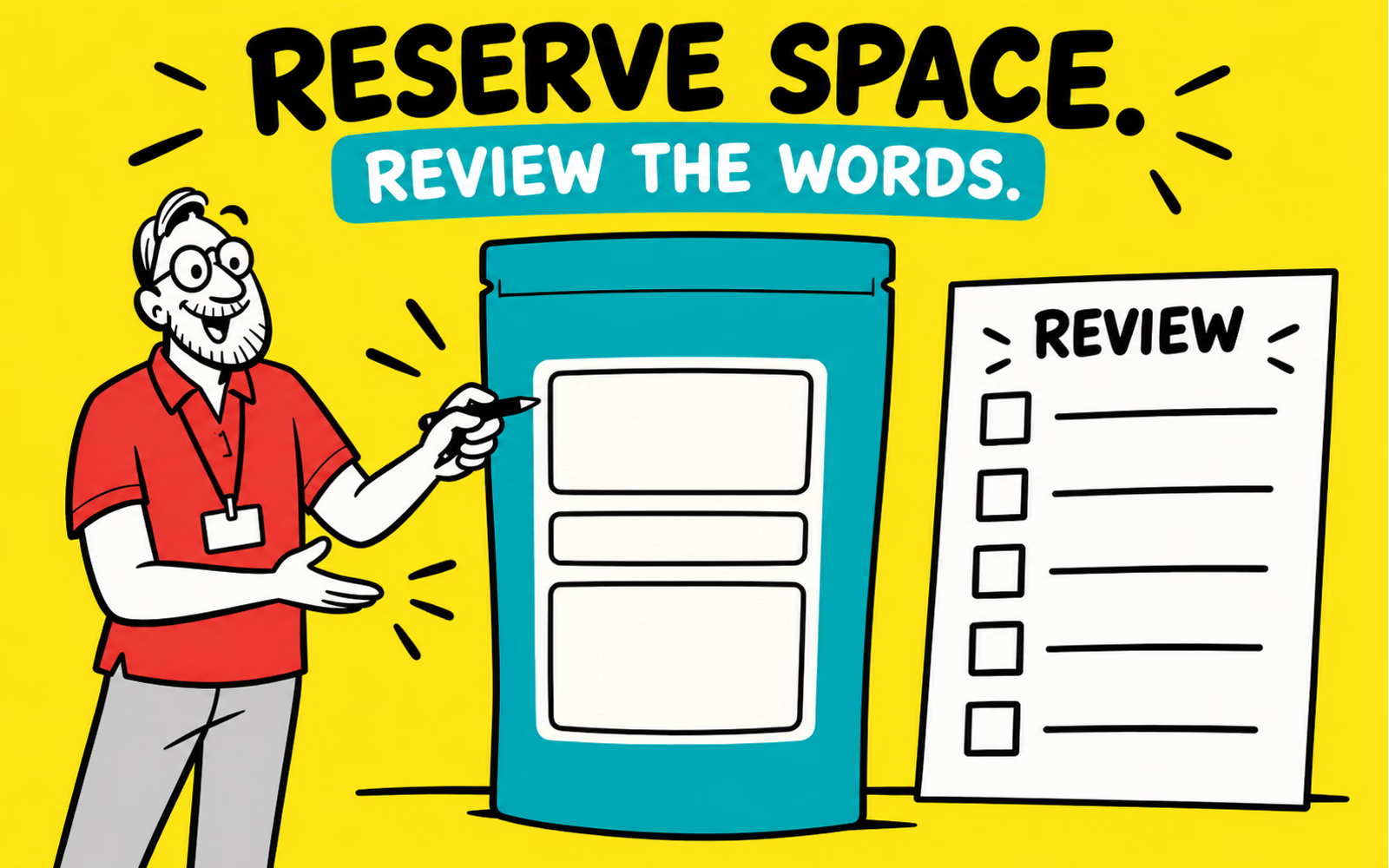
Reserve space before decorating it
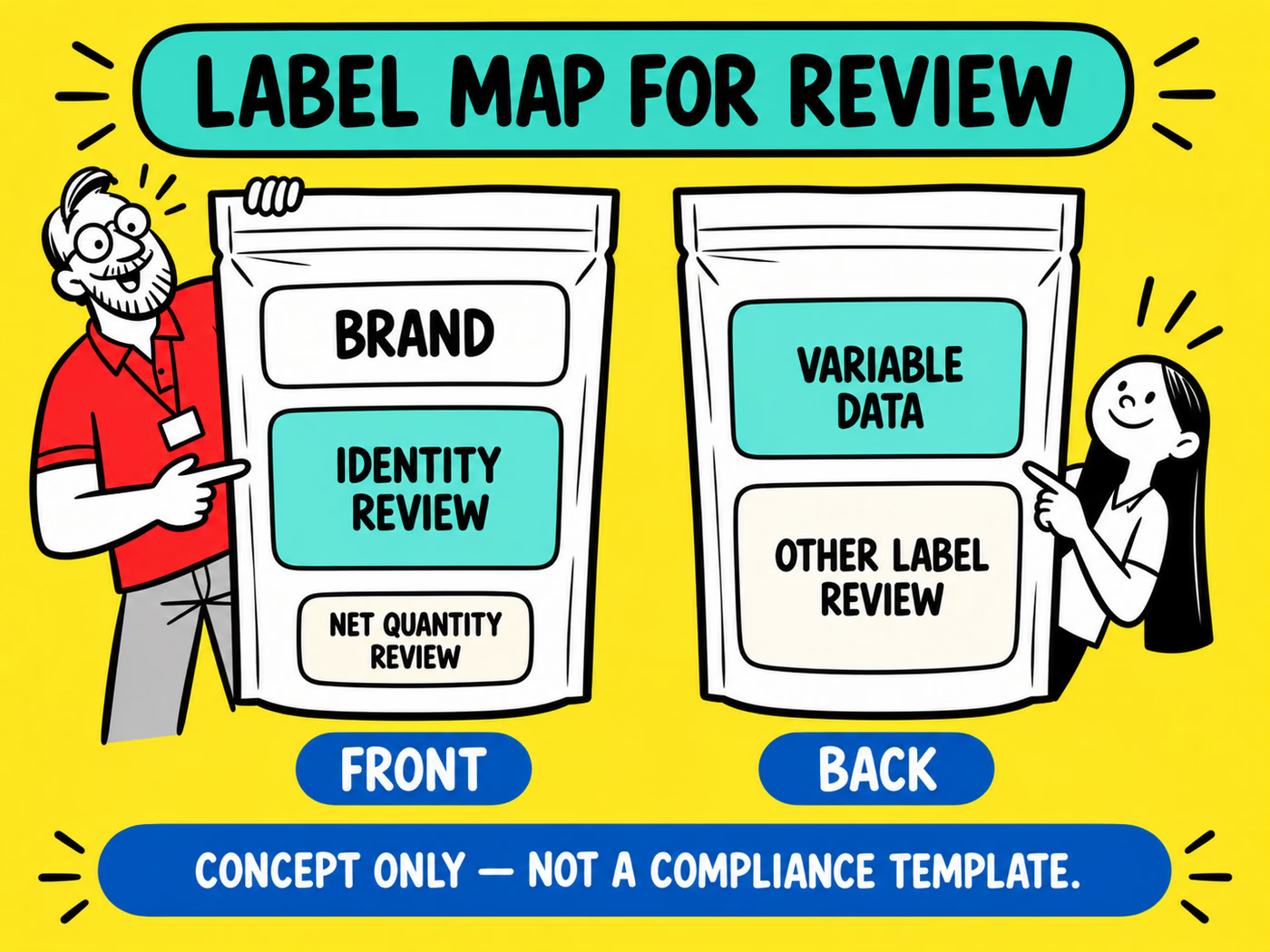
Set aside workable areas for reviewed identity and net-quantity information, and for any other applicable declarations. Resolve exact wording, placement and type requirements for the actual package with your qualified reviewer. The diagram here is a conceptual information map, not a universal legal layout.
The coffee bag design guide compares graphic hierarchies. Use that discussion after identifying the content constraints. Treat every proposed product or nutrition claim as a review item, even when it appears inside attractive storytelling.
Plan fixed, variable, and review-required fields
A field can be fixed in production and still need compliance review. These are separate questions: who supplies and approves the content, and how often does it change? Record both rather than assuming that permanent artwork is already verified.
| Field group | Data source | Decision before print |
|---|---|---|
| Brand and story | Approved brand content | Which claims or descriptions need further review? |
| Identity and net quantity | Actual product and filled-package data | What wording and presentation apply to this package? |
| Business and applicable declarations | Responsible business and formulation records | Who checks the applicable information and its accuracy? |
| Batch-dependent data | Actual production record | How is the correct data applied, checked and kept readable? |
Leave unknowns visibly unresolved
In the working file, identify missing inputs by their function. Keep fictional addresses, invented origins, nutrition tables and certification marks out of the preview. They can look convincing enough to escape notice in a later proof.
For a small format, the coffee sample packaging guide helps frame the physical space question. Reducing the bag size does not settle which information applies or make a larger bag’s label decision transferable.
Prepare artwork for a qualified final check
Send the reviewer the actual formulation, proposed claims, filled quantity, package dimensions, sales context and complete artwork. Include every panel and the intended variable-data area. Keep the review findings tied to a dated version so a later edit cannot inherit approval by accident.
After content review, inspect the production proof at its intended size. Check reading order, contrast, the effect of seams and folds, and whether changing data will fit its reserved area. Any required revision should return to the responsible reviewer when it affects the reviewed content or presentation.
Keep the packaging brief specific
Use the coffee pouch specification guide for the actual filled shape, closure and intended handling. Explore coffee bags and custom labels, then follow the artwork guide for the confirmed construction.
BrandYourPack quotes packaging components. A packaging quote or visual proof does not replace the responsible food business’s labeling review, and it does not include supplying or filling the coffee.