
Coffee Sample Packaging: Plan Small Formats Without Guessing Capacity
Define the sample purpose and fill weight, then review actual pouch space and closure. Keep each coffee identifiable with controlled labels and cards.
Coffee sample packaging starts with the sample’s purpose, intended fill weight, and an actual filling trial. Measure usable pouch space and the closure arrangement, then plan clear identification for each coffee. A small pouch photograph or a weight label cannot establish capacity or availability for your project.
A sample has a short introduction to make. The recipient needs to know which coffee it represents, while your packing team needs a format they can fill, identify, and close as specified.
Define the sample’s purpose and fill weight
Decide whether the sample is for a tasting, a retail introduction, or a buyer’s review. Record what the recipient will compare and what information they need. That purpose helps you define the intended coffee quantity without assuming a standard sample format.
State what you are packing
Identify whole beans or ground coffee and the intended net fill weight with units. Include the actual product and packing conditions in the request. The same weight description does not uniquely identify the space occupied by different products.
| Purpose | Information to organize | Packing question |
|---|---|---|
| Tasting comparison | Distinct coffee identifiers and matching notes | How will each filled sample be distinguished? |
| Retail introduction | Accurate product identity and next step | What quantity and closure are intended? |
| Buyer review | Reference code and relevant product details | Which actual sample format can be reviewed? |
Keep quantities by coffee and label design separate. If a set contains several samples, list both the individual pouch requirements and any outer presentation that groups them.
Measure the filled sample rather than relying on a photo
Ask about a proposed pouch reference and run an agreed fill trial with the actual coffee. Record the target fill weight, product form, how the pouch is loaded, and the completed arrangement.
Record usable space and closing space
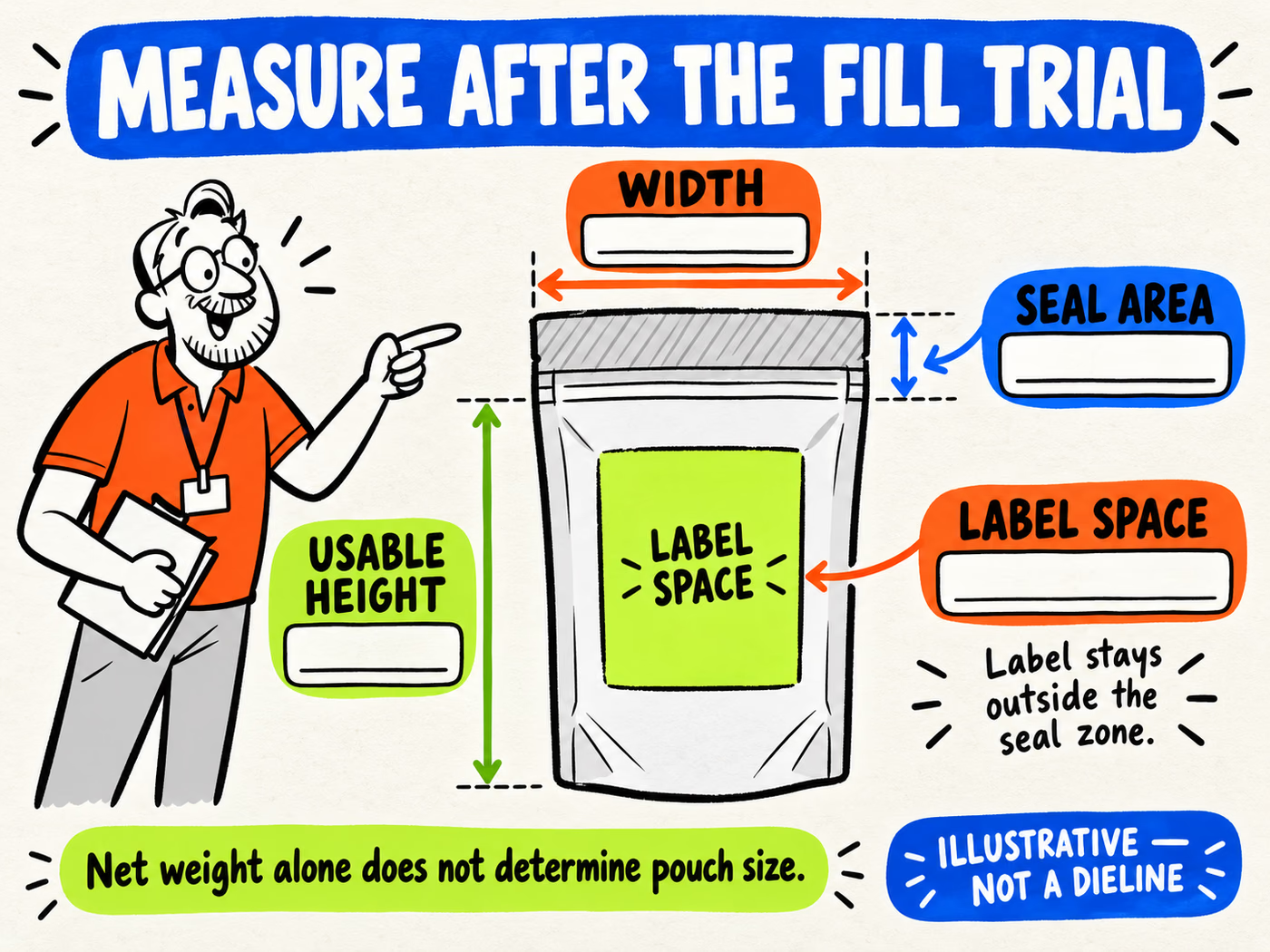
Confirm how width, usable height, and any gusset are defined. Identify the zone needed for the specified seal or closure. External film dimensions are not automatically the space available for coffee.
Check that the intended closure can be completed without forcing the filled contents into its working area. Keep any filling or closing equipment requirements with the responsible operator and supplier.
The coffee bag and pouch specification guide organizes those questions. The small diagrams here are explanatory, not supplier templates.
Plan identification and closing requirements
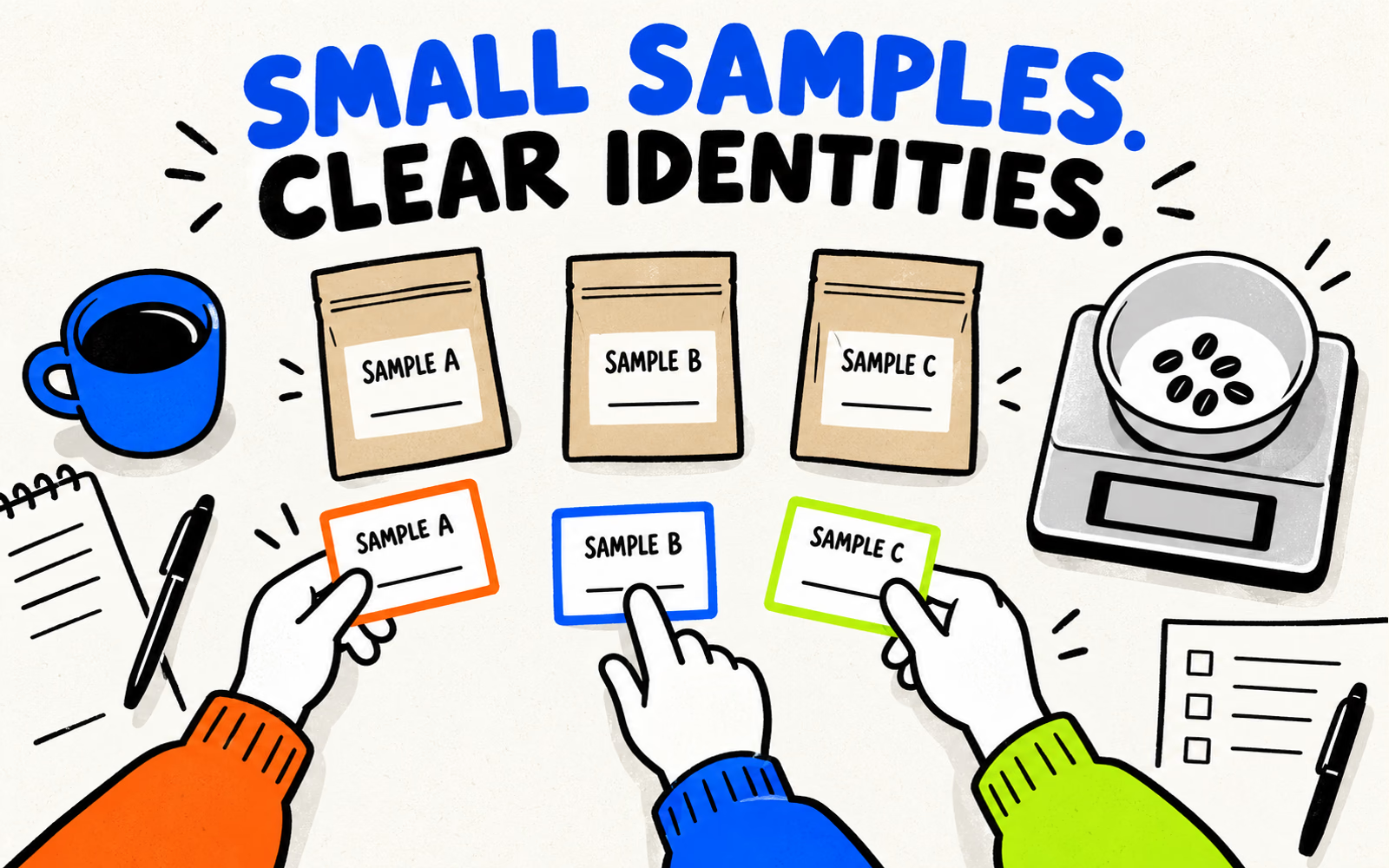
Give every sample a distinct identifier that matches the coffee and any accompanying card. Keep the same reference in the packing list, approved artwork, and recipient notes.
Make the sample easy to distinguish
A shared brand mark can sit beside changing sample information. Leave room for the actual approved text and review it at finished size. The generic A, B, and C identifiers in the illustration are placeholders rather than usable product labels.
Any product-specific labeling information needs a separate review for the actual product and sale. A tasting card or decorative label does not complete that process.
Specify the actual closure
State what happens after filling and whether the recipient is intended to reclose the pack. Confirm the proposed construction, closure method, and equipment relationship rather than inferring them from a drawn edge. See the valve, closure, and gusset guide for component questions.
Keep labels outside the required seal area and review their application on the actual pouch surface. Artwork approval does not establish barrier performance or a freshness period.
Request a sample packaging feasibility review
Evaluate flat pouches, coffee bags, and labels against the requested sample role. Small-format availability, material, closure, and quantities require project-specific confirmation.
Send a measurable sample brief
- Sample purpose, coffee form, and intended net fill weight.
- Proposed pouch reference or requested format.
- Observed filled dimensions and unresolved closing questions.
- Sample identifiers, artwork versions, and quantities.
- Intended handoff, any outer set, and delivery ZIP.
Use the artwork guide after the proposed dimensions and print areas are confirmed. For retail-size planning, the 12 oz versus 1 lb guide explains why a weight label is not a dimension.
This request concerns packaging to review. It does not imply coffee supply, a filling service, or a confirmed small-format minimum.
Make every sample identifiable.
Planning packaging for your coffee? Share your filled-product dimensions, closure needs, quantities by design, and delivery ZIP. Packaging specifications are confirmed with your quote.
Planning references
- BrandYourPack: How to Specify Coffee Bags & Pouches.
- Coffee Bag Valves, Closures, and Gussets.
- Packaging Artwork Guide.
Reviewed October 6, 2026. Original sample concepts; capacity, materials, closure, and actual format availability require confirmation.