
12 oz vs. 1 lb Coffee Bags: Weight Is Not a Packaging Dimension
Compare 12 oz and 1 lb as net coffee weight, then use an actual fill trial to specify the bag. Record gusset, closure, and usable space separately.
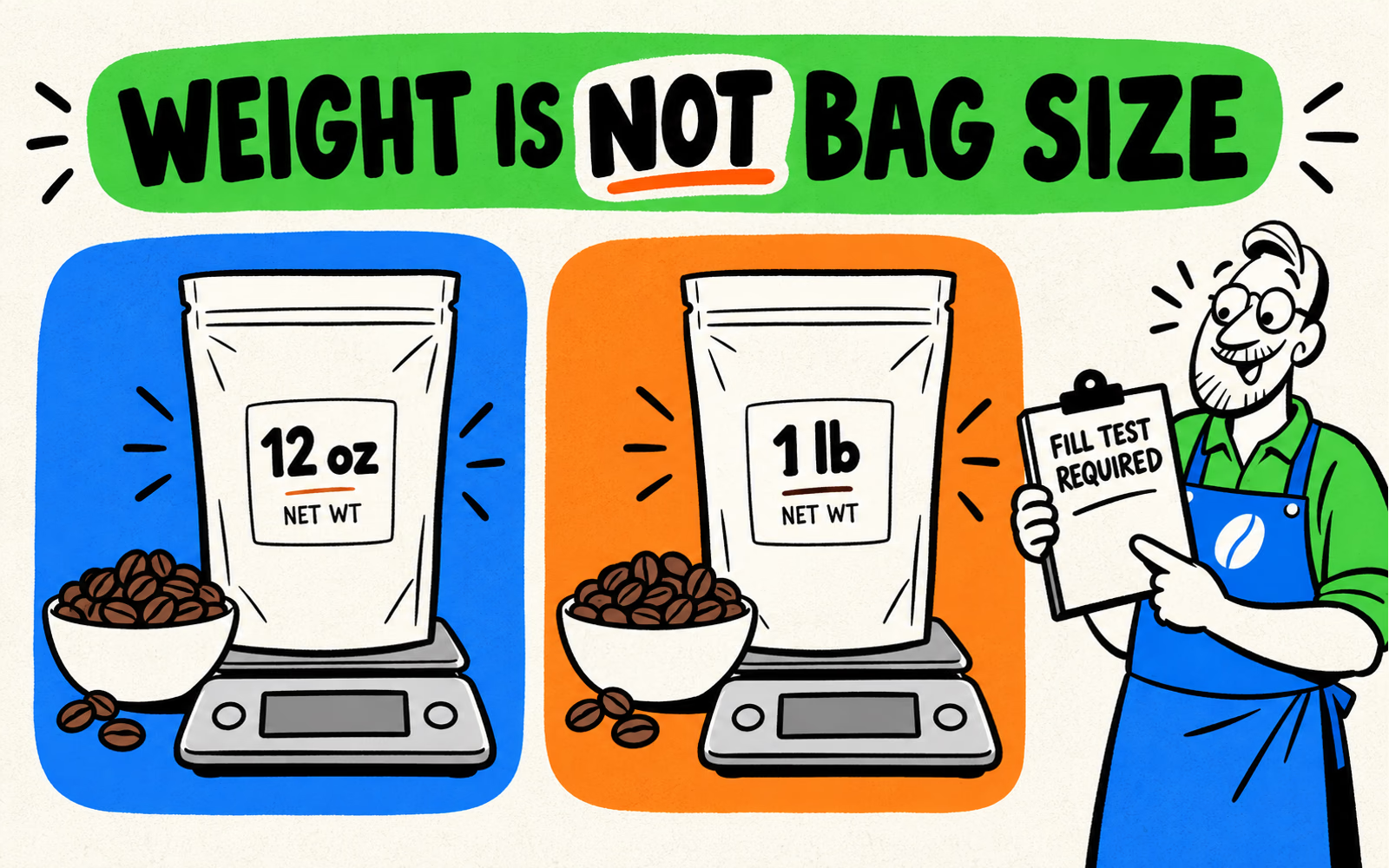
In a 12 oz versus 1 lb coffee bag comparison, the labels describe net coffee weight rather than pouch dimensions. One pound is 16 ounces of mass, so it contains more coffee than a 12-ounce fill. Select the actual bag through a filling trial that also checks usable space, gusset, and closure; do not scale bag height from the weight ratio.
The weight comparison is straightforward. The bag choice still needs measurements. Two weight labels do not tell you how a particular coffee will sit inside a proposed pouch.
Distinguish net weight from fluid capacity
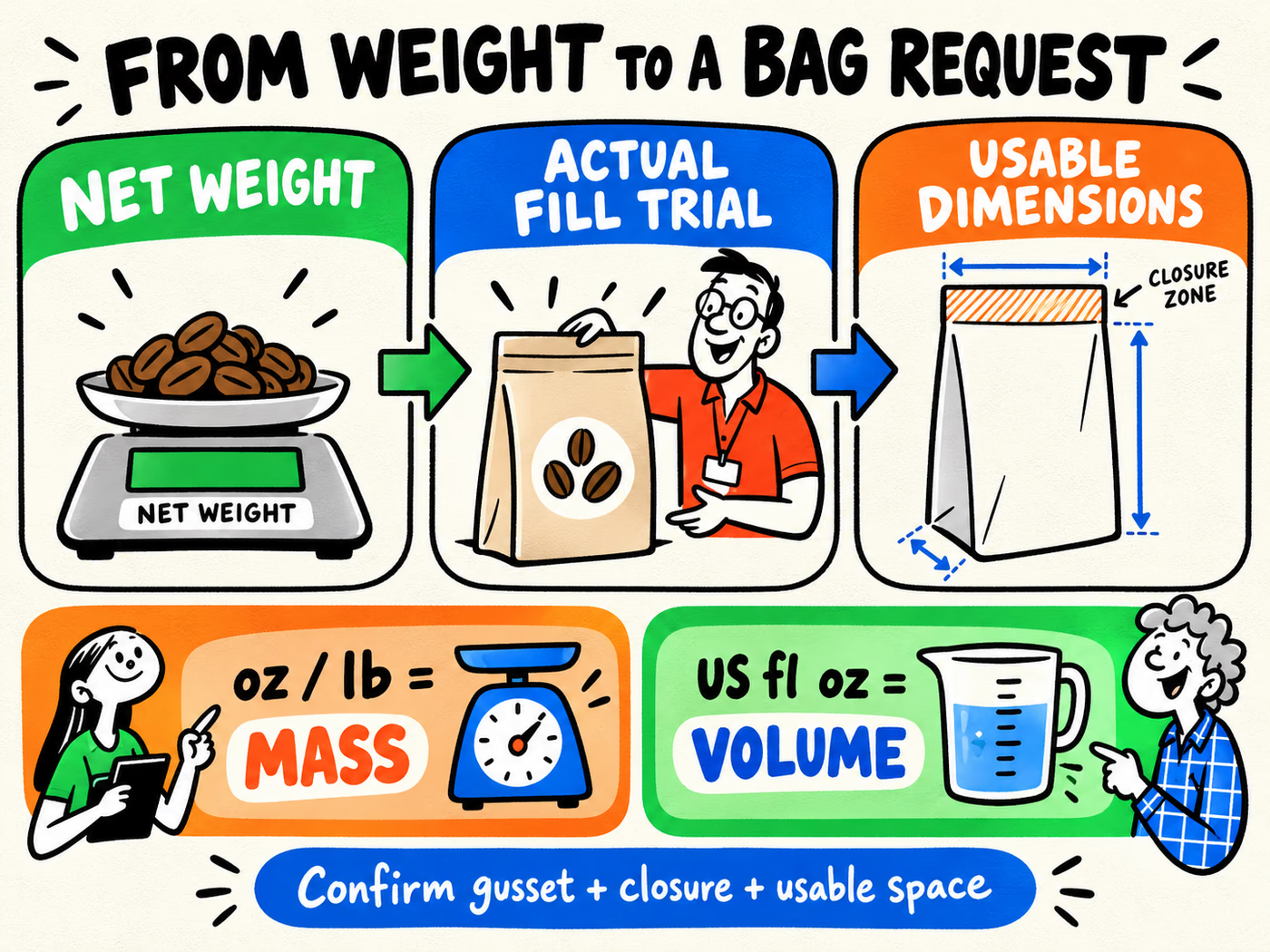
For these packaged-coffee examples, ounces and pounds describe mass. U.S. fluid ounces describe volume. A cafe cup listed in fluid ounces is not a reference for the usable size of a retail coffee bag.
| Term | What it describes | What remains unknown |
|---|---|---|
| 12 oz net weight | 12 ounces of coffee mass | Product volume and required usable bag space |
| 1 lb net weight | 16 ounces of coffee mass | The actual pouch dimensions and closure arrangement |
| US fl oz | A volume unit | Coffee mass without an actual density relationship |
| Bag width, height, gusset | Dimensions under the supplier’s convention | Fit until evaluated with the actual product and closure |
NIST’s weight conversion table confirms 16 ounces per pound. That conversion establishes a mass relationship; it does not determine a pouch’s height, width, or capacity.
Compare the filled product before selecting dimensions
Run the agreed comparison with the actual coffee, recording whether it is whole bean or ground and the product reference used. Keep the packing method clear so the observations can be related to the proposed bag.
Try each target fill separately
Weigh the intended amount, fill the proposed reference, and review its usable space and closing arrangement. Repeat for the other target weight. Note whether a reference works for both requested presentations rather than assuming it does.
The two same-size pouch drawings in our illustration deliberately avoid a proportional height comparison. They show weight labels only; they are not evidence that one actual pouch can accommodate both fills.
Keep the product in the comparison
The relationship between mass and occupied space depends on the actual product and packing arrangement. Do not use a generic bean photograph, a different roast’s sample, or a nominal capacity name as the final fit approval.
The coffee pouch specification guide helps document the actual reference and fill questions. For small tasting formats, the sample packaging guide applies the same measured approach.
Record gusset, closure, and headspace
Ask how the supplier defines each dimension. A quoted width may be flat width, and a gusset may be described under a particular convention. Record usable height separately from any area reserved for sealing or closing.
Give the closure its required working space
Identify the proposed closing method and any equipment requirements. Review how the contents sit below the intended closure and record the space needed for that actual arrangement. There is no universal headspace number in this article.
Separate zipper, seal, valve, and gusset questions. One feature does not automatically establish another, and a drawn component is not a confirmed option. Use the component guide to keep the request clear.
Review the completed package’s shape and artwork area after filling and closing. A crease or expanded gusset can change the visible label area compared with a flat preview.
Prepare a measured coffee bag request
Evaluate coffee bags and stand-up pouches against the recorded use. Include both weight targets and their own sample observations, with quantities separated by reference and design.
Send more than a capacity label
- Actual coffee reference and whole-bean or ground form.
- 12 oz or 1 lb net fill target, with units clear.
- Proposed dimensions under the supplier’s convention.
- Gusset, usable height, seal, closure, and fill-trial questions.
- Artwork versions, quantities, and delivery ZIP.
Use the artwork guide once the bag layout is confirmed. The coffee bag design article develops the visual hierarchy after these practical decisions.
Start with weight.
Finish with a measured request.
Planning packaging for your coffee? Share your filled-product dimensions, closure needs, quantities by design, and delivery ZIP. Packaging specifications are confirmed with your quote.
Planning references
- NIST: Consumer Package Labeling Guide, Selling by Weight.
- BrandYourPack: How to Specify Coffee Bags & Pouches.
- Coffee Bag Valves, Closures, and Gussets.
Reviewed October 6, 2026. Verified mass conversion; pouch drawings are illustrative and do not establish capacity or final dimensions.