
Gift Wrap vs. Gift Boxes: Compare Shape, Preparation, and Presentation
Compare the same gift in two complete arrangements. Look at preparation, access and support before deciding which printed components belong in your brief.
The useful way to compare gift wrap vs gift boxes is to pack the same gift both ways. Compare the full preparation, the opening experience, any inner support and the components needed for transport. Wrapping paper can create a decorative surface; a box can organize presentation. Neither choice establishes shipping protection on its own, and neither is automatically cheaper or more sustainable without project data.
A neat wrapped parcel and a well-arranged box can both make a gift feel finished. The fair comparison starts underneath the decoration: the same item, the same accessories and the same route to the recipient.
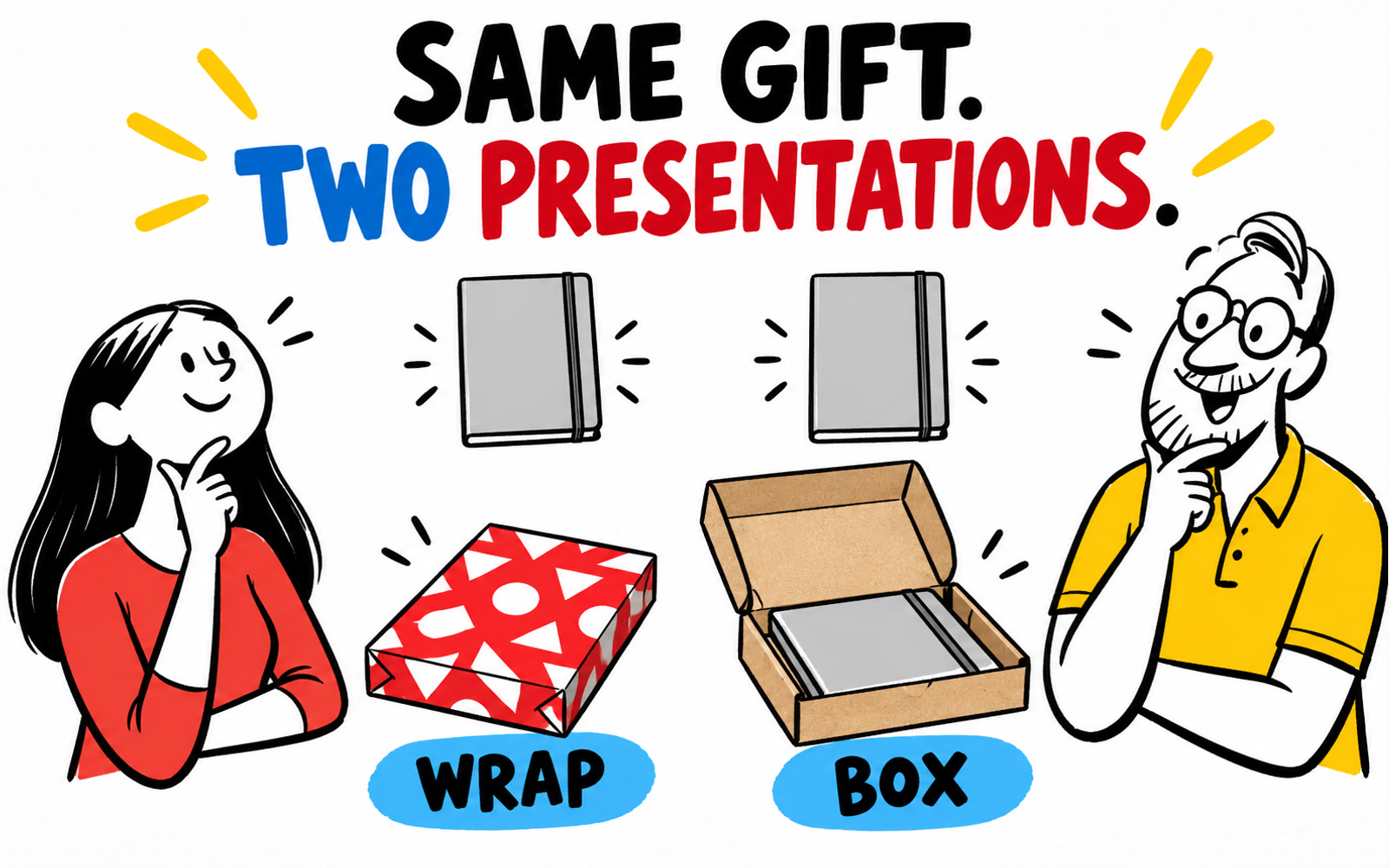
Define the same gift for a fair comparison
Choose one actual product version and keep the contents unchanged between samples. Include its primary pack, accessories and card in both arrangements. If one option contains an extra sleeve or support, record it as a difference instead of attributing the result to paper or box alone.
A plain notebook makes a simple example because its regular outline is easy to recognize. An irregular object or a collection of pieces will pose different questions. Keep those cases separate so a successful-looking notebook presentation is not treated as a rule for every gift.
| Input | Hold constant | Record if it changes |
|---|---|---|
| Gift | Product version and item count | Any substitution |
| Accessories | Card and companion items | Extra sleeve or support |
| Route | Collection, hand delivery or shipment | Different outer packaging |
| Design | Comparable message and motif | Print area and component count |
Measure each complete proposal and retain a short component list. Use the packed-arrangement guide if you will also evaluate an outer parcel. Avoid comparing an empty decorative box with a fully wrapped and protected product.
Compare wrapping and box-based presentation
For the wrap option, examine how the paper meets around the actual shape, where it is secured and whether the graphic remains readable. For the box option, examine fit, placement and the way the recipient reaches the gift. Try both with the people who will prepare orders.
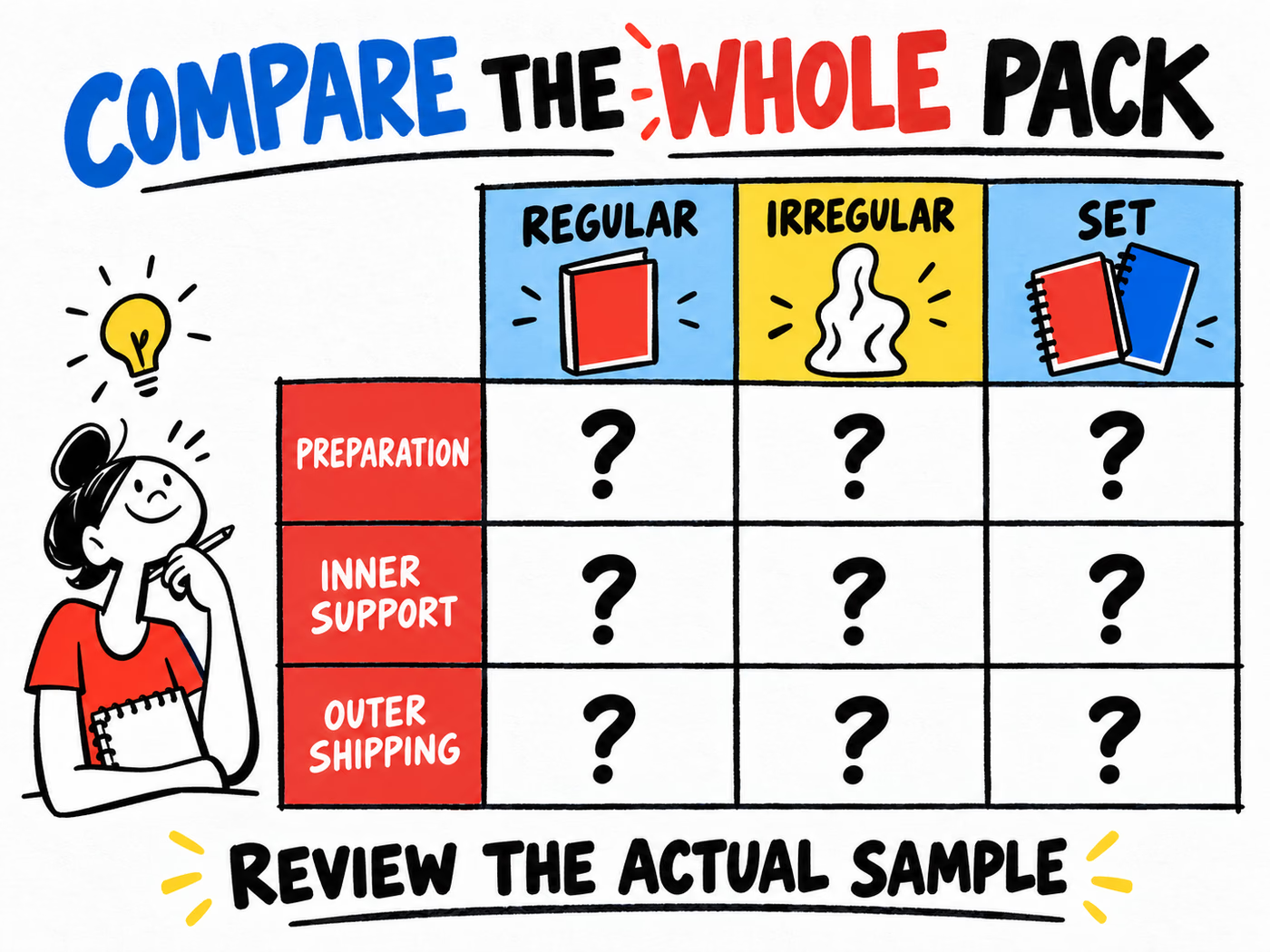
A regular shape may offer straightforward folding surfaces. An irregular shape may need a separate holder or a different presentation. A set of items needs an arrangement that keeps the pieces identifiable. These are questions to review on samples, not scores that automatically favor one method.
Record the work rather than guessing
If preparation time matters, observe the complete process for representative orders under comparable conditions. Include selecting the components, assembling the arrangement and adding the message. Keep the method and sample count with the observations before using them in a purchasing decision.
The matrix below uses question marks intentionally: preparation, inner support and outer shipping must be reviewed for each actual shape. It does not assign invented time savings, environmental ratings or protective results. Consider the opening experience too; a card trapped beneath taped paper may need a different position.
Separate gift appearance from shipping protection
A presentation that works across a shop counter may need another layer for shipment. Decorative wrap can be marked during handling, while a gift box may need its own outer parcel and support. Decide how the complete gift will travel before treating either presentation as ready to dispatch.
Review movement, surface contact and the product’s particular needs with the actual materials. Include the card and other loose pieces in that assessment. A decorative label can identify the gift, but it should not be treated as evidence of a shipping seal or protective performance.
Keep the two jobs in the brief
List presentation components and transport components separately, then evaluate them as one complete arrangement. Measure the finished set with the proposed support before selecting the outer format. Retain the outcome of the actual review rather than copying a gap or structure from an illustration.
The paper-role comparison helps distinguish decorative wrapping from other paper uses. The material name alone does not establish suitability for a particular product or route.
Request the printed components you actually need
Once the two samples have been compared, list the printed pieces in the selected arrangement. Explore wrapping paper, product boxes and labels with the agreed dimensions, intended use and artwork. Identify special structures as requests to discuss, rather than assuming they are available stock.
Compare a project-specific quote using the same scope: quantities, artwork versions, preparation requirements and delivery ZIP. Keep any material-use or cost comparison tied to that scope. A lower count of visible pieces does not by itself establish a lower total cost or environmental impact.
Prepare a design that works assembled
Use the artwork guide and the approved production layout. Place essential words away from folds, overlaps and closures, then read the physical sample at its intended size. An attractive pattern can stay simple while the practical information remains clear.
Use the consumption calculator with actual usage per gift. For a seasonal collection, see the reusable-base guide. Keep the final component list with the artwork so the next order reproduces the reviewed presentation.