
Mother’s Day Gift Packaging: Coordinate Products and Personal Messages
Give the products a clear arrangement and the personal message a place of its own. Build each gift around its actual contents, then coordinate the printed pieces.
Mother’s Day gift packaging works best when the contents, presentation and personal message are planned together. Start with the actual products, choose a coordinated pack that accommodates the complete arrangement, and put the card where the recipient can find it easily. Separate the shared printed design from any changing message, then confirm quantities and production options for each version.
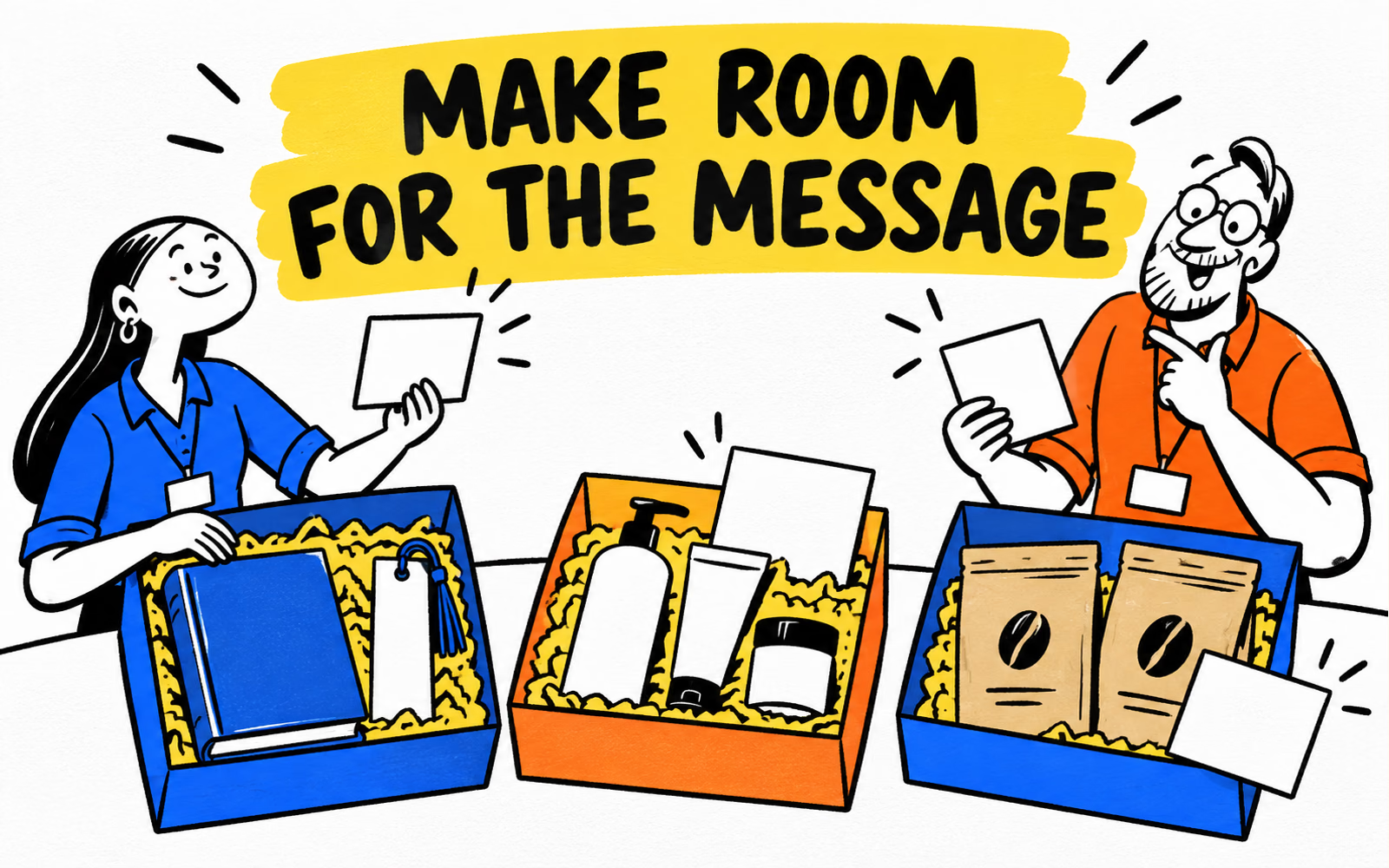
A good gift feels considered before the recipient reads a word. A book with a bookmark, a small cosmetics set and a coffee selection can all feel personal, but they need different arrangements. The message card ties the experience together without forcing every gift into the same box.
Define the real gift contents
Write down what is included in each gift, including accessories, primary packaging and the card. A book-and-bookmark pair differs from a book sold alone; a cosmetics set may contain several containers with different heights. Give each actual assortment its own reference so the packing team can recognize it.
Our three illustrated concepts use books, cosmetics and coffee as examples. They are planning ideas rather than products supplied by BrandYourPack. Keep the real product names and versions in your brief, especially when a substitution changes the dimensions or accompanying information.
| Gift idea | Record before choosing the pack | Keep with the products |
|---|---|---|
| Book and bookmark | Complete dimensions and the bookmark position | Edition details and gift message |
| Cosmetics selection | Container versions, closures and arrangement | Responsible supplier product information |
| Coffee selection | Actual sealed pouches and item count | Coffee identification and supplier information |
Measure the complete arrangement, including any proposed support. The mailer-box measurement guide explains why the packed set matters more than the bare item. Review products that could move, rub or leak with their responsible suppliers before choosing the presentation.
Choose a coordinated presentation system
Repeat one original motif across the box, label and card, while letting the products determine the usable space. A bold circle pattern or a simple line drawing can connect several formats. Keep enough quiet space around the product identifier so the recipient can tell which gift they have.
For the book concept, place the bookmark where it is visible without covering the card. For the coffee concept, keep pouch identifiers easy to read. For cosmetics, retain the original product information instead of hiding it beneath decorative labels. The same identity can work across these arrangements without making the structures identical.
Try the opening sequence
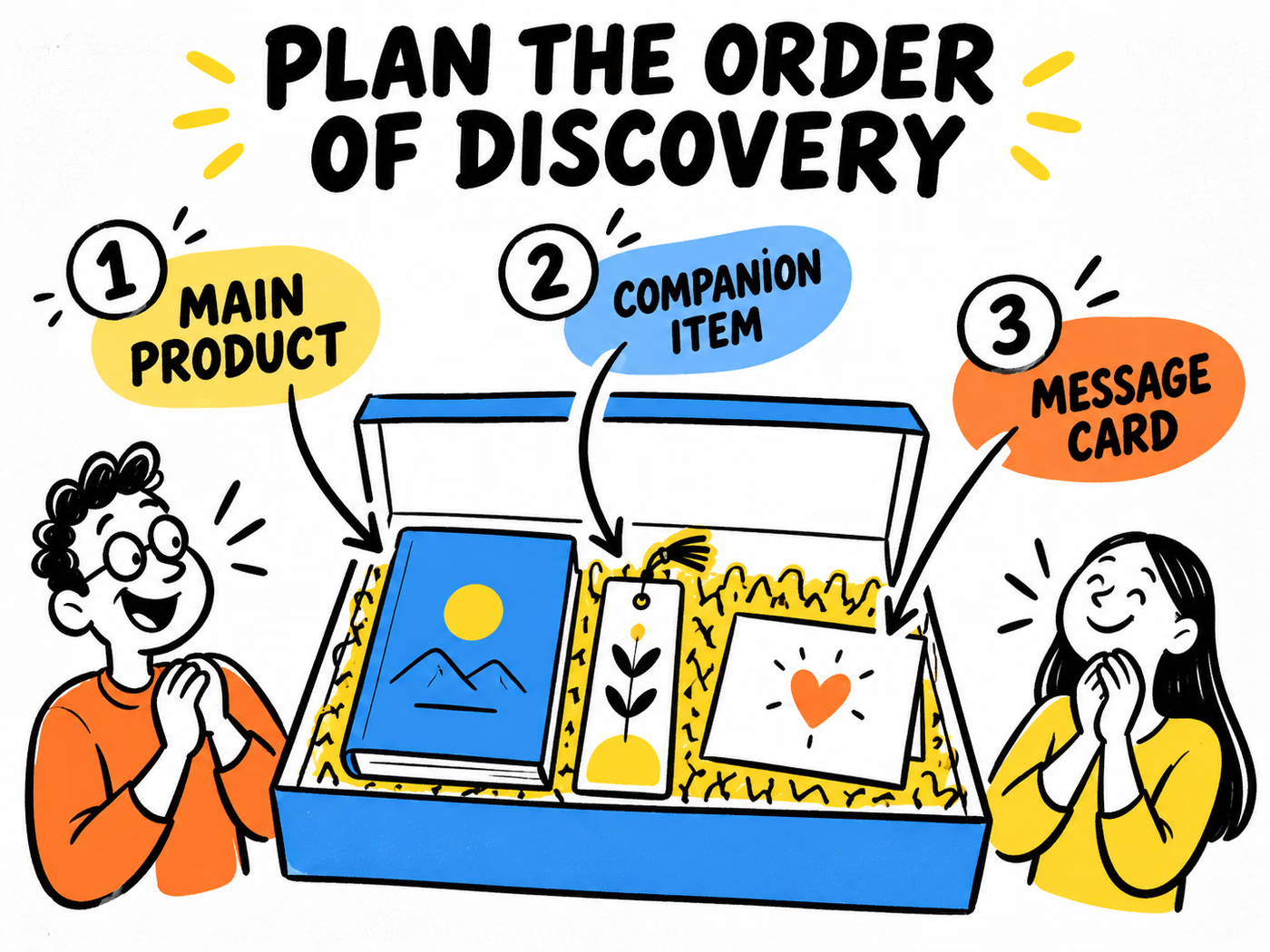
Open a complete sample as a recipient would: notice the message, recognize the main item and reach the companion piece. Move the card if it falls behind the products or comes out with loose wrapping. The arrows in our diagram describe that order of discovery; they do not prescribe box dimensions or a support method.
Compare the coffee sampler guide for an example in which product identification also shapes the layout. If the gift will be shipped, review the outer parcel and its protection separately from the presentation inside.
Give the personal message a clear place
Decide who supplies the message and how it reaches the packing team. A shared printed card with a blank writing area is one possible workflow. A separate customer-supplied message is another. Confirm the actual process before advertising individual printed names or personalized messages.
Keep the message short enough for its intended area. Read a printed sample rather than judging it only on a screen. A card that looks generous in the design file may leave little space after a greeting, signature and handwriting are added.
Make the handoff easy to follow
Link the final message to the correct order in your internal workflow. Compare the card and gift contents before closing the pack. Where no personal message has been supplied, use the agreed standard version rather than inventing a note on the customer’s behalf.
The card design guide can help prepare the printed component. The blank cards in our illustrations intentionally leave the words to the real sender; they are not examples of sentimental copy to reproduce.
Prepare quantities and artwork versions
Count the gifts by assortment and the printed pieces by design. If the same card works with all three sets, list it as one shared component. If the wording or layout changes, give each file a distinct reference and record the quantity needed for that version.
Use the consumption calculator with your own order forecast, usage per order and usable stock. Separate the sales campaign date, packing date and required arrival date. Discuss the schedule with the supplier before promising a delivery window to customers.
Request the complete set of printed pieces
Explore product boxes, mailer boxes and thank-you cards with the actual specification. Include intended use, packed dimensions, artwork versions, quantities and delivery ZIP. Identify which components are for presentation and which must support transport.
Follow the artwork guide for the approved structure and proofread every version. Retain one final assortment record with the approved copy so a later reorder starts from the gift you actually sell.