
Patagonia Packaging: How to Evaluate Apparel Packaging Claims
Use a dated Patagonia study to distinguish the job a package performs from claims about its material. Build an evidence record for the exact apparel packaging you order.
Patagonia packaging is useful to examine through dated evidence rather than appearance alone. Its July 11, 2014 garment-delivery study documents a specific distribution-center investigation into protective polybags and the consequences of removing them. It is historical evidence for that studied workflow, not a description of every current Patagonia shipment. For your own apparel packaging, record the package’s purpose, exact material, supporting document, claim scope and unresolved questions before approving supplier specifications or public wording.
A plain mailer can look modest while leaving important questions unanswered. What is it made from? Which layer keeps the garment clean? What evidence supports the wording printed on it? Put those questions in the brief before choosing a visual finish.

Locate dated packaging statements from the brand
Patagonia’s July 11, 2014 study describes investigating polybag use in its distribution process, including trials and customer surveys. It reports damage during a particular trial without polybags and discusses other operational consequences of changing the process. Keep those findings attached to the dated study and its specific setting.
We are not presenting its percentages as a benchmark for your business or describing that historical arrangement as the brand’s current universal packaging. The useful lesson is the structure of the investigation: define the objective, observe the actual process and record the result before adopting a broad conclusion.
| Source field | What to retain | What not to transfer |
|---|---|---|
| Date | July 11, 2014 | A claim about all current shipments |
| Setting | The described distribution workflow | An unrelated supplier’s process |
| Question | Effects of changing protective packaging | A universal answer for every garment |
| Result | Findings within the studied conditions | A guaranteed result for your order |
That distinction is our analysis of the source. No performance or environmental benefit is promised for the illustrated mailer. Our search review is qualitative and supplies no keyword volume or difficulty score.
For a separate brand-presentation example, use the Gymshark guide. This article focuses on the evidence record that should support a material or performance statement.
Separate appearance from material evidence
Color, texture and a minimal layout show appearance. They do not identify composition, establish recycled content, confirm an end-of-life route or demonstrate protective performance. Keep each proposed claim connected to an exact material and a document that addresses the claim.
Begin with the wording someone wants to use. Ask what it refers to: the mailer body, a label, the entire assembly or one production version. Then identify the document and scope needed to support that wording. If the evidence is missing, keep the claim pending rather than treating the illustration as proof.
| Proposed statement | Document needed | Scope to identify | Open question |
|---|---|---|---|
| Material description | Supplier material specification | Exact item and version | Does it match the supplied sample? |
| Content claim, if proposed | Relevant supporting record | Component and stated basis | What remains unverified? |
| Performance statement | Relevant physical review record | Actual arrangement and conditions | What did the review establish? |
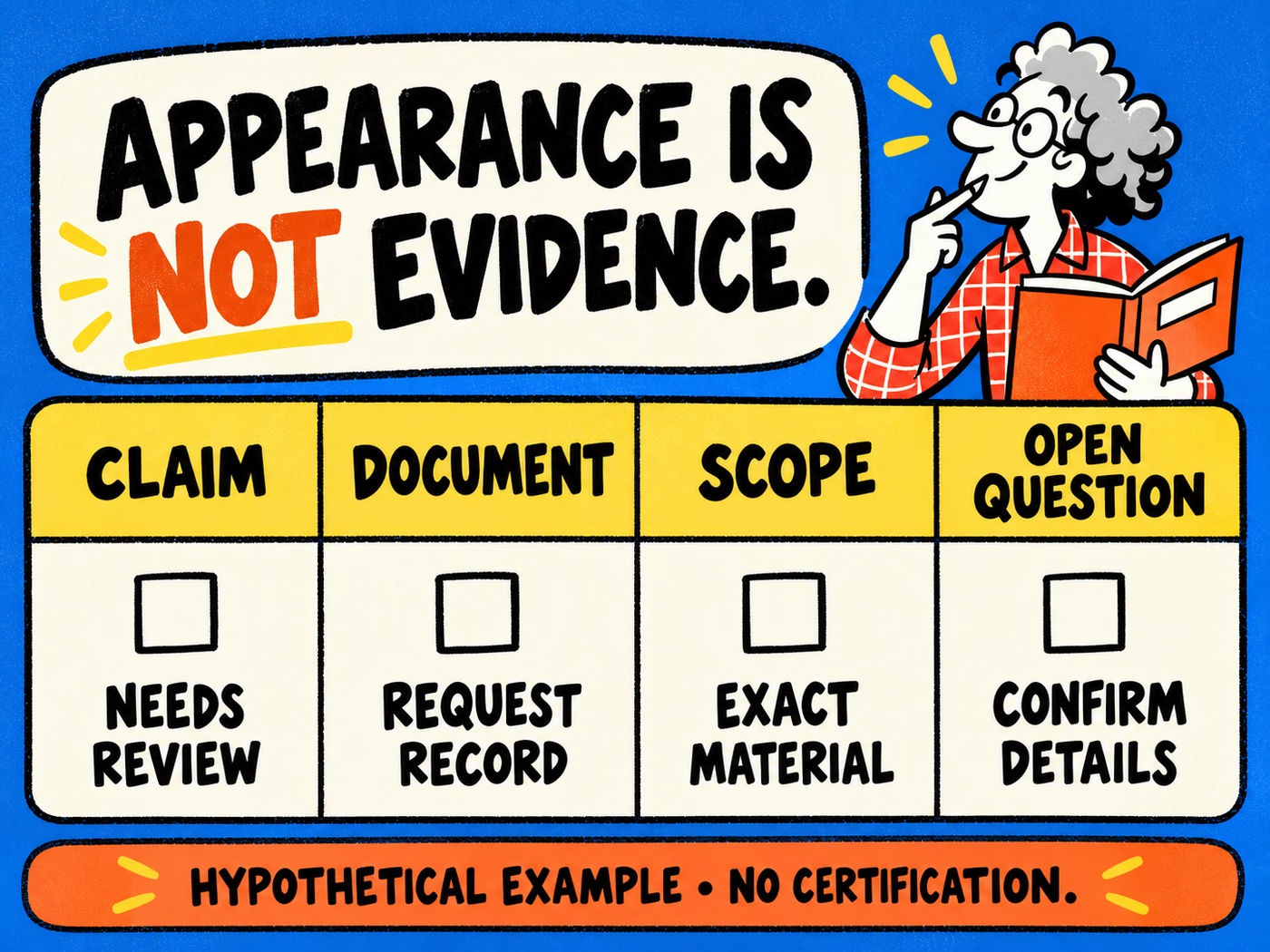
The infographic contains empty checkboxes and generic prompts. Its row is explicitly hypothetical; it does not certify a product or supply a missing document. Use it to organize questions, then replace the prompts with your own verified records.
Do not transfer an environmental statement from Patagonia or another company to your catalog. Even a documented statement belongs to its actual item, scope and date. No recycling symbols or environmental promises have been added to our fictional packaging.
Apply the same questions to your apparel packaging
Map the garment’s journey through your own workflow: storage, picking, packing and delivery. Identify what keeps it clean and what handles the outer journey. If an inner layer is proposed, state its purpose separately from the outer mailer’s role.
Arrange representative orders, including a single garment and the combinations that need more room. Include tags, cards and any confirmed protective layer. Review the folded arrangement before choosing dimensions, then keep the reference order linked to the proposed packaging.
| Workflow step | Question to ask | Record to keep |
|---|---|---|
| Storage and picking | What conditions affect the item? | Actual handling context |
| Packed order | What belongs inside the unit? | Garment and all included pieces |
| Outer delivery pack | What construction is proposed? | Exact specification and packed size |
| Customer information | What wording is supported? | Approved copy and evidence reference |
Make a change reviewable
If you propose removing a layer, changing material or using a different closure, identify the question the change is meant to answer. Keep the earlier arrangement as a reference and record what the relevant review actually shows. Avoid assuming that less visible material automatically gives a better overall outcome.
Discuss poly mailers, tissue paper and labels according to their actual roles. The paper-versus-poly guide compares a broader packing workflow rather than assigning a universal environmental winner.
Record what your own supplier must confirm
Request the proposed material and construction information for the exact item. State the garment arrangement, intended use and dimensions. Separate required confirmations from optional print choices so the supplier knows which open questions affect the physical package.
Keep the document date, item reference and applicable scope in the working record. If a material or manufacturing version changes, ask whether the earlier documentation still applies. A familiar trade name is not enough to connect a new order to an old claim.
| Field | What to record | Review question |
|---|---|---|
| Item | Exact material and construction reference | Which version is being offered? |
| Use | Actual packed garment and handling | What purpose must it serve? |
| Evidence | Document, date and stated scope | Which wording does it support? |
| Print request | Original artwork and approved copy | Are unverified claims removed? |
| Order | Quantities and delivery ZIP | Does the quote match this version? |
Use the measurement guide to keep the complete packed arrangement separate from outside dimensions. Use the artwork guide after the format and printable area are confirmed. A small logo or label still needs an exact file and review record.
Save unresolved questions alongside the approved parts of the brief. That lets the team continue useful design work without quietly treating pending material claims as facts. The final order should identify what is confirmed, what was reviewed and which specification the next reorder must preserve.