
Gymshark Packaging: Practical Lessons for Activewear Orders
Separate what official Gymshark guidance documents from assumptions about a parcel. Build your own activewear packing range from single garments, sets and mixed orders.
Study Gymshark packaging by separating documented guidance from assumptions about a particular parcel. The official information reviewed here does not establish one outgoing pack construction for every order. For your own activewear brand, measure actual single items, coordinated sets, and mixed orders, then select packaging around those complete bundles. Garment size labels do not describe parcel dimensions, and a recognizable outer design does not establish shipping protection.
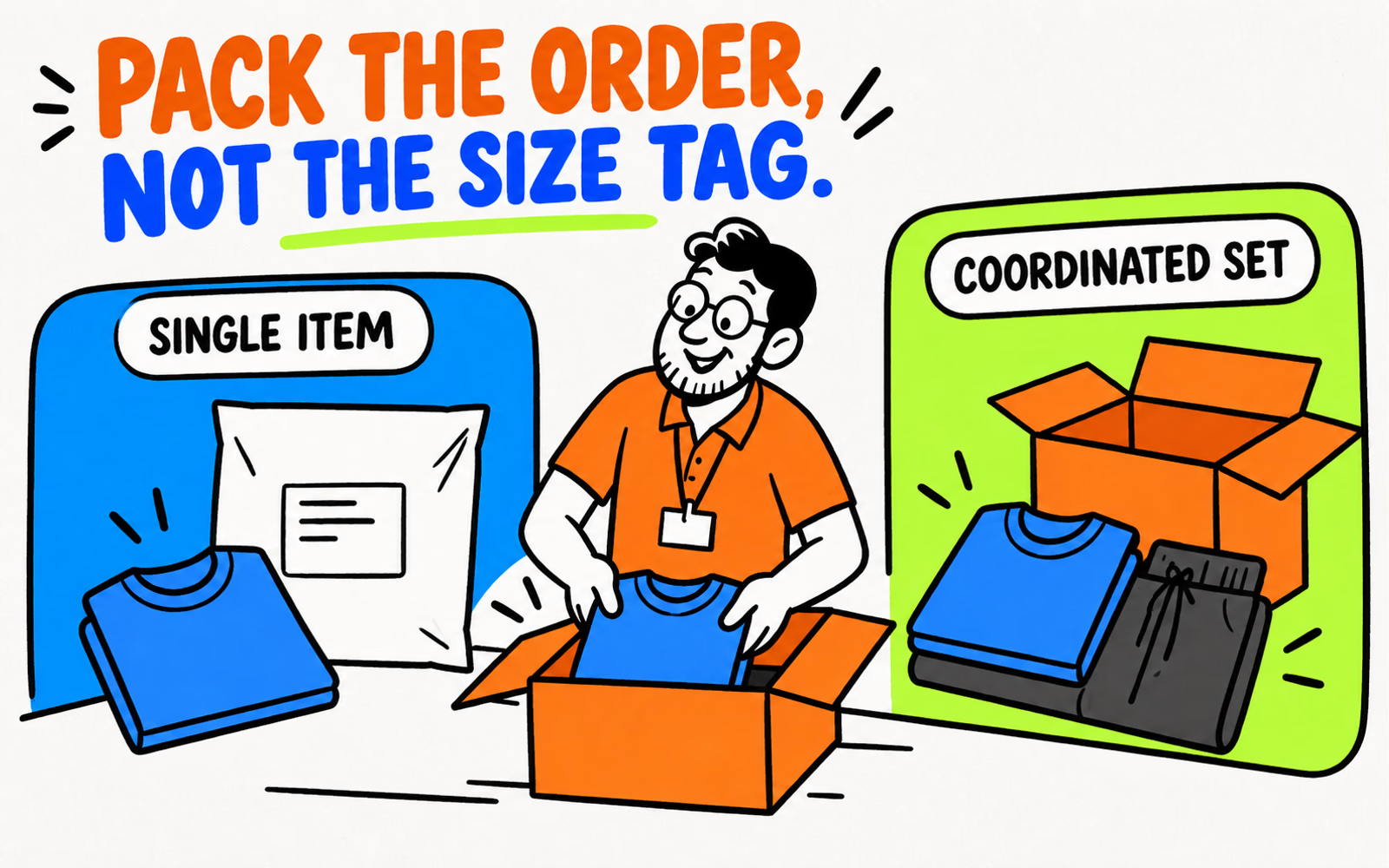
A pair of leggings, a matching set, and a mixed order can share the same brand identity while needing different packing arrangements. That is the practical question to resolve before choosing a standard mailer.
Review documented activewear order packaging
Gymshark’s official return guidance, reviewed on October 6, 2026, distinguishes return methods and locations. For US Happy Returns Bars, it describes bringing items with the relevant code without boxing them. Its separate manual-return section for named other locations mentions secure packing, ideally in the original packaging.
Those statements document specific return workflows. They do not identify the material, dimensions, recycled content, or structure of every outgoing Gymshark parcel. Keep that boundary clear when using the brand as a starting point for research.
Separate a source from a visual assumption
If you document an actual order, record its market, date, contents, and the layer shown. An inner garment bag and an outer dispatch pack are different objects. A photograph cannot establish material composition or recycling instructions on its own.
The drawings in this article are original independent-brand concepts. They explain order combinations without copying Gymshark marks, garments, packaging text, or claiming to show a customer delivery.
Measure single items and coordinated sets
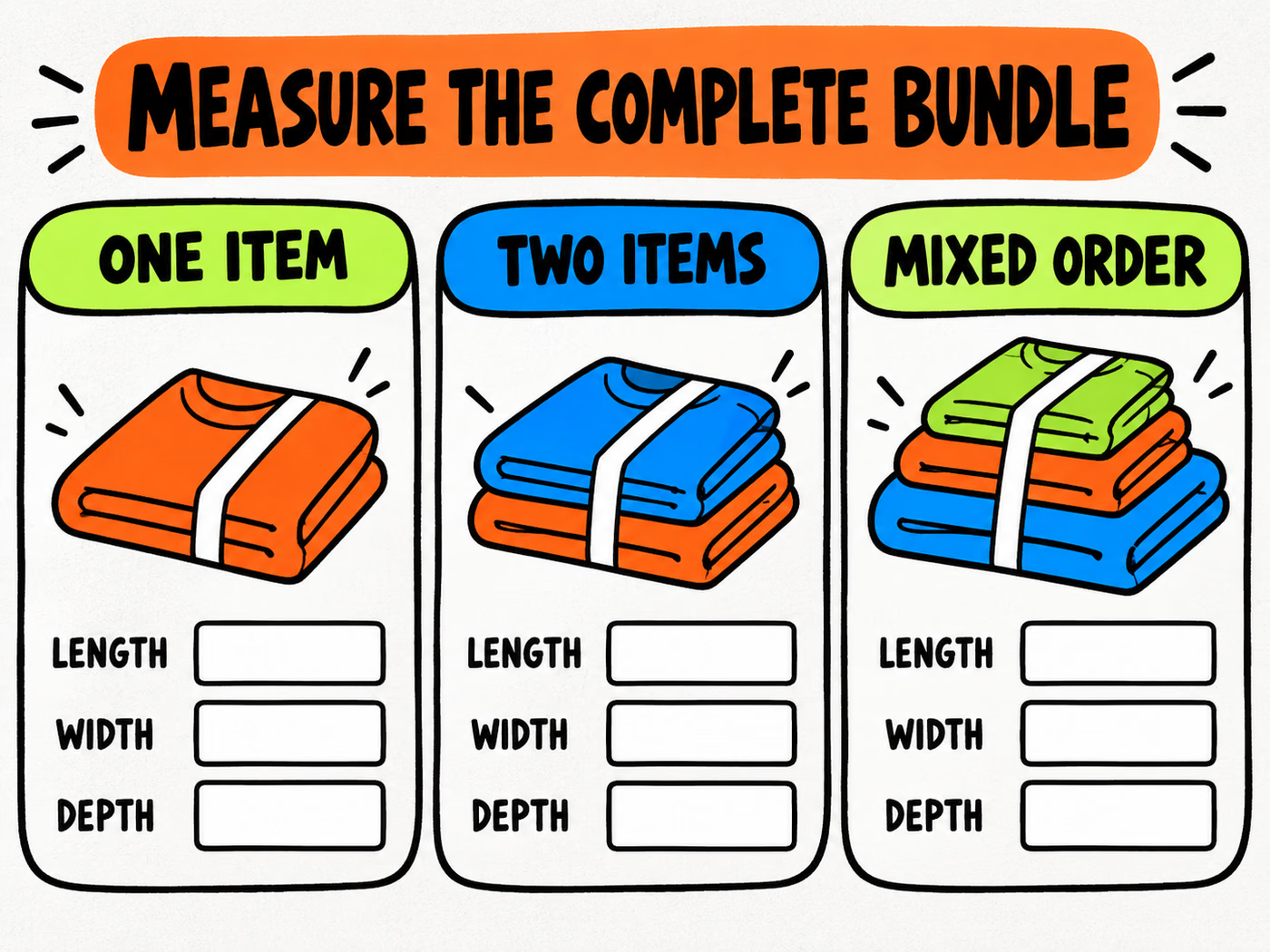
Fold the actual garments using the process your team can repeat. Include any required wrap or support, then measure the complete bundle. Record the finished length, width, and depth with units and a reference photo.
| Order | What to prepare | What to record |
|---|---|---|
| Single item | One actual folded garment with required layers | Complete bundle and closing needs |
| Coordinated set | The actual paired pieces in the chosen arrangement | Stacking or side-by-side footprint and depth |
| Mixed order | The intended combination of different garments | Overall arrangement and any vulnerable features |
Keep garment size and parcel size in different fields. Even within one garment size, fabric, construction, accessories, and the chosen fold can change the bundle. Check representative product versions rather than applying a body-size chart to packaging.
Record the method
Identify the fold, item count, and additional layers beside each measurement. If the combination changes, review the arrangement again. Use the folded-garment measurement exercise for the detail. The infographic provides blank fields, not universal dimensions.
Separate presentation from shipping protection
Give the outer pack, presentation wrap, and information a separate job. The outer construction must be reviewed for the intended dispatch; a tissue sheet can organize the opening, and a card can carry accurate item-specific information.
Compare a mailer and a box around the real bundle using the apparel format guide. Do not decide only by how much branding can fit on the outside.
Use one identity across different formats
Keep a recognizable mark and a concise message, then adapt them to the approved print areas of each construction. A folded set should not need a new brand identity simply because it requires a different pack.
Review tissue paper by its presentation role. Keep garment care information tied to the actual item, and avoid inventing return promises or instructions for an illustrative card. The SKIMS case discussion offers a separate example of distinguishing a documented project from an original apparel concept.
Specify your own activewear packing range
Create one row for each reviewed order arrangement. Include the garment versions, fold method, complete dimensions, candidate outer reference, presentation pieces, closing needs, artwork version, and requested quantities.
Ask whether several combinations can share a confirmed reference, while keeping exceptions visible. A small range is useful when it covers the actual orders; it is not useful if staff has to force a larger bundle into the standard format.
Send the complete brief
Discuss poly mailers and mailer boxes with the intended use. Request a review of the actual sample and keep proposed materials separate from anything inferred from another brand’s pack.
Use the apparel hub to coordinate the wider range. Prepare the approved artwork only after the construction and print areas are known. Include quantities per design and delivery ZIP so the quote can address the real order mix.