
Book Subscription Packaging: Protect Corners and Organize the Extras
Choose the pack from the protected book and complete set of extras. Separate accessories, review pressure points and keep each edition tied to its packing record.
Book subscription box packaging should be specified from the protected book and all the extras together. Include the wrap or proposed corner support before measuring, then separate accessories that could press against the cover or move into the book’s edges. Review the complete closed arrangement for each edition. The book’s nominal trim size alone does not describe the space the finished kit needs.
A bookmark and a small club pin can seem insignificant beside a hardcover. Once the box closes, their position matters. Start with the book’s actual packed shape, then give the extras a deliberate place.
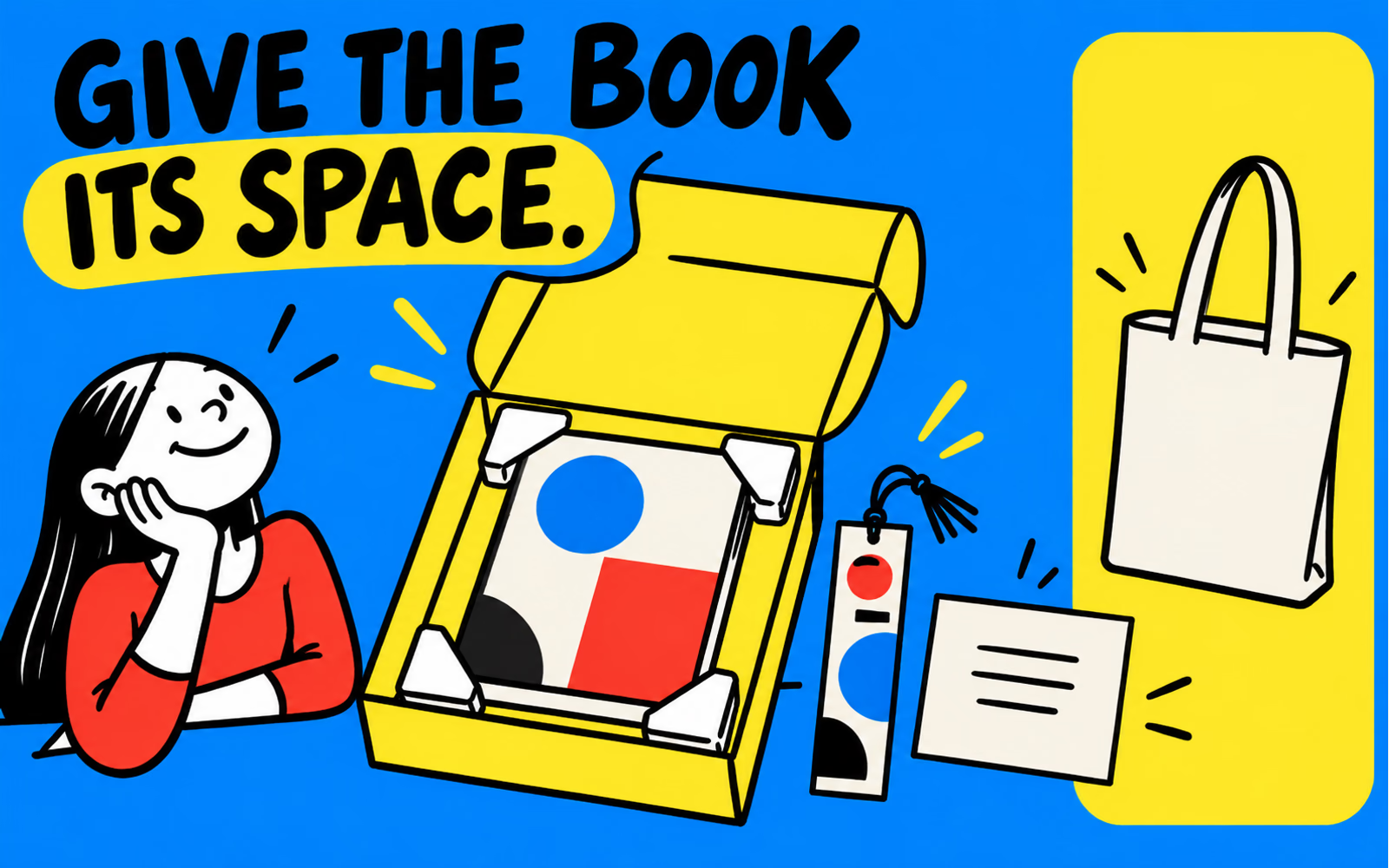
Measure the protected book and all extras
Use the actual edition selected for the shipment. Record the book’s width, height and thickness, then add the proposed wrap or support and measure again. State which measurements describe the bare book and which describe its protected arrangement.
Add every extra to the working sample: bookmark, reader card, art postcard or another confirmed item. A folded fabric accessory can change the required depth, while a rigid object may need a separate region. Do not choose the box from the cover dimensions and discover those differences at assembly.
Track edition changes
A paperback, hardcover and special edition may have different dimensions and weight even when their story is the same. Keep the edition reference on the packing sheet and review a substitution before releasing it under an older arrangement.
The mailer-box measurement guide explains complete-product measurements. The subscription packaging guide helps connect that physical record to the wider program, including component and artwork versions.
Plan separation between books and accessories
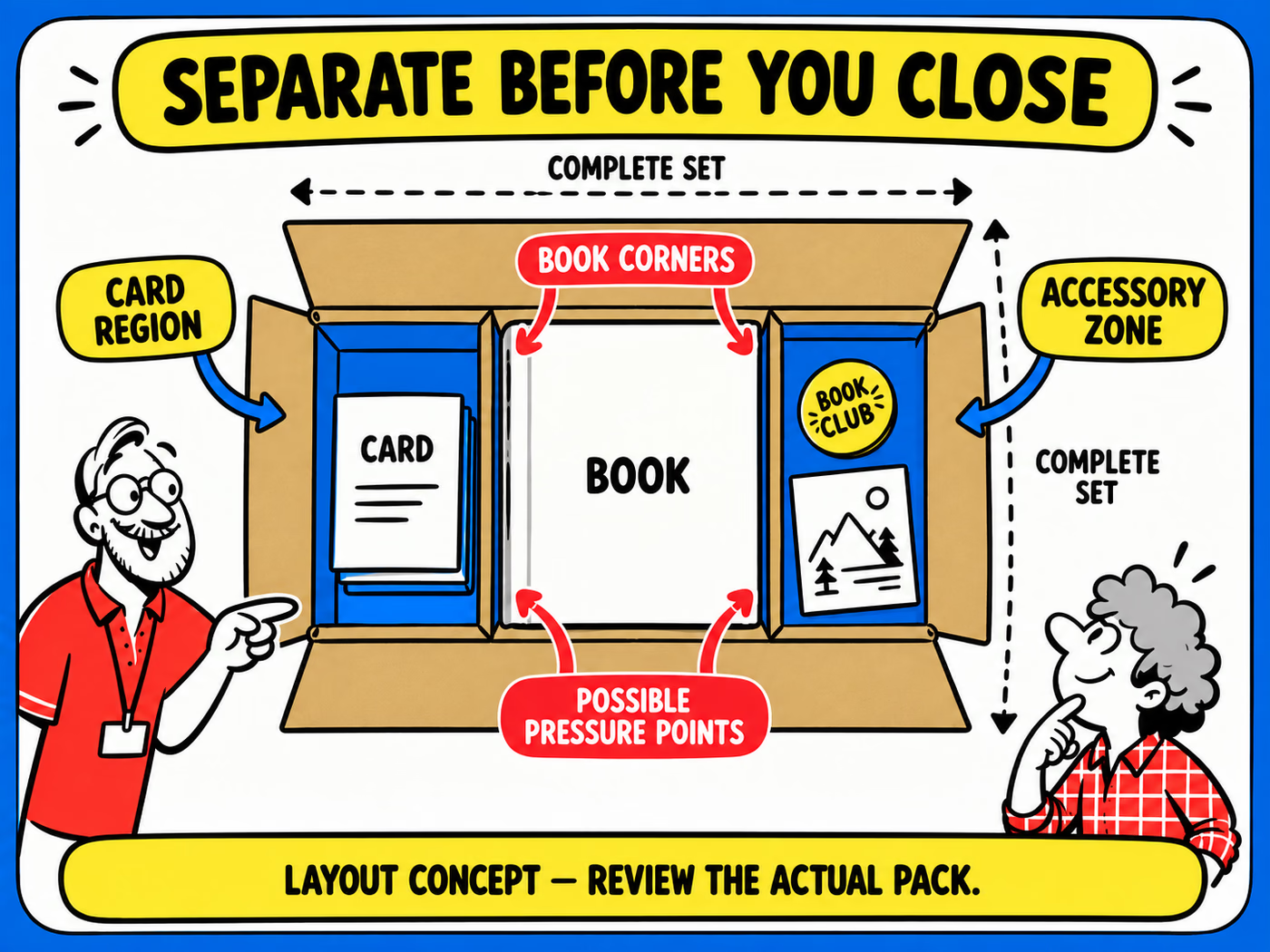
Look at the proposed closed kit, not only the opening photograph. Identify where an accessory might contact the cover, spine or corners. A pin, folded tote or stacked card can occupy space differently once the lid presses down.
| Area | Question in the actual sample | Record to keep |
|---|---|---|
| Book corners | Where could an edge meet the outer pack or another object? | Proposed support and areas needing review |
| Cover and spine | Could an extra press, rub or shift against them? | Accessory position and separation method |
| Printed card | Can the reader remove it without disturbing the arrangement? | Card position and finished format |
| Complete closed set | Does closure crowd or change the planned layout? | Photograph, dimensions and packaging reference |
Choose support from the actual contents
The inserts-versus-fill comparison distinguishes different support approaches. Confirm the proposed construction and review the complete arrangement rather than assuming a divider or more fill automatically protects the book.
The illustrated corner supports and zones are ideas for discussion. They do not demonstrate shipping performance or a certified construction. Keep fit, movement and intended handling questions attached to the actual product samples and project review.
Design the reveal and reading information
Decide what the reader should find first. A short welcome and a clearly placed bookmark can start the experience without concealing the book or requiring someone to lift a loose accessory from its cover. Keep the reader-facing order separate from the assembly instructions.
Use a card for the approved reading information: a club introduction, a genuine discussion route or context supplied for that edition. Confirm the destination and wording before printing. Avoid spoilers unless the card makes their location clear to the intended reader.
Keep the artwork yours to use
The book in our illustrations has an original fictional geometric cover. Use actual cover artwork, author images or quotations only when the necessary permission is in place. A subscription’s decorative identity can be original without borrowing a recognizable cover.
For a changing monthly selection, keep stable branding on the outer pack and edition-dependent information on a clearly named card version. The changing-contents guide helps identify which parts of the packing record need another review when the selection changes.
Prepare a packed-set specification
Create one sheet for the actual book edition and extras. Include product references, protected dimensions, component positions, proposed support, complete outside dimensions and packed weight. Attach a photograph showing the arrangement before closure and identify the matching artwork files.
Give the sheet to someone who did not arrange the sample. Ask them to assemble it, locate the reader card and explain which areas need particular attention. Record confusion and crowding. A comprehension walkthrough helps improve the instructions; it does not establish transport protection.
Request the confirmed component range
Explore mailer boxes, shipping boxes and insert cards with the complete intended use. Confirm whether the proposed support is available and suitable for the actual specification.
List quantities by box reference and card version. Follow the artwork guide after the construction is confirmed. When a book or extra changes, compare it with the approved sample and update the packing record before reusing the previous instructions.