
Fenty Beauty Packaging: Lessons in Building a Distinct Product Family
Compare documented foundation, gloss and compact presentations, then translate the hierarchy into original carton layouts with clear product types and variants.
Fenty Beauty packaging is useful to study through clearly identified products rather than a generic mood board. We reviewed the official presentations for Pro Filt’r Soft Matte Longwear Foundation, Gloss Bomb Universal Lip Luminizer and Diamond Bomb All-Over Diamond Veil on October 6, 2026. The visible bottle, gloss container and compact use different formats within the same brand. For your own carton family, preserve clear brand, product-type and variant roles while adapting the layout to each exact structure.
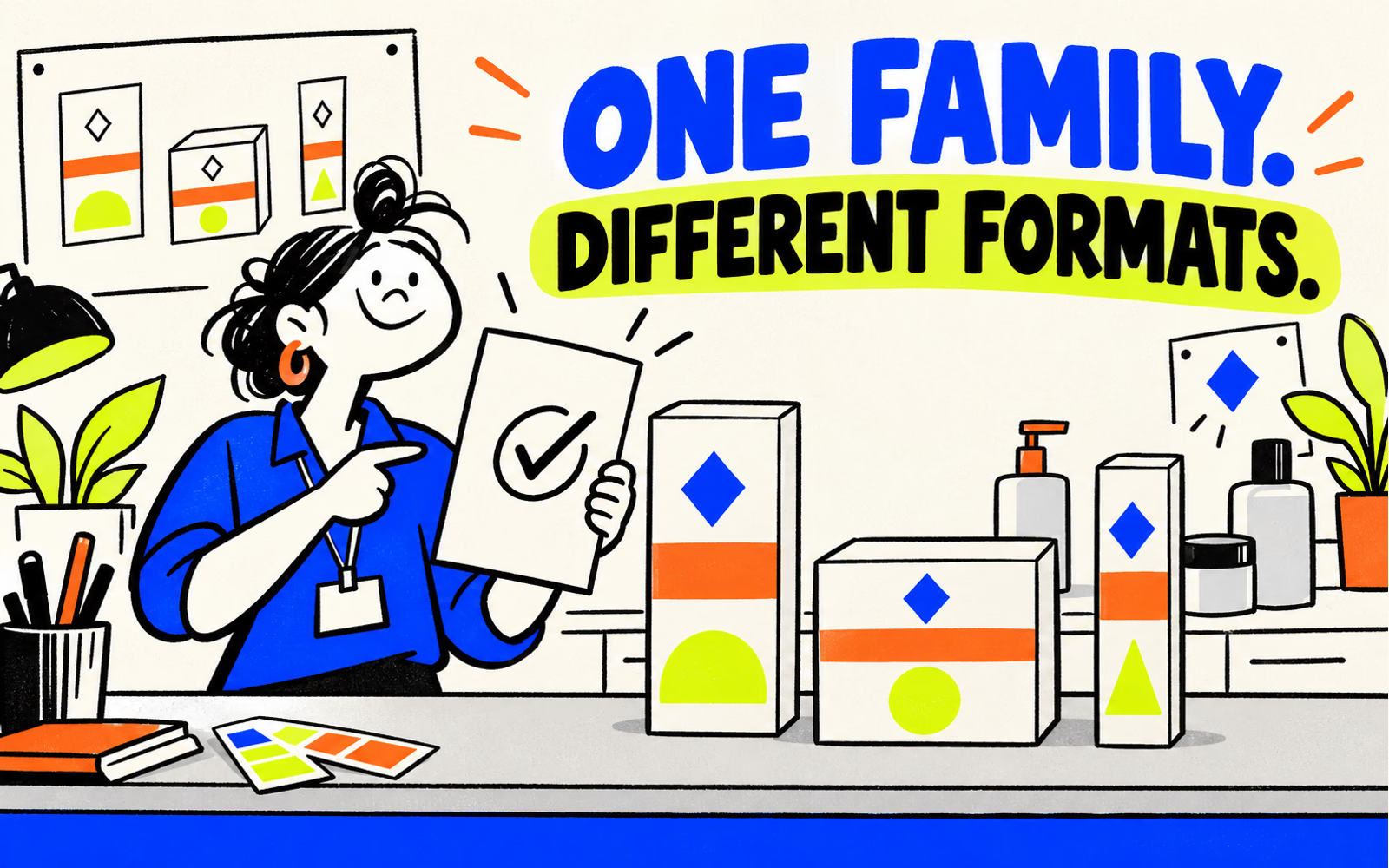
A product family becomes harder to manage when one item needs a tall front panel and another needs a wide one. The goal is to keep the information easy to recognize without forcing every format into the same proportions.
Document the product family being analyzed
Our source set contains three named official product presentations: Pro Filt’r Soft Matte Longwear Foundation, Gloss Bomb Universal Lip Luminizer and Diamond Bomb All-Over Diamond Veil. The reviewed images show a taller foundation bottle, a smaller gloss container and a compact. The product pages also identify selected variants.
These are visible product-container presentations, not complete retail-carton drawings. They do not establish the dimensions, board grade, closure or print specifications of an outer box. The foundation page also identifies a retiring product; this article uses it as a dated design reference, not an availability recommendation.
| Source item | What the presentation shows | What it does not establish |
|---|---|---|
| Foundation | Named product and taller bottle presentation | An outer carton specification |
| Gloss | Named product, container and selected variant | A confirmed box structure |
| Compact | Named product and compact presentation | A production-ready carton template |
Our interpretation concerns information roles across different visible formats. We then apply those roles to original, fictional cartons for an independent brand. The illustrations use generic containers and original colors rather than reproducing Fenty’s distinctive forms or branding. No claim about ingredients, product performance or commercial results is needed for this exercise.
Compare hierarchy across different carton formats
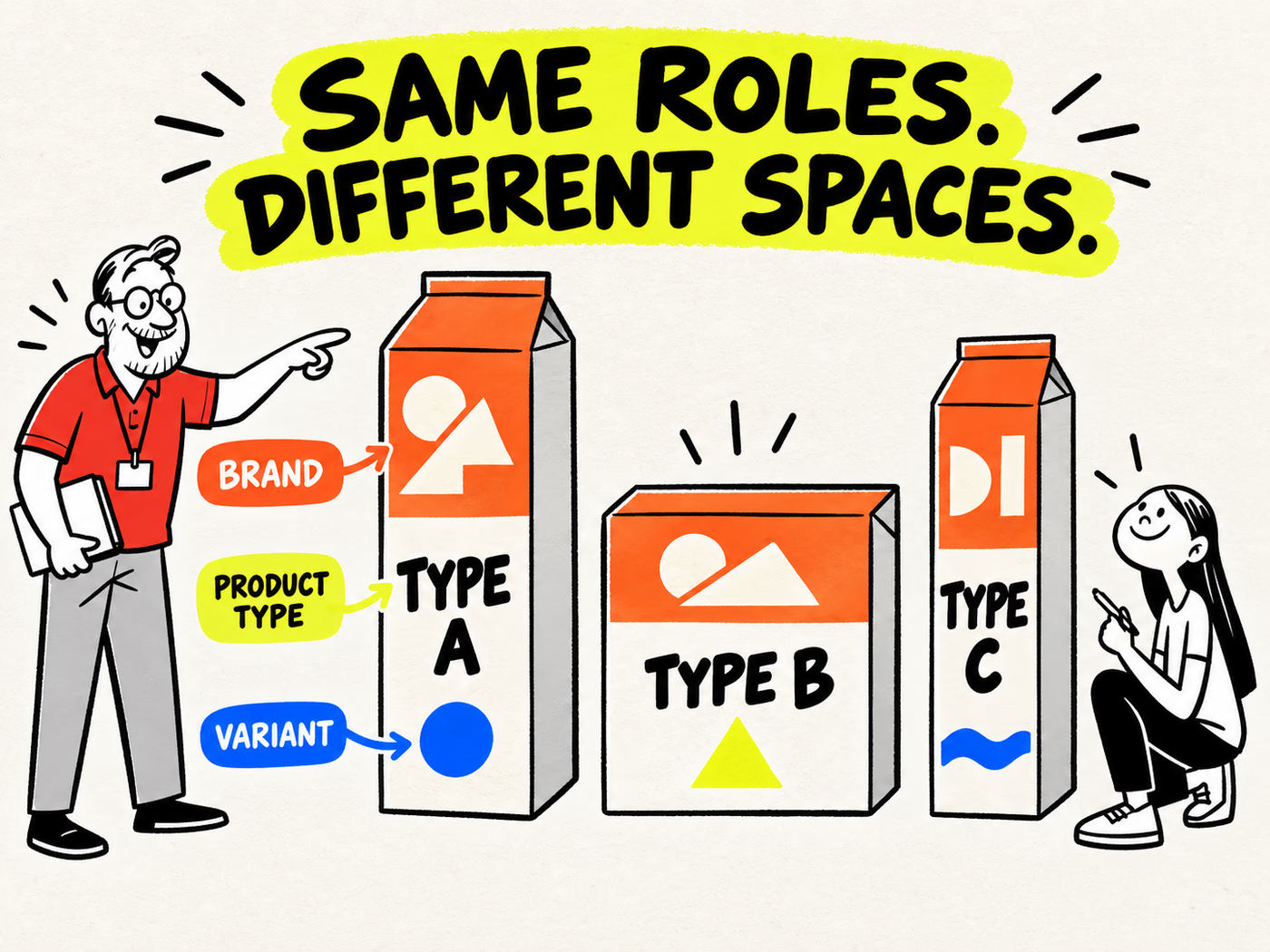
Use three consistent questions for each front panel: whose product is this, what type of product is it, and which variant is it? Give those roles a clear reading order. Their exact positions and line breaks may change when the panel proportions change.
A tall narrow carton can support a different arrangement from a short wide carton. Simply shrinking one master layout may make the product type too small or push the variant against a fold. Start with the information roles, then arrange them on each actual template.
| Information role | Tall or narrow front | Short or wide front |
|---|---|---|
| Brand | Reserve a deliberate identity area | Preserve identity without dominating all space |
| Product type | Review line breaks and readable size | Use the wider area deliberately |
| Variant | Keep a clear separate identifier | Avoid confusing it with the product type |
The inline illustration uses three differently proportioned carton fronts with Brand, Product Type and Variant zones. Type A, Type B and Type C are editorial placeholders, not product names or legally sufficient cosmetic copy. The drawing explains hierarchy; it is not a dieline or a physical fit test.
For your own folding cartons, confirm the finished product and proposed structure before selecting the front-panel layout. The typography guide adds a practical readability review once the actual panel size is known.
Create distinct variants without losing consistency
Separate a change of product type from a change of variant. A gloss and a foundation need clearly different product-type information. Two variants of the same product need a clear identifier within that product’s established hierarchy. Treating both changes as a color swap can create ambiguity.
Use text as well as color to identify the variants in your own system. A picker should be able to match the printed identifier to the inventory record without relying only on a subtle difference between colors. The variant area needs enough room for the longest real name in the range.
Review difficult combinations before approving the family
Put the narrowest front, the longest product name and the longest variant name into the review set. Inspect the layouts together and then individually at real size. A pleasing row of oversized mockups can hide a weak individual panel.
Keep a file list that distinguishes format, product type and variant. If a shared brand element changes, identify every file affected. If only one variant changes, keep the revision tied to that item so an unrelated carton is not overwritten.
The Rhode guide discusses a related beauty-family planning problem. This exercise specifically adapts the reading roles to different panel proportions. Product boxes and labels each need an exact structure and information brief; matching colors alone do not connect their production files.
Prepare an original beauty packaging brief
Begin with the complete product arrangement: container, closure and any included pieces that stay inside the carton. Record the intended use and dimensions, then confirm the proposed structure’s internal space and template. Use the measurement guide for the general distinction between packed arrangement and exterior size; the supplier should confirm the convention for this carton.
Create a separate artwork line for each format and variant. Include the original identity, approved product copy, reserved information areas, template version, quantity and destination ZIP. Have the responsible product team provide and approve the information required for the actual product and market.
| Brief component | Record for each item | Family-level review |
|---|---|---|
| Physical arrangement | Packed product and confirmed structure | Which formats are genuinely different? |
| Front hierarchy | Brand, type and variant layout | Do the roles remain recognizable? |
| Approved content | Exact copy and responsible reviewer | Are versions controlled? |
| Production request | File, quantity and delivery destination | Does the order match the file list? |
Use the artwork guide once the exact templates are confirmed. Keep decorative artwork and approved product information in a controlled file workflow. A supplier should not have to infer the intended variant from a folder of nearly identical previews.
Review every proposed layout on its own terms before approving the full family. A shared visual system can make that process easier to organize, but each format still needs its own physical fit and print review. Save the final file list so a reorder preserves the intended product and variant distinctions.