
Halloween Treat Packaging Ideas for Bakeries and Small Brands
Use original pumpkins and geometric shadows to connect seasonal packs. Choose the actual treat format first, then review contact materials and quantities.
Halloween treat packaging ideas start with the treat and the way it will be sold: one item, a mixed box or a gift collection. Use original seasonal graphics on a feasible construction, keep food-contact requirements separate from decoration, and plan quantities by product and artwork version. A pumpkin pattern makes the theme recognizable; it does not establish food suitability, product shelf life or an available box size.
A bold pumpkin circle or a simple geometric shadow can make the collection feel seasonal without needing a recognizable movie character. Let the treats and packing workflow determine the format beneath that artwork.
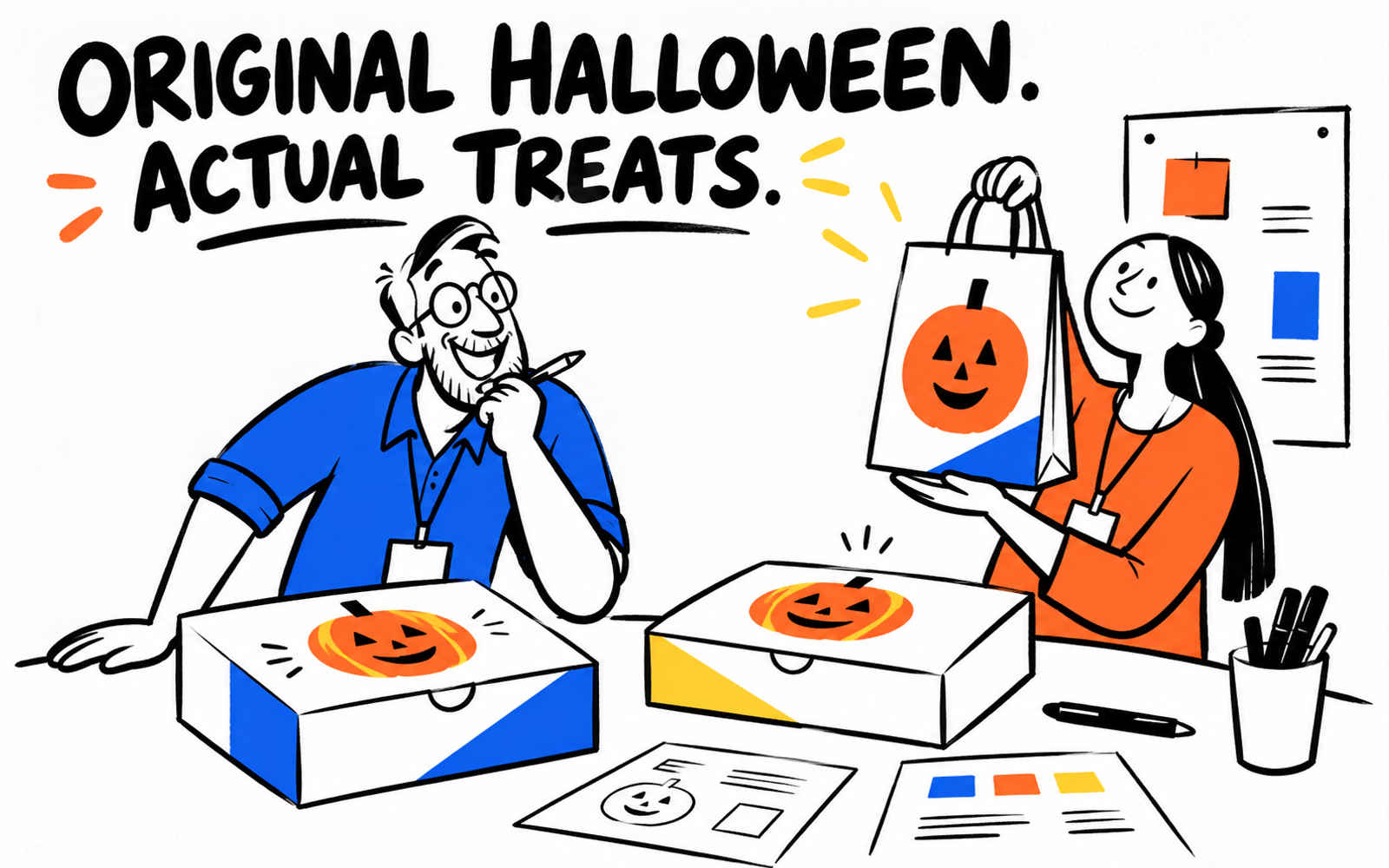
Choose the treat and the way it will be sold
Write down the actual finished product, including decoration, primary packaging and any components that remain with it. A single wrapped cookie, a sharing assortment and a taller bakery gift each give the outer pack a different job.
Define the handoff too: counter collection, a market sale or another intended journey. Record whether the customer receives a ready-to-carry pack or places it inside an additional bag. Keep those steps in the brief before comparing artwork concepts.
Describe the finished assortment
Measure representative decorated products rather than a cutter, recipe photo or unfinished bake. Include unusually broad or tall examples if they belong in the order. For a mixed set, record the exact combinations and proposed positions.
The cookie format guide covers single items, assortments and gifts. This article adds an original Halloween graphic system and a limited campaign workflow; it does not replace the fit review for each actual set.
Compare original Halloween packaging concepts
Start with simple artwork that scales across confirmed formats. Our fictional collection uses pumpkin circles and angular shadow shapes in orange, blue and yellow. The cartons remain rectangular and the bag has a distinct front panel, so the illustration does not depend on a special character-shaped construction.
| Concept | Shared graphic idea | Packing question |
|---|---|---|
| Single-treat outer pack | One large pumpkin circle and clear identity area | What is the actual primary pack and handoff? |
| Mixed rectangular carton | A small repeating geometric shadow pattern | How are the decorated items arranged and removed? |
| Gift paper bag | A bold motif with a coordinated product identifier | What keeps the complete contents located during carrying? |
Make the design your own
Develop original shapes, type and messages. Keep third-party characters, logos and distinctive franchise artwork out of the concept unless the actual rights and project use have been resolved. A reference for mood is not a ready-to-print design asset.
Compare front-panel identity and space for actual product information on the assembled sample. The seasonal collection guide helps connect different formats without assuming they all use the same dimensions.
Keep food-contact requirements separate from decoration
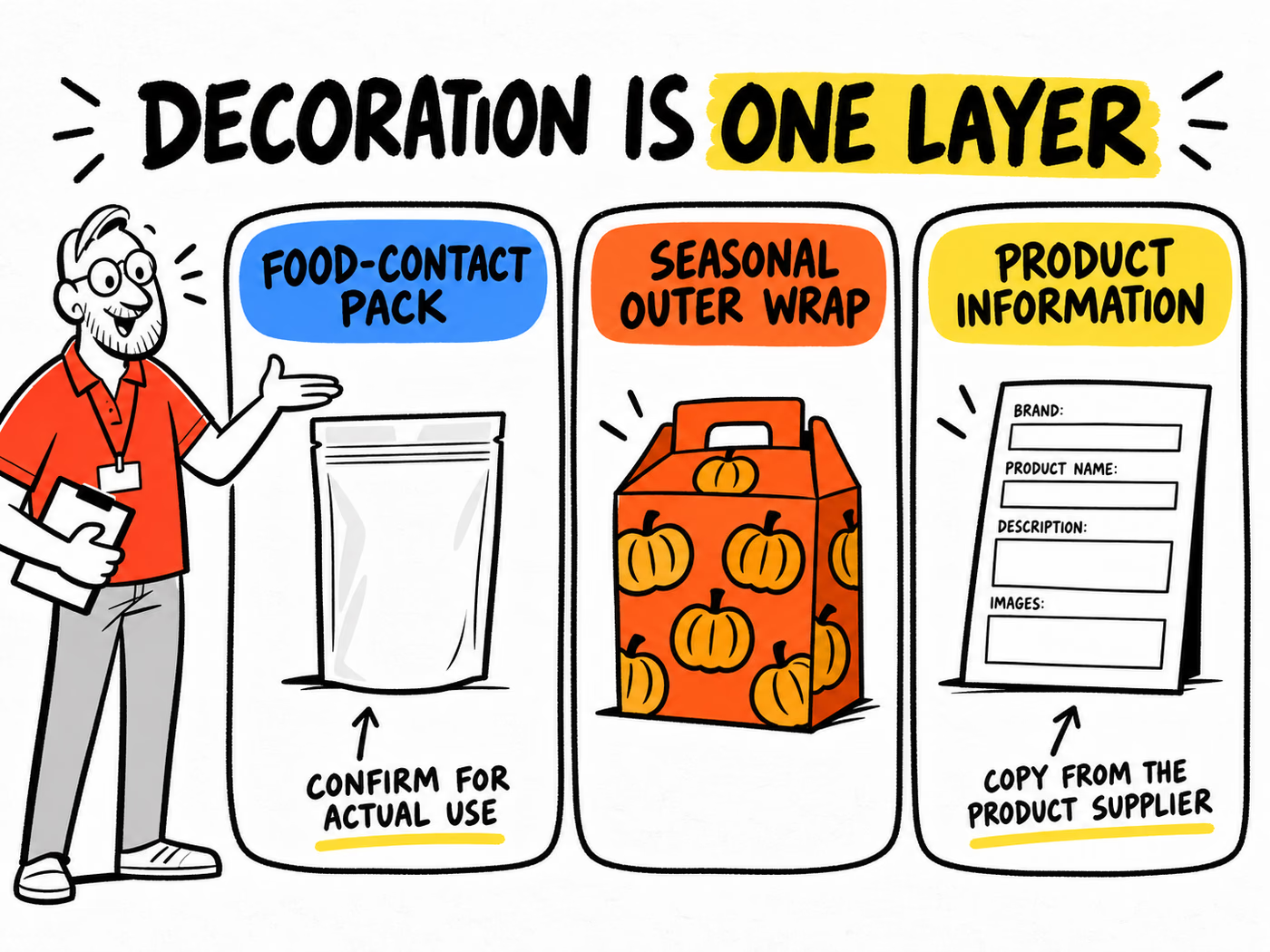
Identify every component that could touch the food in the actual arrangement. Obtain the relevant material and intended-use information from the responsible suppliers. Keep food-contact review tied to the real product, packing method, storage and handling conditions.
An outer pumpkin-pattern carton, label or decorative paper does not establish the suitability of an inner bag or liner. If the product arrives in a specified primary pack, preserve that role rather than swapping it for an unreviewed themed material.
Leave room for real product copy
Reserve a readable identification area and use information supplied and reviewed by the responsible food business. Do not invent ingredients, allergens, handling directions or suitability claims to fill the panel. Keep each artwork version connected to its actual treat reference.
The diagram below separates contact packaging, seasonal decoration and product information. Its fields are conceptual. Neither the diagram nor a tidy arrangement establishes a completed food-suitability review. The spring cookie guide applies the same separation to irregular decorated shapes.
Plan a limited seasonal print run for review
List quantities by pack reference and artwork version, with the campaign’s actual dates. State which items can be used after the campaign and which carry season-specific wording. An undated geometric motif may remain useful longer, but its construction still needs to suit the next order.
Use the consumption calculator with your own expected orders, usage per order and current stock. Supplier lead time and purchase terms are inputs to confirm, not numbers supplied by the illustration. Treat any extra stock as an explicit business decision.
Prepare the seasonal request
Explore folding cartons, paper bags and labels for the reviewed formats. Include dimensions, intended use, print versions, quantities and delivery ZIP. Confirm what is feasible for the actual timetable.
Follow the artwork guide for the approved construction. Keep copy approval, material questions and production-file versions together. A seasonal idea is a starting brief; it is not a promise of a particular minimum order or delivery date.