
HelloFresh Packaging: Branding Lessons for Meal-Prep Businesses
Separate the printed delivery system from temperature control. Plan outer-box identity, recipe identification and current insert versions around your own service.
HelloFresh packaging combines several documented jobs: an outer box, ingredient or meal-kit packs, recipe information and temperature-control components. Its official US pages discuss these layers separately. For a meal-prep business, the useful branding lesson is to make the printed components easy to identify and keep their information current. A printed box, label or insert is not a validated cold-chain system; temperature control requires its own competent specialist review.
An attractive delivery box is only one part of a meal service. A customer also needs to identify the right recipe, find its information and understand what each printed component belongs to.
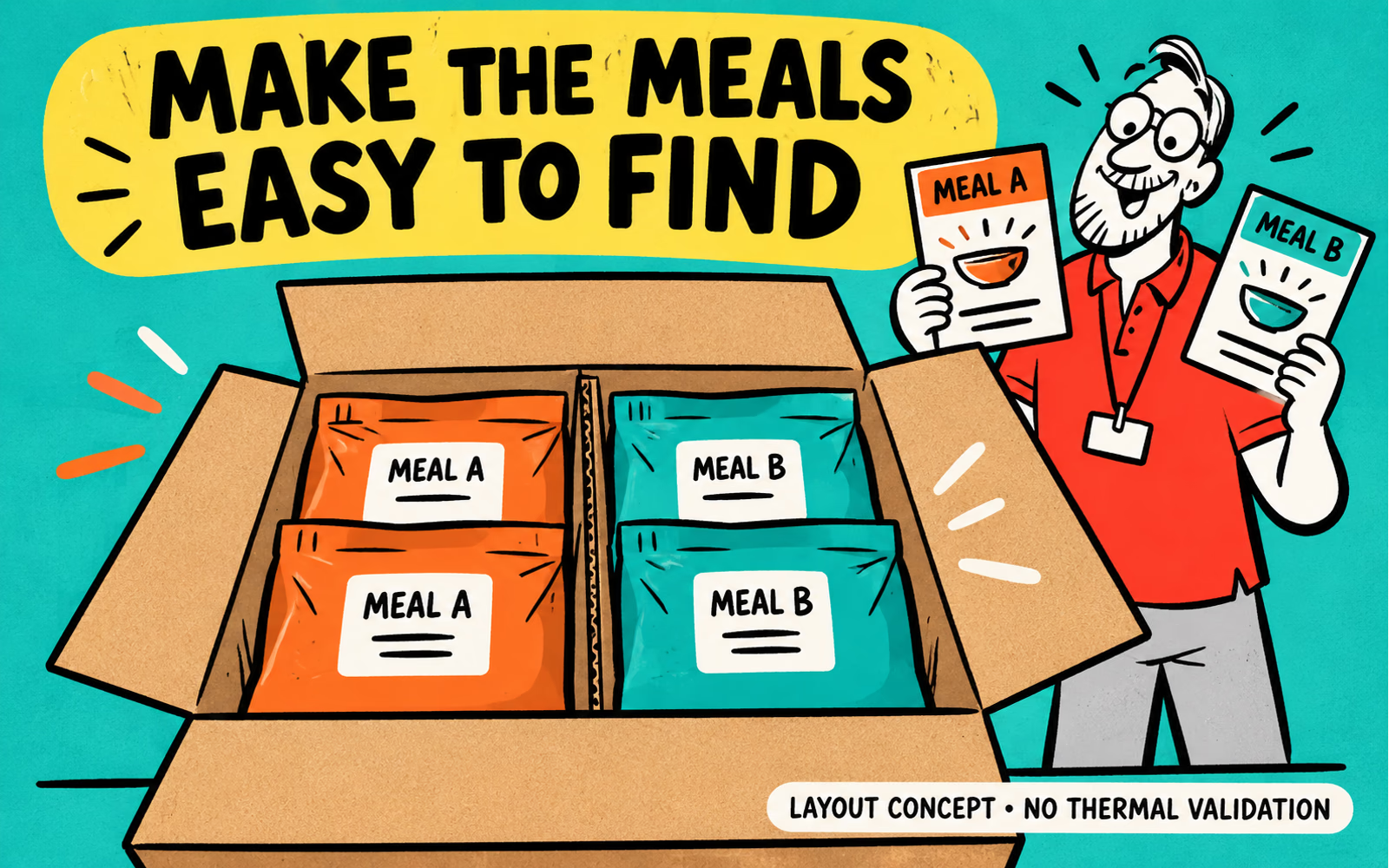
What the documented delivery includes
HelloFresh’s US how-it-works page describes deliveries with pre-measured ingredients and step-by-step recipes. Its packaging page discusses boxes and separators, meal-kit bags and insulation as different categories. Those descriptions help identify the layers without assuming that every delivery uses the same configuration.
Use the documentation as a starting point for questions, not a ready-made specification for your service. The outer pack, grouped contents and recipe information each need a clear role. The illustration here shows only opaque neutral packs and conceptual organization.
| Layer | Useful printed-planning question | Separate review |
|---|---|---|
| Outer box | How is the service identified? | Complete delivery construction |
| Grouped contents | How is the meal or recipe identified? | Actual contents and contact conditions |
| Recipe information | Which approved version belongs to this meal? | Food-information content approval |
| Temperature control | Which specifications must specialists establish? | Independent thermal and transit validation |
No delivery duration, storage temperature or shelf-life result is supplied by this article. It examines printed organization and identification, with the actual service conditions left to the appropriate technical review.
Separate branding from temperature control
The HelloFresh Group packaging-lab story describes professional testing and thermal validation. That documented development work is separate from placing a brand on an outer box. Do not infer that a visually similar arrangement will reproduce another company’s performance.
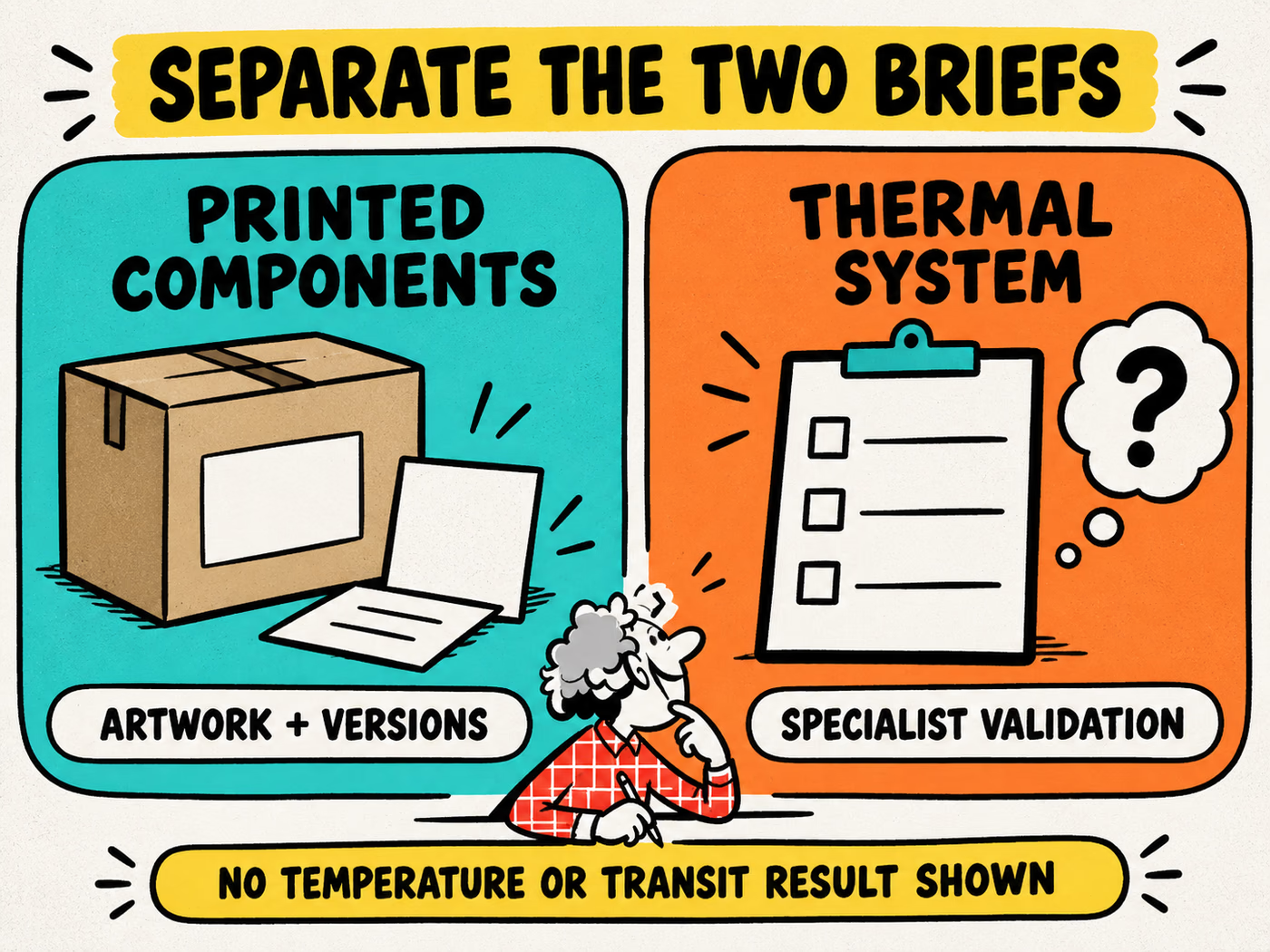
Keep two briefs: the printed components and the actual temperature-control system. The first covers artwork, versions, dimensions and print application. The second belongs with specialists who can define and validate the service’s actual contents, route and conditions.
Do not let artwork approval imply technical approval
A signed print proof approves the specified artwork within its agreed scope. It does not establish that a meal stays suitable during transport. Save the different reviews against their own requirements so a change in one area does not silently become an assumption in the other.
The two-panel infographic below deliberately leaves the thermal side as a brief requiring specialist validation. It provides no invented insulation assembly, test report or performance result. BrandYourPack’s printed components should be discussed against the actual approved delivery arrangement.
Organize recipes and meal identification
Assign each meal a clear reference that connects the pack, recipe information and packing record. Separate the fixed brand layout from changing meal content. A reused graphic can be efficient only if the right approved information is selected for the right item.
For a conceptual two-meal order, Meal A and Meal B can illustrate the grouping logic. In a real service, use your approved identifiers and content. Avoid treating a decorative color alone as the only way to distinguish items; the reference should remain readable.
| Item | Keep consistent | Change deliberately |
|---|---|---|
| Outer identity | Service name and stable graphic roles | Order-specific information if required |
| Meal identifier | Reference system and placement | The actual meal or variant |
| Recipe insert | Document layout and readable hierarchy | Approved recipe version |
| Packing record | Version references and review process | Actual order configuration |
Review the information as one set
Check that the card and labels refer to the same meal and current version. Keep required food-information content approval with the relevant qualified team; graphic layout does not establish its completeness. Do not invent ingredients, dietary claims or handling instructions to fill a mockup.
The menu-versioning guide covers fixed and changing fields. The insert guide helps assign the card a useful task. Together they support a traceable printed workflow rather than thermal validation.
Plan printed components for your own service
List the printed pieces your actual service needs: an outer shipping box, identification labels and approved inserts, for example. Provide the complete packed dimensions, intended application conditions, artwork versions and quantities by item. Keep specialist delivery requirements attached where they affect those specifications.
Do not measure only a product container and assume it represents the complete shipment. The measurement guide distinguishes the packed arrangement from the external envelope. Any thermal components approved elsewhere must be included in the real arrangement, not guessed from this illustration.
Request a defined scope
Explore shipping boxes, labels and insert cards as printed components. Confirm available formats and the actual application requirements. Do not assume that those product categories include refrigeration materials or a complete temperature-controlled delivery service.
Keep the approved artwork, content versions and specification record together. Use the meal-prep component guide to structure the discussion. When the meal range or delivery construction changes, identify which printed and technical reviews need to be revisited.