
Macaron Packaging Ideas: Plan the Arrangement Before the Artwork
Compare a row with a compact assortment before designing the outside. Record finished macarons, contact points, usable space and the complete opening sequence.
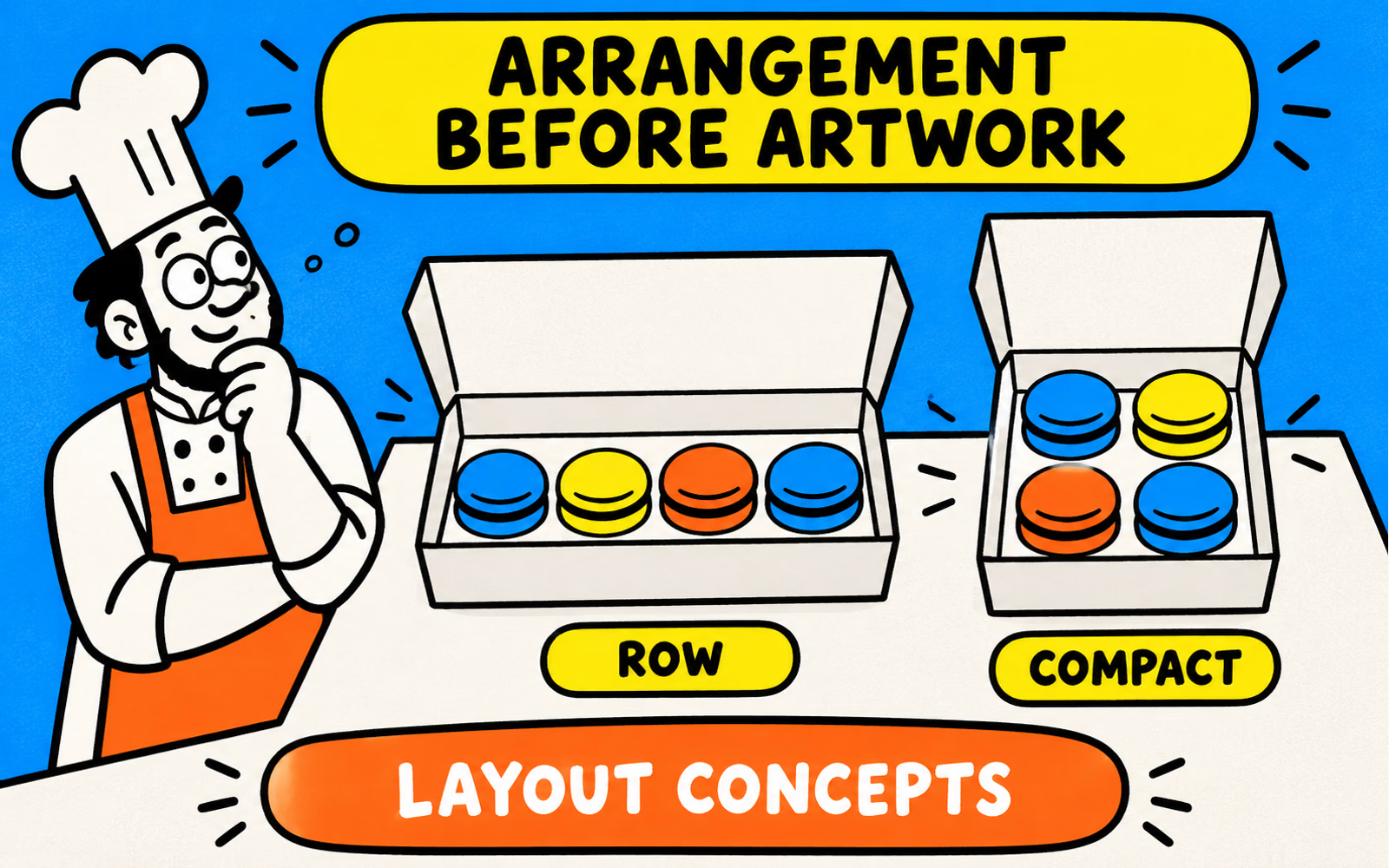
Good macaron packaging ideas begin with the finished assortment and how the pieces will sit inside the pack. Compare a row with a compact arrangement, note possible contact points, and review any separation or support with the actual product. Choose the structure and opening sequence before adapting the artwork. A pictured tray or divider is a concept until its construction and suitability are confirmed.
The same assortment can look completely different in a long row and a compact gift box. The useful comparison goes beyond appearance: it asks how the macarons are placed, held, and removed.
Measure the finished macaron assortment
Record the finished product, including the filling and any decoration that changes its outline. Measure representative examples from the actual range, rather than treating a single neat piece as the specification for every batch.
List the assortment by product version and count. A box containing different shapes or thicker fillings needs a record of those differences. Keep a photograph of the proposed order beside the dimensions so the reviewer can see what you mean.
Measure the arrangement as well as the pieces
Place the assortment in the orientation you intend to use. Record the complete footprint, its height, and the proposed support or separation. Product dimensions and packed-arrangement dimensions serve different purposes; do not substitute one for the other.
Use the box measurement guide to keep conventions clear. Mark whether a candidate box measurement is internal or external and identify the exact sample you are reviewing.
Compare rows, trays, and individual separation
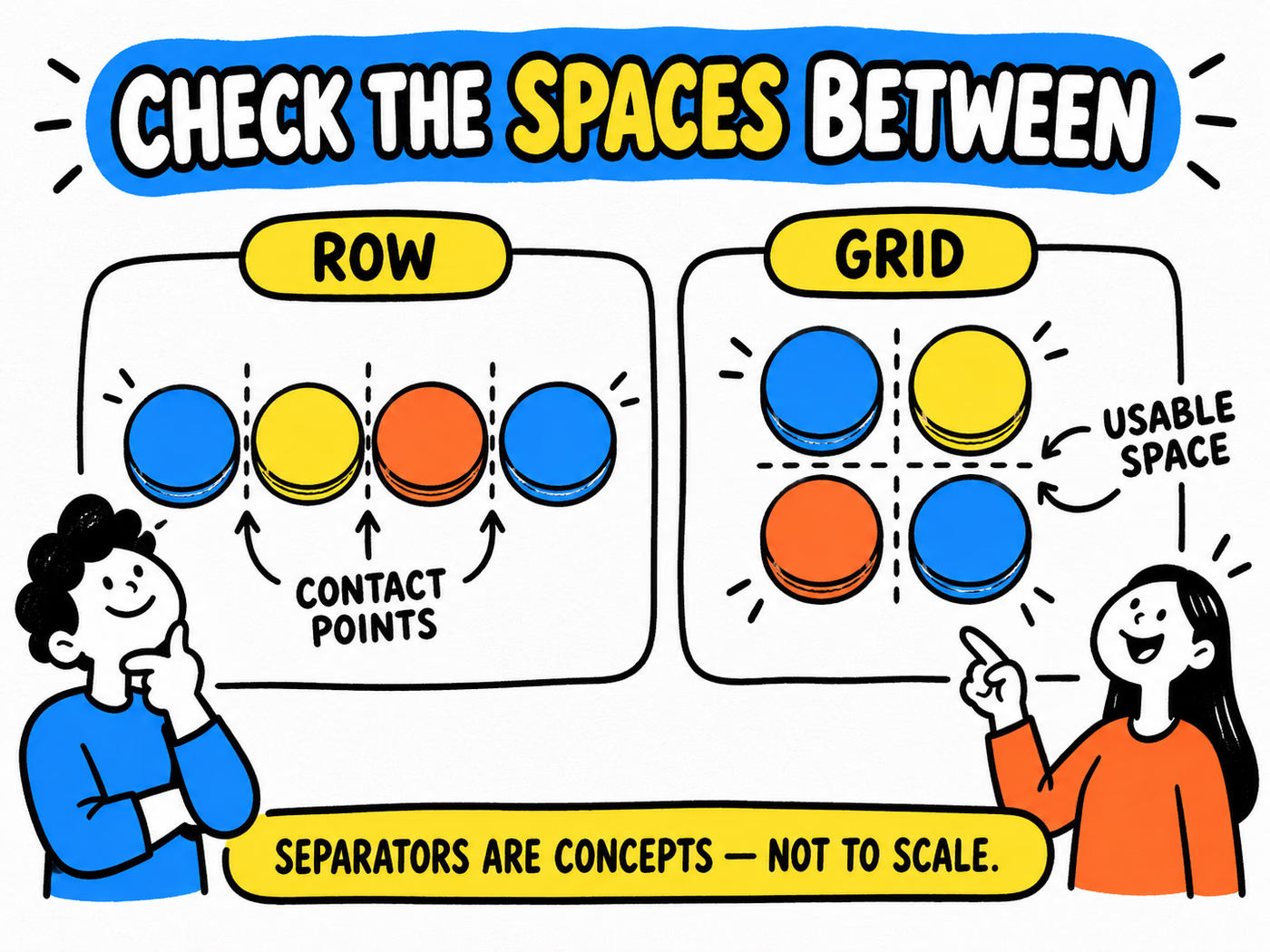
Try a row and a compact layout with the same assortment. Note where pieces could meet one another or the outer panels. Consider how staff loads the order and how the customer lifts out a piece; a layout that looks tidy from above may be awkward to use.
| Approach | Observation to record | Question for review |
|---|---|---|
| Row | Orientation, end space and possible side contact | How is each piece held and removed? |
| Compact grid | Spacing between pieces and complete footprint | Where might neighboring pieces meet? |
| Proposed tray or separators | Contact areas and loading sequence | Is this geometry feasible for the actual product? |
Draw a proposed divider as a hypothesis and label it accordingly. Its material, geometry, fit, and manufacture need review. The illustration uses dashed separator lines to make that distinction visible.
Keep observations tied to a sample
Record what happens when the actual pack is loaded, closed, handled as intended, and opened. If a piece shifts or touches a panel, identify the arrangement and product version. Avoid assigning a universal tolerance or treating a drawing as a protective test.
Design the outer presentation around the chosen layout
Once the arrangement is understood, decide which face the customer sees first and how the pack opens. Keep the main name and message on a panel that remains visible; reserve the specified folds and closing areas for the structure.
A row box can use a long visual rhythm, while a compact box can use a centered label. These are layout possibilities, not reasons to change the product arrangement just to suit a graphic. Adapt the artwork to the confirmed shape.
Coordinate the information
Use a concise card when it supplies useful approved product information or a gift message. Keep version-specific content matched to the actual assortment. Do not invent storage instructions or shelf-life claims as decorative copy.
Explore insert cards and review text at finished size. For any paper proposed near the contents, separate its presentation role from its intended contact using the paper-function guide.
The bakery collection exercise helps coordinate colors and editions after the individual structures have been reviewed.
Request a confirmed structure and sample plan
Send product photos, representative dimensions, assortment count, preferred orientation, and your arrangement sketches. Describe intended contact and handling conditions and any support proposal that remains unresolved.
Folding cartons and product boxes are starting points for a project discussion. Ask which construction is appropriate and whether the proposed tray or separation can be reviewed. Do not assume that an illustrated feature is a catalogue option.
Agree what the sample must answer
- Can staff load the actual assortment consistently?
- Does the closure interfere with the contents?
- Where does contact or movement occur?
- Can the customer remove a piece as intended?
- Which materials and contact conditions need confirmation?
Request a sample-review plan for the complete pack. A result for one arrangement does not prove protection or preservation for every assortment. After the structure is agreed, prepare artwork on the approved template and list quantities by design.