
Pet Subscription Packaging: Separate Toys, Treats, and Product Information
Keep treats in their own approved primary pack and give accessories a separate position. Build a readable edition card for the actual assortment.
Pet subscription box packaging should organize the actual products while preserving each item’s own primary packaging and information. Keep food products in the pack specified by the responsible supplier, plan separation from toys and accessories, and match the edition card to the confirmed assortment. Measure the complete protected set. A decorative outer box is a presentation and delivery component, not a pet toy or a substitute for food packaging.
A treats pouch, a toy and a leash share a customer, but they do not share the same packaging job. A useful kit lets the customer identify each item without confusing the printed theme with instructions for the products.
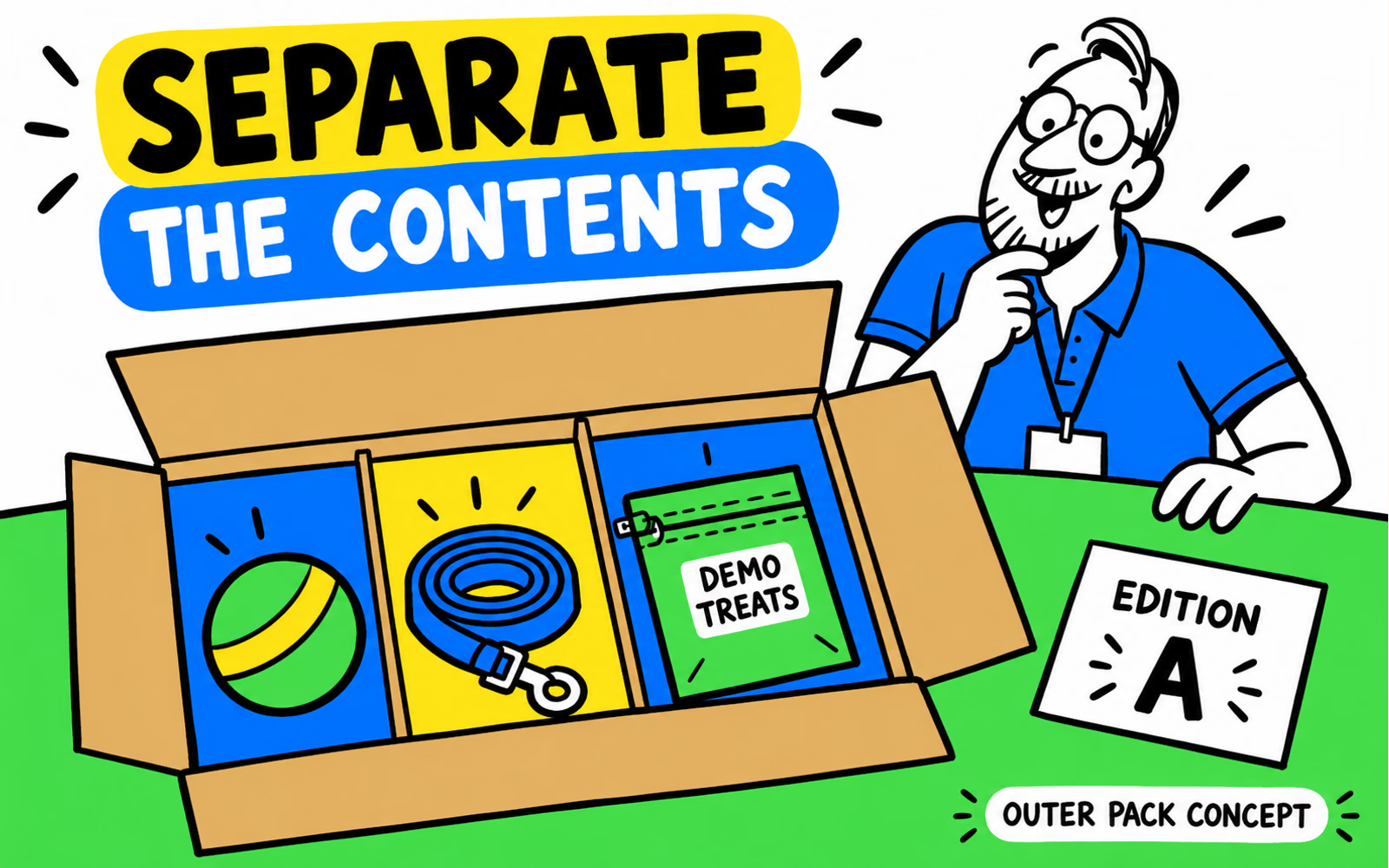
List the products and their existing primary packaging
Start with a component list for the actual edition. Record the product reference, quantity, existing primary pack, dimensions and weight. Include closures, tags, cartons and any information that must remain with the product.
Obtain the relevant storage, handling and product information from the responsible supplier. Keep the original packaging specification in the project record. Do not choose an unmarked decorative pouch and assume it can replace the pack in which treats are supplied.
Describe what arrives at the packing station
Our illustration uses a closed demonstration pouch, a generic ball and a rolled leash. These are fictional planning contents, not products sold by BrandYourPack. In your real brief, distinguish a loose accessory from an item that arrives individually packed.
The subscription edition guide helps organize the complete range. Add a category column for food products, toys and accessories so changes are easy to notice before the physical arrangement or message card is reused.
Separate food products from other accessories
Arrange food products in their specified primary packs and give other items a deliberate position. Examine where a rigid accessory, tag or buckle could contact a pouch. Review rubbing, compression and movement for the actual combination rather than treating a drawn boundary as proof of separation.
| Category | Packaging job | Question before approval |
|---|---|---|
| Packaged treats | Preserve the specified primary pack and its information | Could another item contact or crowd this pack? |
| Toy | Hold and identify the actual supplied product | What position and support suit its real shape? |
| Accessory | Keep the confirmed item and tag together | Could a rigid part press against another component? |
| Edition card | Explain the confirmed assortment to the customer | Does every description match the actual product? |
Keep food containment distinct
The outer box and a printed divider do not establish food-contact suitability or containment. Resolve any proposed change to the food pack with the responsible supplier for that exact use. This article provides no nutrition, veterinary or feeding assessment.
Use the holding-method comparison for the proposed arrangement. Ask which components are available and what they do before including a special divider in the purchase list. The illustration marks separations to review, without a claim that they have passed testing.
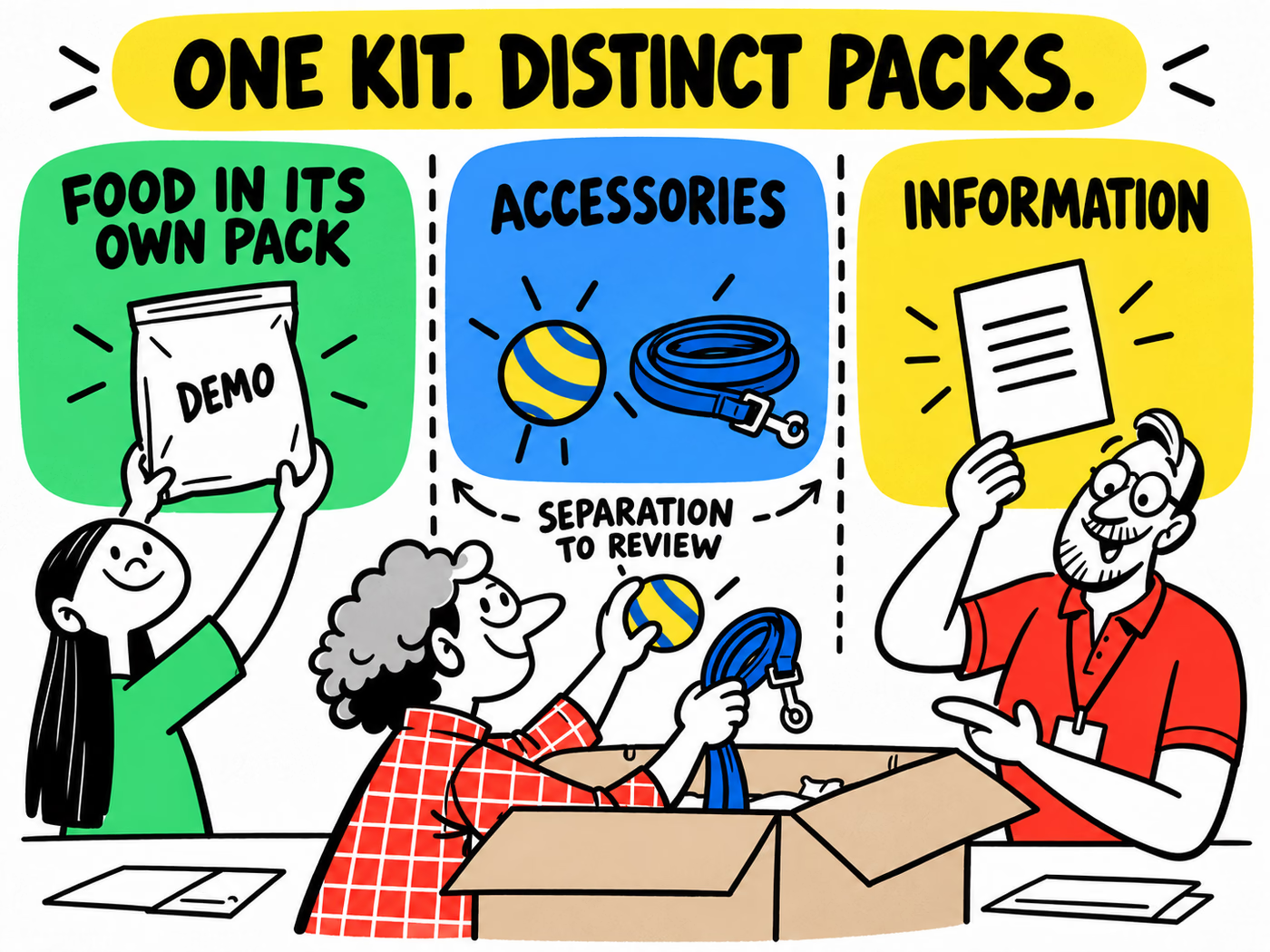
Plan edition labels and useful information
Give the recipient a short map of the actual kit. Identify each item using the product information approved by its responsible brand. Keep that map matched to the edition rather than printing a broad description that could be wrong after a substitution.
A fictional card structure might use: What is in this edition, Where to find each product’s supplied information, and How to contact the subscription brand about an order. Fill those sections with verified details before production; the illustration deliberately leaves the information card blank.
Write to the customer opening the box
Keep the outer packaging message directed to the person unpacking the order. Avoid encouraging a pet to chew the carton, closure or printed card. A toy inside the kit and the delivery box have separate purposes.
Use the edition-card version guide to tie copy to the contents. Product-specific feeding, use or suitability instructions should come from the responsible supplier. Do not create them in the packaging design process or imply they apply to every pet.
Measure the complete protected assortment
Measure the actual arrangement with all primary packs, proposed support, tags and the edition card in place. Include the shape of a rolled accessory and any projecting hardware. Record length, width and height with units, and distinguish usable internal space from the finished parcel’s outside dimensions.
Review both the largest and the awkward edition. A smaller assortment can have more room to move; one large toy can crowd a pouch even when the total item count is lower. The changing-contents worksheet helps keep those differences visible.
Prepare a component-by-component request
Explore mailer boxes, labels and insert cards for the confirmed range. Use the measurement guide and artwork guide after the proposed construction is understood.
List quantities by reference and edition. Keep the packed sample photograph and product information beside the approved files. The project request concerns packaging components, not food supply or pet-product manufacture. Reopen the relevant review whenever a product, primary pack or assembly method changes.