
Pizza Box Design Ideas: Artwork That Works Beyond the Lid
Give the pizza box lid, sides, and order identifier distinct jobs. Compare three original graphic directions on the confirmed box structure.
Pizza box design ideas should give the lid, visible sides, and order identification distinct jobs. Start with the confirmed box structure, compare original typography, local illustration, and pattern concepts, then prepare the selected artwork on the approved dieline. A new graphic should not change closure, ventilation, or food-contact arrangements without review.
The lid gets the biggest canvas. The side may get the longest look when several orders are stacked at pickup. Design the whole visible box, with one clear purpose for each panel.
Start with the confirmed pizza box structure
Resolve the proposed box reference before designing. Record the finished pizza dimensions, usable interior, closure, and intended packing and handoff conditions. The artwork belongs to that particular structure rather than to a generic square on a screen.
Keep the design brief separate from construction changes
Ask for the approved print layout and identify exterior panels, restricted areas, and any supplier instructions. Adding openings, changing folds, or printing inside creates a different specification that needs review. A concept illustration cannot approve those changes.
The independent pizzeria packaging plan covers the wider order system. This article develops three graphic directions for the confirmed box, with attention to the surfaces visible beyond its lid.
Confirm before drawing
- Exact proposed box and usable internal dimensions.
- Finished product and intended contact conditions.
- Approved exterior print panels and restricted areas.
- Pickup, stacked-order, and carrying arrangements.
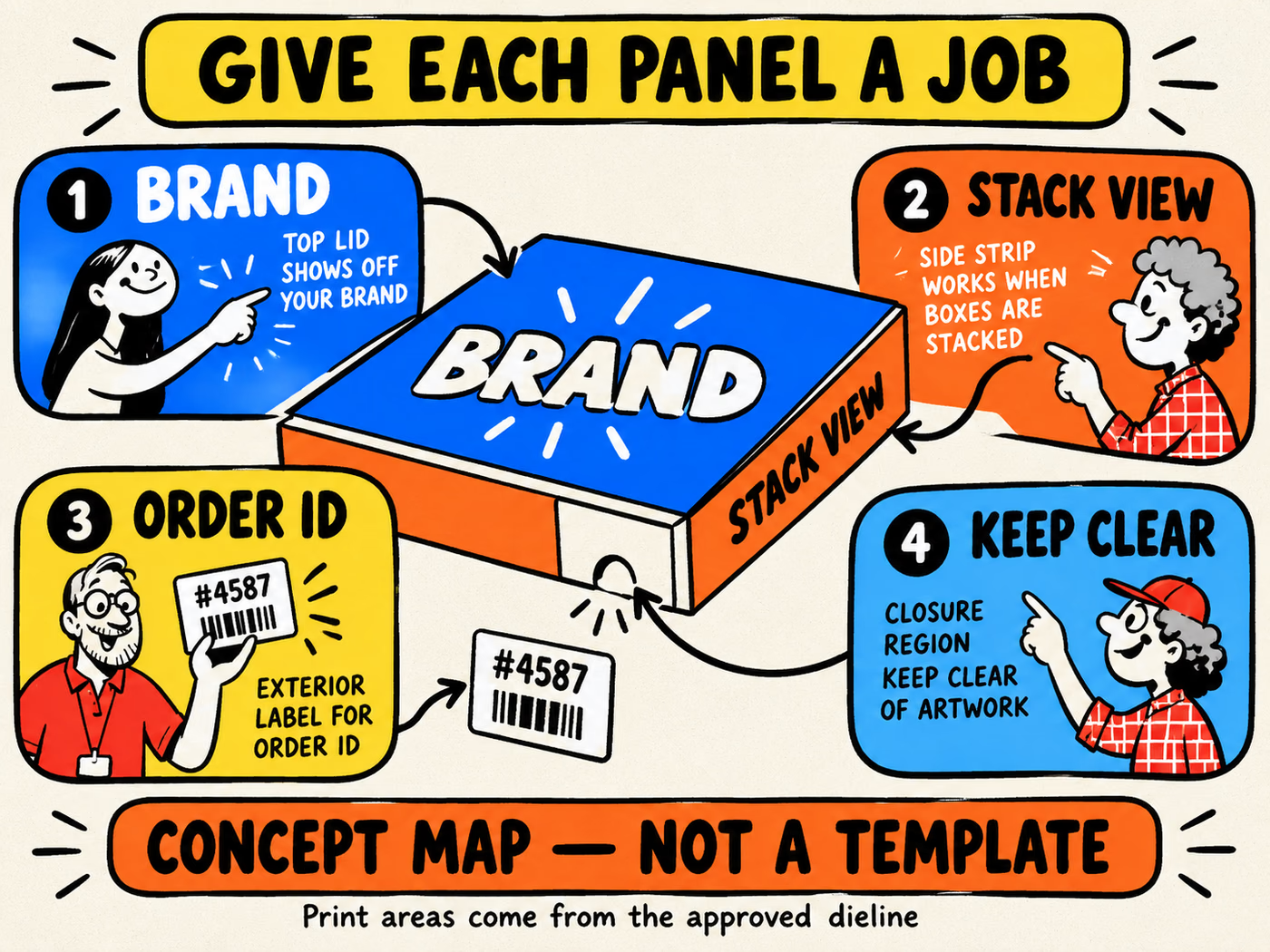
Assign a purpose to each visible panel
Put the strongest brand identifier on the lid, then decide what the sides contribute. Repeating a smaller mark may be more useful than shrinking the entire lid illustration onto every narrow strip.
| Area | Possible job | Review on the assembled box |
|---|---|---|
| Lid | Main name or original visual idea | Readability, orientation, approved print coverage |
| Visible side | Identify the brand within a stack | Short wording and viewing direction |
| Order identifier | Connect the pack to the correct order | Exterior placement and staff checking process |
| Closure region | Allow normal opening and closing | Restricted print or application areas |
Leave operational information its own space
Decide how the order will be identified during service. A separate exterior label or agreed marking area can keep changing information outside the decorative pattern. Check the actual application and ensure it does not interfere with opening.
Review the artwork with boxes closed and stacked as well as laid flat. A side identifier facing the wrong direction can be technically present and still awkward to use.
Compare three original artwork directions
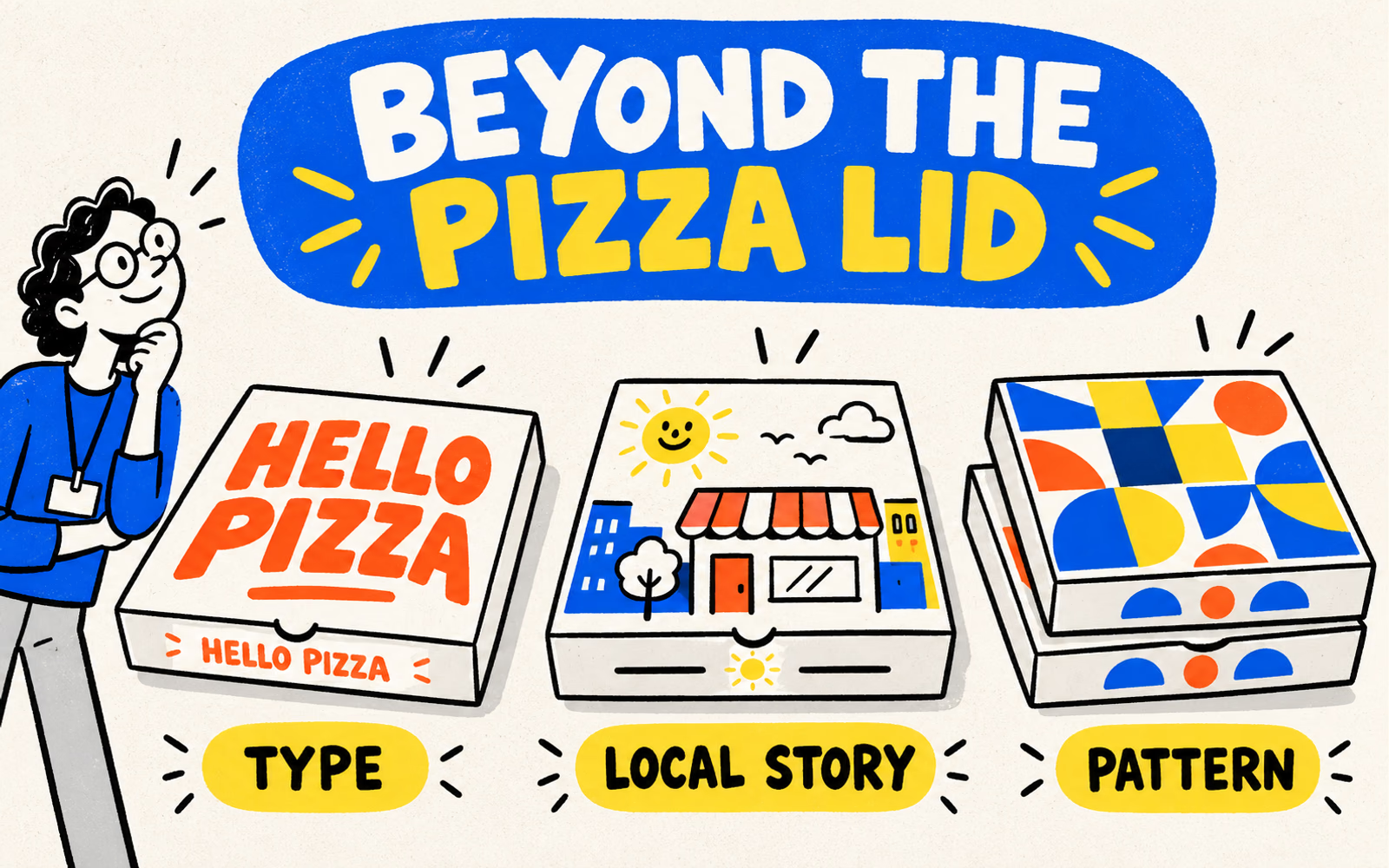
Keep the proposed structure consistent while changing the visual approach. The three fictional concepts above show alternatives rather than manufactured examples.
Large typography
A short, bold line gives the lid one immediate message. Our “Hello Pizza” concept repeats a compact identifier on the visible side. Try your actual business name at finished size, especially if it is long or contains a small descriptor.
An original local story
A simple invented storefront and sun create a neighborhood scene. Your own illustration could reference an authentic part of the business, using original artwork and verified details. Keep small linework readable on the proposed substrate.
A modular pattern
A few repeated shapes can connect lid and sides without copying a chain’s identity. Keep the pattern secondary to the name and order identifier. Ask how it aligns across approved panels rather than assuming the flat design will wrap continuously.
Use the same colors or symbol on an exterior bag where appropriate. The takeout branding guide develops that broader coordination.
Prepare the design on the approved dieline
Request the current template for the confirmed box. Follow its bleed, safe areas, orientation, and file instructions. Keep structural lines separate from printable artwork according to the supplier’s requirements.
Use the artwork guide for file preparation and the box measurement guide for dimension conventions. Record the exact template and artwork versions approved together.
Evaluate pizza boxes, labels, and carrying bags against their intended uses. Include quantities per box reference and design, with any contact or construction questions clearly identified.
Make every visible panel useful.
Planning packaging for your food business? Tell us what you are packing, its finished dimensions, intended contact and handling conditions, quantities, and delivery ZIP.
Planning references
- BrandYourPack: Packaging for Independent Pizzerias.
- Packaging Artwork Guide.
- Tissue, Greaseproof, and Wrapping Paper.
Reviewed October 6, 2026. Three original graphic concepts; construction, ventilation, print areas, and contact use require reference-specific confirmation.