
Small Business Saturday Packaging: Tell a Local Story Without Overdoing It
Let your own shop story lead. Coordinate a reusable bag, a temporary event label and a concise card, while keeping official campaign assets separate.
Small Business Saturday packaging ideas should start with your own shop story and the actual purchases customers will carry. Keep the everyday bag recognizable, use a separate component for event-specific information, and add a concise thank-you card. If you use official campaign materials, review their current terms and intended uses instead of adapting a downloaded logo into a custom packaging design.
A shop’s character often lives in ordinary details: the person behind the counter, a familiar street or the way an item is chosen. Packaging can carry one of those details without turning the entire bag into an event poster.
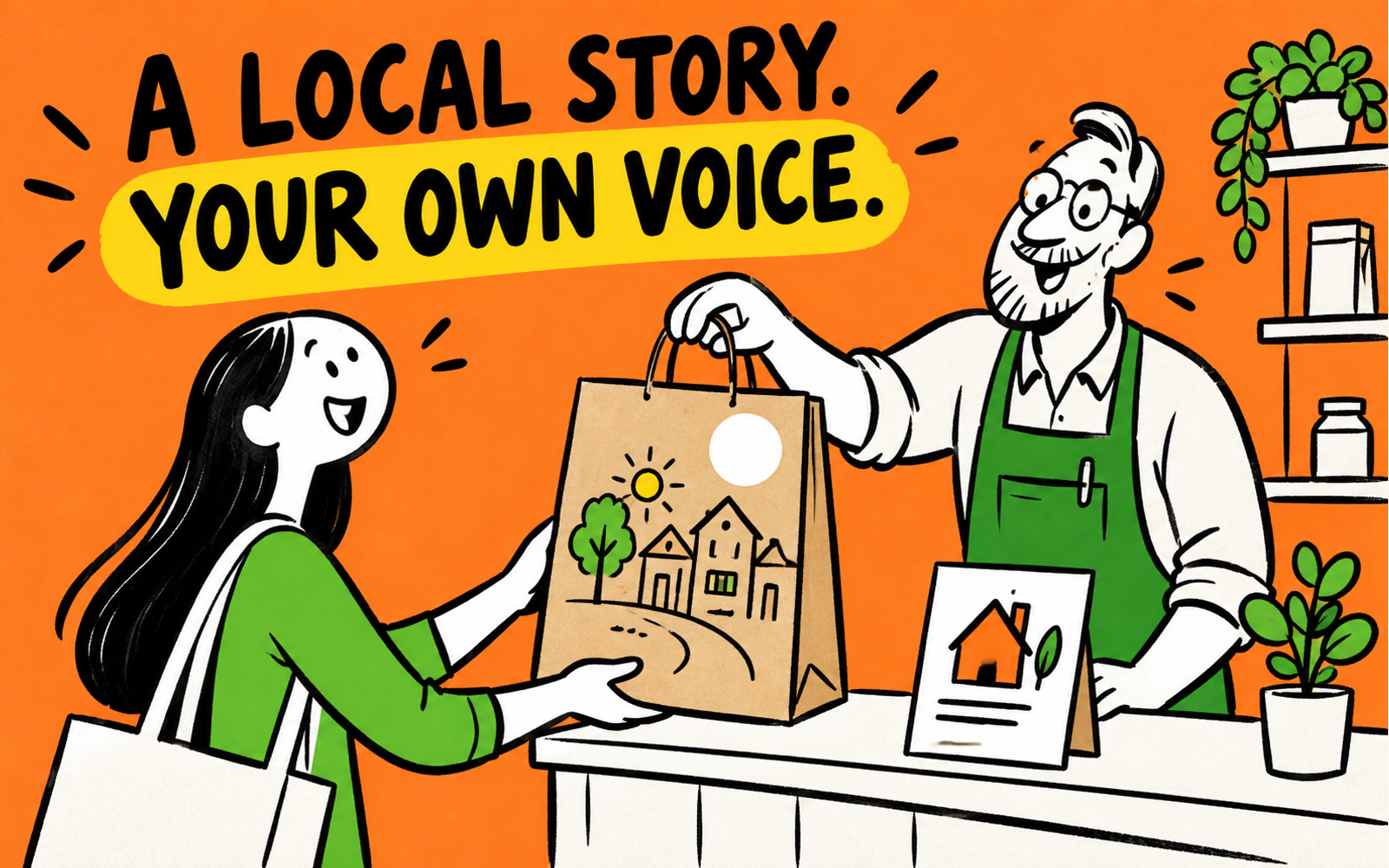
Choose your own local retail message
Choose a real detail about your business that customers can understand quickly. It might be the way you curate the selection, a service you offer in-store or a short explanation of how a product is made. Check the wording with the person responsible for that information before it becomes printed copy.
A fictional shop might illustrate a generic row of storefronts and describe how its team selects gifts. Your own shop can use an original drawing connected to its actual identity. Avoid invented founding dates, local sourcing claims or community contributions simply because they make the story sound appealing.
Write for the moment after checkout
The buyer already has the purchase. A useful card can thank them, introduce the people behind it and point to a real way to stay in touch. Give one clear next step rather than several competing requests. Keep event promotions separate from enduring product or care information.
The SBA’s 2026 page, reviewed October 6, 2026, lists Small Business Saturday as November 28, 2026. Confirm your shop’s own hours and event arrangements before printing them. The national date does not establish your local schedule.
Coordinate bags, labels, and thank-you cards
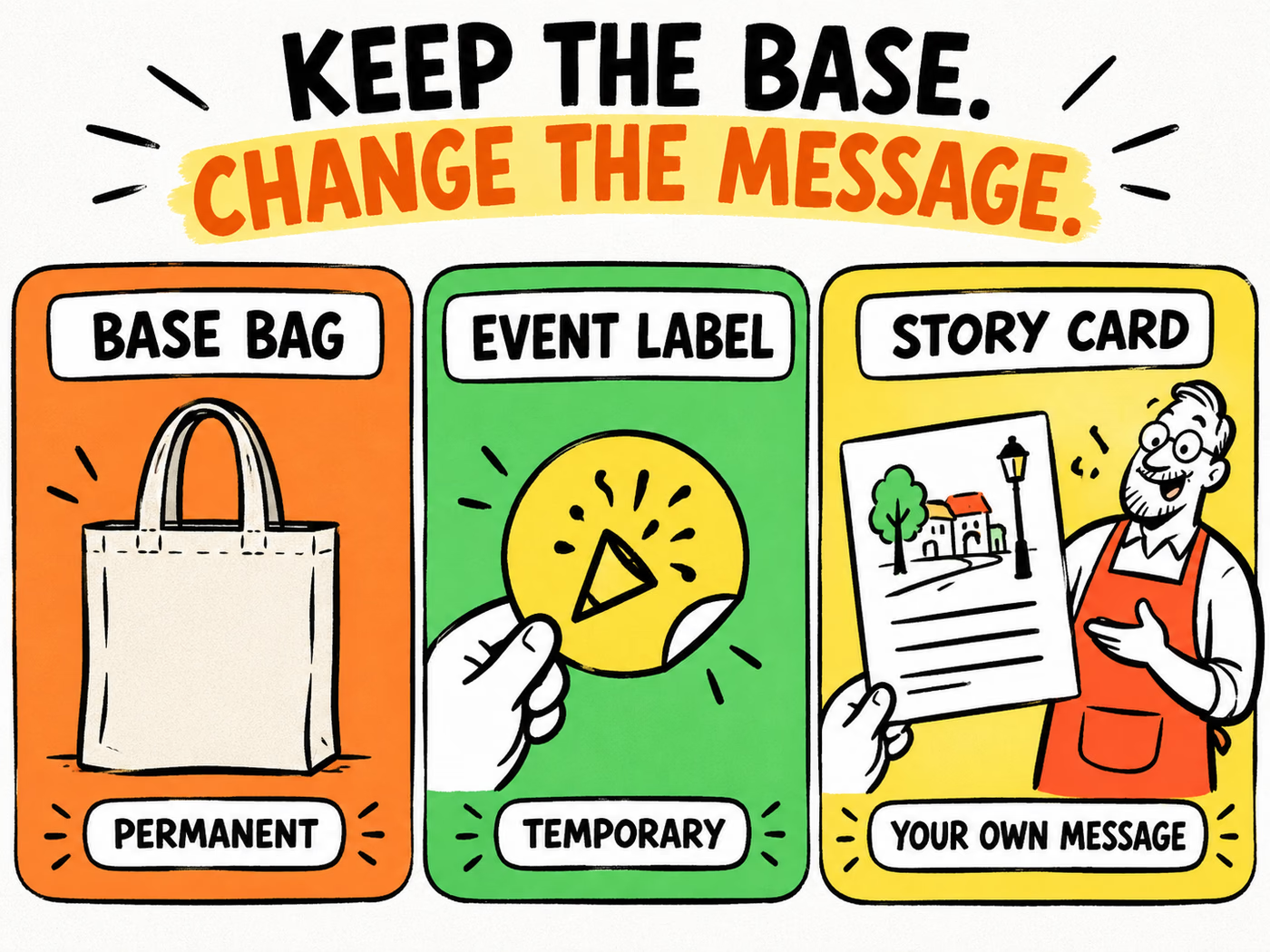
Give each piece one job. The bag carries the shop identity; an event label can carry confirmed temporary information; the card explains the story or thanks the customer. Repeat one original illustration or color accent so the pieces feel related without repeating every sentence.
Compare the actual purchases before selecting bag formats. A single small item and several boxed gifts may need different usable space and handling arrangements. Do not choose one size only because it produces a neat display behind the counter.
| Component | Useful message | Review before printing |
|---|---|---|
| Base bag | Shop identity and original motif | Actual product fit and handling |
| Event label | Confirmed temporary information | Placement, dates and artwork version |
| Story card | One shop detail and a thank-you | Accurate copy and readable size |
Try it at the counter
Pack representative orders with the team that will use the components. Note whether a label hides existing information, the card gets folded or the graphic sits near a closure. Keep the sample close to the packing station so the agreed arrangement is easy to repeat.
Explore retail bags, stickers and thank-you cards using the actual format and intended use. The illustration is an original concept, not a tested handling specification.
Keep campaign branding separate from your brand
Your own local story and official campaign materials have different owners and purposes. Review the American Express materials page and its linked terms before using downloaded assets. The page reviewed October 6, 2026 points users to brand guidance and limits alteration and use outside the intended purpose.
Do not assume that access to a social post or poster permits placing its logo on a manufactured bag. Review the specific asset and intended packaging use with the responsible rights holder. The examples here use original graphics and make no claim that the fictional shop has official participant or partner status.
Keep a separate file for each purpose
Store your own bag artwork separately from official materials used under their terms. Record the source and applicable instructions for any campaign asset so the next person preparing the event does not mistake it for a reusable shop logo.
Some official pages still display older campaign dates. Use the year-specific source above for 2026 and recheck the current resources when preparing a later campaign. This modular arrangement lets the enduring shop identity remain useful after the temporary message has expired.
Prepare quantities for the actual event plan
Plan quantities around expected orders and the formats you actually use. Separate bags by size, labels by event version and cards by message. Check usable stock before ordering more; an outdated event label should not be counted as a current component.
Use the consumption calculator for the agreed event scenario. Keep any extra cover, purchasing quantity and lead time as confirmed project inputs. A national campaign does not guarantee foot traffic or a particular sales result.
Retain an event-ready brief
Record the shop schedule, component quantities, artwork references and delivery ZIP. Proofread addresses, hours and destinations against the actual event plan. The artwork guide supports preparing files for the approved structure.
After the event, retain the useful base design and retire expired files. For a wider seasonal system, see the Christmas packaging guide; for the message itself, compare the thank-you note examples.