
Tiffany Packaging: What Small Brands Can Learn Without Copying the Look
Study the documented gift presentation, then create your own carrying, reveal and message sequence with an original identity and a confirmed structure.
Tiffany packaging can be studied as a documented gift presentation rather than a color to imitate. Its US gift-wrapping FAQ, reviewed October 6, 2026, describes the signature box and ribbon, with an optional gift message enclosed in an envelope. For a small brand, translate the sequence into three original decisions: carrying, revealing the gift and delivering the message. Use your own colors, marks and presentation, and confirm the proposed structure for the actual item.
A gift’s packaging is encountered in stages. The recipient carries it, sees what is inside and reads the message. Those moments can feel connected without reproducing another brand’s recognizable appearance.

Document the gift presentation being analyzed
The official US gift-wrapping FAQ describes Tiffany.com purchases arriving in its signature Blue Box with a white satin ribbon. It also describes a gift-message option for each item, enclosed in a white envelope. That is the documented presentation used for this discussion.
The source does not provide a production drawing for an independent supplier, establish the construction of every item-specific box or confirm what a different business can manufacture. Keep its gift-service description attached to the brand and the review date.
| Documented component | Question for an independent brand | Your project decision |
|---|---|---|
| Presentation box | How is the item revealed? | Original structure and artwork |
| Gift message | How does the note reach the recipient? | Card placement and approved text |
| Coordinated identity | What connects the pieces? | Your own mark and palette |
Our interpretation concerns the sequence and the relationship between pieces. It does not claim a measured sales effect or transfer the brand’s material statements to another box. The search review is qualitative, with no measured keyword volume.
The original illustration uses orange and cobalt with a geometric identity. It intentionally differs from the documented blue box and white ribbon. For the separate small-item arrangement problem, use the jewelry packaging guide.
Separate the gifting ritual from protected brand elements
The useful sequence is carrying, revealing and messaging. Each step suggests a planning question that an independent business can answer in its own way. The particular color, mark and signature arrangement belong to the documented brand identity.
Tiffany’s official heritage page identifies Tiffany Blue as a trademarked part of its identity. This guide is a design-planning discussion, not advice on the legal boundaries of a specific proposed mark. Develop an original system and have any unresolved identity questions reviewed by the responsible team.
| Gift moment | Question to answer | Original decision |
|---|---|---|
| Carry | How will the recipient move the gift? | Bag or other carrying arrangement |
| Reveal | What is visible when presentation opens? | Your own box, layout and artwork |
| Message | Where does the personal note belong? | Your own card and placement |
The infographic shows independent examples of those moments. It does not claim that the carrying bag appears in every Tiffany order or that the illustrated lid structure matches Tiffany manufacture. The lifted lid is a concept to discuss with a supplier.
A recognizable ritual does not need borrowed visual details. Give your own sequence a clear identity and avoid adding a familiar brand symbol merely because customers already recognize it.
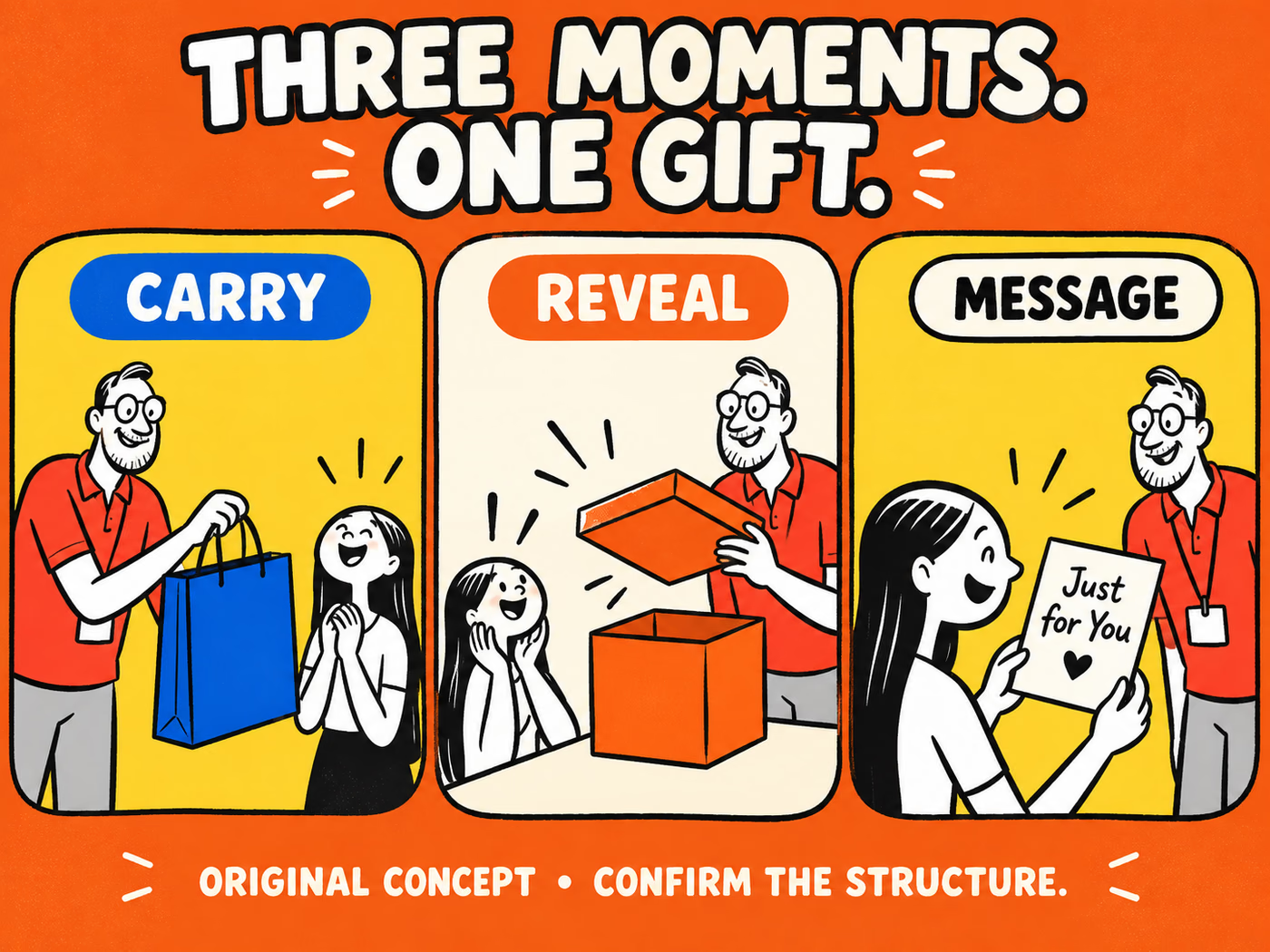
Create your own distinctive gift system
Write a short brief about the giver and recipient. Is the gift handed over in a shop, sent to an employee or placed at an event? That context changes what the bag, box and message need to do. Decide whether the note should be visible first or found after the item is revealed.
Select an original palette and one repeated element, then adapt it to each piece. A carrying bag can use a larger identity area; the presentation box can focus attention on the item; the card needs readable text and a clear place for the message.
| Component | Design task | Physical task to confirm |
|---|---|---|
| Carrying bag | Recognizable original exterior | Complete gift arrangement and handling |
| Presentation box | Orderly reveal of the item | Fit, support and proposed closure |
| Message card | Readable personal note | Placement and room in the arrangement |
Walk through the actual handoff
Arrange the complete gift and rehearse the sequence: lifting it, opening the presentation and finding the card. Record where the hands go and which pieces move. A rendering that looks balanced from above may hide a card or make the actual handoff unclear.
Discuss product boxes, retail bags and insert cards as separate specifications. For a larger assortment, see corporate gifting; for an event-specific note, see wedding favors.
Choose a feasible structure for your project
Start with the actual gift, any inner holder and the complete presentation arrangement. Measure that set before choosing the exterior. Use the measurement guide and confirm the convention for the proposed box with the supplier.
A rigid-looking concept does not establish an available construction or finish. Ask the supplier to confirm the structure, closure, materials, printing and any proposed finishing for the project. Keep feasibility questions attached to the quote rather than hiding them behind a reference photograph.
| Brief field | What to provide | What to confirm |
|---|---|---|
| Contents | Complete gift and support arrangement | Interior fit |
| Presentation | Original visual direction | Proposed structure and finish |
| Artwork | Separate files for box, bag and card | Exact templates |
| Order | Quantities by item and delivery ZIP | Project-specific schedule and scope |
Use the artwork guide after the templates are agreed. Review the set together for identity, then each component for fit and readable information. Matching colors on a screen do not guarantee the same printed appearance on different materials.
Save the approved specification and file list so a reorder preserves your own gift system. If the gift changes, revisit the arrangement and structure before repeating the same exterior size. A clear original brief is more useful to the supplier than a request to reproduce a famous box.