
TikTok Shop Packaging: A Planning Checklist for US Sellers
Record the US shipping route and the official rules that apply to your product. Keep optional branding separate from protection, order identification and handling.
TikTok Shop packaging for US sellers starts with the fulfillment route and the current rules for the product. On October 6, 2026, we reviewed the US Academy Order Packaging Requirements page, dated September 3, 2026. Its packing section distinguishes Seller Shipping, Collections by TikTok and TikTok Shipping from Fulfilled by TikTok, which has a separate policy. Use the applicable official requirements to define handling first, then review optional branded packaging against those requirements.
A colorful parcel may look ready on camera while the shipping brief is still incomplete. This checklist gives each decision a place: which official rule applies, how the actual order is packed, and which original graphics are optional.
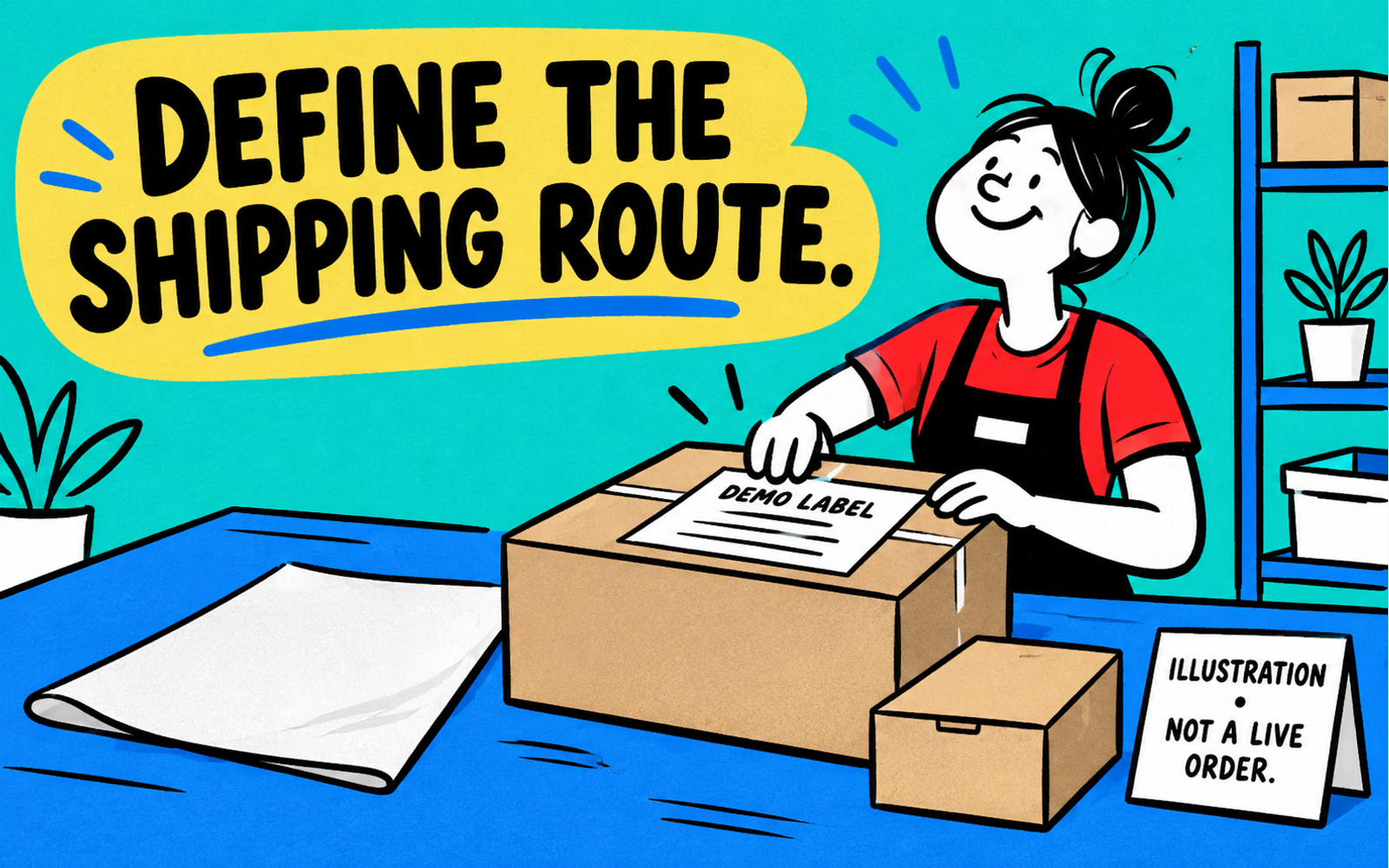
Locate the current US seller requirements
The official Order Packaging Requirements names Mexico and the United States and explicitly addresses US physical-product orders. Its packing section distinguishes the non-FBT routes. Keep the region and route attached to your source record.
If your inventory enters Fulfilled by TikTok, use that separate inventory policy. Create a different working sheet for the inbound arrangement so your team can identify which source belongs to which task.
| Record | What belongs in it | Reason to revisit |
|---|---|---|
| Marketplace | United States and actual fulfillment route | Changing region or route |
| Official reference | Page URL, relevant section and review date | A policy update |
| Product scope | The exact item and any special handling category | A new item or bundle |
| Working method | Packing version linked to the recorded requirements | A material or construction change |
Our qualitative search review found the official US Academy policies. We have not measured keyword volume or difficulty. This guide is an organizational aid for sellers; your current US account instructions and the applicable logistics provider remain the references for the actual order.
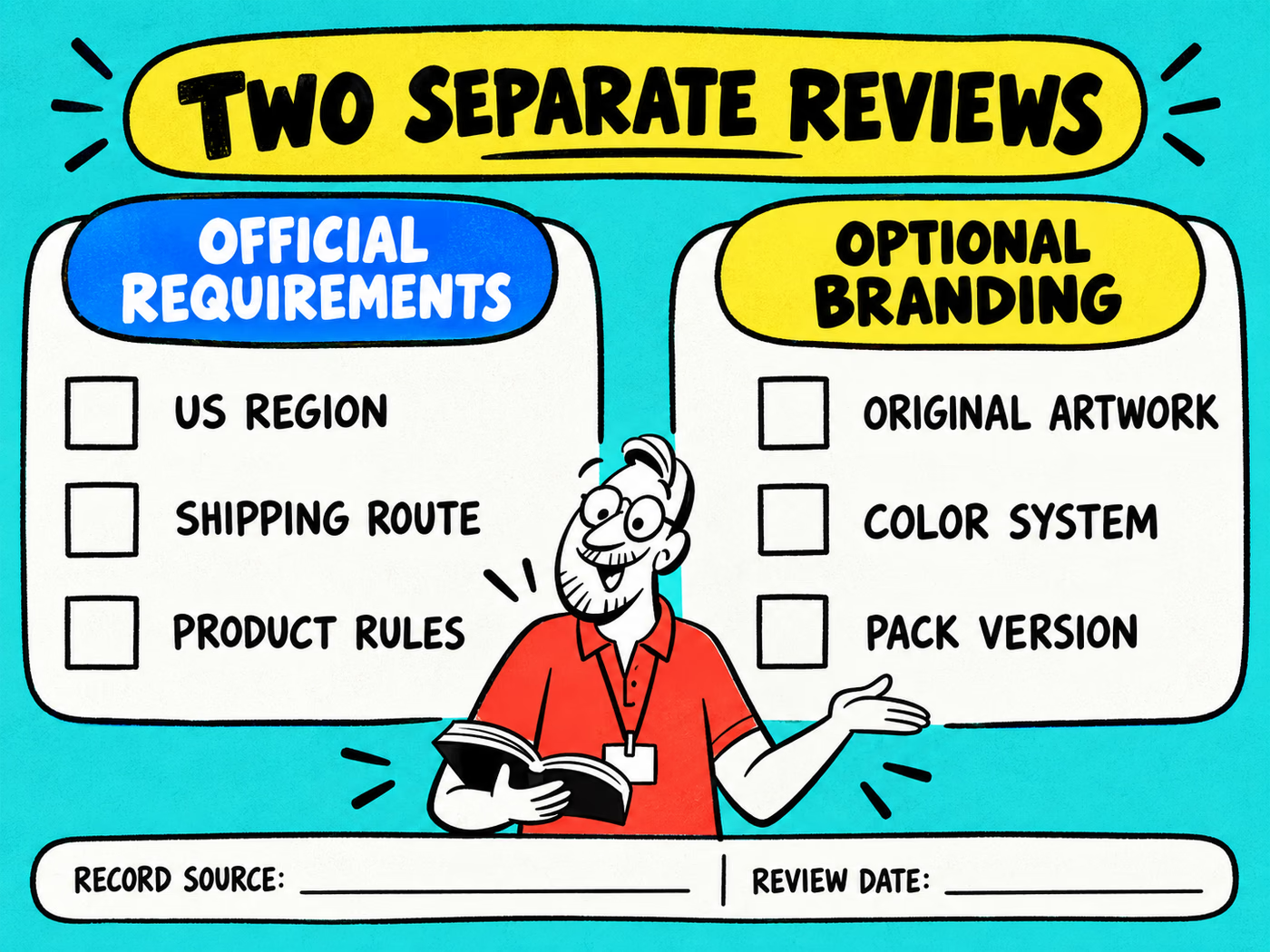
Separate required handling from optional branding
The reviewed non-FBT rules require appropriate sizing, protection and sealing; prohibit loose-fill dunnage and bundled cartons; and defer special handling to the logistics provider. Put those requirements in the handling column.
Keep decoration in a separate column. Your color palette, original logo and artwork version are design decisions; they do not establish that the proposed construction satisfies the product’s handling requirements. A branded insert also needs review against the platform’s prohibited packing practices before you include it.
| Handling record | Optional design record | Evidence to keep |
|---|---|---|
| Product and shipping-route requirements | Original artwork and color palette | Official source plus reviewed design file |
| Material and closure arrangement | Exterior print treatment | Packing version and exact template |
| Order identification | Pack-version identifier for your team | Sample record tied to the actual order |
The infographic intentionally leaves every checkbox empty. Fill your working checklist only after someone has reviewed the relevant requirement and the actual pack. If the item changes from a soft textile to a fragile vessel, revisit the handling method before carrying over the same graphics.
Shipping boxes and poly mailers are possible project categories, not interchangeable recommendations. Confirm the permitted method and protection needed for your specific product before requesting either.
Keep labels visible and orders identifiable
Choose the label location while planning the closed parcel. Give the shipping information a clear area, then review the final arrangement after closure and after any optional branding has been applied. A design that looks orderly in a flat file can collide with a fold, seam or label on the assembled pack.
Use the shipping label produced for the actual order and selected service. A sample label used in a mockup should remain visibly nonfunctional and should never enter the dispatch process. Our illustration says DEMO and contains no operating tracking code or address.
Review the parcel in the condition that leaves your workspace
For your internal inspection, compare the selected order, enclosed item, parcel label and packing-version record together. Check that decoration has not covered required information. Keep sensitive order details out of public artwork samples and marketing photographs.
If you plan custom labels for your own product identity, distinguish them clearly from shipping identification. A brand label does not replace the order label or product-specific information. The artwork guide helps prepare the print file once the reserved areas are agreed.
Build a packaging checklist for your products
Make one working sheet for each materially different packed arrangement. Record the item or bundle, the shipping route, the required method, the materials, the closure and the artwork version. Include the source review date so a future team member can see which rules were checked.
Measure the complete arrangement after adding the protection that the item needs. Use the packed-dimension guide and confirm the proposed structure’s measurement convention with the supplier. Bare-product dimensions alone do not describe a ready-to-dispatch parcel.
| Field | Example of what to record | Who confirms it |
|---|---|---|
| Item and combination | Single item or defined bundle | Seller operations |
| Requirement reference | US source, route and review date | Seller operations |
| Packed arrangement | Item, protection and closed parcel | Packing team |
| Print request | Exact artwork, quantities and destination ZIP | Buyer and supplier |
Keep a reference pack linked to the sheet and record any proposed change before treating it as the normal method. A digital image demonstrates appearance; it does not prove shipping performance. The eBay packing guide covers a different marketplace context, while the FBA checklist separates saleable units from inbound shipment cartons. Do not transfer one platform’s requirements to another.