
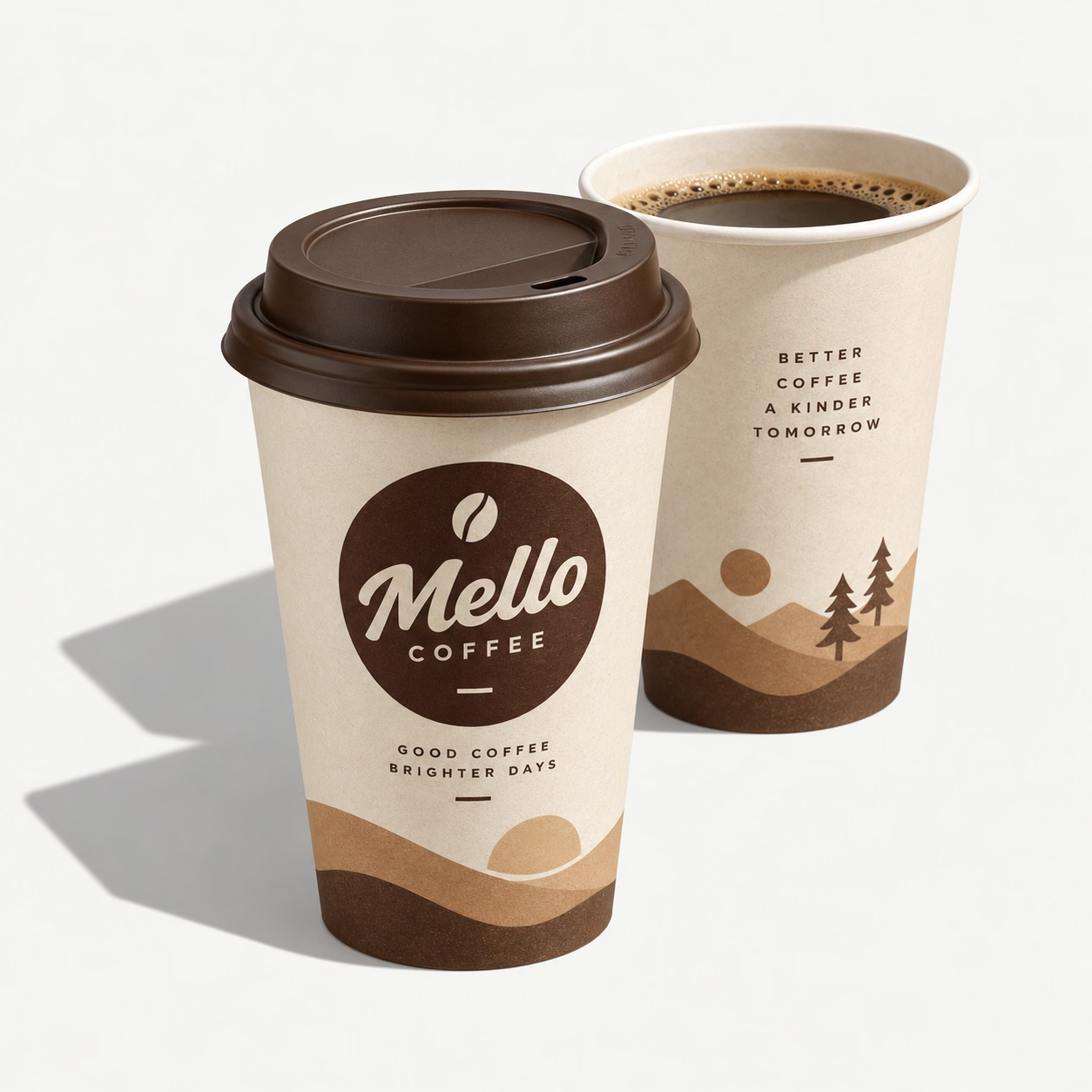
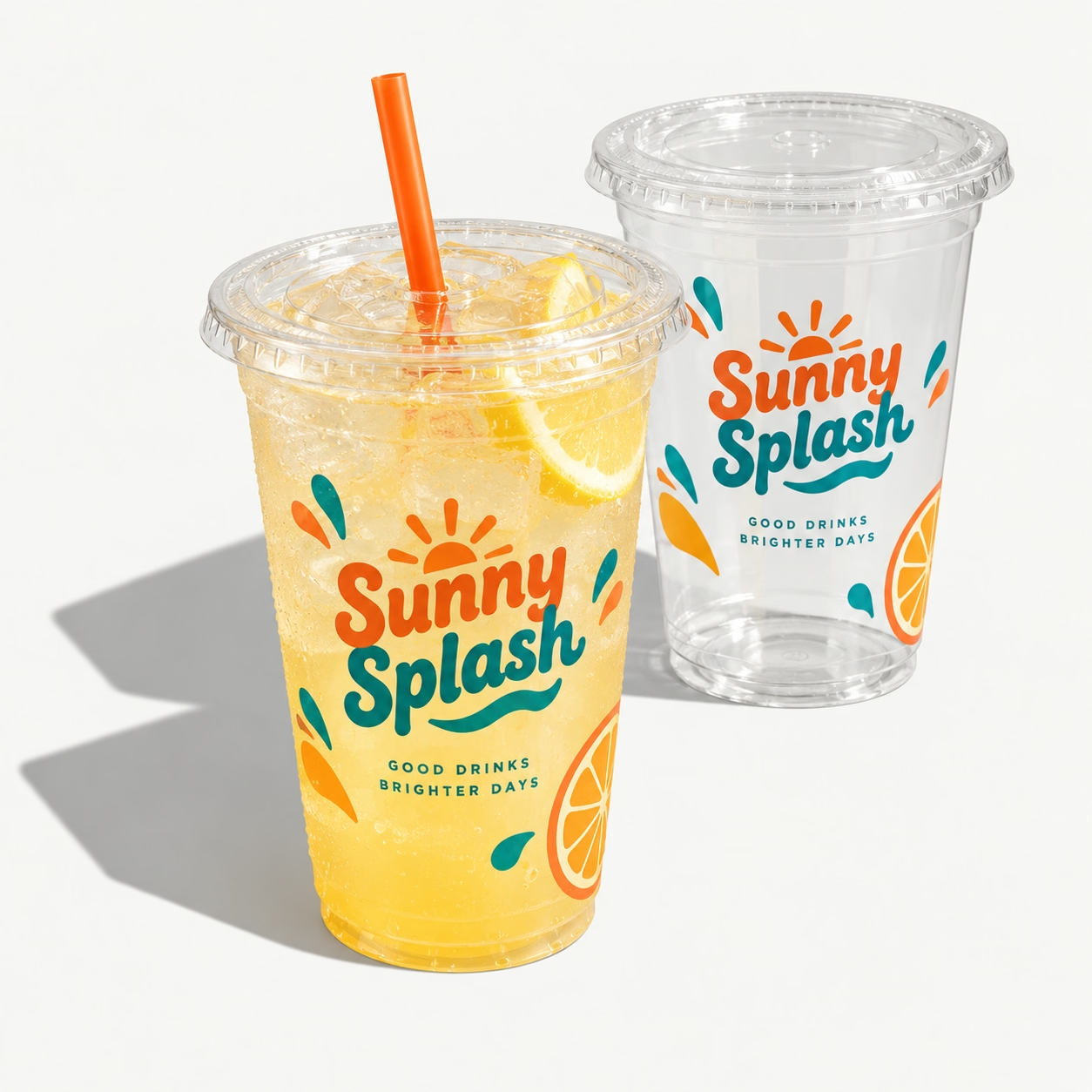
Plan coffee cart packaging around your menu, the exact cup-and-lid combination and the space available on the cart. Count each cup size and accessory separately before comparing quotes.
Build coffee cart branding around a compact set of packaging that works in your actual space: the cup references your menu needs, any matching lids or sleeves, and bags for completed takeaway orders. Repeat a simple visual identity across that set. Keep working stock accessible, reserve stock separate, and quantities tied to real use rather than buying every component in the same count.
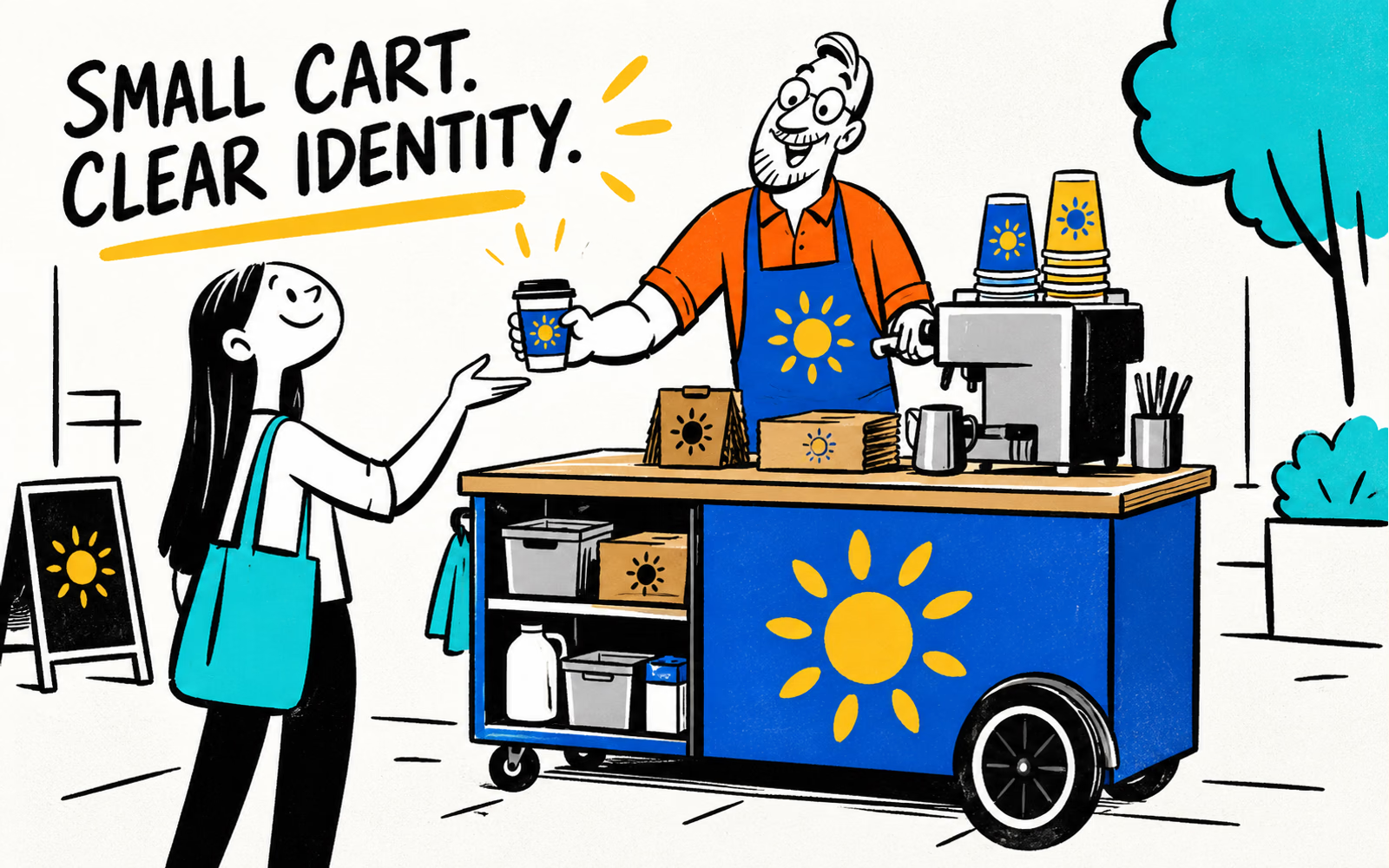
The cart itself is already a strong part of your identity. Packaging should connect with it while leaving staff enough room to prepare and hand over drinks. A coordinated small range can be more practical than a display of many unrelated formats.
Define the cart’s essential packaging
Begin with hot drinks, cold drinks, and food or multiple-item orders to go. Record the complete serving setup for each. The nominal cup label is only part of the brief; the actual cup, closure, sleeve, and carrying arrangement need their own checks.
| Service | Reference to confirm | Quantity basis |
|---|---|---|
| Hot drinks | Cup construction, capacity, exact lid needs, any sleeve | Cups by size; lids and sleeves by actual use |
| Cold drinks | Complete drink with ice or toppings, cup and closure | Each proposed cup and closure separately |
| Takeaway orders | Filled arrangement and suitable carry bag | Bags per completed order, not per drink |
Check your existing cup-and-lid specification before adding artwork. Lids are a matching requirement to confirm in the request, not a separately confirmed catalogue offer.
Build a compact visual identity
Choose one recognizable motif, a small palette, and a clear version of your shop name. Try them on the smallest surface first. A design that works on the cart sign may need simplifying on a sleeve or small label.
Design around what customers actually see
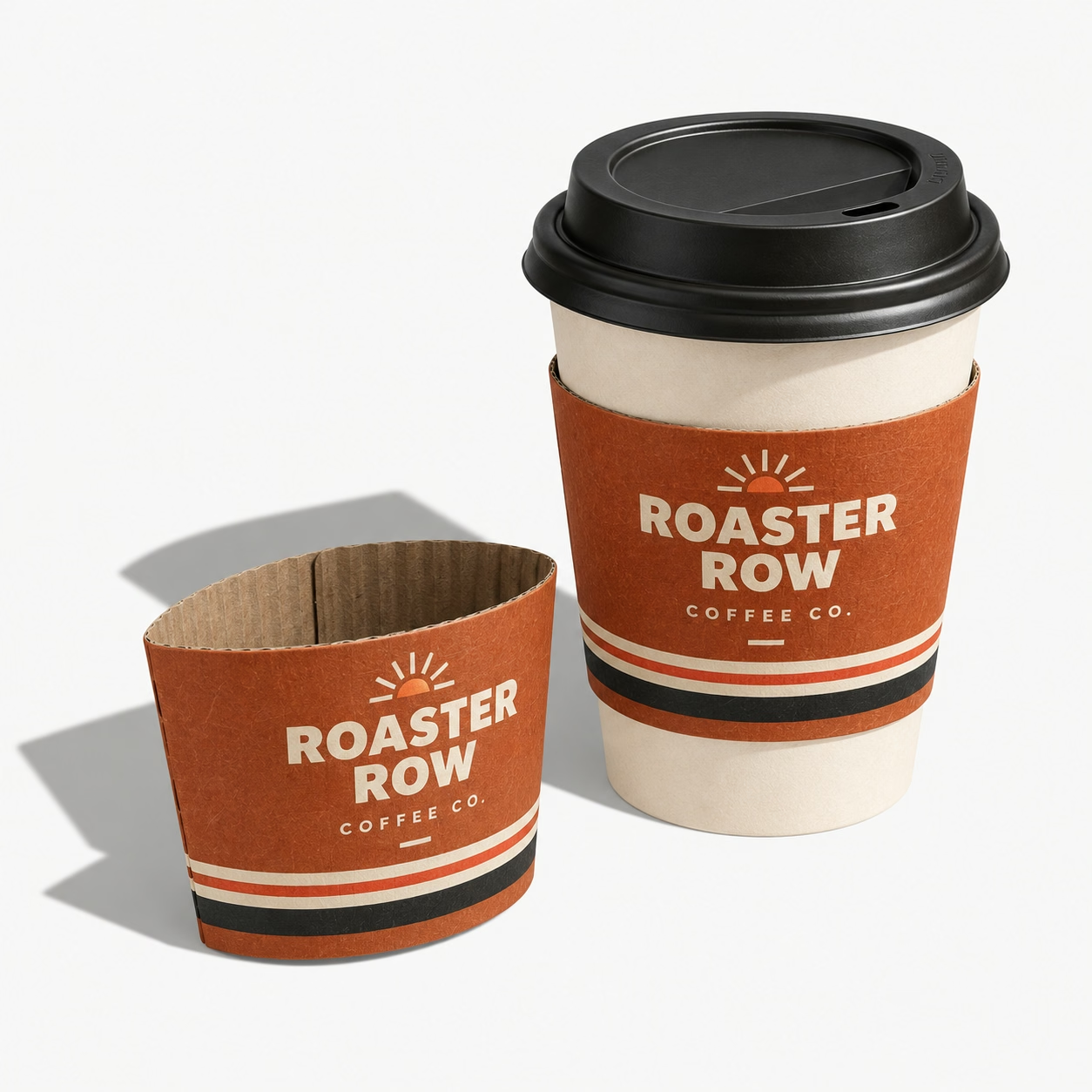
A sleeve can cover part of a cup design. A hand covers another part. Review placement on the proposed assembled setup so your main identity remains visible in normal use.
For example, an original sun motif could appear once on a cup and once on a bag, with a simpler mark on the sleeve. That creates a relationship without making every surface identical. Keep product or menu version labels separate from the stable brand artwork where useful.
Compare printing with an applied label
Either route can be worth evaluating. Include surface suitability, placement, application work, artwork count, and usable quantities. Our sticker-versus-printed-box comparison demonstrates the method; cups require their own surface and use review.
Prepare files against the confirmed template using the artwork guide. Do not scale a layout from a photograph of another cup.
Organize cups, sleeves, and bags
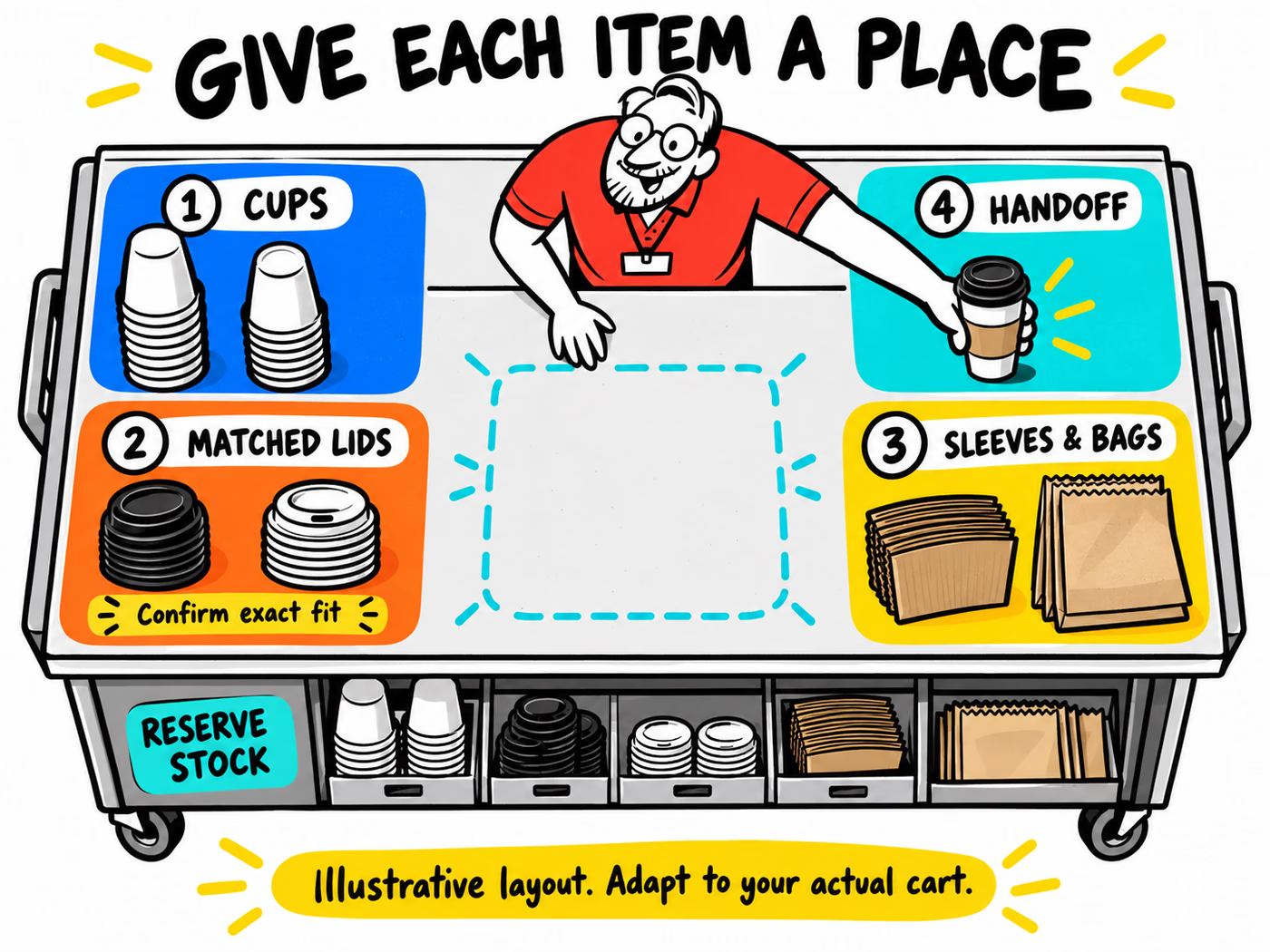
Map the actual counter and storage before assigning each item a place. Separate preparation from customer handoff. Put working quantities where staff can identify the reference and reach it without mixing sizes.
Keep matched references together
Give each cup size and corresponding lid a clear storage label. Keep sleeves and bags nearby when the order needs them, while preserving a clear working surface. The illustration is one possible arrangement, not a universal cart layout.
Keep reserve stock out of the working count
The launch purchase need not all sit on the cart. Record what fits in the working area, where reserve stock lives, and how replenishment happens. Mark unknown supplier pack sizes or delivery dates as pending.
The existing planning example below uses 120 drinks per service day and a 75%/25% size mix, giving 90 and 30 cups before any chosen allowance. Those are illustrative inputs to replace, not production minimums. Use the consumption calculator with your own demand and stock.
Create a quote-ready starter list
Request the collection together while listing each reference separately. “Packaging for a coffee cart” is a useful context, but it does not identify the capacities, closures, artwork, or quantities.
Include these details
- Drink menu, hot or cold use, and requested capacities.
- Exact cup, rim, lid, and sleeve requirements for review.
- Quantity by component, cup size, and artwork version.
- Working storage, reserve location, and replenishment constraints.
- Any complete food or multiple-drink carryout arrangement.
- Destination ZIP, needed-by date, and artwork status.
Explore custom coffee cups, printed sleeves, and paper bags against that list. Final references, accessory compatibility, pricing, and delivery are confirmed in the project proposal.
A small range.
A recognizable cart.
Planning your own café packaging? Share your drink use, requested capacities, exact lid needs, quantities by design, and delivery ZIP for a custom quote.
Planning references
Expanded October 6, 2026. This branding guide complements the existing launch and stock plan below. Original layouts are illustrative; use actual cart measurements and proposed components.
Build the setup around service
A mobile coffee cart has two packaging problems: serving the drink correctly and keeping the working stock accessible. Begin with the menu and how the cart is replenished. A logo treatment comes after the cup, closure, sleeve and carrying arrangement have been specified.
| Service | What to specify | What to count |
|---|---|---|
| Hot drinks | Cup construction, serving size, rim/lid reference and any sleeve | One line per cup size; lids and sleeves have their own usage rate |
| Cold drinks | Finished drink, ice/toppings, usable fill and closure | Cup and closure references separately |
| Several drinks to go | Filled arrangement, bag dimensions and carrying requirements | Bags per completed order, rather than per drink |
Separate an opening order from cart stock
The quantity purchased for a launch does not all need to sit on the cart. Record the opening calendar, expected service count, sizes offered, supplier pack quantities and usable storage. Keep a daily working quantity separate from reserve stock. If a delivery date or pack size is unknown, mark it as pending rather than assuming immediate replenishment.
An illustrative mix of 120 drinks per service day, with 75% in one cup size and 25% in another, gives 90 and 30 cups before loss allowance. That is a planning assumption to replace with your own mix. It does not confirm a cup specification or production minimum.
Choose branding after you define the reference
Direct print and stickers have different preparation and handling costs. Compare the same cup and usable quantity, include each artwork setup, and time the labeling task. Check placement on the actual cup before adopting a label. Neither a photograph nor a nominal capacity establishes compatibility.
BrandYourPack accepts project specifications for review. Final cup references, accessories, quantities, pricing and delivery are confirmed in the proposal. Lids are a compatibility requirement to include in the request, not a separate confirmed catalogue offer.
Prepare one coordinated request
- List every cup size, intended drink and requested quantity.
- Identify the exact lid/rim and sleeve requirements; attach existing reference photos if useful.
- Give the artwork count and quantity for each design.
- Describe cart storage and replenishment constraints.
- Include delivery ZIP, needed-by date and the current status of your artwork.
Build a coordinated setup
Selections to review for your project. Each reference and its conditions are confirmed in your quote.
Everyday service
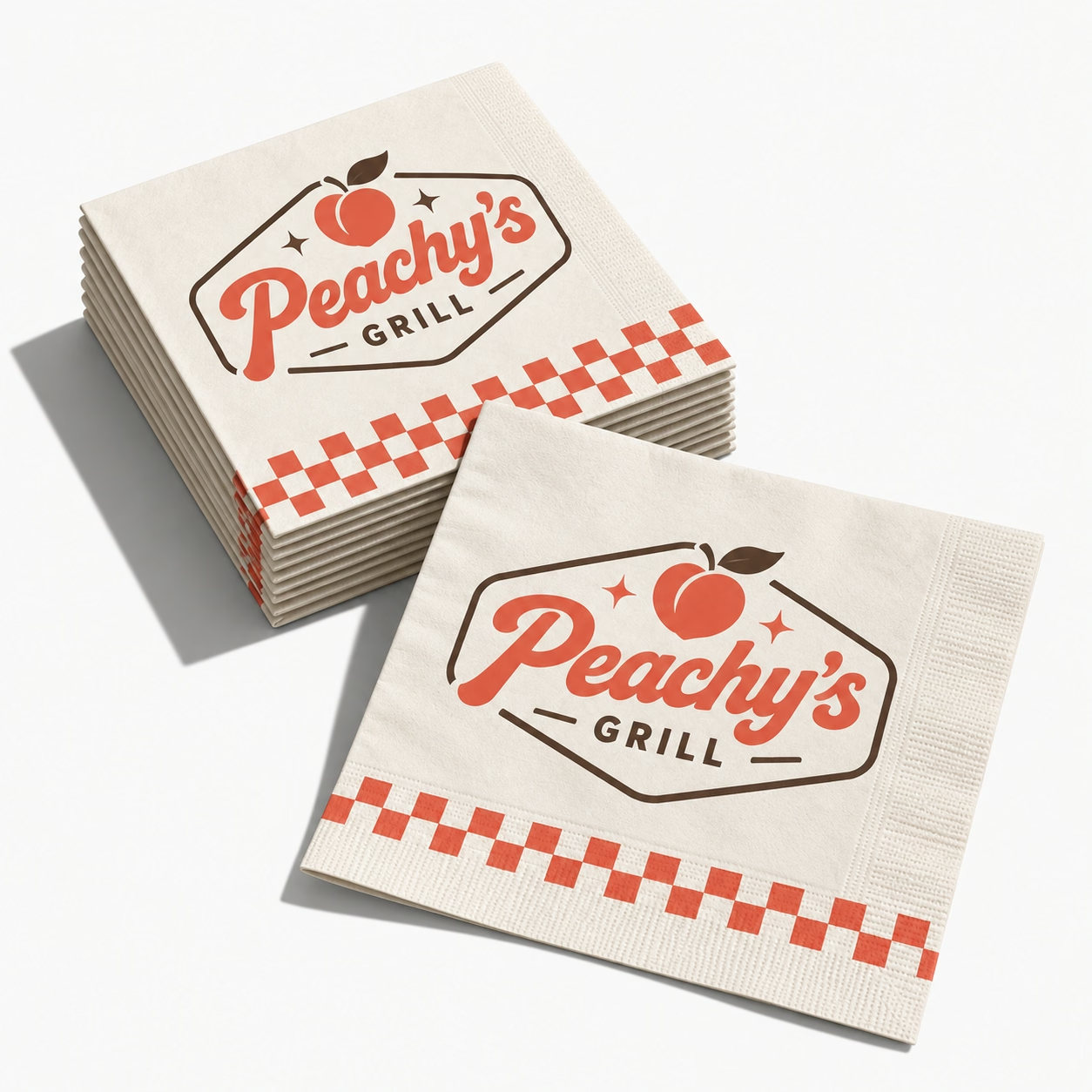
Review cups, any required sleeves and napkins as one serving arrangement. Give each component its own quantity and reference.
Drinks to go
Add carrying requirements to the brief when customers take several drinks or food away. Check the filled arrangement and bag fit.
A menu becomes an opening order.
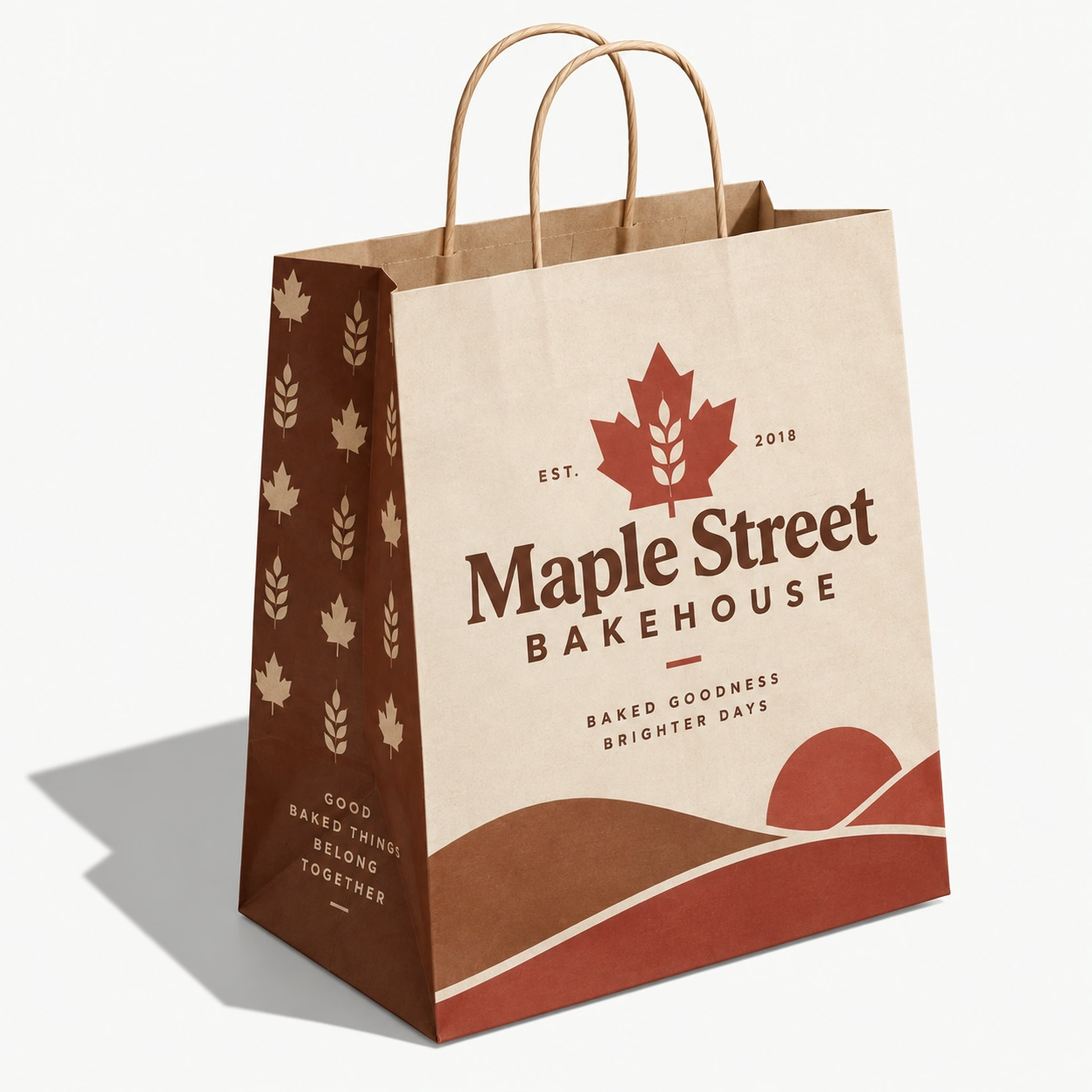
Illustrative planning example: a coffee cart serves two cup sizes and offers food to go. Its brief separates cups by size, identifies each lid requirement, counts sleeves from actual use and records carrying bags by completed order. Working stock stays separate from the reserve order.
Use the quote checklistQuestions about this decision
Should coffee carts order the same number of cups and sleeves?
Only if every served cup uses a sleeve. Count the actual usage rate for each accessory and keep sizes separate.
Does a coffee cart need a different cup than a café?
The service and storage conditions may differ, but the correct reference is determined by the drink, cup construction and exact closure. The word “cart” does not define a separate compatible cup.
Can I get a single price for the full setup?
Request the components together, with separate quantities and specifications. The final proposal must identify what is included, accessory compatibility and delivered cost.
Ready to put your plan on paper?
Share the intended use, dimensions, quantities, artwork and delivery ZIP. We will review the specification for your project.