Measure a finished sourdough loaf in its intended packing condition, then test the bag opening, usable depth and closure with a sample. Width alone does not establish fit around a tall boule.
Record the loaf envelope
Place the finished loaf on a flat surface in the condition in which it will be packed. Measure the largest width, front-to-back length and height without compressing it. Record the units, product shape and whether it will be sliced or enclosed in another pack. The measurements describe the product envelope, not a bag specification.
| Measurement | Where to measure | Record with it |
|---|---|---|
| Width | Widest side-to-side extent | Irregular crust or garnish beyond the usual outline |
| Length | Largest front-to-back extent | Long loaf ends or a separate inner pack |
| Height | Base to highest point | Product orientation during insertion |
| Packing state | Actual condition at packing | Whole/sliced and any secondary wrap |
Ask how the bag dimensions are defined
Flat width, gusset and usable depth are not interchangeable measurements. Ask whether the quoted gusset is fully expanded and how the opening and closure are represented. External paper size can include a seam, fold or closure area that is not usable space for the loaf.
Do not calculate a universal bag width by adding the loaf width and height. Bag geometry, gussets, loading orientation and closure change the fit. Treat any initial dimensions as a requested starting point for a sample.
Run an insertion-and-closure trial
- Identify the sample bag’s dimensions and construction.
- Insert the intended loaf without forcing, crushing or tearing the opening.
- Close it in the proposed way, using the actual required closure space.
- Check how the packed product rests and how the customer opens it.
- Repeat with the largest expected loaf variation and record the result.
For illustration, an 8 × 8 × 4 inch boule should be recorded as that loaf envelope, not advertised as fitting a nominal 8-inch flat bag. A separate closure allowance must be resolved in the sample trial.
Keep fit separate from material suitability
A fit check does not establish food-contact suitability, moisture behavior or storage performance. Describe the intended product contact and packing conditions when asking for the material. Dedicated bread bags need project review; a handled carryout bag should not be assumed to serve the same role.
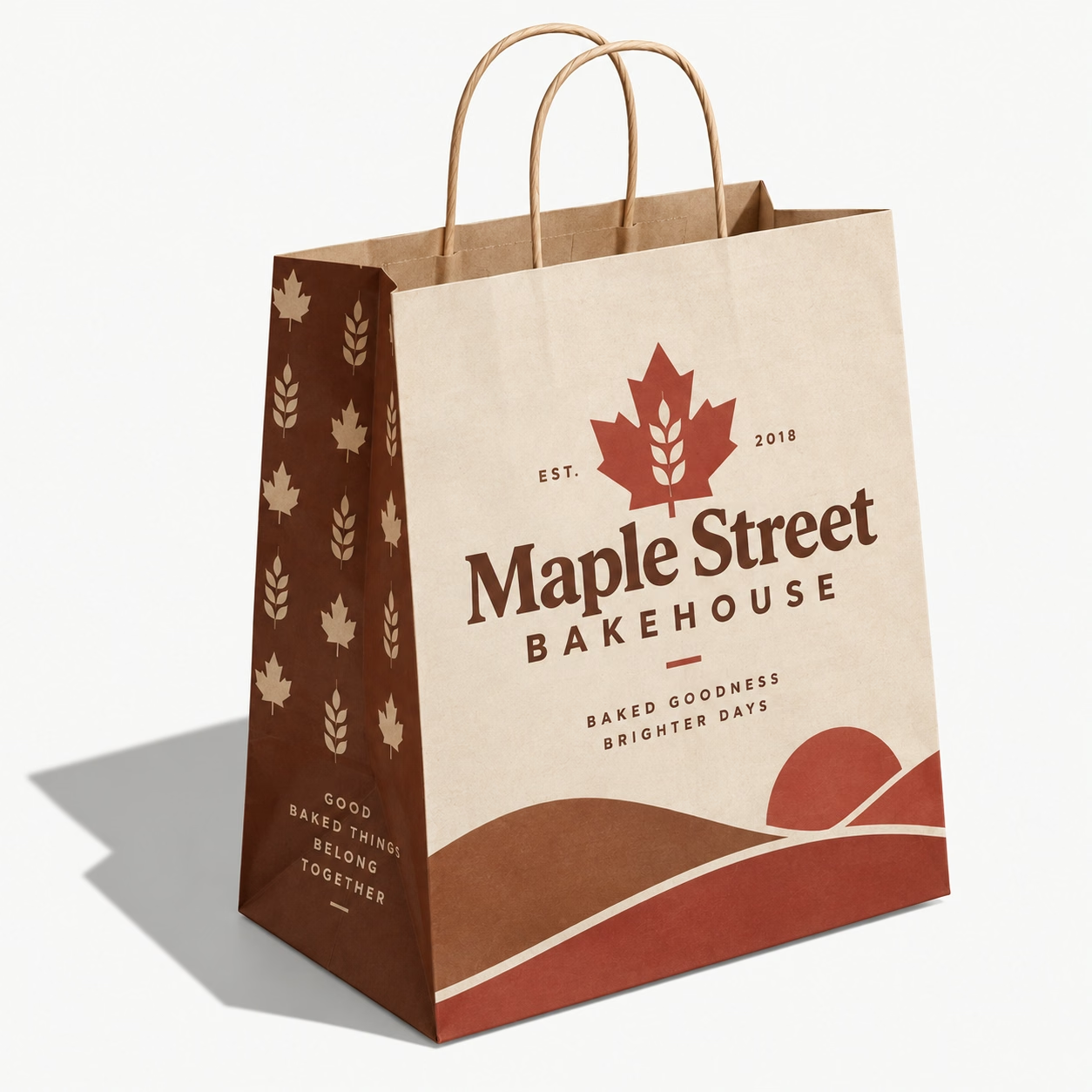
After the primary pack is settled, measure the complete one- or two-loaf pickup order for its carryout bag. Keep those two sets of dimensions in the quote so the primary and carrying components are not confused.
Questions about this decision
Can I choose a sourdough bag from loaf weight?
Weight alone does not describe the loaf envelope or bag opening. Record dimensions and evaluate fit with the actual loaf.
Does flat bag width include the gusset?
Dimension conventions vary by reference. Ask for the drawing and how flat width, gusset and usable depth are defined.
Should I measure warm bread or packed bread?
Record the product in its intended packing condition and state that condition in the request. The reference and handling suitability still require separate review.