
Paper vs. Poly Mailers: Compare the Actual Order and Material Specification
Use the same folded order to compare the proposed material, seams, closure, and handling conditions. Document claims separately and confirm which formats are available.
Paper vs. poly mailers should be compared on the same packed order, using the actual material, seams, closure, and intended handling conditions. A paper-like or plastic-like appearance does not establish protection, reuse, or end-of-life claims. BrandYourPack lists custom poly mailers; a specific paper mailing format needs separate availability confirmation. Start with the order you need to send.
Two bags can look similar in size while using different constructions and closing methods. Make those details visible before judging which proposal fits the project.
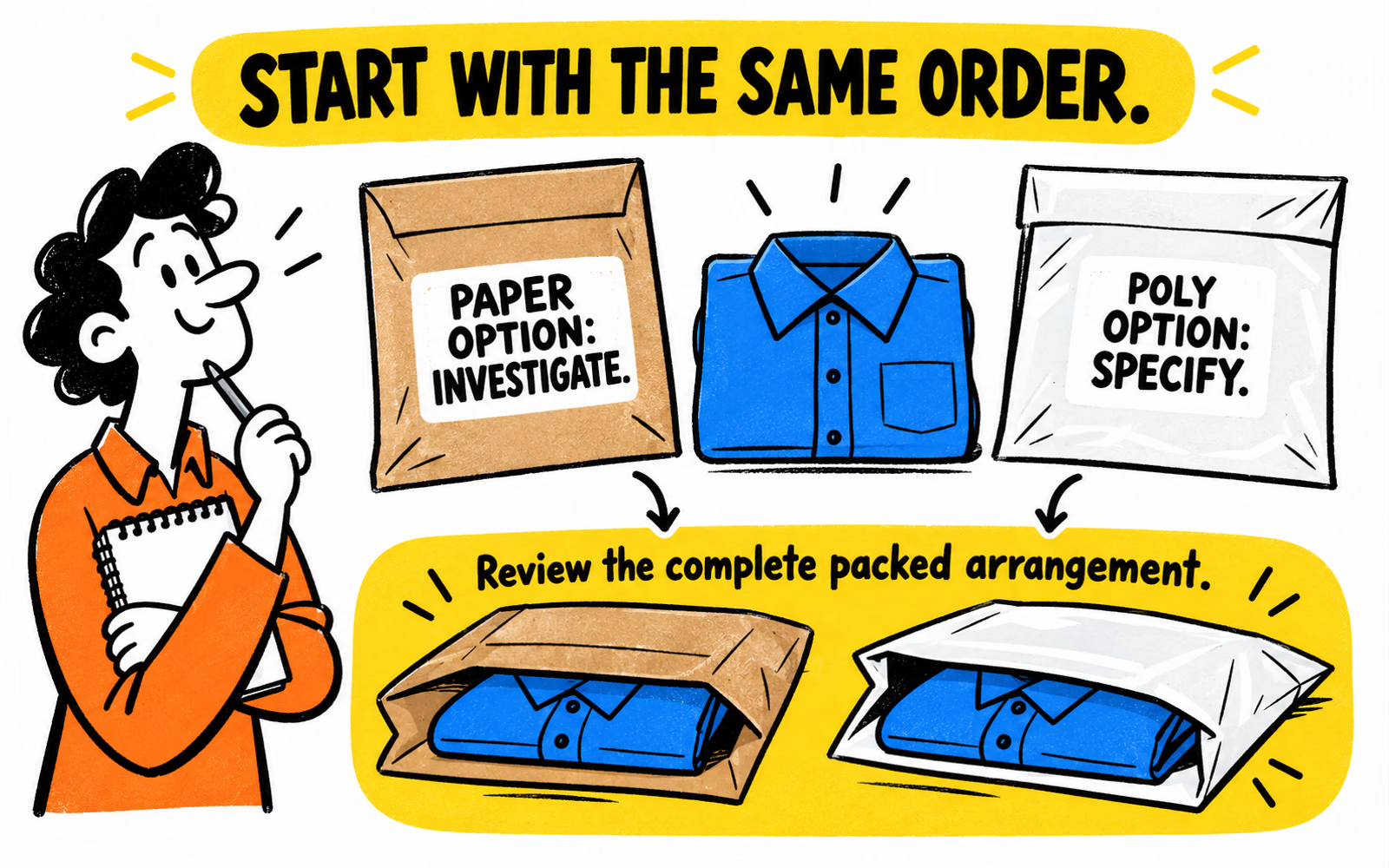
Define the packed order and exposure conditions
Measure the actual folded garment with its primary pack and any added card or wrap. Record the bulky version in the relevant size range. The mailer must accommodate the final arrangement and its closing area, not just the dimensions of an unfolded product.
Follow the intended journey
Describe handling, expected exposure, and how the customer opens the pack. A local handover and a parcel shipment can create different questions. Identify vulnerable product surfaces and any retail pack that must retain its shape.
For apparel, use the folded-garment measurement guide. Keep the item orientation and packing method with the measurement record so the next person can reproduce the same arrangement.
If the order needs a different outer format, review poly mailers versus boxes for clothing separately. Changing to a box introduces another construction and holding-system proposal; it is not merely a color change.
Compare material and closure specifications
Request the proposed reference, material description, dimensions, seams, and closing method. Identify any layers or coatings in the actual specification rather than assigning them from a photograph. Ask what information is available for the intended use.
| Field | Paper option to investigate | Poly option to specify |
|---|---|---|
| Material | Record actual construction and treatments | Record actual film construction |
| Usable size | Include packed bulk and closing area | Include packed bulk and closing area |
| Seams and closure | Describe the proposed method | Describe the proposed method |
| Application | Record preparation and conditions | Record preparation and conditions |
| Evidence | Identify reference-specific documentation | Identify reference-specific documentation |
Follow the proposed closing instructions in a trial arrangement. Record whether the pack can be assembled without forcing the contents into the closing area. Keep any label or added component in the review too.
A carrying paper bag is not evidence that a particular paper mailing bag is available. Ask about the format by its actual job and construction.
Separate presentation from protection claims
Review the visible identity and customer experience as design questions: artwork placement, readable information, and opening instructions. Keep them separate from questions about the contents and the intended exposure.
Build an evidence record
Document the items, closing method, moisture-exposure question, proposed reuse, and any end-of-life statement. For each claim, identify the actual specification and supporting information, or mark it unresolved. Do not give either material a green check simply because its surface looks familiar.
If a reuse feature is proposed, ask what it is intended to do and review the actual opening and reclosure process. A second strip in a drawing is not proof that a used pack is suitable for another journey.
For an environmental statement, request documentation tied to the proposed reference and destination system before adding it to artwork. This article does not assign a recycling route or declare an environmental winner.
Keep observed sample results tied to the reviewed pack, contents, and procedure. The illustrations supply comparison fields; they show no exposure trial or protection rating.
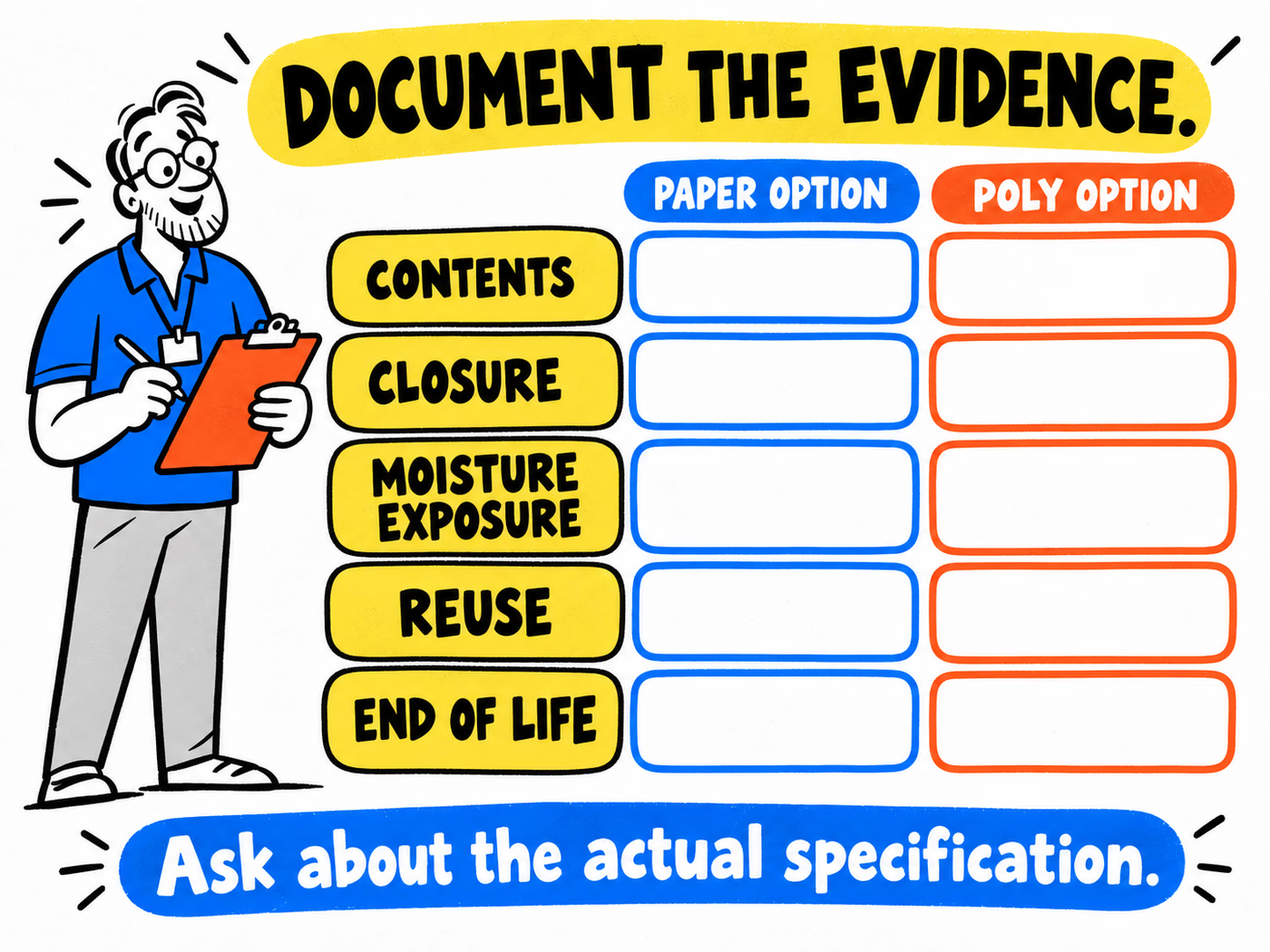
Request only the formats confirmed for your project
Use custom poly mailers as a listed format to specify. Describe the packed dimensions, intended use, material preferences, and closing needs. Ask which proposed reference addresses that brief.
For a paper option, ask for availability and its full specification before treating it as an alternative offer. Keep its source and sample-review questions separate. Review mailer boxes if the project calls for a box format.
Coordinate the clothing presentation with the apparel packaging plan, and prepare print files with the artwork guide. Confirm the approved dimensions and layout first.
- Name the exact contents and primary packs.
- Provide packed measurements, orientation, and quantities by design.
- Describe closing, labeling, opening, and exposure questions.
- List which claims and sample results still require review.
Compare the confirmed proposals with the same brief. Keep final specification, sample scope, pricing, and delivery conditions in the project record rather than carrying assumptions from the material name into the order.
References & planning resources
Original conceptual comparisons and worksheets support the project brief. They show no tested performance, technical grade, or confirmed supplier terms.