
Choose clothing packaging from the folded order and its sales channel. Separate shipping structure, brand presentation and retail carrying requirements.
Useful clothing packaging ideas begin with the folded order and the sales channel. Evaluate a poly mailer or a box for the complete packed garment, then give tissue and inserts specific presentation or information roles. Measure the finished arrangement before choosing sizes, and compare a light tee, a bulky hoodie, and a multi-item order separately.
The aim is a packing system your team can repeat and your customer can open comfortably. A clean fold and one purposeful printed detail often create a clearer presentation than several unrelated layers.
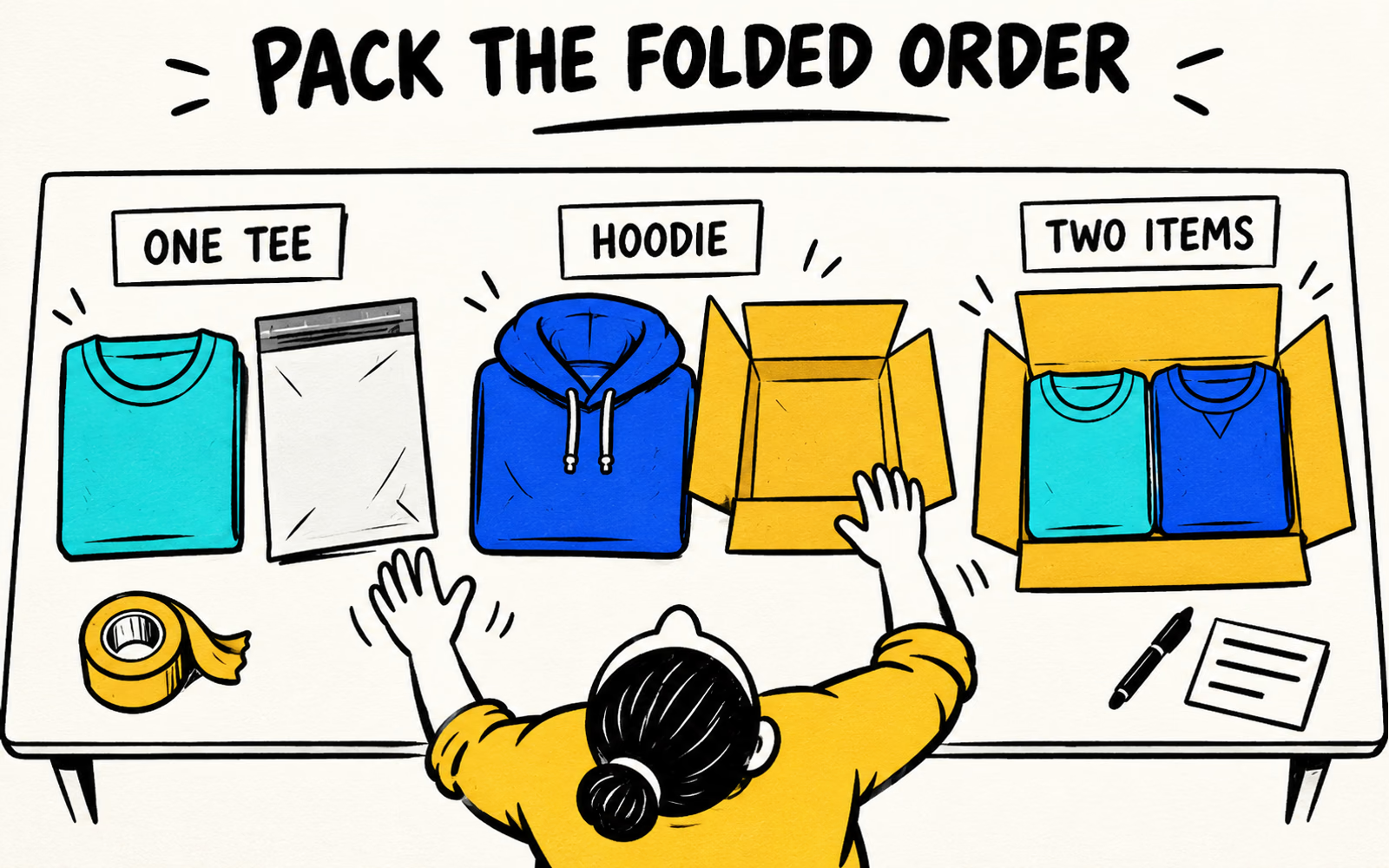
Choose packaging from the folded order
Lay out the garment as it will be packed. Include tags, any protective layer proposed for the item, tissue, and cards. Measure that arrangement rather than the unfolded garment or the bare product alone.
Use three representative orders
A single tee, a hoodie, and two garments can reveal very different thicknesses and opening needs. Fold each in the intended way and keep the method consistent while comparing proposals. Include a larger garment size if it changes the packed arrangement.
Record length, width, and full thickness, then describe the loading method. A flexible mailer needs sufficient room for insertion and its intended closure; a box needs appropriate internal fit for the complete contents. Ask the supplier how the proposed dimensions are defined.
The existing folded-garment mailer guide covers this measurement discussion. For boxes, use the mailer-box measurement guide and distinguish inside fit from outside parcel dimensions.
Compare mailers and boxes by use
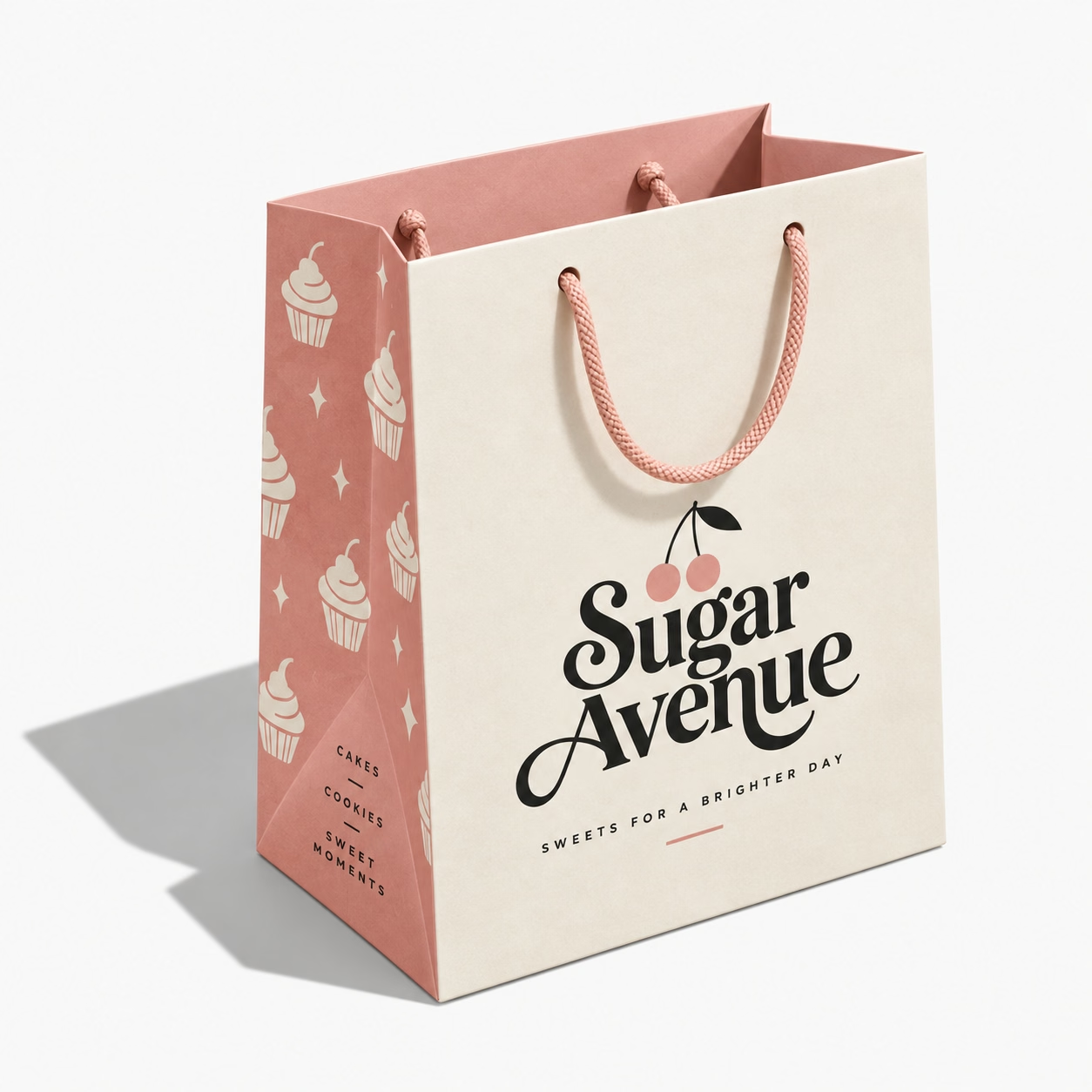
Start with the required journey and the customer’s opening experience. A clothing order collected in store raises different questions from one sent through a carrier network. A retail carry bag serves the handoff; it should not be assumed to replace shipping packaging.
| Order | Route to evaluate | Decision questions |
|---|---|---|
| One folded tee | Appropriately specified poly mailer | Does the packed item load easily, close correctly, and receive the required protection? |
| Bulky hoodie | Suitable mailer or box | How does full thickness affect fit, closure, opening, and the finished parcel? |
| Multi-item gift order | Box with a planned internal arrangement | Do items stay organized, and does the presentation work without forced compression? |
| In-store purchase | Retail bag suited to the contents | Can the customer carry the full order as intended? |
Compare a packed sample, not an empty package
Evaluate the proposed construction with real garments and all added parts. Check the closure, loading and removal, and the arrangement after representative handling. If a garment needs protection from moisture or surface contact, specify that need explicitly and confirm the proposed solution.
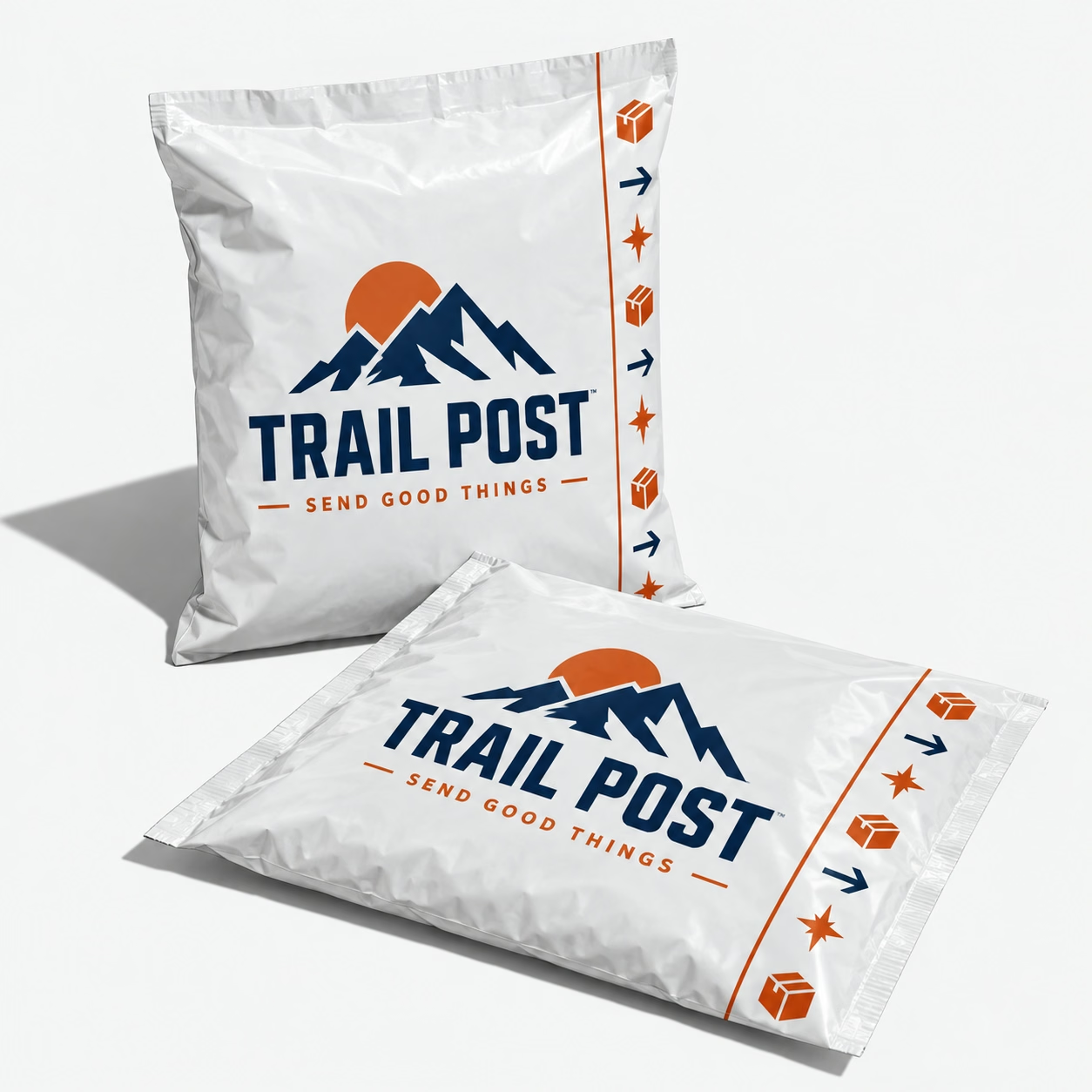
Explore custom poly mailers and mailer boxes using these criteria. The matrix below is a decision aid; it does not assign universal package sizes or establish transit performance.
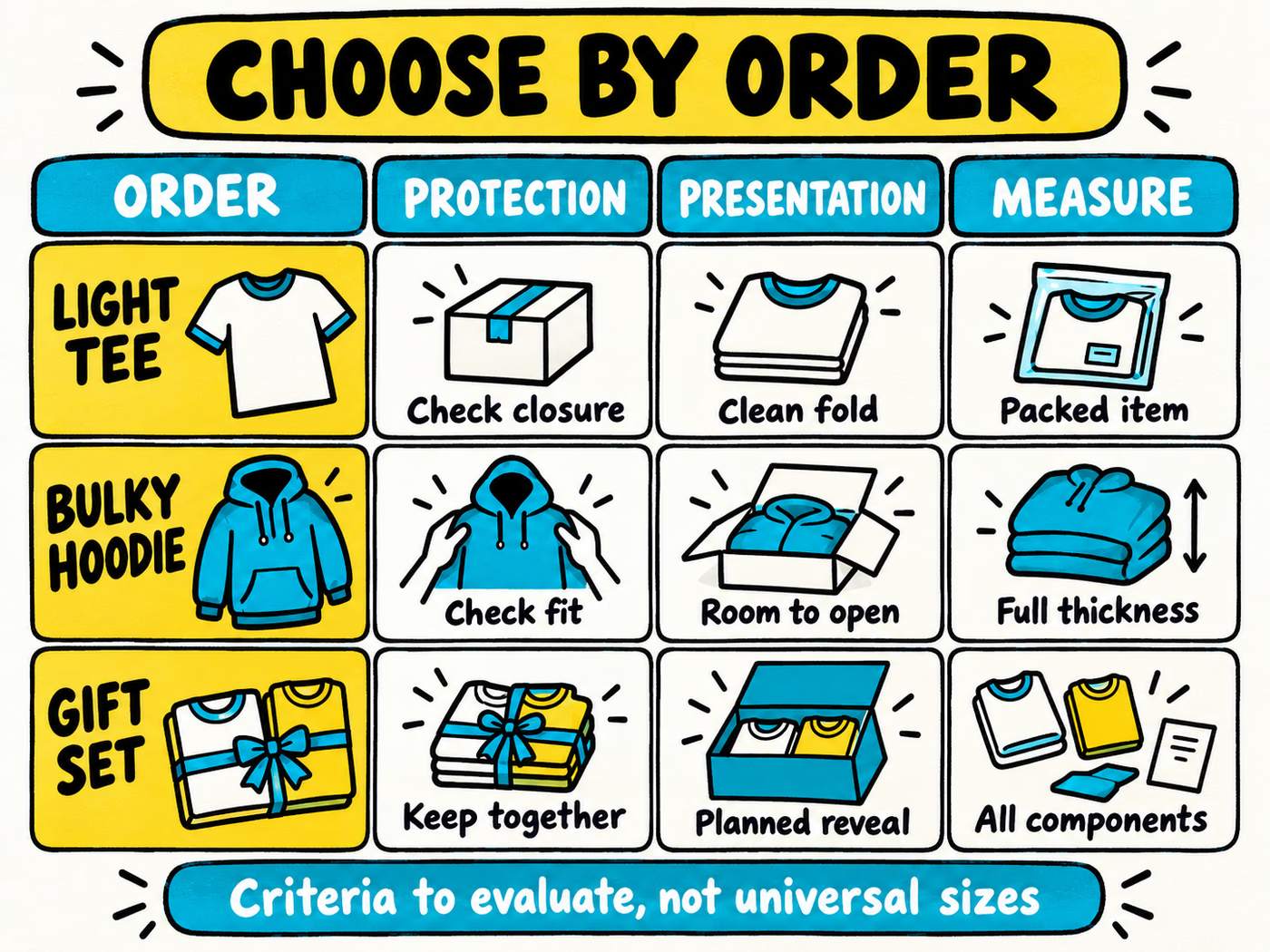
Coordinate tissue and printed inserts
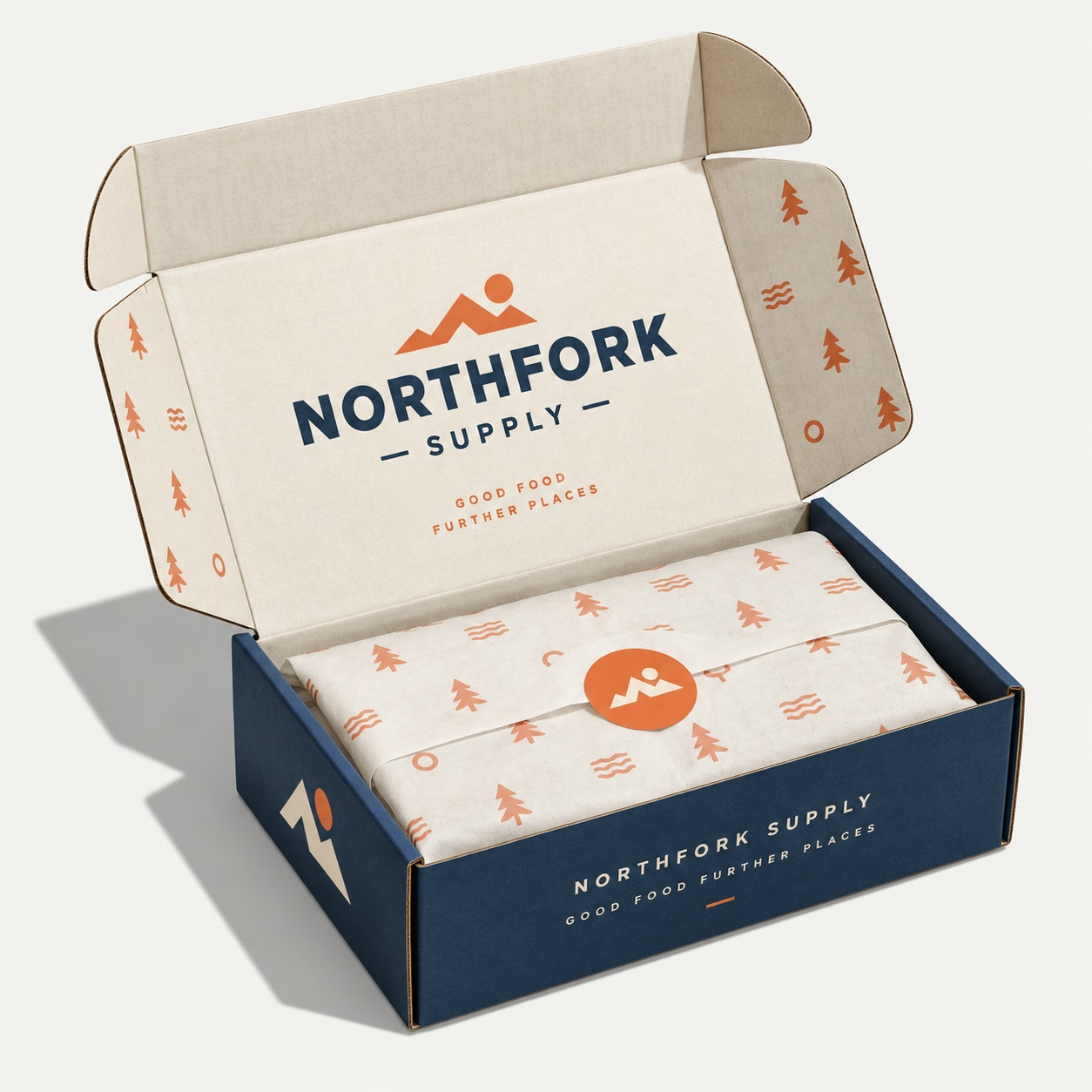
Give each added layer a reason to exist. Tissue can organize the reveal and carry a repeating brand pattern. A printed insert can explain a return process, provide product information, or thank the customer. Neither should hide the information the customer needs.
Keep presentation and protection distinct
Decorative tissue is not automatically a moisture barrier. Confirm material suitability for the actual garment and intended use. If an added sheet or support changes the folded dimensions, measure again before approving the outer pack.
For a fictional clothing label, one strong color on the exterior and a simpler tissue pattern inside can create continuity without repeating a full campaign on every component. Place a useful card where it can be found without unfolding every garment.
Write instructions you can fulfill
Use the brand’s confirmed garment-care information and current returns process. If you want the package to support returns, describe the exact opening method and proposed second closure in the specification. Do not assume that an ordinary mailer can be resealed or reused for a return journey.
See the apparel return packaging guide for those questions. Plan separate artwork versions for each drop using the apparel variant guide, while keeping quantities tied to the actual stock plan.
Record dimensions and quantities for your quote
Create one line for each packed order type: garment references, folded dimensions with all components, proposed outer format, artwork version, and required quantity. Mark any construction or protection question that still needs confirmation.
Your apparel project brief
- Sales channel and intended shipping or handoff use.
- Representative garments, size variations, and folding method.
- Complete packed-product length, width, and thickness.
- Mailer or box format and required closure or return features.
- Tissue and insert roles, with confirmed wording.
- Artwork versions, quantities, delivery ZIP, and sample approval needs.
Review custom tissue paper for the presentation layer and use the artwork guide once the print areas are confirmed. The product selection and detailed apparel planning sections below can then help you build the full request.
Start with the fold.
Build the complete order.
Planning your own poly mailers? Share the packed-product dimensions, intended use, artwork versions, quantities, and delivery ZIP for a project-specific quote.
Planning references
Reviewed October 6, 2026. Original selection criteria. The illustrations show concepts, with dimensions, construction, and performance subject to project review.
Match the packed order to its channel
| Channel | Start with | Review |
|---|---|---|
| Online single item | Folded garment plus presentation pieces | Mailer opening, useful space and closure |
| Online several items | Complete stacked arrangement | Mailer or box fit and handling |
| Retail handoff | Completed purchase arrangement | Carrying bag base and handles |
| Limited drop | Approved common packaging plus versioned detail | Artwork and stock per run |
A retail bag is not assumed to be a shipping mailer. Review the proposed poly mailer or box for the actual shipped order.
Measure the completed fold, not the flat garment
Include tissue, tags, cards and other items that will be packed with the clothing. Record the folded width, length and thickness, plus the loading method. Different garment sizes or multi-item orders can need different reference checks.
Use the folded-order measurement guide before choosing a mailer. A nominal flat mailer size does not define every useful packed arrangement.
Plan the brand details as separate components
Tissue, cards and stickers can provide a consistent visual layer without changing the outer artwork for every collection. Assign quantities to each component and observe actual assembly work. Presentation does not establish protection for an accessory or rigid item included with the garment.
For return reuse, request and verify the exact opening/closure features. No double-seal or resealable capability is assumed for a generic mailer.
Keep seasonal runs connected to approved references
- Folded order range and reference dimensions.
- Outer structure and intended closure.
- Artwork quantity per brand or drop version.
- Presentation components and assembly method.
- Return workflow if required, plus destination and confirmed terms.
Use the drop-version worksheet and the returns specification.
This is a planning method, not a report of completed sample tests. Keep approval tied to the exact proposed construction, artwork and intended use.
Build a coordinated setup
Selections to review for your project. Each reference and its conditions are confirmed in your quote.
The online order
Review the proposed mailer or box with the complete garment stack and its actual closure.
The retail handoff
Use carrying packaging for the finished purchase arrangement, with presentation pieces counted separately.
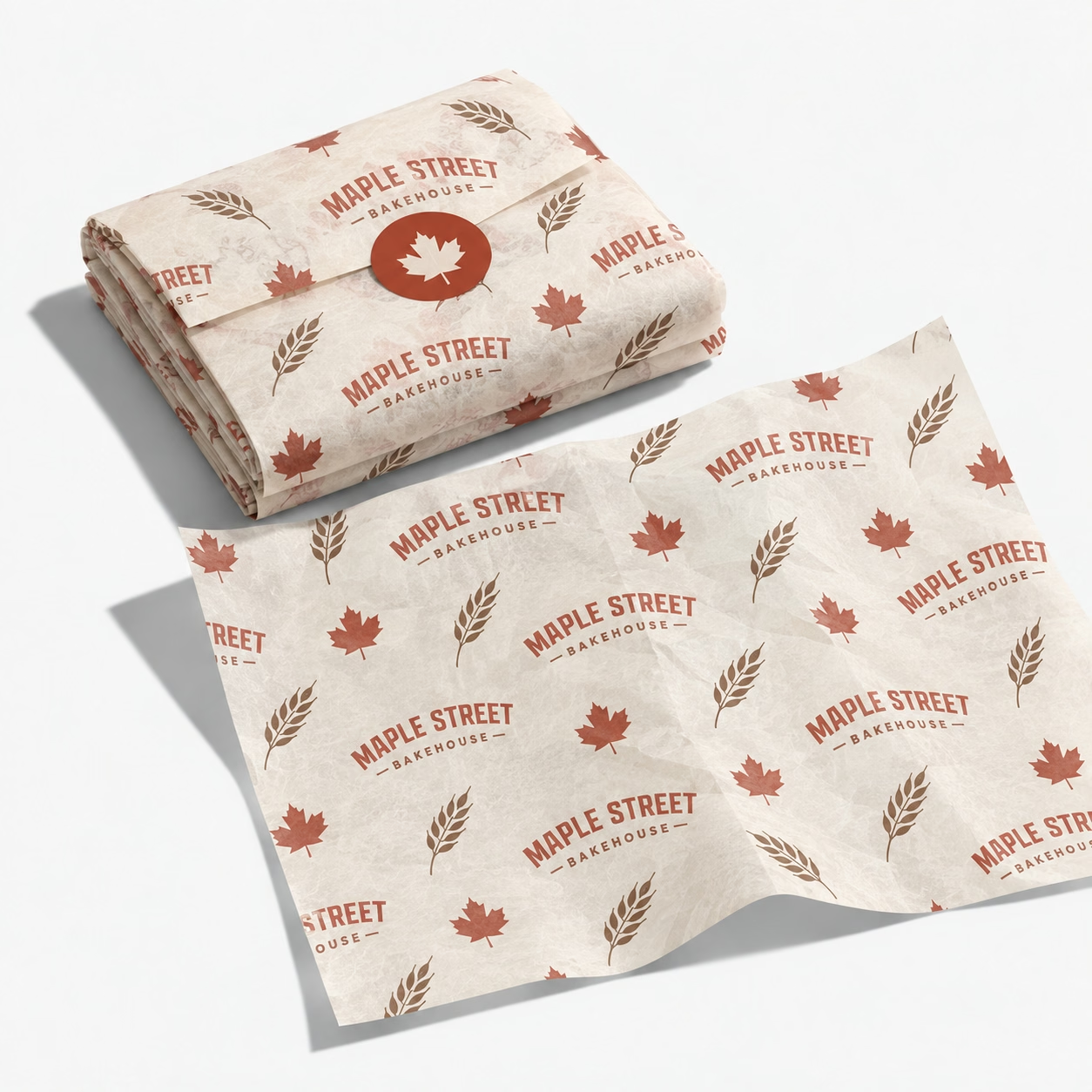
A shared system for a changing collection.
Illustrative brief: an apparel brand uses a defined garment fold, shared outer branding and collection-specific cards. Its largest normal order is checked on the proposed pack; any return-reuse features are confirmed separately, and quantities remain distinct by artwork version.
Use the quote checklistQuestions about this decision
Is a poly mailer appropriate for every clothing order?
No universal fit or protection result is established. Review the complete folded order, contents and intended shipment on the proposed reference.
Can retail bags replace shipping packaging?
They serve a carrying role. A shipping arrangement needs its own structure, closure and intended-journey review.
Are the mailers automatically reusable for returns?
No. Confirm opening and second-closure features on the exact reference and test the intended return workflow.
Do I need new outer artwork for each drop?
Not necessarily. Stable outer branding with drop-specific cards or labels is one workflow to compare with separate printed runs.
Ready to put your plan on paper?
Share the intended use, dimensions, quantities, artwork and delivery ZIP. We will review the specification for your project.