
Dunkin’ Donut Boxes: Takeaway Packaging Lessons for Bakeries
Look beyond the donut box alone. A mixed bakery order needs defined food packs, drink containers and a carrying arrangement that works at the real handoff.
A Dunkin’ donut box can be studied as one part of a coordinated takeaway order. Dunkin’s official January 2019 branding announcement shows cups, donut boxes and other packaging together. For an independent bakery, separate the donut arrangement, drink containers and outer carrying setup. Confirm the actual food-contact specification and how the complete order will be handled; a shared graphic does not show that a bag can support loose drinks.
Two drinks and a donut box make a different handoff from a donut box alone. Plan the whole order before deciding which printed surface gets the largest brand message.
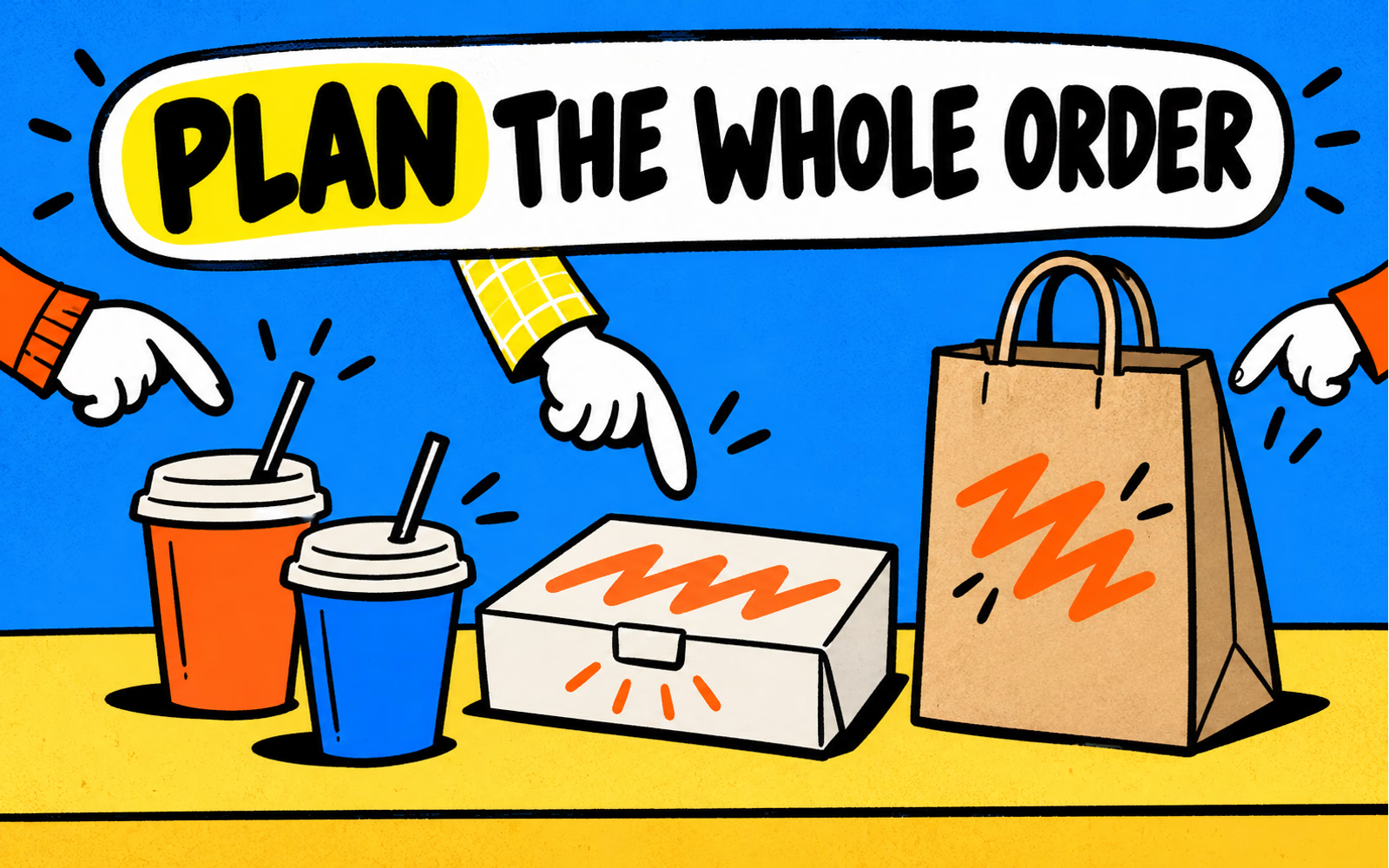
Document the takeaway packaging example
Dunkin’s January 24, 2019 announcement introduces its renamed identity across cups, donut boxes, napkins and other pieces. The published photograph shows multiple packaging formats in a shared visual direction. It is a dated branding example, not a specification for every current order.
The useful takeaway is the relationship between the components. A drink cup and a donut carton have different physical jobs while contributing to one branded handoff. Neither the photograph nor its coordinated colors establish their dimensions, materials or carrying performance.
| Component shown or discussed | Planning question | What the source does not establish |
|---|---|---|
| Drink packaging | Which drink and closure are involved? | A supplier’s exact cup-and-lid pairing |
| Donut box | What is the finished product arrangement? | Internal clearances or contact suitability |
| Coordinated pieces | How should the set communicate one identity? | That one outer bag fits every order |
Use the assortment guide for count and presentation within a donut box. This article focuses on the additional work created when drinks and bakery items leave together.
Plan a combined drink-and-donut order
Write down a representative order, including the finished donuts with their toppings, the number and type of drinks, closures and any useful accessories. Arrange the actual proposed components before selecting an outer carrying item.
For two drinks and a mixed donut carton, first review the donut layout and lid clearance. Then review each complete drink container. Only after that should you evaluate how the items are grouped for handoff. A bag’s appearance alone does not tell you how liquids will be supported.
Trace the handoff from counter to customer
Consider how staff assemble the order and how the customer picks it up. If a separate beverage carrier or support is proposed, identify it explicitly and check its relationship to the cups and other items. Do not draw an unsupported drink inside a bag and treat the drawing as a workable solution.
Record the intended orientation and open questions for a physical review. The donut planning guide addresses the complete finished piece, while the Dunkin’ size guide separates menu names from confirmed capacity information. Neither supplies a tested mixed-order carrier.
Separate presentation from carrying needs
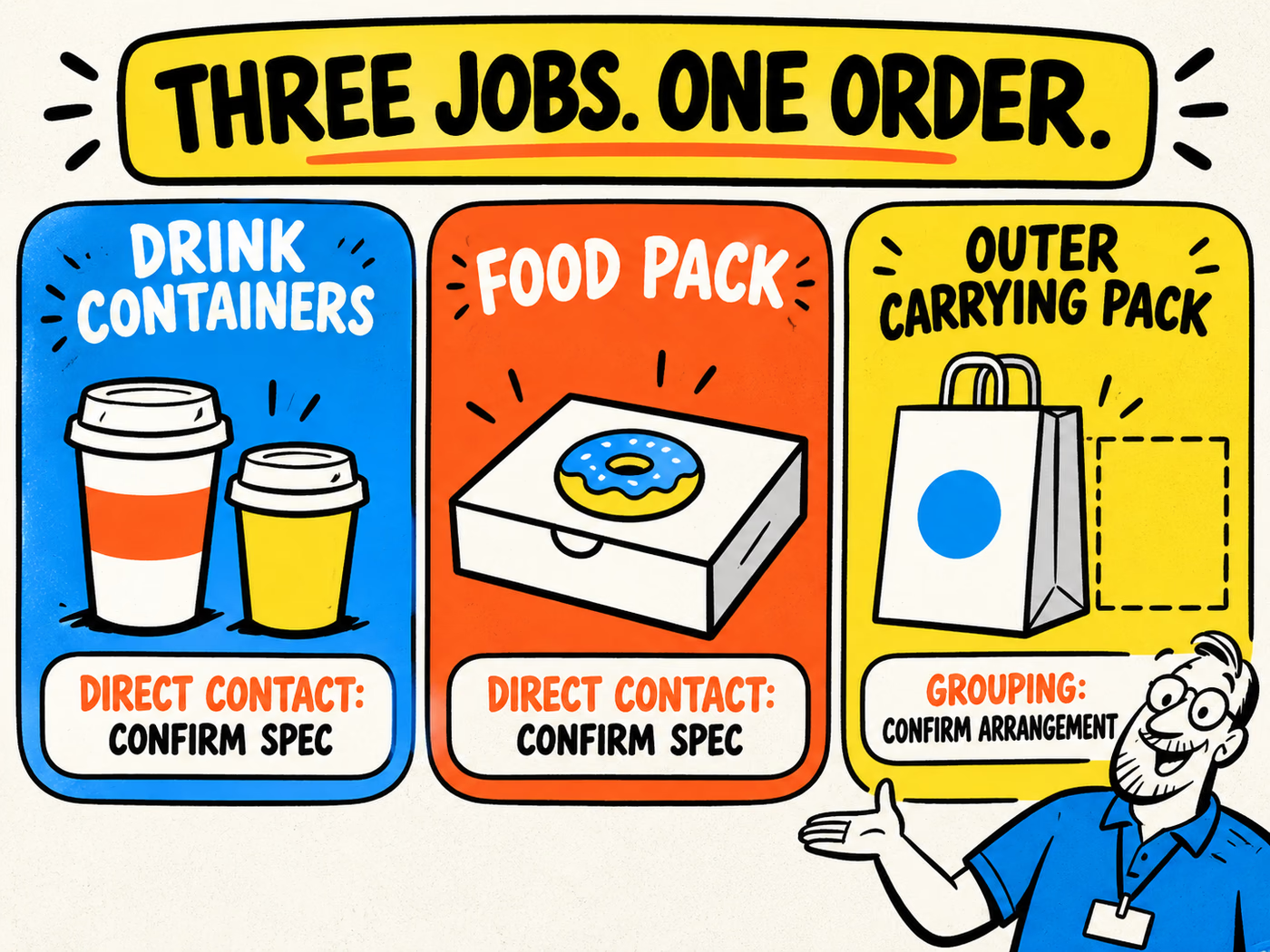
The visible branded panel does one job: identify the bakery and communicate the approved message. Direct-contact components do another job around the food or drink. Outer packaging groups the order. Keep those roles separate even when all the graphics look coordinated.
Ask what each proposed material will contact and under which intended conditions. A paper bag that groups closed packs is a different application from a sheet placed directly against a finished donut. An illustration cannot settle either material specification.
| Job | Relevant component | Review input |
|---|---|---|
| Contain the drink | Exact cup and closure | Intended drink use and proposed references |
| Pack the donut | Carton and any direct-contact component | Finished dimensions and intended contact |
| Group the order | Outer bag or defined carrying arrangement | Complete pack dimensions and support needs |
Keep decorative layers in their role
Decorative tissue or a printed exterior should not become a substitute for a confirmed contact material. Use the paper-role guide to distinguish presentation from the actual application. Confirm the specification for your food rather than relying on a generic material name.
The diagram below separates these jobs using fictional components. The bag remains separate from the drinks because no physical support arrangement has been demonstrated or approved.
Specify a coordinated bakery takeaway set
Create a brief for each component and a short record of the complete order. Include the finished product dimensions, intended contact and handling conditions, proposed format, artwork version and quantity. Ask which dimensions are internal and which describe the outer carrying envelope.
Use the measurement method to distinguish the packed arrangement from the bare product. For a different carton construction, confirm the supplier’s measurement convention and template instead of treating a mailer drawing as its production layout.
Coordinate files without merging specifications
Keep one original visual system across the cups, cartons and bags, but prepare separate approved files for the actual items. A change to the cup design need not silently change the carton quantity or the carrying arrangement. Save proofs against identifiable versions.
Explore paper cups, folding cartons and paper bags with the intended use clearly stated. Confirm available specifications and review the complete proposed set physically before committing to the handoff.