
Dunkin’ Cup Sizes: A Guide to Hot and Iced Drink Sizes
Compare the hot and iced size names in Dunkin’s current US nutrition guide, understand the limits of capacity evidence, and build clearer cup specifications.
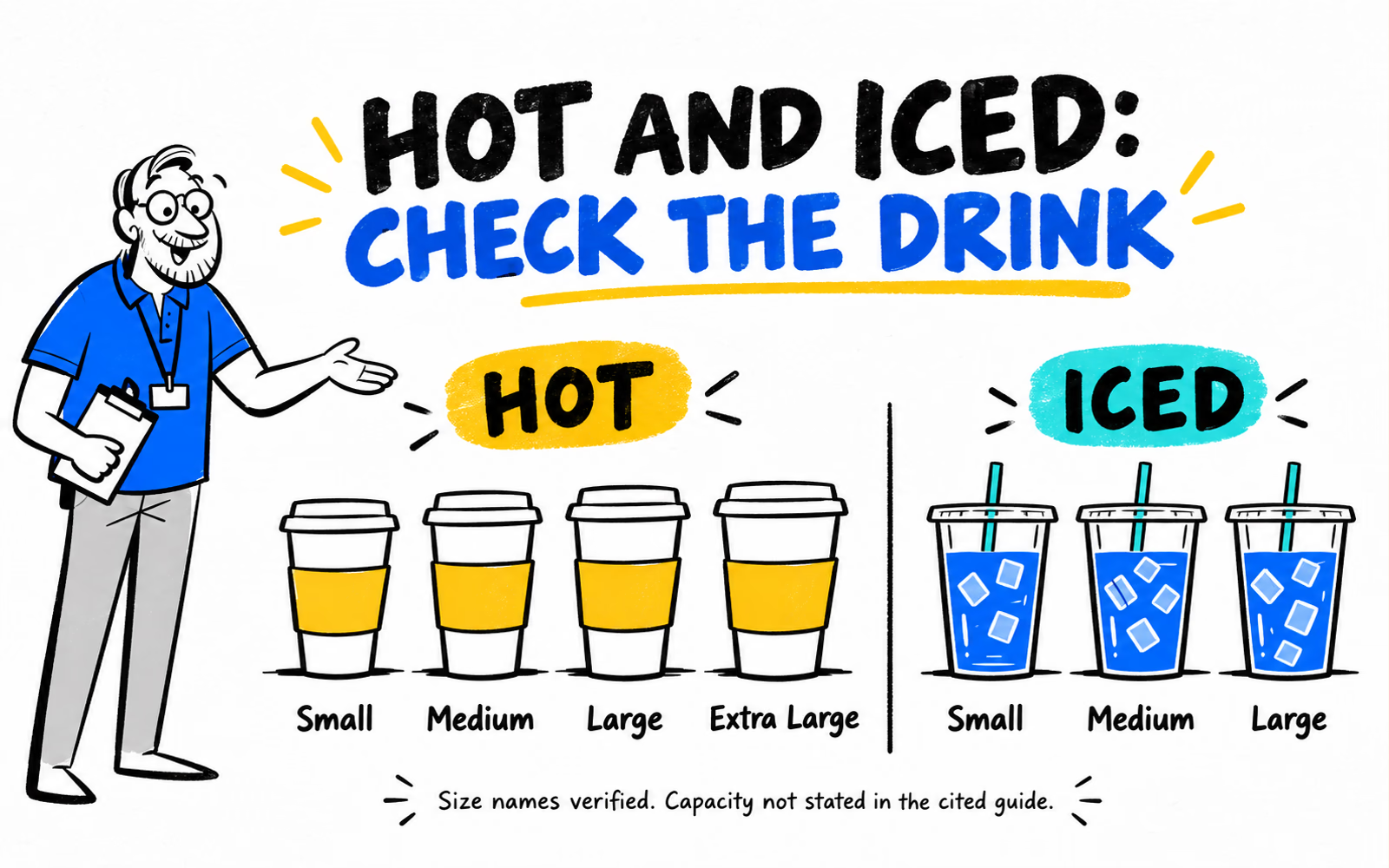
Dunkin’s US nutrition guide dated September 21, 2026 lists hot coffee in Small, Medium, Large, and Extra Large, and iced coffee in Small, Medium, and Large. Its serving-size column uses those names rather than fluid-ounce capacities. This guide separates the confirmed names from the volumes that remain unconfirmed in the current source; it does not fill those gaps with another chain’s sizes.
If you came looking for a single ounce chart, the source matters. A “medium” is an ordering label. To turn it into a cup specification, you still need the particular drink, service type, and a verified capacity.
Dunkin’ hot drink sizes
The current guide linked from Dunkin’s official nutrition page has a Hot Coffee section listing four names. For the plain hot coffee entries, the size column reads Small, Medium, Large, and XLarge. Here we spell the last one out as Extra Large, matching the product description.
| Size name | Listed in the cited guide? | Fluid-ounce capacity |
|---|---|---|
| Small | Yes | Not stated in the cited guide |
| Medium | Yes | Not stated in the cited guide |
| Large | Yes | Not stated in the cited guide |
| Extra Large | Yes, as XLarge in the size column | Not stated in the cited guide |
Keep the beverage beside the name
This is evidence about the Hot Coffee entries, not every hot beverage on the menu. Do not automatically extend the range to a latte, tea, or a different market. Check the exact drink’s current options when ordering.
The nutrition table contains other numerical columns. Those values describe nutrition; they should not be read as cup volumes. A calorie, caffeine, or nutrient value is not a capacity measurement.
Dunkin’ iced drink sizes
The same guide lists plain Iced Coffee in Small, Medium, and Large. It does not provide a corresponding ounce figure in the serving-size column. There is no Extra Large entry in that particular plain Iced Coffee list.
| Name | Hot Coffee | Iced Coffee |
|---|---|---|
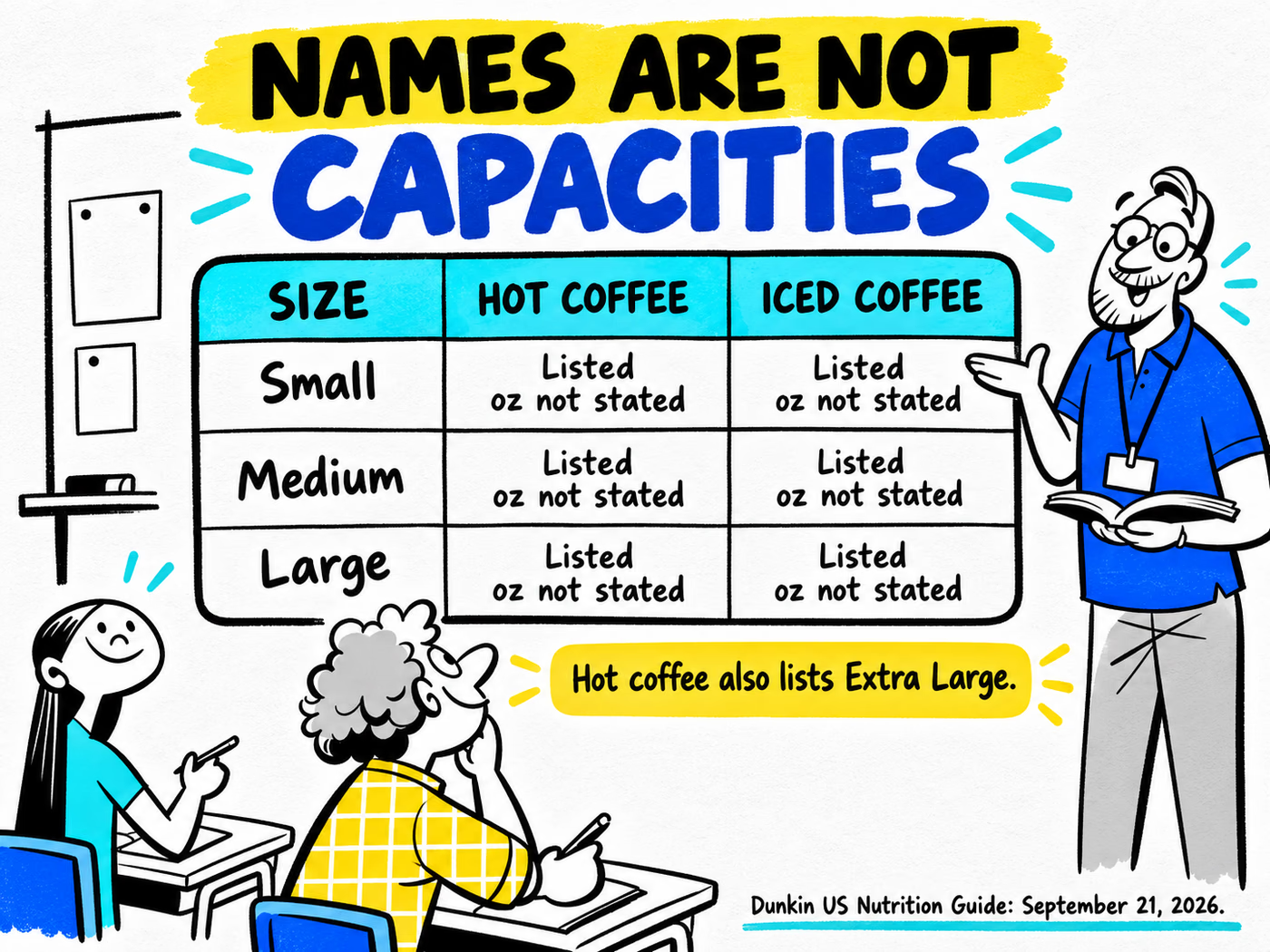
| Small | Listed; oz not stated | Listed; oz not stated |
| Medium | Listed; oz not stated | Listed; oz not stated |
| Large | Listed; oz not stated | Listed; oz not stated |
| Extra Large | Listed; oz not stated | Not listed for this drink |
What an older official source can—and cannot—confirm
Dunkin’s archived nationwide Cold Brew launch announcement explicitly mentions cup sizes of 16, 24, and 32 oz for that launch. That is historical, drink-specific evidence. It does not verify today’s Iced Coffee or every cold drink, so those numbers are not inserted into the current comparison.
For your purchase, confirm the drink and the chosen restaurant’s current menu. For a packaging order, obtain the actual supplier specification rather than using a historical menu reference.
Compare names with actual capacity
A shared word does not establish a shared volume. Dunkin’s Medium should not be equated with another chain’s named size unless you have verified both capacities for comparable drinks.
Our Starbucks US size chart uses specific hot and cold menu examples with stated capacities. The different evidence available for that chart is a reason to keep sources beside the data, rather than forcing both chains into an apparently complete table.
Separate three questions
- Menu name: what the customer selects.
- Capacity and serving fill: the stated volume and how your complete recipe occupies it.
- Physical fit: the proposed cup’s actual dimensions and matching lid connection.
Ice, foam, and toppings belong in the serving setup. Even a confirmed capacity would not reveal how much liquid is poured before ice or whether a particular lid fits. Use the cup-and-lid guide to record those requirements separately.
Build a clear size menu for your café
For an independent café, start with your recipes rather than copying another business’s labels. Decide the complete served portion, then evaluate a manageable range of proposed cups for hot and cold use.
Make the menu and specification agree
- List the drinks and their complete serving setup.
- Record requested capacities with explicit units.
- Choose customer-facing names and explain their portions consistently.
- Confirm exact cup, lid, and sleeve references together.
- Estimate quantities by size, service type, and artwork version.
Compare paper cups and plastic cups for the intended use. Review wall constructions without assuming that a wall choice establishes a lid match. A coffee cart can use the same method while adding working-stock and storage planning.
Clear names.
Confirmed specifications.
Planning your own café packaging? Share your drink use, requested capacities, exact lid needs, quantities by design, and delivery ZIP for a custom quote.
Sources & evidence limits
- Dunkin US nutrition page and its September 21, 2026 Nutrition Guide — Hot Coffee on printed page 26; Iced Coffee on printed page 37.
- Archived Cold Brew launch — historical capacity evidence, not current verification.
Reviewed October 6, 2026. BrandYourPack is independent of Dunkin. Unbranded drawings are illustrative and do not establish dimensions, capacities, or compatibility.