
Sephora Packaging: Retail Bags, Gift Presentation, and Brand Consistency
Separate the bag used to carry a purchase from the box used to present a gift. Build an original retail set around the orders your shop actually handles.
Sephora packaging is useful to study as a visible retail identity, but a shopping bag and gift packaging perform different jobs. Sephora’s September 2025 newsroom example documents branded shopping bags in a retail-related image; it does not specify their dimensions or confirm a complete gift service. For your own shop, plan carrying, gift presentation and messaging separately, then connect those pieces with an original visual system.
A customer may leave your store with one item for themselves or several items intended as gifts. The packaging brief should make that difference clear before you choose a bag size or add a decorative box.
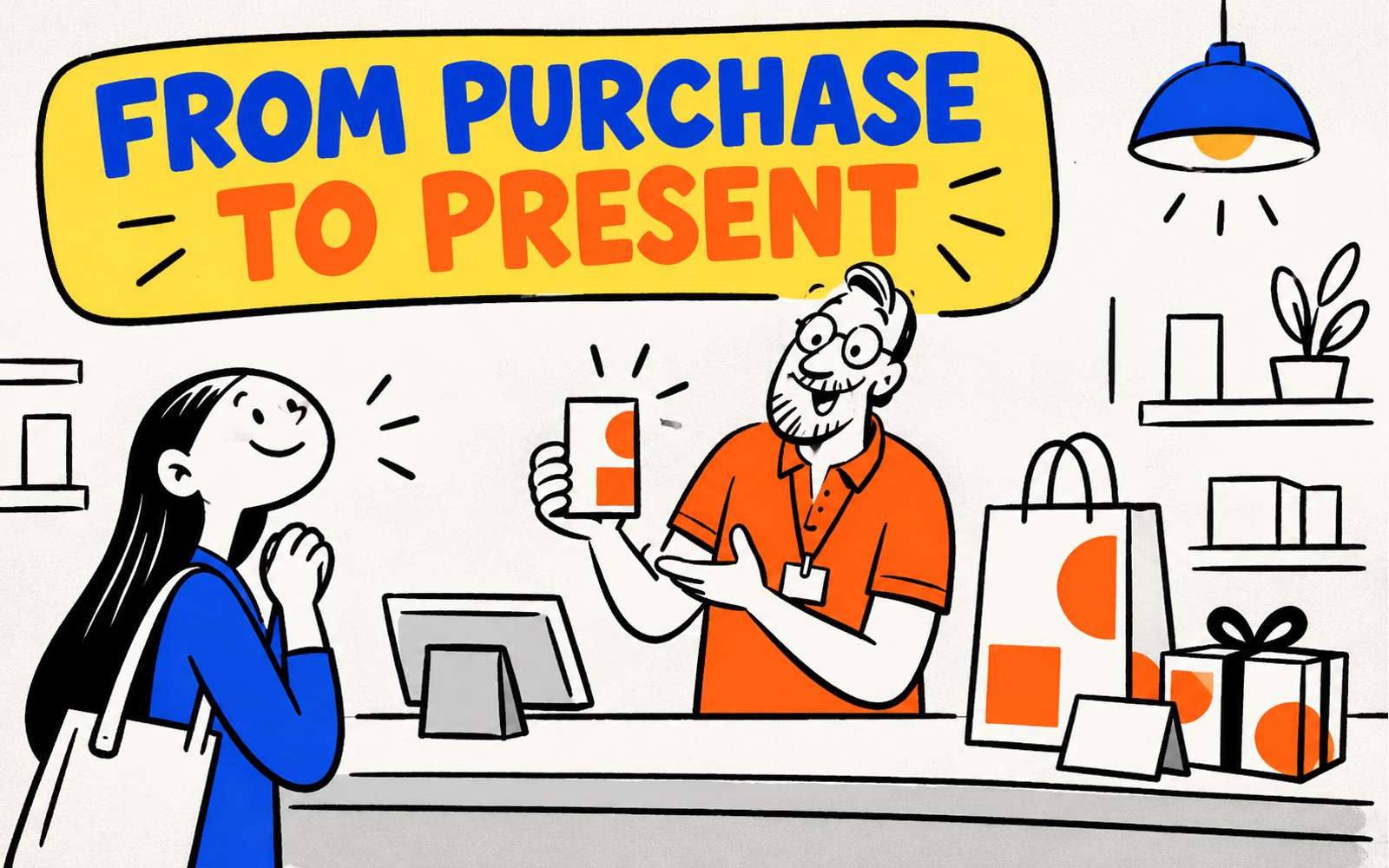
Review a documented retail presentation
The official September 25, 2025 announcement includes an image identified as Rockettes holding Sephora shopping bags. The visible bags use a strong black-and-white identity with the retailer’s name. This is a dated presentation example, not a specification sheet for every store or purchase.
Our interpretation is that a carry item can act as a recognizable continuation of the shop’s visual identity. That observation does not prove a sales effect, establish a handle construction or show how a gift would be wrapped inside.
| Visible in the documented case | Useful question for your shop | Still needs confirmation |
|---|---|---|
| Branded carrying bags | What original identity belongs on the carry item? | Material and handle construction |
| Related visual treatment | Which elements connect your retail set? | Artwork for each exact template |
| A retail-related handoff | What will the customer carry? | Packed arrangement and intended handling |
The illustrations use independent geometric artwork rather than Sephora stripes or branding. For another beauty-brand example, see the Glossier guide. Keep your own product, presentation and carrying requirements attached to the actual project.
Separate shopping bag and gift packaging
Start with the customer’s next action. A shopping bag groups the purchase for carrying. A gift box presents an already defined item or arrangement. A message card helps the recipient understand who the gift is from. One piece may combine some roles, but the roles still need to be named.
A product’s retail carton might already provide an appropriate presentation. Adding another box can introduce unnecessary packing work or change the required bag space. Conversely, loose retail units may need a deliberate gift arrangement before being placed into a carry bag.
Plan the point-of-sale choice
Write down what staff should do for a normal purchase, a single gift and a purchase containing several separate gifts. Decide where the card goes and whether the purchaser needs to inspect the items before the final presentation is closed.
For paper bags, discuss the complete packed arrangement and intended use. For product boxes, identify which item the box actually surrounds. A matching graphic alone does not establish fit or carrying performance.
If your products are small, jewelry packaging planning offers useful questions about keeping the item identified and presented. Apply them to your own products rather than assuming every beauty purchase needs the same structure.
Coordinate different purchase sizes
Build a short list of real order patterns. A single compact carton and a pair of gift cartons may need different bags even when the artwork belongs to one family. Measure the finished arrangement, including any tissue or card that stays inside, before selecting the proposed format.
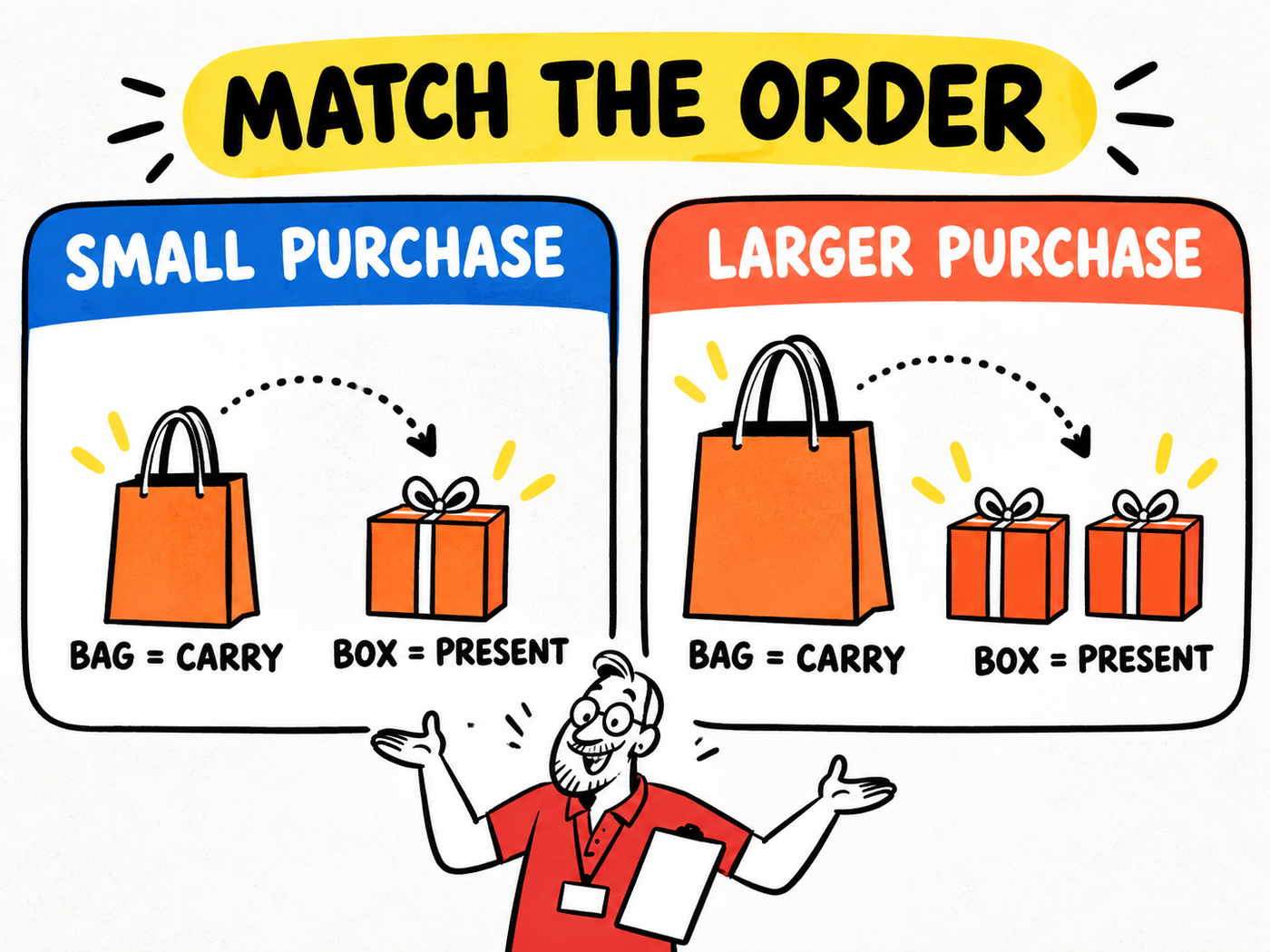
The two illustrated arrangements are conceptual: one smaller purchase and one larger grouping. The labels describe their jobs rather than dimensions or load ratings. They do not establish that a particular bag or handle can support your products.
| Order pattern | Presentation question | Carrying question |
|---|---|---|
| One retail item | Does its own carton finish the presentation? | Which bag fits the complete item? |
| One gift | Is an additional box or card useful? | Does the finished gift fit upright? |
| Two separate gifts | Can staff identify each recipient’s set? | How are the closed sets grouped? |
| Mixed purchase | Which items belong together? | What prevents an awkward handoff? |
Share visual rules without duplicating every layout
Keep the original mark and main graphic roles consistent, then adjust placement for each format. A small carton face and a larger bag offer different viewing areas. Check the actual artwork at finished size rather than scaling one file onto every component.
Review the bag size and handle guide and packed-dimension method. Record which arrangement each proposed format is intended to serve, so staff do not have to guess when the next delivery arrives.
Prepare your own retail packaging set
Create one brief line per component: item reference, finished packed dimensions, intended role, proposed material and construction, artwork version, quantity and delivery ZIP. State clearly which parts are for carrying and which are for presentation.
Where tissue paper belongs in the set, describe its role and actual contact conditions. Choose it with the product and arrangement in mind rather than assuming a decorative appearance establishes suitability.
Keep staff use in the review
Ask the shop team to review the proposed packing sequence with the actual items. Record where the card is placed, which pieces are closed at the counter and how the finished purchase is handed over. Keep those observations with the sample and revision reference.
Follow the artwork guide for production files. The corporate-gift guide helps when several items form a defined set. Approve the current artwork and structure together, and keep quantities by format separate for reorders.