
Bakery Subscription Packaging: Keep the Box Stable as the Assortment Changes
Keep a recognizable outer presentation while reviewing each bakery edition. Separate changing contents, contact packs, labels and cards in one edition record.
Bakery subscription box packaging works best when the outer identity is consistent and each edition has its own packing record. Define the range of possible assortments, then separate the outer box from product-specific contact packs, labels, and cards. Recheck fit and delivery requirements whenever the contents change. A successful arrangement for one edition is not evidence that the next assortment can use it unchanged.
The customer can recognize the same bakery box each month while the packing team follows a different edition sheet. That separation makes changes visible before dispatch.
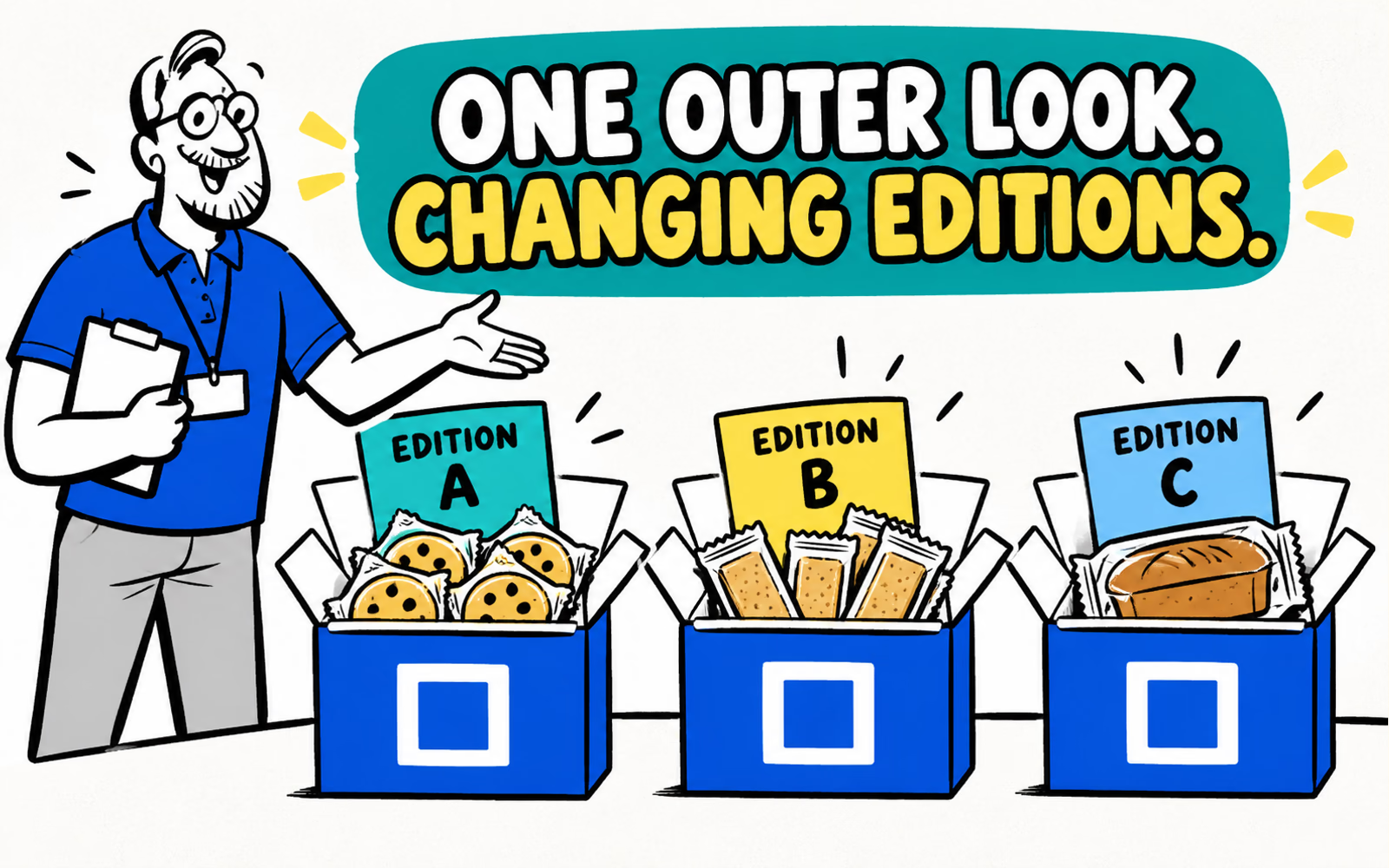
Define the range of possible bakery assortments
List the editions you can reasonably describe now. Record the product versions, quantities, finished dimensions, and individual packs required for each. A cookies-only edition and a mixed order with a taller baked item are separate arrangements.
Identify what remains unknown. If a future special has not been developed, do not describe its fit as already solved. Keep an exception process for an edition that falls outside the reviewed range.
Use a product-and-edition record
Give every product and edition a clear identifier. Include the actual packing condition and the intended route to the customer. This creates a traceable link between the assortment, information card, and proposed packaging references.
The subscription hub addresses the wider assembly and dispatch plan. This article adds the bakery-specific distinction between the outer presentation and the packs or information that change with the food assortment.
Separate a stable outer pack from changing contents
Keep the common brand mark, outer artwork, and opening style together as one proposed reference. Record the internal arrangement separately. A stable exterior is useful only when the actual edition can be packed and handled as intended.
| Component | Potentially stable | Review when the edition changes |
|---|---|---|
| Outer box | Brand artwork and reference | Complete fit, closure and handling |
| Product contact pack | Only where the actual specification remains suitable | Food, contact, exposure and construction |
| Support or spacing | A reviewed arrangement for named contents | Positioning and changed item profiles |
| Card and labels | Shared layout system | Edition copy, product versions and quantities |
Compare both the large arrangement and a smaller edition that leaves more empty space. The changing-contents guide helps organize that review. Do not assume that sizing for the largest product solves how every smaller assortment is held.
Keep food contact separate
Describe the actual food, exposure, and contact conditions for the proposed primary pack. Presentation tissue or decorative fill does not automatically supply a suitable food-contact layer. Use the paper-function guide for that distinction.
Plan edition-specific information and labels
Prepare the approved product information for the actual edition before adapting the card. Keep assortment identifiers, any reviewed instructions, and the edition name in a controlled record. Do not transfer information from last month merely because the layout still fits.
Use one card layout with a clearly identified version. Check that the printed batch belongs to the intended dispatch and that the contents match the edition sheet. Keep customer messages separate from any product-specific information that must travel with the item.
Make the packing check practical
Place the current edition sheet at the station and remove superseded cards from the active supply. Ask the packer to compare product versions, labels, and the card before closing. A shared visual style should make the edition easy to identify, rather than conceal a copy change.
Use the insert versioning worksheet and consider labels and cards as separately counted components. The matrix below shows which records need attention each time; it assigns no automatic compatibility or preservation result.
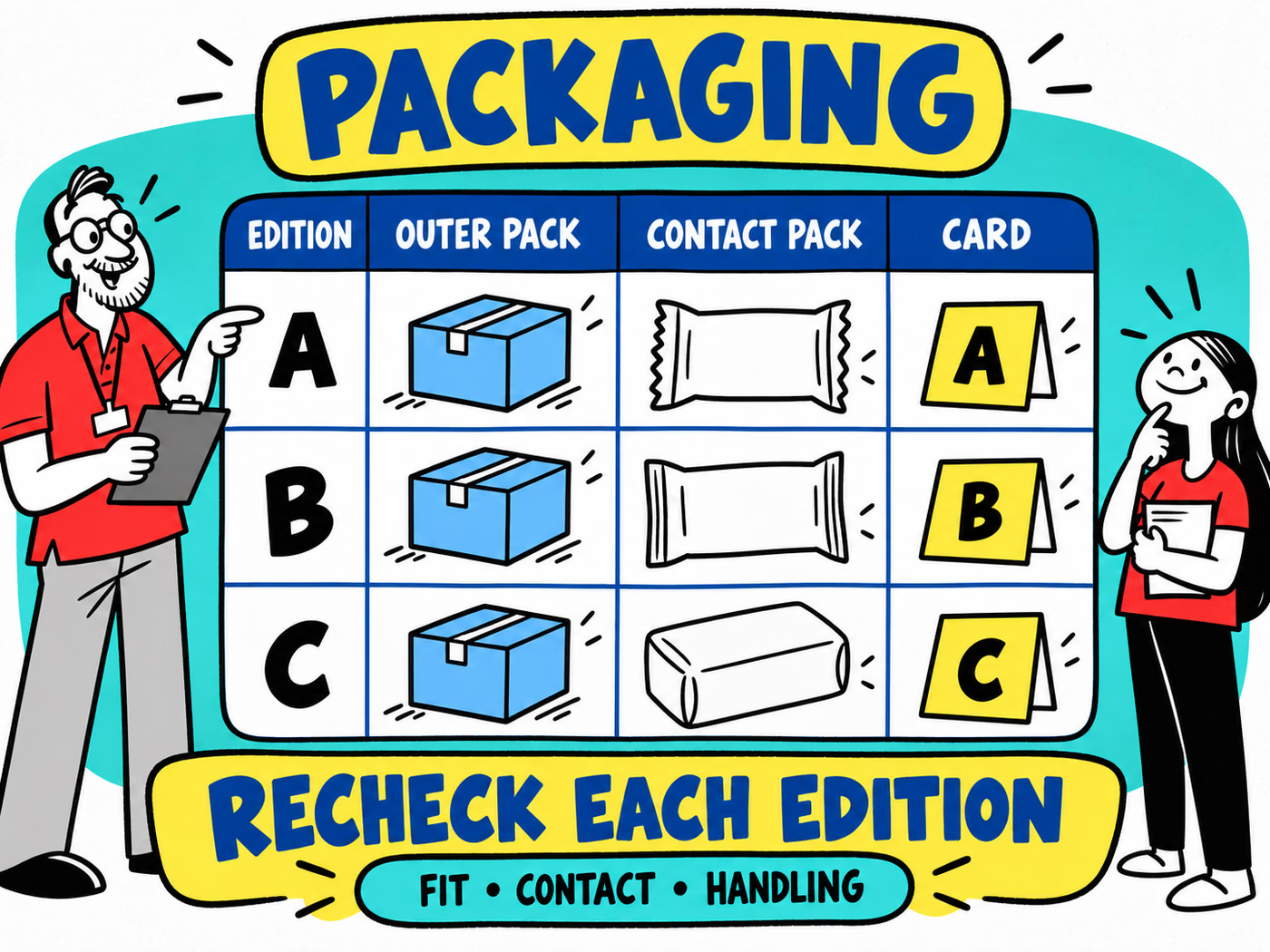
Review fit and delivery requirements for each edition
Prepare the full edition in the proposed sample, including its individual packs, support, labels, and card. Review loading, closing, intended handling, and opening. Record the exact references and the issues observed.
A bakery delivery can raise product-specific requirements that a branded box alone does not address. Describe those needs explicitly and obtain the appropriate review for the actual goods and route. This article supplies no temperature-control system, shelf-life assurance, or general approval for shipping perishables.
Approve the edition, not an unlimited range
Retain a dated record of the reviewed arrangement. Repeat the relevant checks if a product, contact pack, support method, or delivery requirement changes. Use the measurement guide for the complete arrangement and the dispatch stock worksheet to count each reference separately.
Discuss mailer boxes with the actual intended use and edition range. Prepare the confirmed artwork after the structure is reviewed, then send quantities by design and the delivery ZIP.