
Beauty Subscription Packaging: Keep Small Products Organized and Identifiable
Plan the actual closed containers, their arrangement and the matching edition card. Keep presentation, support and product information as distinct decisions.
Beauty subscription box packaging starts with the actual closed product containers in each edition. Record their sizes, shapes and product-supplier handling requirements, then plan separation and support for the complete assortment. Match the printed card to those exact products. A neat reveal and a bright exterior do not establish leak resistance or make one arrangement suitable for every month.
Three small beauty products can create a surprisingly varied packing problem: a broad jar, a short tube and a taller bottle each occupy space differently. Start with those differences before fitting them into a shared visual theme.
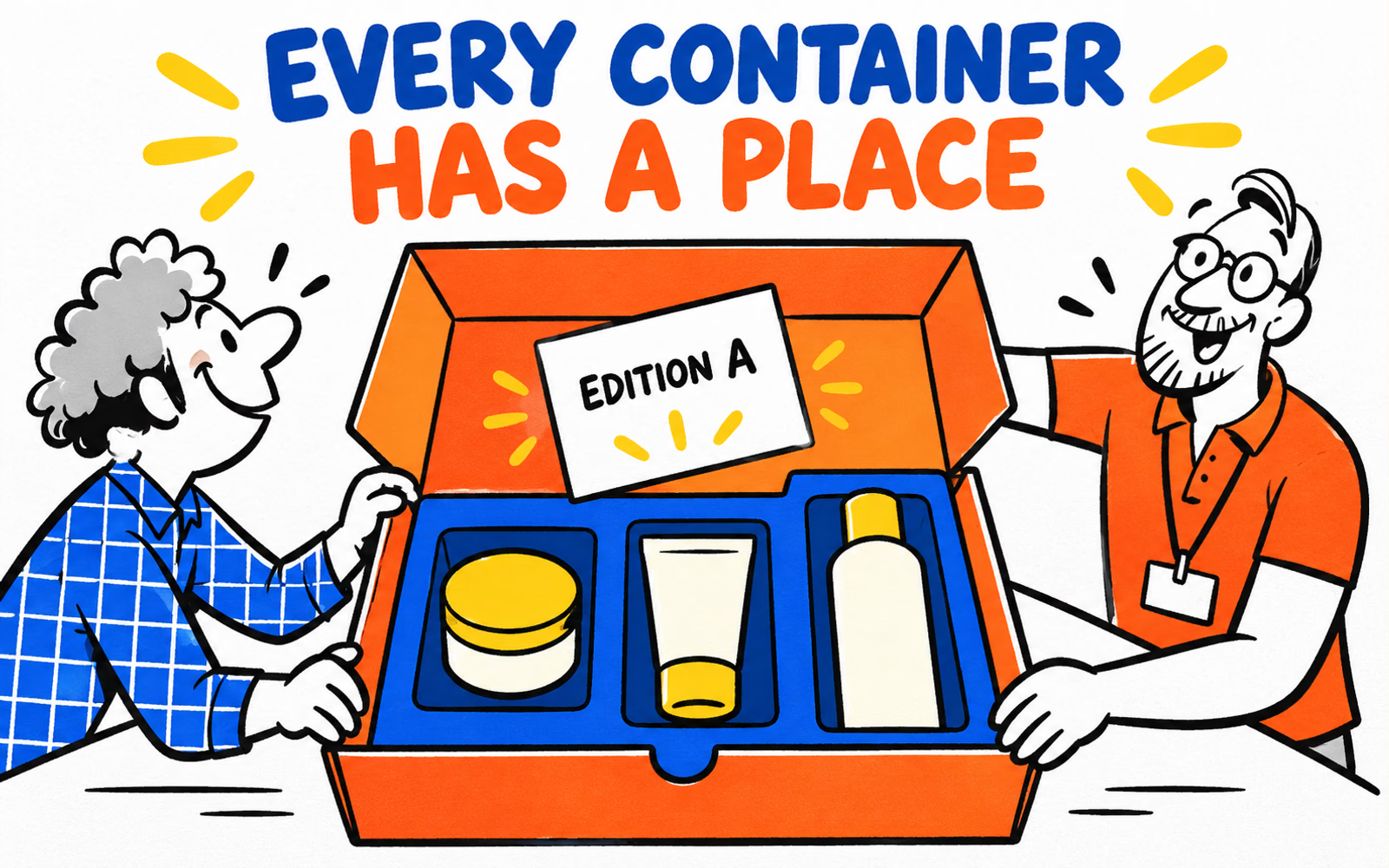
List the actual product containers in each edition
Make an edition sheet using exact product and container references. Include caps, lids, pumps, cartons and projecting parts as supplied. Record the maximum dimensions and weight of each closed product rather than estimating from a promotional photograph.
Ask the responsible product supplier for applicable packing and handling information. Keep questions about the primary container, its closure and any additional containment separate from the printed outer box. A designer should not infer those answers from the way the bottle looks.
Record the assortment, not just the biggest item
In our fictional Edition A, the set contains a jar, tube and bottle. A later edition could replace the tube with a second jar. That might change spacing and assembly even if the tallest item stays the same. Use the changing-contents worksheet to record the actual range.
The beauty-order layers guide distinguishes primary containers, presentation and outer packaging. This article adds edition-specific container mapping rather than copying a brand’s recognizable pouch or its product instructions.
Plan separation and orientation
Arrange the real closed containers with the proposed holding components. Identify contact points, areas where one container could move toward another, and any part that could be pressed during closure. Use the orientation specified for the actual product and intended handling; an upright drawing is not proof that it remains upright in delivery.
| Container example | Question to resolve | Record for the edition |
|---|---|---|
| Closed jar | How are the base, lid and neighboring items separated? | Actual dimensions, proposed position and support reference |
| Capped tube | Could another object press the closure or folded end? | Product-supplier guidance and complete arrangement |
| Capped bottle | What locates it, and what could contact its cap? | Orientation, contact areas and unresolved questions |
Do not give the card a protective job
A printed card carries information. It should not be treated as the part that holds a bottle or contains a spill. Review those jobs separately with the actual construction and product supplier.
Use the support-method comparison to define what the proposed holding system does. Special supports and any additional containment need their own feasibility review. The blank matrix below deliberately leaves size, orientation and support decisions open for real project data.
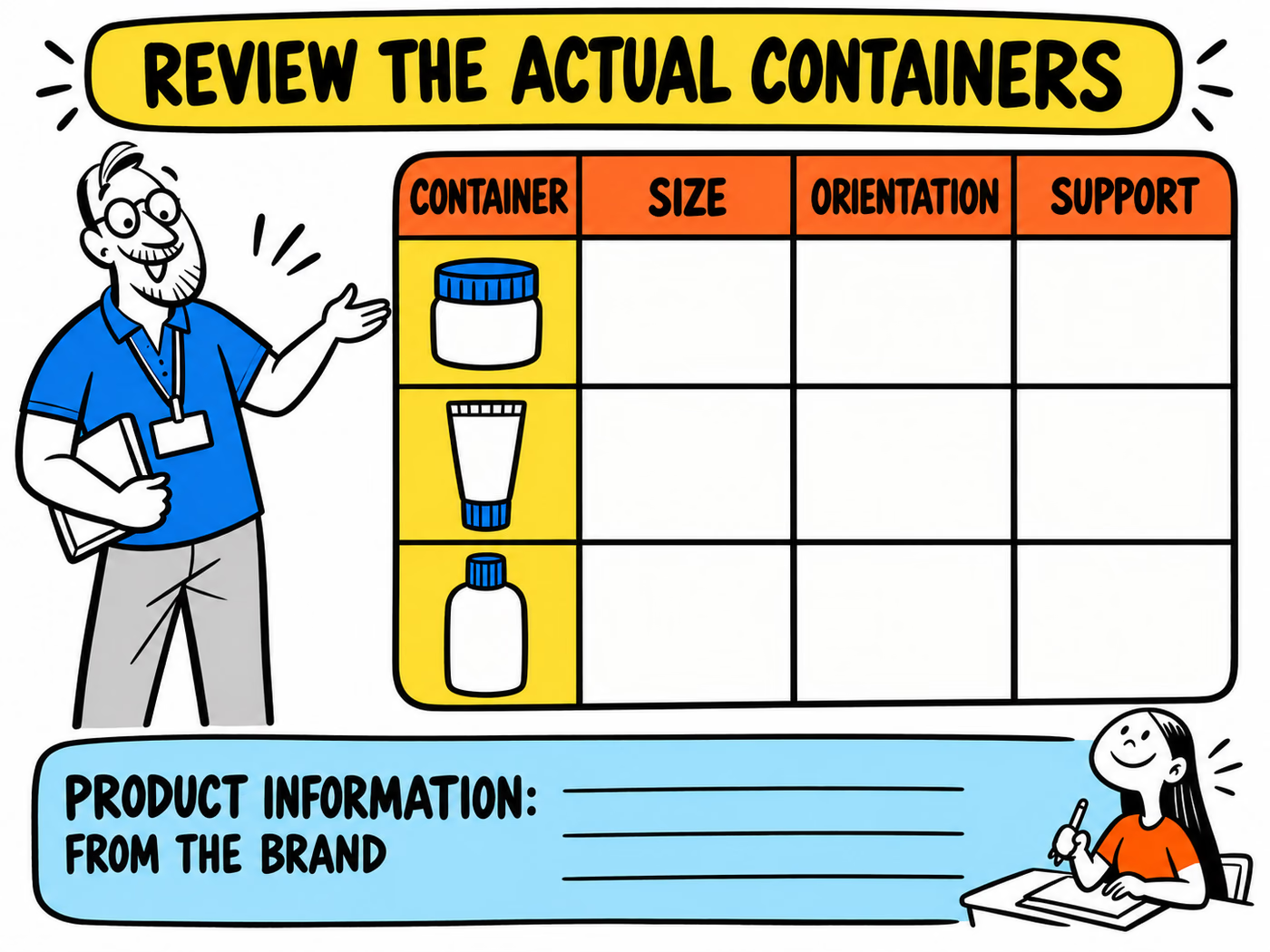
Match the printed information to the contents
Assign one card version to each confirmed edition. Compare the product names and references on the card with the actual packed containers before closing. Similar-looking products should not inherit each other’s description merely because they share a packaging color.
Have the responsible brand supply and review product information. Do not invent application steps, ingredient details or cosmetic claims to make a card feel complete. Keep the approved wording connected to the product version and its information source.
Make changes easy to spot
Put an internal edition code on the packing record and approved artwork file. Keep customer-facing information readable, while the operational record identifies the exact mix. The insert-card version guide helps organize that connection.
If a product is substituted, review both its physical fit and the accompanying copy. A new container may fit the same space but need different information; an unchanged message may still be paired with the wrong product. Retire superseded files from the packing station.
Review each edition before confirming the package
Assemble, close and open the proposed edition with actual products. Record crowding, movement, access to the card and any contact that needs investigation. Keep those observations separate from the evidence required for leakage, compatibility or transport questions.
Use the sample review checklist to identify the exact components, method, conditions and limits. The fragile-product PR guide adds a useful distinction between the reveal and the protective system when the edition contains a fragile container.
Quote the edition range clearly
Explore mailer boxes, insert cards and labels with quantities by reference and design. Measure the complete arrangement using the box measurement guide, then follow the artwork guide for the confirmed layout.
The request concerns printed packaging. It does not offer cosmetic products, filling services or a validated liquid-shipping system. Keep unresolved primary-container and handling questions visible until the responsible parties resolve them.