
Depop Packaging Ideas: Branded Orders Without Overpacking
Give a resale order a clear identity with a few purposeful pieces. Compare the presentation by component count and usefulness, then check the actual US shipping instructions.
Depop packaging can feel distinctive with one clear graphic idea and a few components that serve the actual order. Choose a suitable mailer or box first, then add a purposeful wrap, sticker, or useful message. Compare the work each piece does rather than assuming more decoration improves the experience. Check Depop’s current US shipping guidance and the selected carrier’s packaging requirements before dispatch.
An original sticker can give an order personality. It works best when the package already has a clear purpose and the extra pieces earn their place.
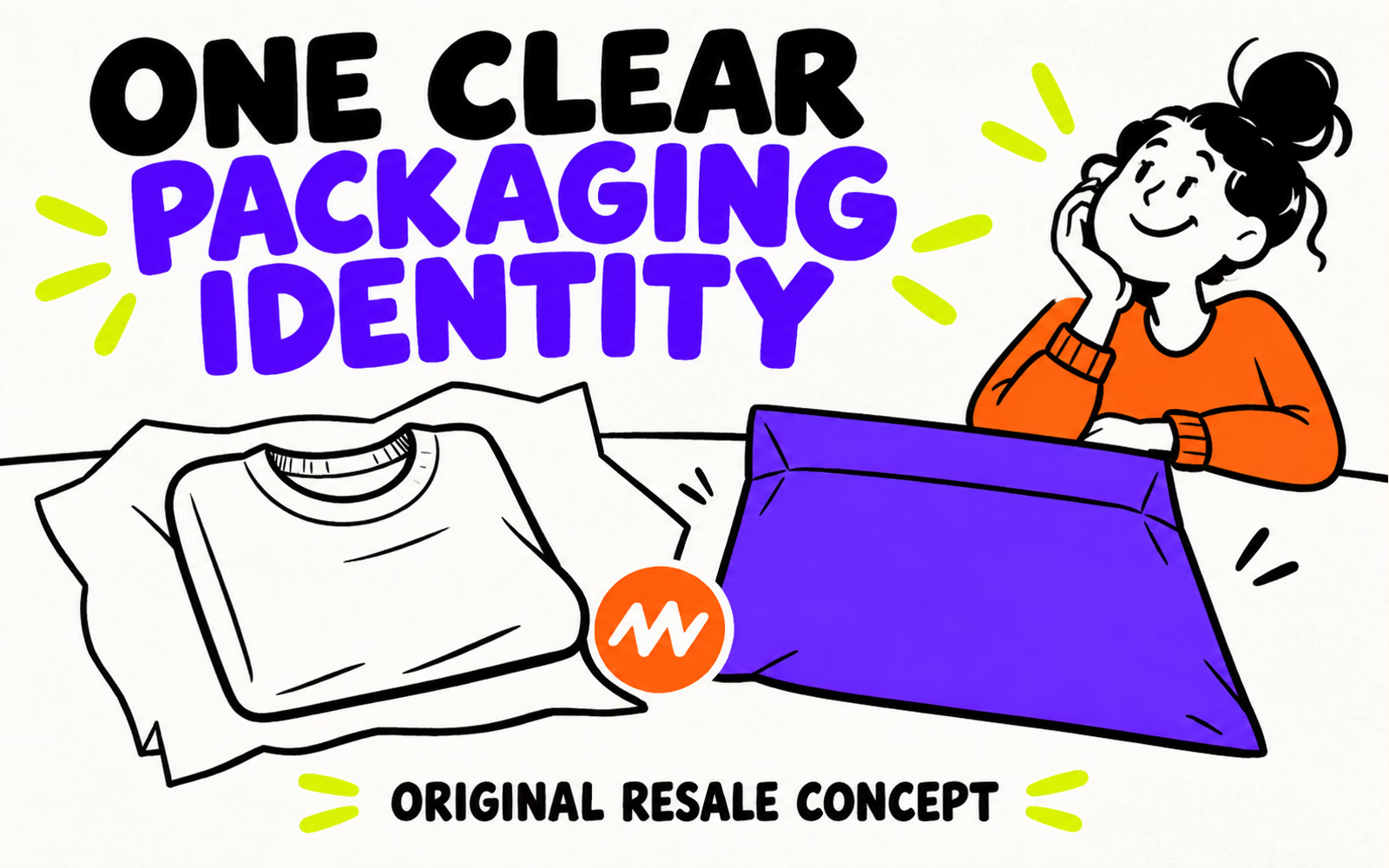
Choose a restrained packaging identity
Pick one element customers can recognize: a graphic sticker, a short original wordmark, or a consistent color relationship. Keep it connected to your own shop identity rather than copying Depop’s mark or another seller’s visual system.
Write a one-sentence visual brief
For a fictional resale shop: “Use one orange zigzag on the outer piece, with plain tissue around the garment.” That is a concrete design direction, not a claim about protection, sustainability, or customer response.
The illustration uses an unbranded vintage-style shirt and that original graphic idea. It contains no confetti, promotional offer, real label, or customer details. It is not a parcel that has been shipped or reviewed by a buyer.
For a printed detail, compare stickers with the work of the main pack. Confirm the application surface and intended use before choosing the specification. See stickers versus custom-printed components for the broader design decision.
Compare simple mailer and box presentations
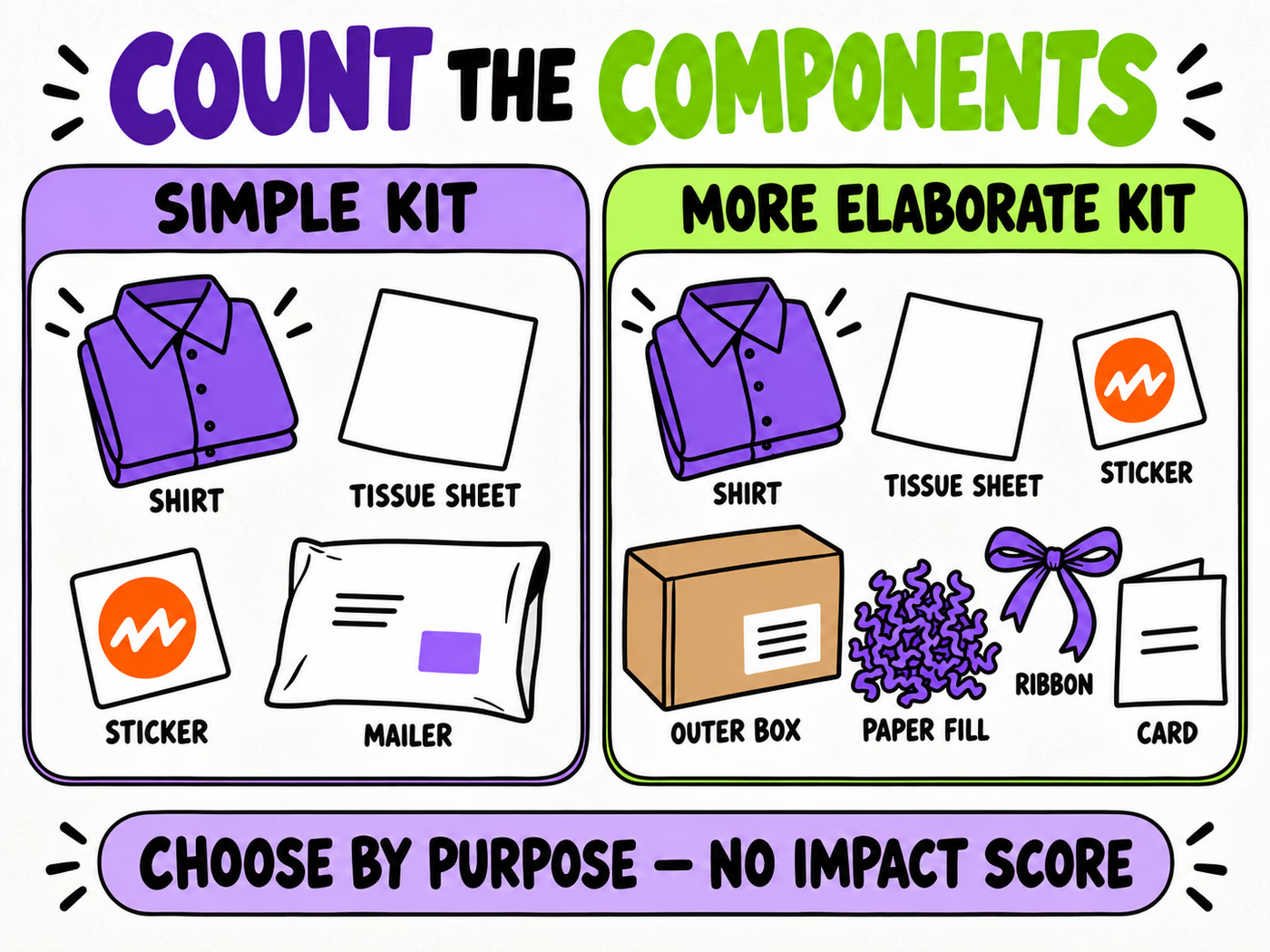
Use the same garment and required arrangement in both sketches so the comparison concerns presentation. First choose the outer construction according to the actual contents and handling brief; then decide which extra pieces help.
| Concept | Components shown | Questions to answer |
|---|---|---|
| Simple kit | Garment, tissue, graphic sticker, mailer | Does each piece organize, identify, or enclose the order? |
| More elaborate kit | Same garment, tissue, sticker, box, ribbon, decorative fill, extra card | Which additions solve a real problem or supply useful information? |
Compare purpose rather than assigning a score
The infographic lists components. It supplies no price, emissions calculation, protective rating, or environmental verdict. A smaller kit is not automatically the right construction for every garment, and a box is not automatically unnecessary.
If the item has rigid or vulnerable features, review its support requirements before removing a layer. Use the apparel format guide for the actual mailer-versus-box decision.
For the proposed materials, discuss poly mailers and tissue paper by intended use. The illustration does not establish availability, material composition, or a manufactured sample.
Include only useful post-purchase information
Ask what the buyer needs after opening the parcel. Keep accurate item-specific care information with the garment, and use a concise thank-you if it suits your shop. Avoid including several cards that repeat the same message.
Test the message before printing it
Write the proposed card on plain paper and read it at the intended size. Check whether it adds something useful, whether the next step is current, and whether it agrees with the marketplace’s rules. Remove an invented discount, return promise, or care instruction before it becomes a recurring printed mistake.
For a secondhand garment, do not replace the original care information with unsupported advice. Keep any disclosure tied to the actual sold item and the approved sale record rather than a decorative packaging slogan.
See useful insert ideas for planning and the finished-size typography review for layout. If a code is useful, confirm the destination and test the real asset with the QR planning guide. This article supplies no working code or tracking service.
Check your packaging against current shipping guidance
Depop’s official How to ship – US guidance, reviewed on October 6, 2026, allows new or suitable reused packaging, asks sellers to remove or cover old shipping information, and calls for an appropriately sized, secure pack. It also directs sellers to carrier-specific packaging guidance.
If using Depop Shipping, its guide says to use the label generated for that order. A different selected shipping method has a separate workflow. Check the actual sale and current help page rather than copying another marketplace’s label routine.
Keep branding out of the shipping information
Leave the label area readable and keep decorative stickers clear of its barcode and address. Inspect a reused piece for condition and inappropriate old markings before adapting its appearance. Reuse alone is not an environmental performance claim.
- Confirm the selected shipping method and order label.
- Review the garment’s required arrangement.
- Check fit, closing, and the label area.
- Remove unnecessary presentation pieces.
- Record any issue that needs a different format.
Use the practical resale kit exercise for station organization, while keeping each platform’s instructions separate. Prepare any custom artwork with the production guide and send the actual project dimensions and quantities for a quote.