
Mystery Box Packaging Ideas: Keep the Surprise, Clarify the Essentials
Make the opening playful while keeping the actual offer understandable. Give exterior information, the reveal and product details separate jobs.
Mystery box packaging ideas work best when the surprise concerns the reveal, while the actual offer remains understandable. Decide what the customer knows before buying, arrange the contents in a clear opening sequence, and keep each product’s information with it. Use the real assortment to review fit and support. A playful exterior should not introduce unsupported value promises, prizes or descriptions that do not match the contents.
A customer can enjoy opening a surprise without having to guess how to identify the products afterward. Plan those two moments together: what is clear before purchase and what becomes visible when the lid opens.

Define what may be a surprise and what must be clear
Start with the actual offer, then decide which details are intentionally revealed later. The item selection, a color variation or the order of discovery can be part of the experience. Do not let that decision replace a review of the commercial information the customer needs before purchasing.
Create one approved offer record for the sales page and packaging team. Record the actual product category, what is included or variable, and the information responsible staff have confirmed. This is a copy-planning exercise; the blank fields in our illustration are not approved sales conditions.
| Planning area | Question to answer | Where to review it |
|---|---|---|
| Before purchase | What does this actual offer include and leave variable? | Approved commercial description |
| Opening sequence | Which item or message appears first? | Complete packing sample |
| Product identification | How does the recipient recognize and use each item? | Responsible supplier information |
Keep playful graphics separate from promises
Abstract shapes can suggest curiosity without displaying currency, prize symbols or a guaranteed return. Avoid a slogan that implies a minimum value or a chance of winning unless the responsible business has established the actual offer and reviewed the wording. Our example makes no such claim.
Plan the reveal without unnecessary layers
Sketch the customer’s first three actions: open the outer pack, find the introduction and reach the products. Each wrapping layer should have a practical purpose, such as keeping an item identifiable or supporting the intended presentation. More paper is not automatically a better reveal.
Try a fictional desk-kit arrangement with three separately wrapped generic objects and a short introduction card. The shared motif connects the pieces, while temporary packing references identify them behind the scenes. These invented contents illustrate an order of discovery rather than a collection offered for sale.
Keep access simple
Open the real sample as a recipient would. Note loose pieces, a card hidden under contents or a wrap that makes the product hard to remove. Revise the sequence before making the printed message describe an opening step the pack does not support.
Review holding components using the support-method comparison. Decorative tissue and a printed card need their own roles; neither should inherit a protective claim because it sits neatly around the products.
Keep product information with the contents
Once the surprise is revealed, the recipient should be able to tell what each item is. Preserve primary packs and information from the responsible product supplier. Where a separate card summarizes the assortment, compare it with the exact contents before closing the parcel.
Use an internal assortment reference to connect the packing record and card artwork. That reference helps the team catch a substitution even when the wrapped objects look similar. Retire outdated card files instead of relying on someone to remember which copy belongs to the new mix.
Separate three information surfaces
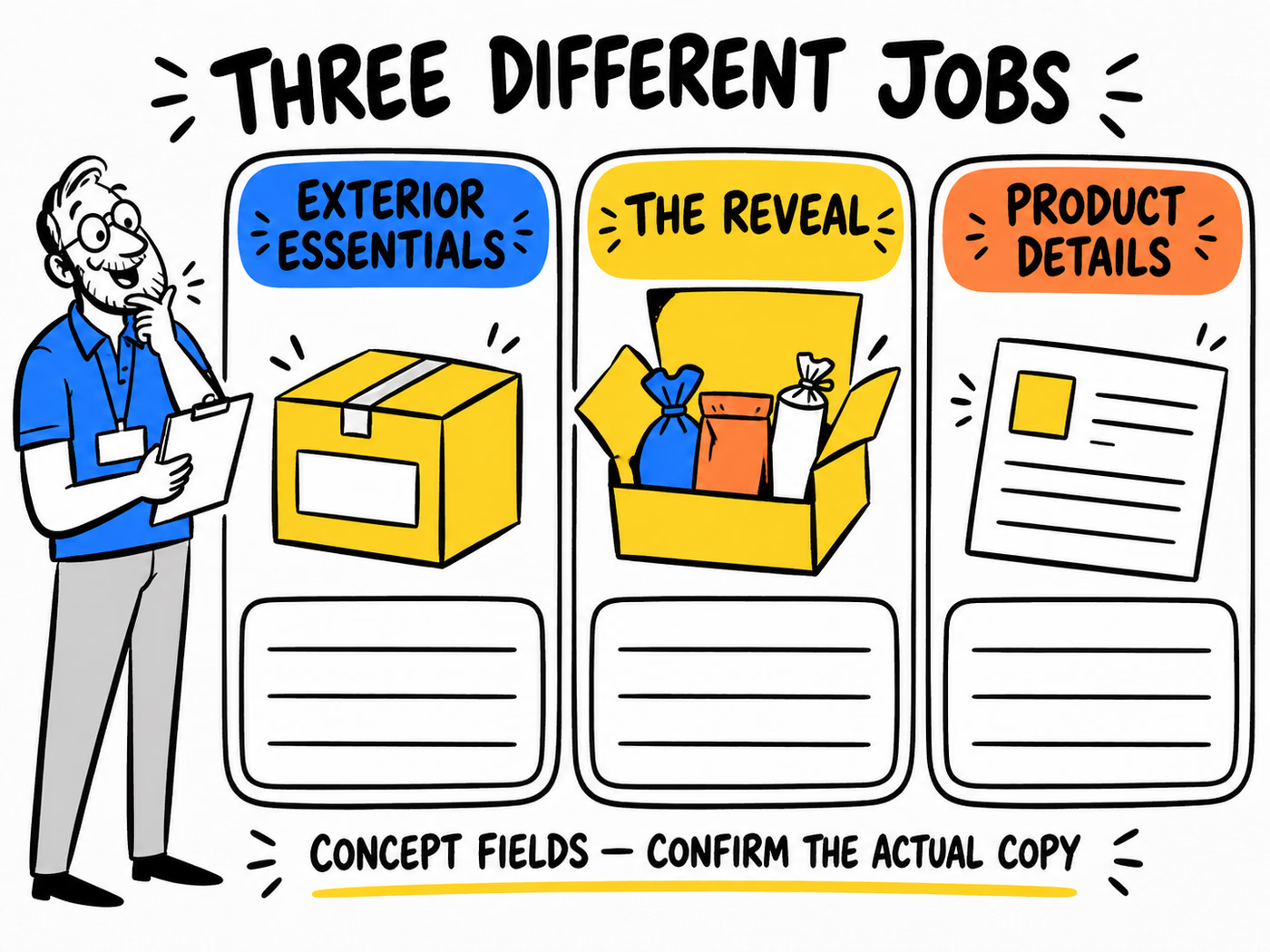
The exterior can carry the confirmed identity and useful opening message. The interior introduction can set the tone. The product’s own information explains the actual item. The infographic below distinguishes those jobs and deliberately leaves commercial and product-copy fields blank.
The mixed-category kit guide demonstrates why product categories retain different packing and information needs. For order sorting, the shipment-record guide adds a separate operational check; a themed wrapper does not decide which products belong in a parcel.
Prepare a reusable packaging system for changing assortments
List the combinations you expect to pack, including the smaller assortment and any unusually shaped item. Keep actual dimensions, primary packs, weight and proposed holding parts in the record. A box that closes around the largest item may still leave a smaller edition poorly located.
Use the changing-contents worksheet and measurement guide for the complete arrangement. Keep shared artwork separate from the card and support versions that change by assortment.
Request the complete system
Explore mailer boxes, tissue paper and insert cards with quantities by reference. Include the confirmed offer copy, intended handoff and actual packing range in the project brief.
The edition-system guide connects the recurring components. Prepare production artwork only for the confirmed construction using the artwork guide. If the contents or description change, review their fit, support and copy together before reusing the earlier pack.