
Smoothie Cup Sizes: Plan the Drink, Topping Space, and Lid
Measure the finished smoothie, then account for toppings and the closure. Turn your serving procedure into an exact cup-and-lid request.
Plan smoothie cup sizes from the finished serving you prepare, including any toppings and the space needed to close and serve it. Keep the recipe portion separate from the proposed cup’s nominal capacity. Check the actual cup, closure, opening, and accessory combination; a flat lid and a dome lid are not interchangeable simply because the cups look similar.
A smoothie that stops below the rim and one finished with fruit need different clearance checks. The most useful size comparison puts your real serving beside the proposed cup.
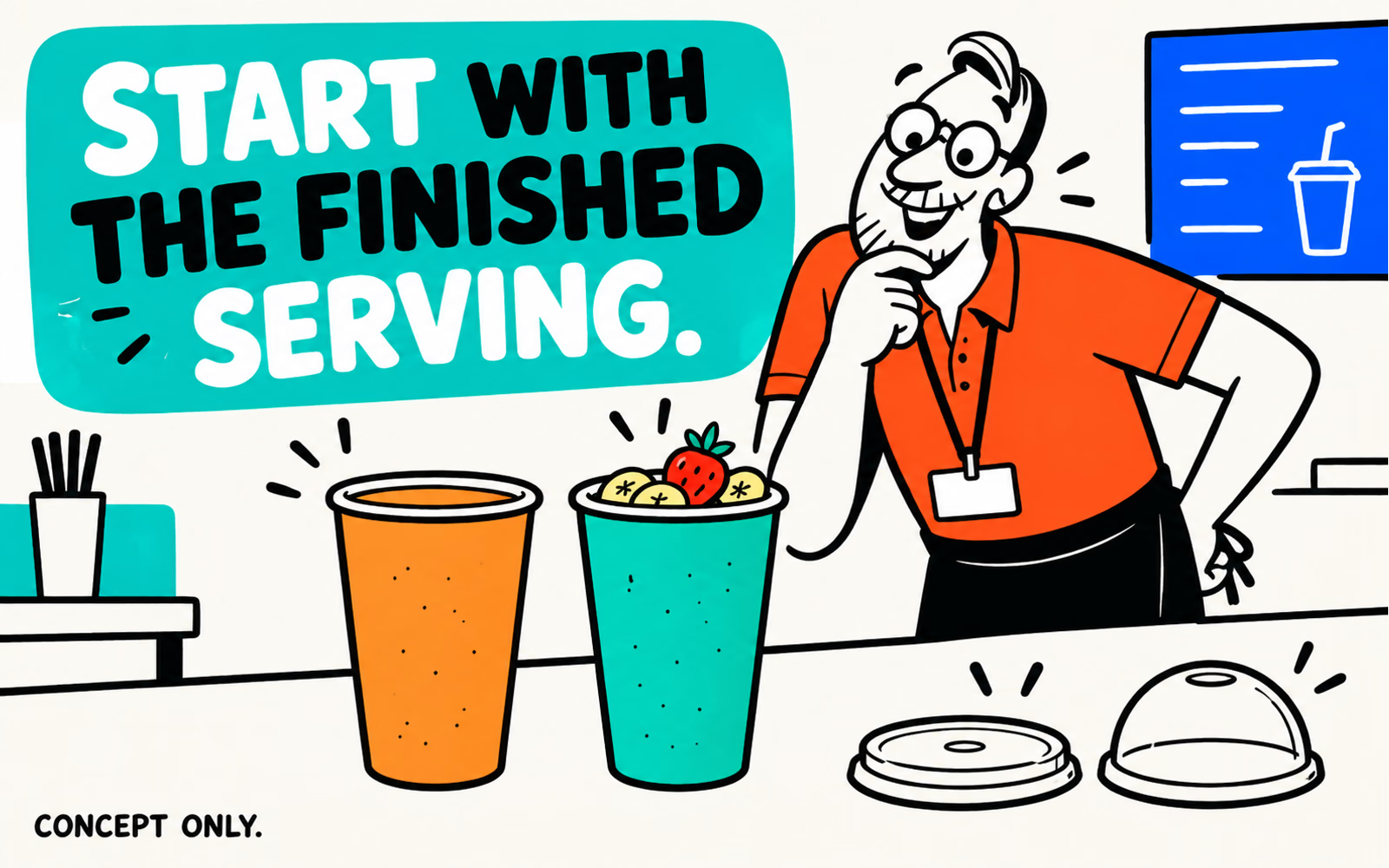
Measure your finished smoothie serving
Define one serving procedure before comparing cups. Record the recipe version, batch size, intended number of servings, and how staff divides the finished batch. If your process leaves product in the blender, measure what actually reaches each served cup rather than dividing the starting ingredients and calling that the portion.
Use a consistent measurement method appropriate to your workflow. State whether an entry is a measured volume or a weight; they are different records, and converting between them requires information about the actual mixture.
Observe the order at the counter
Prepare representative servings in the proposed sample. Record the filled level and the order of any additions. Include a plain version and the topped version if both are offered. Note whether the preparation varies enough to change the space available at closing.
Do not borrow a coffee chain’s size name or assume it describes your smoothie. The general cup-and-lid guide helps identify candidate specifications; your own portion record decides which candidates are worth reviewing.
Account for toppings and headspace
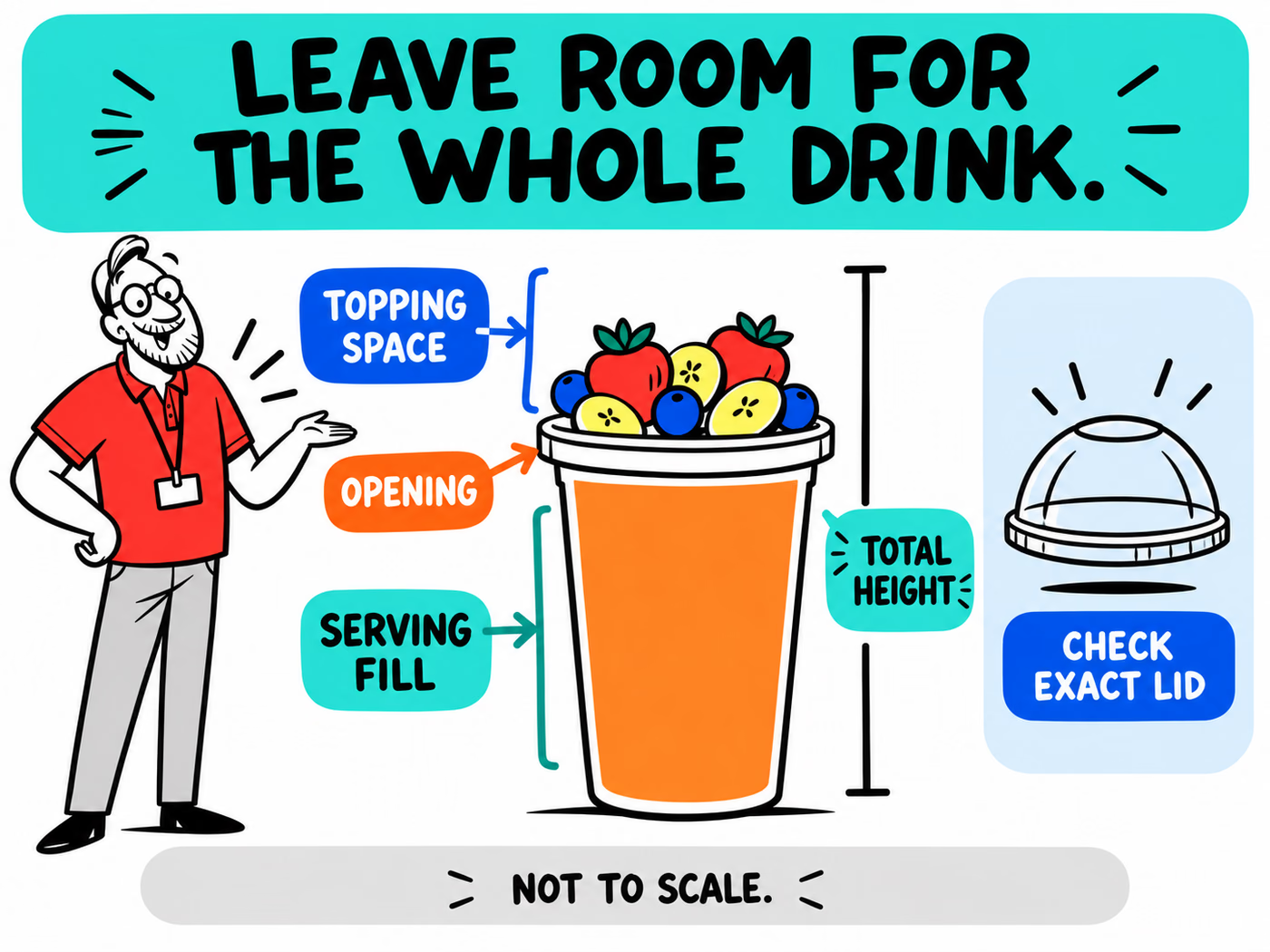
A cup can accommodate the drink portion yet leave too little room for its finish. Record the topping arrangement separately: what is added, where it sits, and how high the completed presentation reaches. Then check the room needed by the actual closure.
| Preparation | Record at finished fill | Question for the sample |
|---|---|---|
| Plain smoothie | Actual serving level and closing space | Does the proposed closure work with this fill? |
| Fruit-topped smoothie | Serving level plus the topping arrangement | Is there clearance for the actual presentation? |
| Several menu variations | Each repeatable preparation | Which versions need a different cup or closure? |
Keep nominal capacity and observed working fill in separate fields. Extra visible space is not necessarily wasted space, and filling to the rim is not a universal serving target. The right arrangement depends on the preparation and closing procedure you are reviewing.
Make the record easy to repeat
Use a photograph of the completed sample with its recipe and cup references. Describe any contact between topping and closure. Repeat the observation when either changes. The section illustration labels the areas, without giving a recipe ratio or specifying a clearance dimension.
Compare closure requirements for your service
Write down how the smoothie is served: handed over at the counter, placed in a carrier, or included in a larger takeaway order. Identify how the customer drinks it and whether the proposed opening or accessory suits the actual consistency and presentation.
Review flat and raised closures as separate candidates. Ask for the exact matching reference for each proposed cup; do not transfer a lid from another format based on appearance or a shared capacity label.
Check the workflow, not only the silhouette
Try filling, closing, handing over, and opening the actual sample under your intended service conditions. Record fit and usability observations. A drawing with a domed lid does not establish protection, temperature suitability, or a transport result.
Keep the closure away from important artwork and confirm what parts of the cup remain visible. The cold-drink branding exercise is useful for reviewing contrast with the contents, while the smoothie’s serving procedure needs its own record.
Request the exact cup-and-lid combination
Organize the request by the drink you intend to serve, rather than by a generic “smoothie cup” description. Include the measured portion, topping version, observed fill, intended service, and exact closure questions. Add the preferred cup reference and ask which accessories belong with it.
The plastic cup product page makes beverage use and lid needs part of the request. Treat its format choices as a starting point for review. Confirm material, construction, dimensions, quantities, and included accessories in the final proposal.
For labels, describe placement and cold-service conditions. For direct print, identify artwork versions and prepare the confirmed shape with the artwork guide.
- Send the recipe and serving identifiers.
- Include plain and topped sample observations.
- List cup and closure references separately.
- Request quantities for each artwork version.
- Add the delivery ZIP and any project deadline.
A complete request makes differences between your menu versions visible before you commit to a cup range.