
A microbakery packaging plan separates the pack touching the bread from pickup presentation, variety identification and the bag carrying a complete order. Match each role to your actual production and selling channel.
Sourdough packaging ideas for a microbakery work best as separate jobs: the material touching the loaf, the label identifying it, and the outer bag carrying the order. Plan whole loaves, smaller pieces, and mixed orders from your actual selling channels. Confirm contact materials and completed fit before applying the bakery identity.
A beautiful bread bag is useful only if it belongs to the right part of your packing process. This sourdough section extends the microbakery plan below with a practical loaf-to-order system.
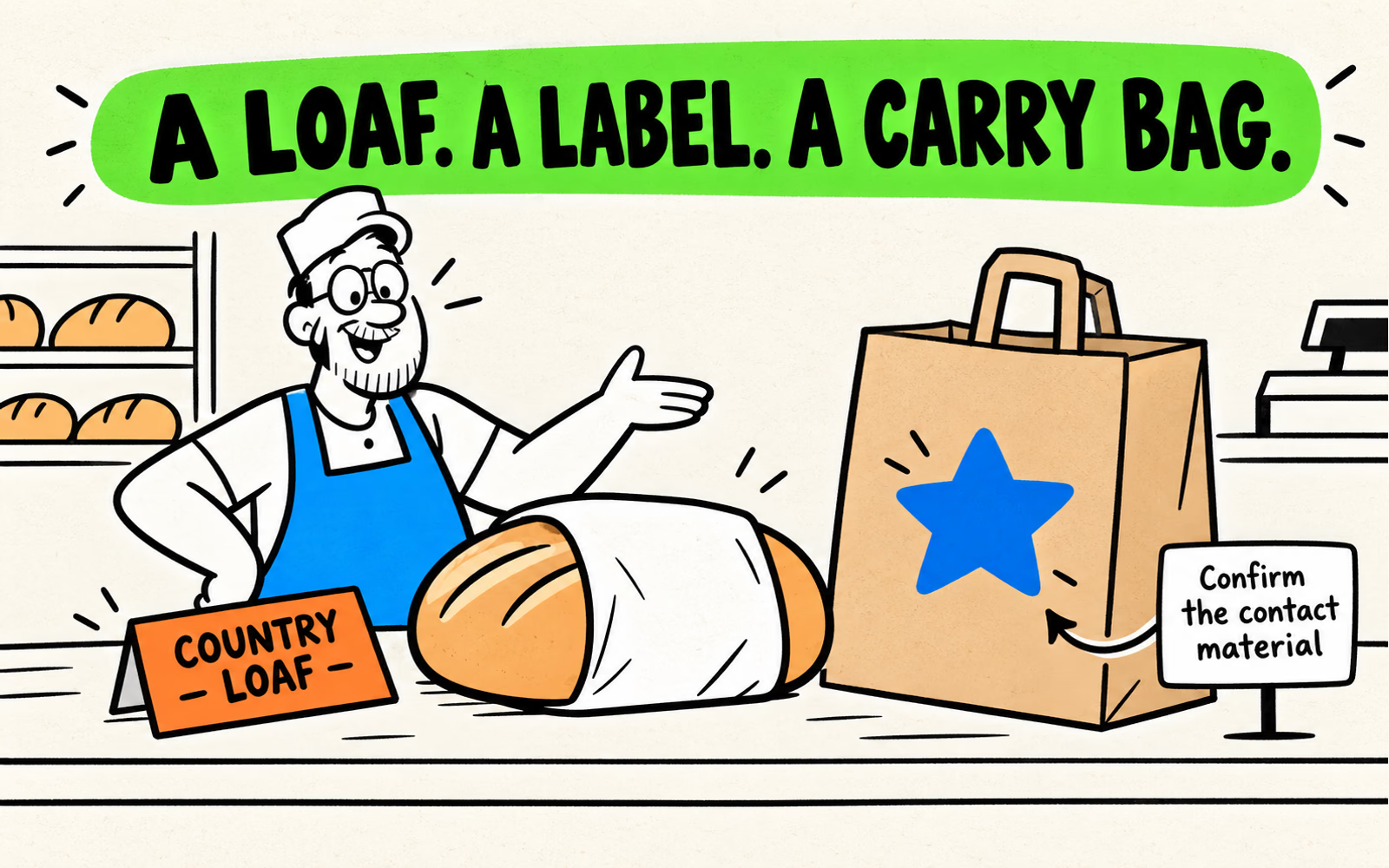
List the bread formats and selling channels
Begin with the bread leaving your bakery: whole boules, longer loaves, smaller pieces, and any mixed bread-and-pastry orders. Measure the finished products in their intended packing condition and record which format sets the largest required opening or usable space.
Match the pack to the handoff
A preordered single loaf collected at your counter is a different arrangement from several purchases carried around a market. Keep the loaf pack and the complete-order carry bag as separate lines, even when both use paper.
| Format | Order situation | Record |
|---|---|---|
| Whole loaf | Single pickup | Finished loaf dimensions, pack opening, closure |
| Smaller pieces | Individually sold portions | Exposed surfaces, count, intended contact arrangement |
| Mixed order | Market or preorder collection | Each primary pack and the complete carrying load |
Use the sourdough bag measurement guide for a focused fit worksheet. Here the goal is to organize the complete system around those measurements.
Separate food contact from branded presentation
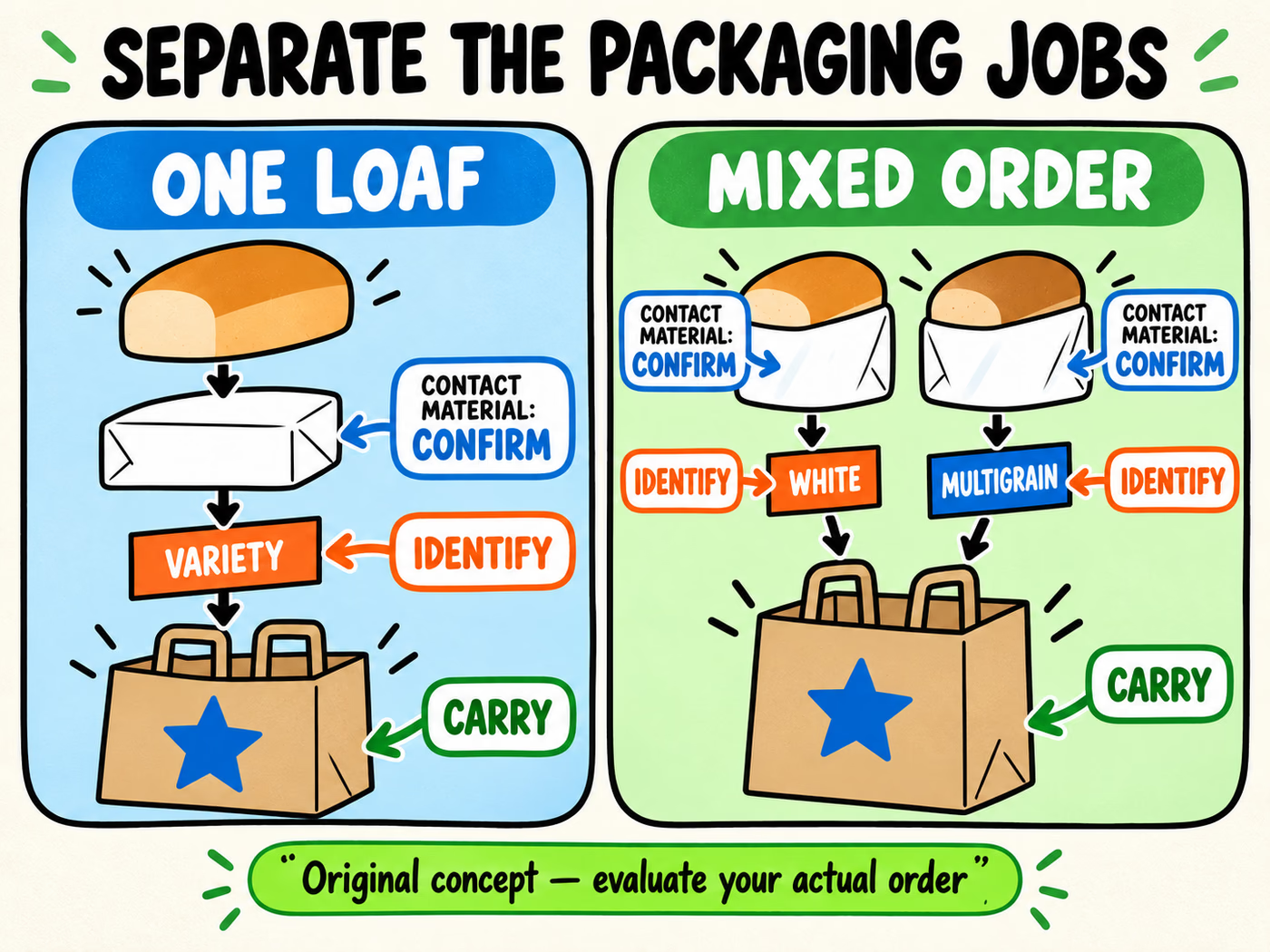
Draw three roles on your packing list: contact, identification, and carrying. One component may perform more than one role, but each intended use still needs confirmation.
The layer touching the loaf
Specify the actual material and packing conditions. Include any printed surfaces that could touch the bread while inserting, closing, or opening the pack. A neutral appearance does not establish suitability, and a decorative wrapping-paper concept is not a confirmed bread-contact product.
Review the paper-role guide to separate decorative presentation from intended contact. Ask the supplier to confirm the proposed material for your particular use before ordering.
The identity and the outer order bag
An external label can identify the loaf; an outer carrying bag can group several already packed items. Test that arrangement with the largest intended order. Keep labels and loose cards outside unapproved food-contact areas.
Identify varieties without changing every component
Keep the bakery name and visual identity consistent, then define what changes by variety. A shared outer pack with controlled labels is one option to compare with separate printed versions.
Build a simple label register
Record the variety name, artwork version, intended application surface, and quantity. Check that the label corresponds to the loaf actually packed. Any ingredients, allergens, weight, dates, or other required information need a separate accuracy and compliance review.
A label color can support recognition, but the written identifier should do the main work. Do not rely on color alone when staff or customers need to distinguish varieties.
The existing variety-label guide develops version control. Use printed bags versus bags with labels to compare the complete workflow, including application work, rather than assuming one method costs less.
Prepare your microbakery packaging list
Make one line per actual component: loaf contact pack, exterior identifier, larger carrying bag, and any separate presentation piece. Include the intended use and quantities by format and design, with unresolved material or fit questions marked clearly.
A useful microbakery request
- Whole-loaf and portion measurements in packing condition.
- Weekly pickup and market-order scenarios.
- Contact-material requirements and closure method.
- Variety-label versions and application surfaces.
- Complete-order carrying needs, quantities, and delivery ZIP.
Evaluate paper bags, labels, and wrapping paper against their confirmed roles. A carrying bag is not automatically a bread bag, and decorative paper is not automatically a contact liner.
For mixed bakery collections, connect the artwork with cookie packaging or holiday gift planning while keeping each product’s specification distinct. The original commercial plan below retains the broader weekly-order and sample-review questions.
One bakery.
Clear packaging roles.
Planning packaging for your food business? Tell us what you are packing, its finished dimensions, intended contact and handling conditions, quantities, and delivery ZIP.
Planning references
- BrandYourPack: Measuring a Bag for a Sourdough Loaf.
- Bakery Packaging for Multiple Bread Varieties.
- Tissue, Greaseproof, and Wrapping Paper.
Reviewed October 6, 2026. Original planning concepts; no freshness period or food-contact approval is implied by the illustrations.
Assign a role to each component
| Role | Information to prepare | Catalogue relationship |
|---|---|---|
| Primary bread pack | Finished loaf, contact, closure, packed conditions and fit | Bread-bag format needs a separate project review |
| Variety identification | Recipe/version, label area, artwork quantity and application | Explore food labels or product labels |
| Pickup or market carryout | Number of packed loaves, footprint, handles and packed weight | Explore paper carryout bags |
| Gift or multipack presentation | Arrangement, internal clearance and intended journey | Review the requested box construction separately |
Measure the finished loaf and the full order
Record the widest, tallest and longest points of the finished product in the condition in which it will be packed. A round boule, long loaf and sliced loaf create different fitting problems. Trial the proposed opening and closure with a physical sample, then measure the complete order if several packs share one carrying bag.
A paper bag with handles in the catalogue is a carryout option to review. It is not automatically a confirmed direct-contact bread bag. If you need a dedicated bread bag, include that format and its intended use in the project request.
Keep weekly quantities and artwork versions separate
Plan pack usage from units produced for sale and the selling channel. Track labels by variety; a fixed bakery mark and changing recipe information do not always need separate primary-pack artwork. Use the current item/version list so an obsolete label cannot be mixed into a new production run.
For an illustrative week of 80 plain loaves and 40 seeded loaves, the planning total is 120 primary packs. It remains two label quantities if variety information differs. The total does not establish a production minimum.
Request the component that solves the actual problem
- Send loaf measurements and a photo identifying the measurement points.
- Describe direct contact, closure and the product’s packing condition.
- List each variety, artwork version and quantity.
- Describe single-item pickup, market display and multi-item carryout separately.
- Include delivery ZIP and the date the packaging is required.
Material suitability, exact bread-bag availability, labeling requirements and delivery conditions require confirmation for the final specification. A generic mockup is a design illustration, not evidence of those properties.
Build a coordinated setup
Selections to review for your project. Each reference and its conditions are confirmed in your quote.
One loaf, clearly identified
Specify the primary pack for the actual bread, then review the label area and closure. A carryout bag is a separate packaging role.
A mixed pickup order
Group the completed order only after each product is packed and identified. Review the carrying arrangement with the actual contents.
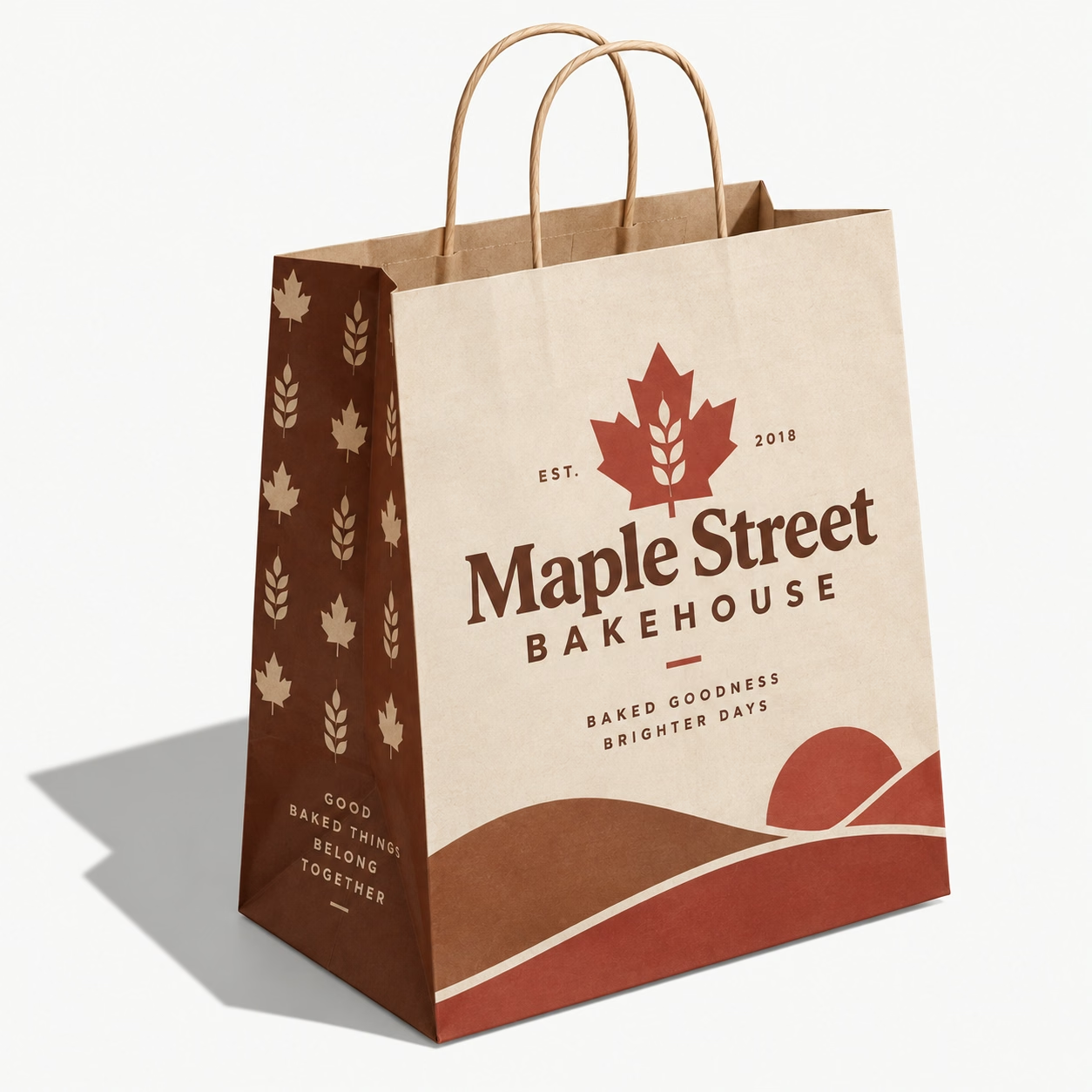
A small range. A clear handoff.
Illustrative planning example: a microbakery offers plain and seeded loaves for weekly pickup. It records each loaf envelope, requests the appropriate primary pack and assigns quantities to each label version. Carrying bags follow the order mix, rather than automatically matching loaf count.
Use the quote checklistQuestions about this decision
Can one bread bag serve every loaf?
Only after fit, closure and intended use have been checked for each loaf format. Start with the largest or least regular packed product, then review the others.
Do I need a different printed bag for every recipe?
Not necessarily. Compare a shared primary pack with variety labels against separate printed artwork runs, including version control and application time.
Are carryout paper bags the same as bread bags?
No. Carryout and direct product packaging have different roles. A dedicated bread-bag specification and its availability need separate review.
Ready to put your plan on paper?
Share the intended use, dimensions, quantities, artwork and delivery ZIP. We will review the specification for your project.