
Shake Shack Packaging: Coordinating Burger Boxes and Takeout Bags
Study a documented Shake Shack packaging presentation, then map your own burger, side, and carrying set. Coordinate the hierarchy and review the complete order.
Shake Shack packaging offers a documented example of coordinated presentation across a burger order and its carrying pieces. Study the specific case and its date, then map your own burger box, side container, and bag as one set. Repeat a clear identity while giving each component the information it needs. Confirm actual fit, materials, contact conditions, and handling separately from the design.
The box is only part of the takeaway experience. A recognizable set also needs a workable arrangement for the sides, the outer bag, and the person packing it.
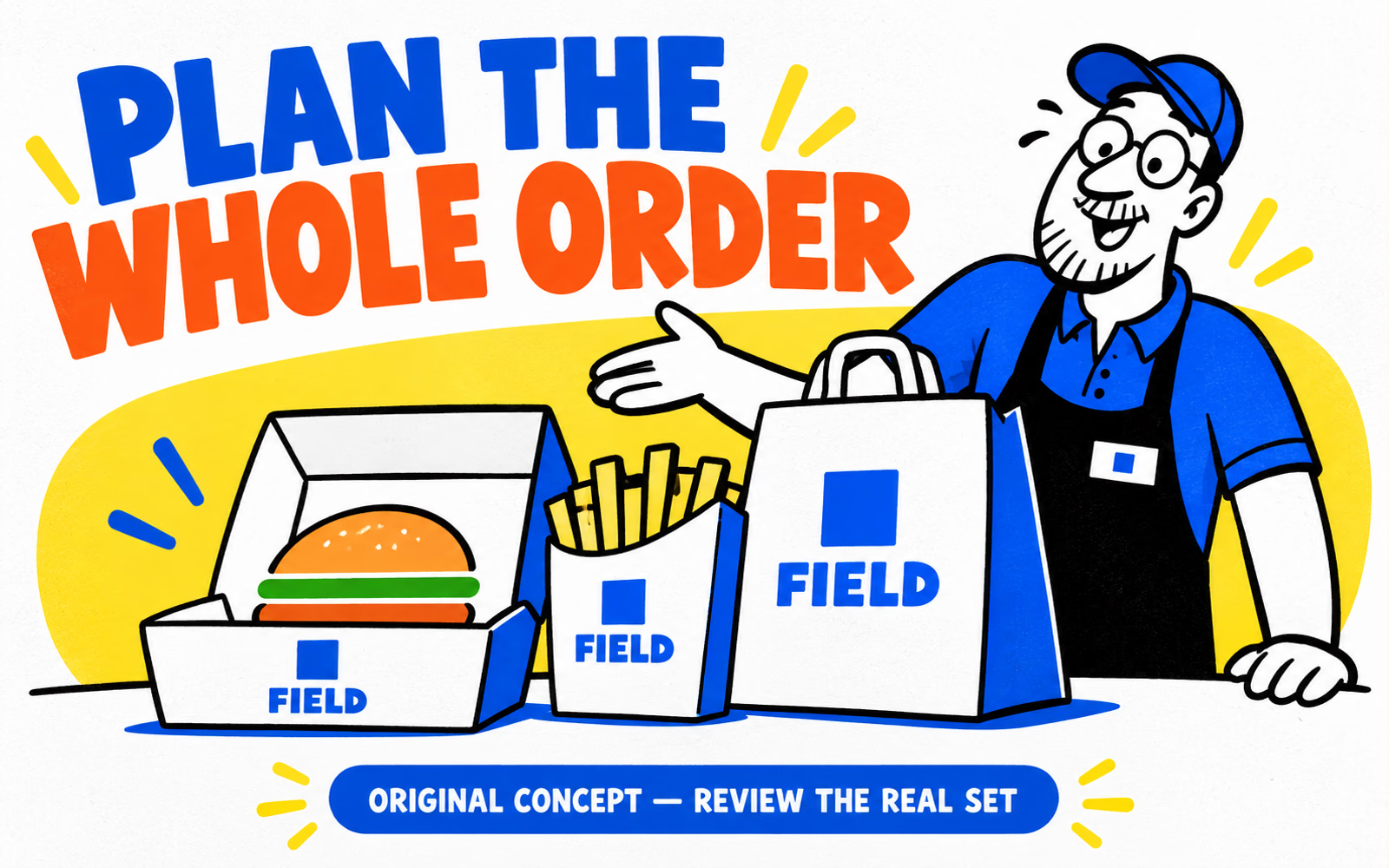
Review a documented Shake Shack order
Designer Michelle Deng’s 2021 holiday packaging project documents work for Shake Shack, names the art-direction team, and identifies her illustration, design, and photography role. A project image presents a takeaway bag with burger boxes and fries; the page credits that image to Shake Shack’s Instagram.
The project describes a seasonal visual system applied across several touchpoints. Treat it as a dated design case, not a statement about every current restaurant order. It is useful for seeing how an identity can connect pieces without assigning each piece the same role.
Keep the scope of the lesson clear
Shake Shack also discussed a revised bag design in its own later bag announcement. That supports studying the outer bag as a distinct communication surface. It does not provide dimensions or a specification for your burger box.
Our planning inference is to design the takeaway set together. The blue-square Field illustration is original and does not reproduce the campaign, burger icon, lettering, or trade dress.
Map the burger and side packaging
List the pieces in one typical order and any variations that change the load. Include the burger as served, its proposed container, the side portion and container, and the accessories needed at handoff. Keep drinks as a separate question if they are outside this brief.
| Component | Record before choosing a format | Review question |
|---|---|---|
| Burger pack | Finished arrangement, height, closure, contact conditions | Can the intended piece close without disturbing the contents? |
| Side pack | Portion arrangement, orientation, proposed construction | Where does it sit relative to the main pack? |
| Carrying bag | Complete packed load, footprint, handle preference | How is the set placed, carried, and removed? |
Measure the arrangement you plan to use
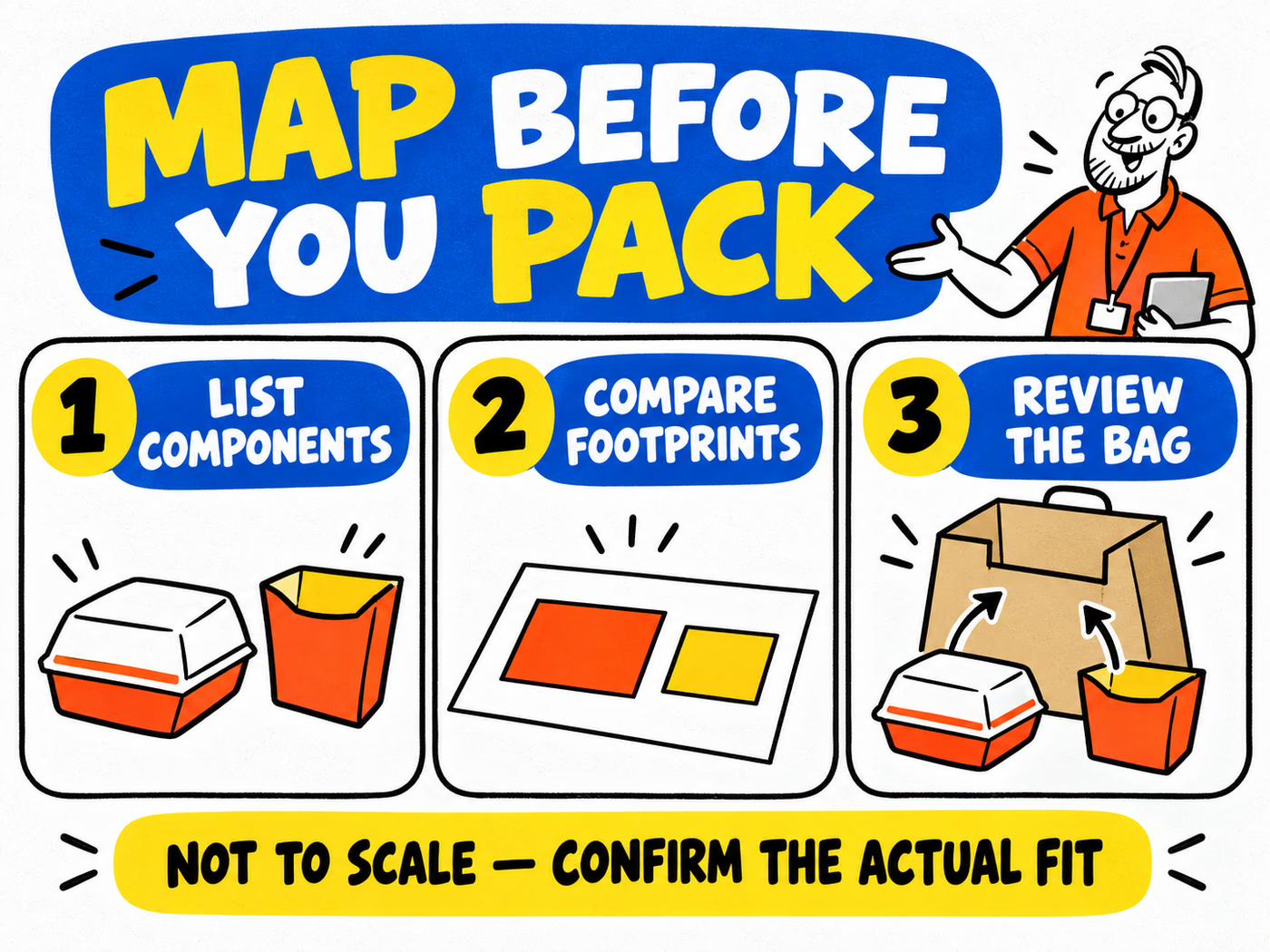
Sketch the footprints and proposed packing order, then review the actual assembled pieces. A tidy illustration does not prove that two containers fit in a bag or that the proposed arrangement performs during handling.
The infographic contains no dimensions or thermal ratings. Its arrows suggest a planning sequence, and the real fit remains a question to confirm. See the finished-burger guide for a fuller item-level brief.
Build a consistent visual hierarchy
Give each piece a clear reading order. The bag can carry the recognizable brand statement, while the box or label can help distinguish an item or order. Decide which surfaces remain visible when the pieces are stacked or the bag is folded.
Repeat a system, not every message
Use a consistent mark, alignment approach, or geometric motif. Adjust its placement to each confirmed printable area rather than shrinking the entire bag design onto the box. Keep necessary order information readable and separate from promotional copy.
The fictional Field set repeats a blue square. It illustrates coordination without borrowing Shake Shack’s identity. For your business, use approved artwork and claims relevant to your own product; another restaurant’s words do not belong in your packaging brief.
Use the actual-size typography review for small text and component-specific color references for the set. Screen coordination is a design exercise; printed appearance needs its own review.
Apply the layer distinction from the Chipotle case when separating identification, optional closure, and carrying.
Request a coordinated takeaway set
Send one overview with separate specifications for burger boxes, paper bags, and labels. List quantities by component instead of assuming every piece shares one order quantity.
Include the finished item dimensions, packed arrangement, intended contact and handling conditions, proposed closure, print sides, artwork versions, and delivery ZIP. Identify any part still waiting on a representative piece or confirmed construction.
Review the set before approval
- Confirm the job and specification of each component.
- Review actual fit, closing, carrying, and removal.
- Check visible artwork and order identification.
- Agree on evidence for any required performance question.
- Record accepted pieces and unresolved issues.
Use the complete-arrangement measurement guide for clear units and orientation, and the paper-purpose guide if adding a wrap or liner. Confirm product-specific conventions separately.
This case supplies design and planning lessons. It reports no completed food-contact, grease, heat, leakage, or transport tests and makes no sustainability claim for your proposed set.