Dutch Bros Cup Sizes: A Practical Guide for Café Owners
The drink family matters as much as the size name. Compare verified Dutch Bros menu examples, then turn your own recipes into a clear cup-and-lid brief.
Dutch Bros sizes depend on the drink family. Checked on October 6, 2026, the official Build Your Own hot Latte lists Small 12 oz, Medium 16 oz and Large 20 oz. Build Your Own iced Cold Brew and Blended Freeze each list Small 16 oz, Medium 24 oz and Large 32 oz. These are named menu examples, not a specification for every Dutch Bros drink or for a compatible cup and lid.
“Medium” is a convenient ordering word, but it does not identify one capacity across these hot and cold examples. For an independent café, that difference is a useful reminder to connect the menu name to the drink being served.
Find the current US drink sizes
Check the individual official product page, not just a general menu category. Dutch Bros publishes available sizes beside these three selected drinks. The table keeps each capacity attached to its exact drink family and the date of this review.
The pages write their capacities as oz. In this drink-size context, the table preserves the published ounce labels; it does not convert them into physical cup height, rim diameter or an exact liquid-only pour.
| Example | Small | Medium | Large |
|---|---|---|---|
| Build Your Own hot Latte | 12 oz | 16 oz | 20 oz |
| Build Your Own iced Cold Brew | 16 oz | 24 oz | 32 oz |
| Build Your Own Blended Freeze | 16 oz | 24 oz | 32 oz |
Check a different drink on its own page before extending the chart. The three rows provide verified examples rather than a claim that all hot, iced, energy, tea or specialty drinks share these options. Local availability is another question to confirm when placing an order.
Separate hot, iced, and blended drinks
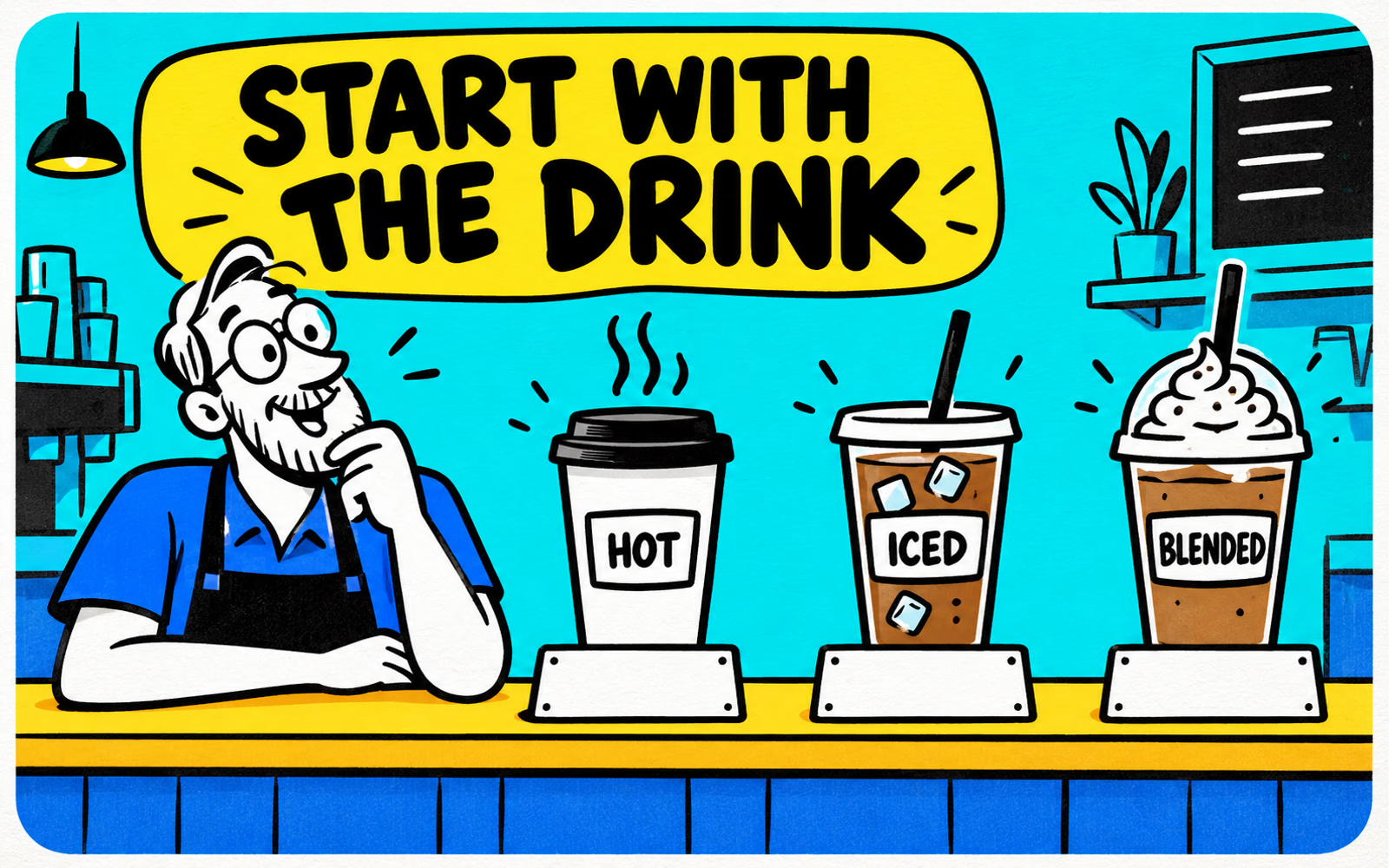
Hot, iced and blended are preparation categories, not interchangeable labels on the same serving. Keep them in separate rows when planning your own menu. Here the medium hot example is 16 oz, while both selected cold examples are 24 oz. Matching the name alone would miss that difference.
For your café, describe the complete drink: hot latte, iced coffee with its intended ice arrangement, or blended smoothie with the proposed topping. The drink use helps identify which packaging options need evaluation.
Start with a manageable service range
A coffee cart offering two hot portions and one iced portion can write three clear specifications without adopting another chain’s full range. Decide what your recipes need, then check the cup choices and storage demands. More names on the menu do not automatically make service easier.
Keep customer-facing names distinct from supplier references. A staff order for “medium iced cups” should point to one agreed item, not several cups that happen to share a nominal capacity. Our smoothie planning guide expands the same serving-first approach for blended drinks.
Capacity versus a filled drink
A listed capacity does not reveal the quantity of coffee, milk or blended base inside a served drink. Ice, foam, toppings and headspace belong to the full serving arrangement. Do not calculate a chain’s actual liquid recipe from the size label alone.
Likewise, a 24 oz menu example does not supply the rim diameter of a cup you can buy elsewhere. Two proposed cups with the same nominal capacity can have different geometry and closure requirements. Evaluate the exact items rather than assuming a number establishes a lid match.
Write down what the customer receives
For an iced recipe, record the intended finished presentation and space needed beneath the closure. For a blended recipe, include any topping and the opening required to drink it. For hot service, record the proposed cup construction and sleeve needs. These are inputs for your own package review, not descriptions of Dutch Bros manufacturing specifications.
Use the cup-and-lid guide to record exact references. Compare single-wall and double-wall options for the intended hot use while keeping closure compatibility as a separate check.
Translate the comparison into a café brief
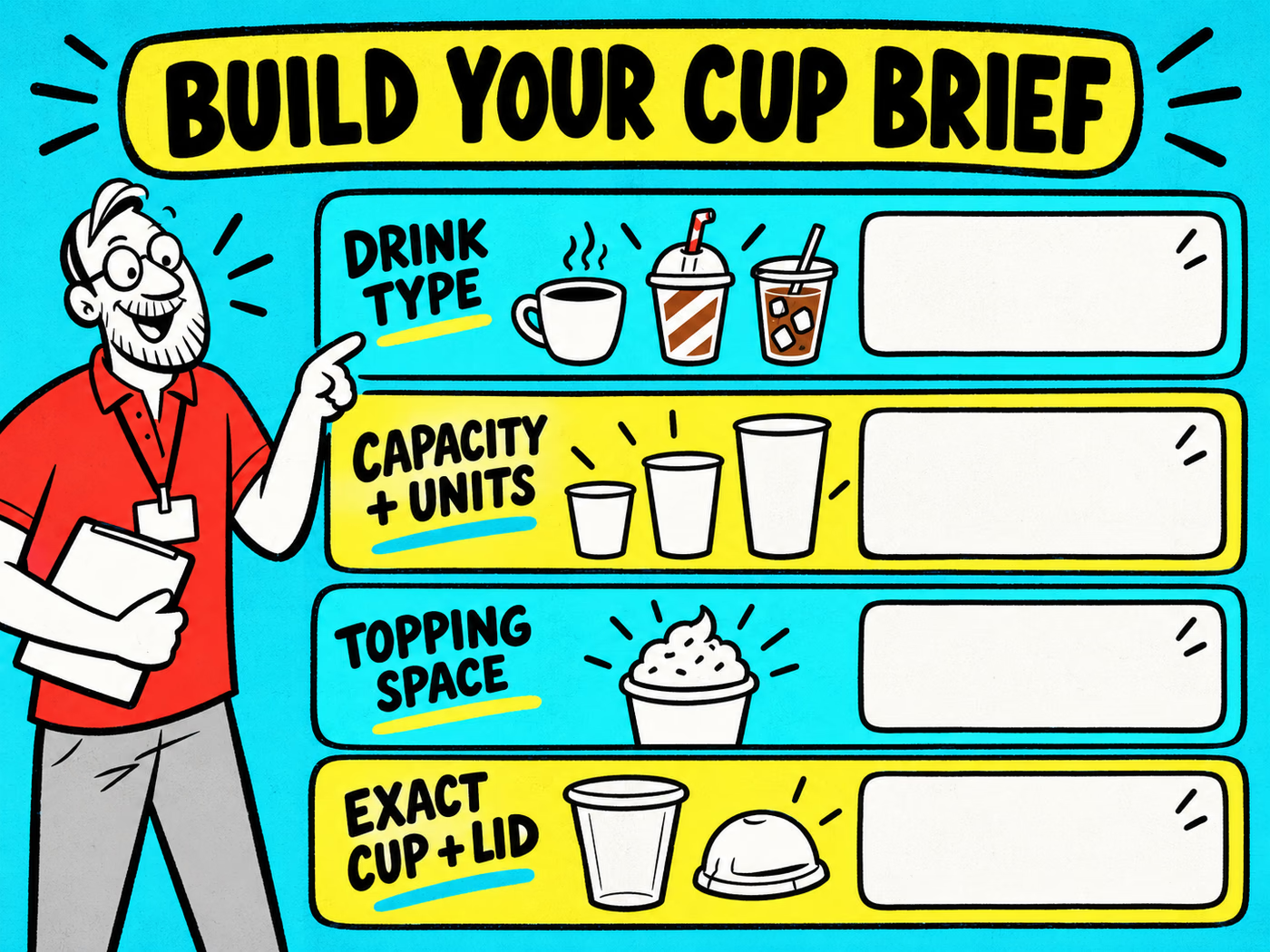
Turn the lesson into a brief with one line per serving. State the drink use, requested capacity with explicit units, full arrangement including toppings, and the exact proposed cup and lid references. Then add the artwork versions and quantities needed for each item.
Leave unresolved fields visible. A blank lid-reference field is more useful than a guessed match that later becomes an order. Ask for the applicable specification and evaluate samples together before committing to the serving setup.
| Field | What to record | Why it helps |
|---|---|---|
| Drink type | Hot, iced or blended recipe | Defines the intended use |
| Capacity and units | Requested nominal capacity | Avoids relying only on a size name |
| Topping space | Complete serving arrangement | Keeps closure clearance in the review |
| Cup and lid | Exact proposed references | Supports a specific compatibility check |
Explore plastic cups and coffee cups for the intended drink. Keep quantities by size and design separate. The infographic below is a worksheet for your café, not a Dutch Bros order form or a certification that any particular closure fits.